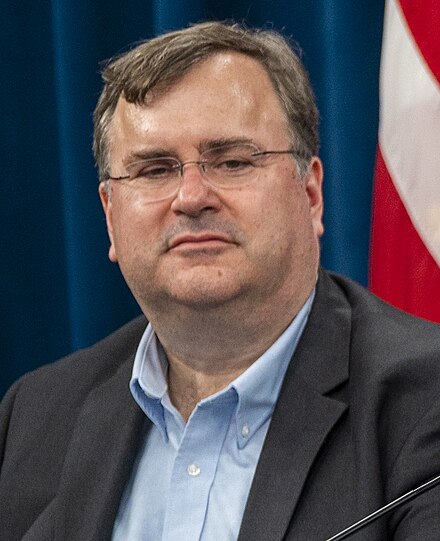
Hey, hey everybody. It's John Hope Bryant and this is the Money and Wealth podcast series season 3 on iHeart Radio on the Black Effect network. I want to thank you for making this podcast number 40 or 50 of entrepreneurship podcasts in America on Apple Podcasts and top 250 on every continent in the world. The top 1% of all podcasts in the world. And today I have a special episode because as you know I often do these podcasts solo. So when I bring a guest on they are truly special. They are signature and this guest is more special than special because he checks a lot of boxes that I've never covered from a principle in these spaces. I talk about investments, I talk about venture capital, I talk about innovation and innovators. I talk about artificial intelligence and technology. But I've never brought other than maybe parallel to this and Michael Milken would be parallel to these areas. I've never brought a leader in this space on the podcast. Today that changes. This is a man that I personally admire, respect, and I like as a human. And there are private conversations he and I have had which are precious to me that I cannot share where he showed who he really is to me. Ladies and gentlemen, I introduce you to Reid Hoffman. Let me give you a little background. Reid Hoffman, the first line, by the way, is enough, but I'm going to go a little further, but the first line just drops the mic. Reid Hoffman is the co-founder of LinkedIn. Let that sink in for a minute. We all use it. I just used it last night. He's a co-founder of LinkedIn, a longtime partner at Greylock, which is a huge investment firm based on the West Coast, and one of Silicon Valley's most influential investors, advisers, and voices on the future of technology, entrepreneurship, and human progress. He has helped shape how the world thinks about networks, opportunity, scale, and now increasingly AI, which we're going to get into today. Through his investing, writing, and his podcast, Possible, he continues to ask one of the biggest questions of our time. How do we build a future that works better for more people? He's also old school. I got a at the end of last year, I got a vinyl album set from Reid that he produced himself as his self-made gift to people he cares about. So, this is more of a conversation about Silicon Valley than it is an interview. It is a conversation about the future. It is a conversation about what's important. And I want to welcome my friend Reid to Money and Wealth.
It is an honor to be here, my friend.
And let's get into this because your time is limited and important. By the way, is there anything I left out on the substance of who you are? Because there's so many things you've done. Is there anything that I left out that you think is really important? Reid,
Nothing that we wouldn't get into in our normal discussion of AI. You know, I also, you know, like you occasionally write books, you know, most recently Super Agency. That's trying to get people to understand that part of in the age of AI, you should kind of grasp your own agency through this. And also, we as technologists should be building things that help you with your agency. But, you know, it's just a, you know, it's this, that, and the other.
No, it's not this, that, and the other. It's the this, the that, and the other. From Reid Hoffman, when Reid Hoffman says it, it takes on a whole different level of seriousness. There's something that you've done which Van Jones and I, I know you're very close with Van Jones. Van Jones and I have launched something called Hope AI and we're co-chairing that and I'm honored to work with Van on that and Van brags about you behind your back. Reid, there's something that Van and I have noticed about you that is unique amongst technologists that I would like to get into as a quick side project this conversation before we get in the meat of this and that is this. You have a humanity to you that you inject into your business conversation. You have an EQ that seems to match your IQ. And one of the things I've noticed about geniuses in Silicon Valley, not all of them, but many of them I have met have a blind spot called people. And the interesting thing is they don't see it. They think that because they're a genius of left-brain technology that they are a genius in everything else and they make assumptions about people which are entirely incorrect and that makes the strategy that they're pursuing not harmful but just less effective than it can be. And I'm just shocked that folks who don't know like in my community when you don't know what you don't know, you know you don't know it. I mean you may be a little have a little bravado about it but when somebody comes to you and says hey look let me tell you about financial literacy. Let me tell you about whatever. At least my communities my base community meaning underserved communities they're willing to step back and go okay if you know better than me let me listen on this topic. I've just not found that among some very successful technologists that they don't see that blind spot of people. They just keep talking and burying themselves deeper and deeper in a completely left-brain approach to something that involves Hello people. What do you make of what I just said, Reid? And how is it that you're bringing a unique approach of humanity and genius to technology and how's that affected how you move?
So you know I think it is very important. I think one of the things that like I kind of describe myself it's a little geeky as a techno-humanist which is the importance of technology is how we amplify our humanity. And people usually experience new technology as the new alien thing. Like when cars were first introduced they feel alien now they feel natural electricity you know glasses the whole thing fire I'm sure. And so the important thing on what we're doing is we're building it for human beings as individuals as groups as societies as humanity and of course most technologists get into technology because they're like oh I can control this universe myself and I can be the you know the god of this universe and I can do everything and I don't have to interface with this bothersome other people and you know all that kind of thing. And so I think that's one of the reasons why you find so many technologists being you know kind of socially awkward frequently dismissive of other people because part of the thing that moves them into it is I am like I am you know the Ayn Randian you know superhuman you know blah blah blah blah blah. And I think that actually in fact the important thing is like look you're really talented you can build these really amazing things but the importance of life is us going through it together and technology is only good when it helps a lot of people right? And so that's the thing and so one of the things that when I teach classes at like YC and other places in my spare time it's what I ask entrepreneurs is what's your theory of the human nature the human condition and how is your work going to improve what that human condition is and why is it that it plays out that way. And it's fine if it's like look we're just providing a much cheaper thing that people really want. Well that's an improvement right? You know we provide jobs and everything else that that's good because business itself broadly is good with you know providing things that people want to buy and employment. Now, of course, it's occasionally bad, like you're selling addictive substances that ruin people's lives. You're like, nah, not good for that, right? And so, anyway, but I think that's the it's that humanist perspective. And part of the reason I wrote Super Agency and some of the other writings is not just for, you know, everyone to think about like how do I embrace my own human agency in the age of AI, but also for technologists to think about when I'm building AI, how do I enhance human agency?
I have the book I have that book here and I've started it. It's brilliant. Everybody should pick it up and follow his podcast and 19 other things he's doing. By the way,
Um, is not just for, you know, everyone to think about like how do I embrace my own human agency in the age of AI, but also for technologists to think about when I'm building AI, how do I enhance human agency?
Yes. Yes. Yes. Yes. Let's back up and go deeper on the human side for one second, then come forward. I really want the audience to understand you and your humanity and how deep that goes.
You know, I keep saying that a phrase my father-in-law would say, which is we're all angels with dirty faces, that a saint is a sinner that got up. There's no perfect people out here. And so when people criticize anybody, I say, I like what that person's doing much better than what you're not doing. People criticize me. I like what I'm doing better than what you're not doing.
Question on the humanity side. There's something I witnessed that I cannot share with the audience because it's private, but it said everything about you to me. People will stand up for you until it's inconvenient for them. People will back you until it costs them money. People will say nice things until it creates a time commitment for them where they're not doing something that they selfishly want to do. We were at a place that we can't talk about. And you every time I've approached you at this place you've taken time this is before I was sort of a known entity if you want to call it that. I spoke there but I wasn't necessarily a member of the club back then and you still would take the time and talk and have a conversation which I respected and we were talking I was talking to a certain technologist a absolute genius by any stretch of the imagination everybody would know the name and you saw the conversation getting interesting and going a little off the rails and I was trying to keep it on the rails. But I was being dismissed. Sorry. There was an attempt. I'm sorry. Dismiss me. I wasn't going to let it happen. But maybe I might have sort of a Compton approach to this like what'd you just say to me, right? And you stepped in and were gracious and kind and Van Jones tried to do something and that didn't work. And you used your credibility to mediate this. You spent about 10 or 15 minutes in this conversation and then you pivoted it away called a cause a gracious exit for everybody and we and you walked off together with me to lunch with sent a message. Why did you do that Reid? Why did you lean in to help somebody you basically didn't know? And why don't more leaders do just that?
Well, I think so. The short answer is you have to think about like who are you and why do you think you're a good person? And that means because you stand for things and you do things and you do the right things and you do the right things when it's not convenient. And so, of course, the, you know, very powerful person that you're, you know, gesturing at could have thought worse of me from my stepping up and saying, "No, no, John's right on this stuff and you should pay attention to him and this is important." And it didn't even occur to me to behave any other different way because you know part of what you try to do is you say look like part of doing the right thing is not just about you but it's about the mission about what kind of things you're doing about what kinds of things that happen and part of the reason I've loved you know your mission and your work and the organization is because you know the world not just the community of bringing people into the middle class and prosperity, but the world is better off by realizing the talent contributing to, you know, society, to industry and so forth. And that really matters. And you have one of the smart unfortunately not many smart, but you have one of the important smart approaches to this. And so the fact that you were like I saw the dismissal which was very rude. And I was like no no no this shall not stand. Right. And so you know it was literally it was a reflex to stand in. And you know a little bit of it was treating people right. But also it was like no no this mission this mission needs to be supported.
Yeah, it's really interesting now. So, first of all, publicly on air. Thank you. And that person was not going to get away with dismissing me, but I would have handled it in a way that was less elegant and less productive than you handled it. I would might have won the battle, but I might have lost the war in the context of the environment we were in. And I would have stepped in mess and not over it. And I tell people always never make an emotional decision. Whenever you make an emotional decision, it's a bad one. And I would have done both. I would have stepped in it and been emotional because they pricked a core nerve of decency and dignity with me. And you were just saying like read John's research like just read his like just just take some time and read his you know and it was just complete dismissal. And I've learned that taught me some lessons about you can be the smartest person on the planet. You can be the most well-prepared. You do everything right and still not get a seat at the table. And you just can't give up. You just got to take no for vitamins. You can't get all wrapped up in how fair the world is because the world is often unfair. And you got to wait for God's grace to step in and save good people from themselves. Often and as I said, no one's perfect, but I think that you're going to be constantly visited by a measure of God's grace because of things like that that you did that no one would if I didn't tell that story, no one would ever know it. I mean, no one was it was four people that three people witnessed this. So, I just wanted to personally on air give you respect and this is why I've come to you from time to time with counsel. I know you choose straight. This is why I asked you to serve on the AI ethics council which you agreed to do by the way which is co-chaired by Sam Altman and myself and Van Jones is on that council along with Dr. Bernice A. King and others. And this is why I want you on the podcast because I think we're sitting at the door of fundamental systemic organizational and human change not seen since the dawning of homo sapiens maybe. And there's no road map for this. And so I'd like to do something I don't often do. I'm going to tee up a couple thoughts and then I want to shut up and let you just go. By the way, how many different jobs do you have, Reid? I mean,
So, you co-founded LinkedIn, which I want to that's one of my first questions is why, how? Because that's just brilliant. You co-founded LinkedIn, which is enough by itself. And was that through Greylock or is that a separate
That was just me as an entrepreneur.
Okay. So you co-founded and then are there other major companies like that you co-founded?
Well I was part of the founding team of PayPal. I was on the board of directors founding member of the board of directors and then later you know kind of executive COO etc. I've actually recently co-founded an AI company for trying to cure cancer. You know so you know small. But then you know investments you know things like Facebook Airbnb etc. I first led the first commercial round in OpenAI speaking of Sam Altman and was on the board of OpenAI for a while. So there's a range of stuff write books do podcasts.
You're on the board of some important companies also aren't you
Yeah Microsoft many people think Microsoft's an important company so you know
Yeah I think so. Yes okay so the easy question why LinkedIn
How long ago was that by the way 20 years
Talking about looking around a corner my god yes. Okay Why why LinkedIn?
So, actually I'll tell a little bit of the fuller story because I think you know your community might like it. So, Peter Thiel, Max Levchin and I were like how do we save PayPal? So, we went off and we were doing this and one of the things we did is we talked about like what other ideas we might have if PayPal went up in a big smokeball because at the time we went off site it was an exponentiating cost curve with no revenue. So we could tell you the hour that the 200 plus million dollars of capital that we invested would all go to zero.
PayPal. Wow. Which is a great success today.