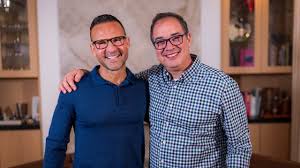
About Carlos Abrams-rivera
In a March 2026 interview, former Kraft Heinz CEO Carlos Abrams-Rivera discussed leadership challenges and the importance of openness. He stated that he is "at my best where things are very challenging," adding that such moments require being "strategic, operational, and inspirational." Abrams-Rivera also advised that leaders should not expect a return to normalcy, saying, "volatility will be the name of the game."
Abrams-Rivera reflected on the personal demands of the CEO role, noting that "once you become CEO, you're no longer going to own your face" and that being open and human can help inspire others. He emphasized the need to surround oneself with agile people and to bring others along, cautioning that individual achievement is insufficient in the corporate world.
Source: AI-verified profile updated from Carlos Abrams-rivera's recent appearances.
Browse all interviews →
Transcript (50 segments)
O
Operator0:00
Greetings and welcome to the Kraft Heinz Company second quarter 2025 earnings call. At this time, all participants are in a listen-only mode. A question and answer session will follow the formal presentation. If anyone should require operator assistance, please press star zero on your telephone keypad. As a reminder, this conference is being recorded. It is now my pleasure to introduce Anne Marie Miguel, global head of IR.
A
Anne Marie Miguel0:26
Thank you and hello everyone. Welcome to the Q&A session for our second quarter 2025 business update. During today's call, we may make forward-looking statements regarding our expectations for the future, including items related to our business plans and expectations, strategy, efforts, and investments, and related timing and expected impacts. These statements are based on how we see things today, and actual results may differ materially due to risk and uncertainties. Please see the cautionary statements and risk factors contained in today's earnings release which accompanies this call as well as our most recent 10K, 10Q, and 8K filings for more information regarding these risk and uncertainties. Additionally, we may refer to non-GAAP financial measures which exclude certain items from our financial results reported in accordance with GAAP. Please refer to today's earnings release and the non-GAAP information available on our website at ir.kraftheinzcompany.com under news and events for a discussion of our non-GAAP financial measures and reconciliations to the comparable GAAP financial measures. I will now hand it over to our chief executive officer, Carlos Abrams-Rivera, for opening comments.
C
Carlos Abrams-Rivera1:45
Well, thank you Marie and thank you everyone for joining us today. Listen, I'm pleased to report that our second quarter results came in line with our expectations with an improvement in year-over-year topline performance. Our investments in product superiority, manufacturing capabilities, and key areas of our business are starting to pay off. It's driving momentum and giving us confidence to reiterate our 2025 full-year outlook. And while we do not have any new news to report today in our consideration and strategic transactions, I do want to assure you that we are actively progressing on our evaluation with a focus on unlocking long-term shareholder value. With that, I have Andrew joining me. So, let's open the call for the Q&A.
O
Operator2:31
We'll now be conducting a question and answer session. If you would like to ask a question, please press star one on your telephone keypad. A confirmation tone will indicate your line is in the question queue. You may press star two to remove your question from the queue. For participants using speaker equipment, it may be necessary to pick up the handset before pressing the star keys. One moment, please, while we poll for questions.
Our first question is from Andrew Lazar with Barclays.
A
Andrew Lazar3:02
Great. Thanks so much. Good morning. Carlos, you know, during the quarter, Kraft Heinz put out a release that the company was considering, you know, various strategic transactions to create value. As there's nothing specific from the company yet, perhaps maybe we can talk a little bit more in generalities. There was obviously a report from the Wall Street Journal about potential business separation. I know you can't comment on specifics, but I guess how would you respond to investors that would say, you know, such actions often times can be nothing more than financial engineering moves that, you know, come with higher costs and dis-synergies, you know, rather than sort of unlocking value. I'm really just trying to provide maybe a forum where you can talk a little bit about these sorts of things maybe more in general as Kraft looks at a lot of different possibilities, right, to try and unlock value.
C
Carlos Abrams-Rivera3:54
Well, thank you Andrew. Always great to hear from you. You know, as I said, you know, our board is working with urgency on an evaluation of those strategic options to unlock, as Sue said, long-term strategic value creation. And you know what I will say also is and I'll remind our investors is that you know we will operate with the same financial discipline you have come to expect from us. You know, so any actions, if any, will be consistent with that goal of unlocking that long-term shareholder value. And that's essentially all I can say at this time, but thank you for your question.
A
Andrew Lazar4:31
Yep. Gave it a shot. Thank you.
O
Operator4:37
Our next question is from Peter Galbo with Bank of America.
P
Peter Galbo4:42
Hey guys, good morning. Thanks for taking the question. Andre, maybe a bit more of a technical one. But there was a pretty sizable, you know, impairment that was taken in the quarter. And was just hoping to get a little bit more detail. It seemed like it was maybe more at the enterprise level, but I didn't know if that flowed down to any of the brands in particular or if it's at all tied to, you know, as you contemplate kind of strategic transactions and you think about, you know, moving different pieces like that, that the reporting change triggered the impairment and again it's relatively sizable. So, just hoping to get more detail there. Thanks very much.
A
Andre Maciel5:24
Sure. Thanks for the question, Peter. So look, we recorded a $9.3 billion non-cash impairment charge and the trigger for that was only the fact that we have a sustained decline in the stock price and that has reduced the carrying value of our intangible assets. We have been monitoring this for some time. We disclosed in our previously filed 10-K the risk that this could happen. So it's not really nothing new here and nothing beyond that. This does not change the view that you basic value of the company including the confidence and direction we have in the strategy.
P
Peter Galbo6:07
Okay, thanks very much.
O
Operator6:13
Our next question is from David Palmer with Evercore ISI.
D
David Palmer6:19
Thanks. I'm just wondering how you're thinking about your pricing and promotion levels currently. You know, where do you see perhaps an opportunity to or a challenge to ramp up promotions or narrow price gaps? And where do you feel like you've taken the steps already that you're comfortable where you are versus your near-in competition if even if that's private label? And I have a follow-up.
C
Carlos Abrams-Rivera6:51
Thank you David. Let me start and then I hand it off to Andre. You want to give additional commentary? But I guess I would just say as context, you know, we are certainly a consumer-centric brand first of all, which means that we are making sure that our brands are brands that going to continue to build for the long term. And what you see from us is that we continue to invest, make investments across the board. And that some of that investment is actually in pricing. We including about 100 basis points in pricing year-over-year and we also are on top of that investing another 30 basis points in marketing so that we can reach about 4.8% of marketing as a percent of net sales by the end of 2025 which will be the highest level in nearly a decade. So and in terms of pricing, guess one clarification that I would make is that if you look at pricing in North America when you exclude the cold cuts, inflation is actually negative. So that gives you a sense that we're also being thoughtful about how to think about pricing. Andre, anything else you would add?
A
Andre Maciel7:51
Well, as we said before we have built into the initial plan about $300 million of investments. We have added a little more towards the second half. We have been concentrating the investments mainly on the key windows. You see more activity now in the third quarter as we are now the peak of the summer. There is some investments that you have saved for this moment as we have a lot of product renovations hitting the market and some core renovations hitting right now. So we concentrated the efforts on that. So you can have the new product, the extra marketing and those investments all hitting at the same time to improve the chance of success. So I mean beyond that there's nothing to say. Carlos, I don't want to steal.
C
Carlos Abrams-Rivera8:45
Yeah. The only thing I would add David here is that it's important to know that we are pricing well below inflation. In fact we're expecting inflation to be about 5 to 7% this year and we're only passing about around 1% of the pricing. So that we are in fact keeping the consumer in mind as we taking this actions on pricing. Sounds like you had another question David.
D
David Palmer9:08
Yeah. No thank you for that. I just, you know, one thing I'm thinking about with regard to Kraft Heinz particularly as you think about strategic actions and you know sort of presumably there's parts of the business that might garner a higher multiple than the others. Is this problem that we see across food right now where legacy parts of businesses that might be growthier are not doing as well as they might have done over the long term and I'm wondering how you're thinking about that with regard to you know whether it's accelerate, protect, or balance. We're seeing you know on average declines continuing in those businesses. You know what is your prospects I guess to make your growth parts growthy in the near term particularly if you want to shine a good light on those parts of the business as you think about strategic actions. Thanks.
C
Carlos Abrams-Rivera10:04
Thank you. I guess let me go back to our strategy that we have been consistent following for the last 18 months or so which is we are making investments to make sure that we're growing across emerging markets, North America retail, and away from home. And in fact we are continuing to make investment to drive that growth and return capital to our shareholder. And when you look at our pillars, in fact, in emerging markets you saw we grew our top line by around 8% through both price and volume at the same time expanding margins substantially. In fact we now in emerging market have our highest operating income margin ever. If you look at North America retail and accelerate platforms, we actually investing also to power it by the brand growth system and we executing through agile ways of working. And let me just say that if you look at the IRI data over the last four weeks, in fact when you exclude cold cuts and bacon that drove about 40% of the decline, the rest of the portfolio in total North America retail actually is improving substantially. In fact, in the latest four weeks excluding cold cuts and bacon, we are down 2.7%. Year to date, we're down 4%. So, you are seeing that the actions we're taking North America retail are also helping us drive the kind of improvements that we wanted to see in the business. And finally, in away from home, we're also expanding into footprints to distribution and driving new innovation into the marketplace. The last thing I will say is that we're not done. We're going to continue to invest in the business because we are confident in the strategy. We're making sure we continue to invest in marketing. Like I said earlier, we continue to step our investment in e-commerce which is helping us also drive our improvements in North America. And frankly, we also have a solid balance sheet and a strong cash flow that allows us to continue to make the investments. So we feel very good that when you look deeply into our growth pillars, all those actions and investments we're making are in fact taking shape in order for us to be able to continue to drive the company towards long-term success.
A
Andre Maciel12:12
I think beyond that we have as we said before have a lot of product renovation hitting the market right now behind mac and cheese, lunchables, mayo, just name those three. We have 20% market increase year over year expected to the second half. So the vast majority of all the meat increases are all happening now in the second semester. We have as we said the step up some investments on price towards the key windows that are still to come. So there is a lot more happening that we should and we should continue to see accelerate part of the portfolio in North America improving readily throughout the remaining quarters.
C
Carlos Abrams-Rivera12:58
Thank you, David. Thank you.
O
Operator13:04
Our next question is from Leah Jordan with Goldman Sachs.
L
Leah Jordan13:09
Thank you. Good morning. Just seeing if you could provide more detail on your sales trends across emerging markets. I know there's a big opportunity for distribution gains and away from home in the region. So it's just curious how those gains have tracked versus your expectations so far this year and how should we think about the pace of those gains in the back half versus the front half and really what's giving you the confidence in that double digit exit rate for this year.
C
Carlos Abrams-Rivera13:34
Great questions. Thank you Leah. Listen, I mean I mentioned that we in fact were very pleased to see that the top line now grew about 8%. I think what behind those numbers though is the fact that the growth coming from both volume and price and the fact that we are doing that while actually increasing our margins at the same time give us quite a bit of confidence that as we look at the end of this year we should be able to be hitting a long-term algorithm of double digit growth. And for us we continue to see investment in our business and it's not going to stop. You know, today it already represents about two and a half billion dollar business of our business overall. And I think what other thing that it gives me confidence is the fact that when you look at step-backs and you look at emerging market it's really a more simple portfolio. It is focused on taste elevation in particular in our Heinz brand and we have a strong go-to-market model. So when you look at the double click of Heinz in emerging markets, you know, it actually grew about 18% year-over-year. So it is building on the strength of our key brand in a simple business that we know how to operate with a model that we now have been able to replicate across markets. So it's something that now we have been building on the success that we have in the past historically and now we're expanding to make sure that we're growing in Latam, we're growing in our Middle East, Asia and Middle East Africa and Asia. And I think for us we continue to believe that this is a place where we have tremendous amount of opportunity for now and for the long term.
L
Leah Jordan15:16
Thank you. And I had a follow-up on the incremental inflation and promotions that were pushed into the third quarter. You know, any color on the magnitude of that impact and how what drove the timing shift and how you view kind of those cost pressures around inflation today.
C
Carlos Abrams-Rivera15:33
Sorry, Leah, you got cut off at the beginning of the question. If you can repeat it.
L
Leah Jordan15:39
Oh, sure. You had called out incremental inflation and promotions that were pushed from 2Q into 3Q. Just any color on the magnitude of that impact we should think about on a quarterly cadence basis and then what was the driver of that timing shift for those two items? And how are you thinking about inflationary cost pressures today?
A
Andre Maciel16:00
Look, magnitude is in the range of 30 to 40 basis points. Yeah, 30 to 40 basis points. It's nothing special. It's mostly the recognition like based on the inventory positions and the throughput that's how the inventories got recognized in the P&L so that's why it shifted Q2 to Q3. So but nothing really beyond that.
L
Leah Jordan16:27
Great, thank you.
O
Operator16:33
Our next question is from Megan Clapp with Morgan Stanley.
M
Megan Clapp16:37
Hi, good morning. Thanks so much. Wanted maybe a follow-up just on the organic sales growth in North America retail. You know, there was a comment in the prepared remarks that you expect gradual long-term improvement in topline trends and clearly it seems like just based on your comment around exit rate on emerging markets and food service that the gating factor here continues to be North America retail. So maybe you can just update us on how you're thinking about timing of getting back to just maybe stabilization first and foremost in North America retail. Thank you.
C
Carlos Abrams-Rivera17:14
Thank you. You know, for me what I would say is and if you go back to kind of the strategy was fueling our growth and the improvements in North America performance it is all the fact that we had now invested in through our brand growth system back in our products. So we're investing in our product superiority. We're investing in better marketing, investing in better tools with e-commerce investments that we have made over the last six months. And that is giving us the confidence that we continue to see that now play into the marketplace. We ended last year with brand growth system impacting about 10% of our business. By the end of this year will be about 40% of our business disproportionately focused in North America accelerate platforms. And you can see how when we are applying that methodology that actually is driving our improvement in performance. In fact, let me give an example of Capri Sun, which is a business that we renovated. We invested back in the business. We improve the marketing. We improve the products. We make sure that we highlighted the benefits that it have with parents and kids that has no artificial flavors, that we have superior taste, that we have better qualities in terms of things that kids love to have, that we have better promotions partnering with places like Nintendo, that we bringing new ideas into marketplace like at Capri Sun with new promotional limited edition products whether that is we bringing new beginning to new channels whether it's club whether it's convenient. So you see how when we apply the brand growth system at a brand like Capri Sun that is comprehensive the investments we make the improvement that it yields in our business. So that along with the fact that we continue to step up our marketing as I mentioned earlier about 30 basis points to get us about 4.8% by the end of the year. You know, that combination of the way we are investing, the fact that we're investing more and that we're using agile ways of working to then take those learnings and apply it to the portfolio is a combination that we believe is the right tools in order to drive continued improvements in our North American retail business.
M
Megan Clapp19:34
Okay, thanks for that.
C
Carlos Abrams-Rivera19:35
Thank you for the question.
M
Megan Clapp19:37
Thank you. And then maybe just a quick follow-up for Andre on the gross margin outlook. Inflation I think overall looks to be unchanged for the year at that five to 7% obviously a wide range but would you be able to just update us on what base input cost inflation is relative to tariffs if that's changed at all and then how should we be thinking about what carries into 2026 just what looks to be a kind of lower exit rate on gross margin in the back half relative to the first half. Thank you.
A
Andre Maciel20:11
Yeah. So in terms of inflation before tariffs, we have the peak of the commodities hitting in Q2, but some of that recognition got pushed into Q3 and we should start to expect some sort of relief starting in Q4. So we should start to reach the inflection point. We still have pockets of high commodity inflation particularly on meat and coffee. Regarding the tariffs, the current expectation based on the latest is an impact of approximately 100 basis points this year linked to the tariffs. And if the tariffs remain as they are right now, it will create a full year annualized impact of approximately 180 basis points. So there will be some carryover into that effect in 2026. As I said before, there are a lot of actions in place for procurement teams and also for commercial teams to mitigate as much as we can being mindful about the current consumer situation. But some pricing is required and that's what we are doing.
M
Megan Clapp21:29
Okay, great. Thank you.
A
Andre Maciel21:30
Thank you.
O
Operator21:36
And our next question is from Max Gumport with BNP Paribas.
M
Max Gumport21:43
Hey, thanks for the question. Compared to our peers that have recently established their official FY26 outlooks have embedded some pretty meaningful margin pressure over the coming quarters from substantial reinvestment. I recognize, you know, with your marketing going to at least 4.8% of sales and media spending going up at least 20% year-over-year, you are also reinvesting, but this still feels a bit less sizable than what we are seeing from some of these peers. So particularly in light of the continued volume declines, just want to get a better sense for what's giving you the confidence that your investment plans for this year are appropriate. Thanks.
A
Andre Maciel22:26
Thanks for the question. Look, we as everything we do, we are always very disciplined in our investments and we like to test investments before scaling them up. So we feel good about the actions that we are doing for this year. I think those are the right ones and the magnitude are appropriate as well. And as we said in the last earnings if we see the results expect from them we will not hesitate to step up. Keep in mind as well that we are actively expanding the brand growth system to more brands as we speak. So this is part of the reason as well where we decided to step up investments a little more beyond what we initially said last quarter. And as opportunities show up as part of this assessment we will continue to step up investments. You know, at this point, we're really trying to grow the business in a way that we think is healthy, like not through price, but through really stronger products and stronger attributes, stronger marketing, which takes more time, but it's the right thing to do. But we are going to step up investments if we deem appropriate, that's for sure.
M
Max Gumport23:44
Okay, I'll leave it there. Thanks very much.
C
Carlos Abrams-Rivera23:48
Operator, we have time for one more question.
O
Operator23:52
Our last question is from Alexia Howard with Bernstein Research.
A
Alexia Howard23:59
Good morning everyone.
C
Carlos Abrams-Rivera24:02
Morning.
A
Alexia Howard24:02
Can I ask about the pace of innovation? If I remember correctly, you were pretty low on the innovation front for much of the pandemic and the global supply chain disruptions, but it sounds as though you exited 2024 at a somewhat higher rate, but probably still quite a lot lower than peers. Can you talk about where you're at today as a percentage of sales? Where you'd like to get to over time and how quickly you could get there? Just so we can get a sense for how quickly that might be ramping up. Thank you and I'll pass it on.
C
Carlos Abrams-Rivera24:42
Thank you Alexia for your question. Let me just give you a little bit of context which is you know for us it's important that when we define innovation we're also thinking through what are the places that we can in fact renovate many of our key products. So when we talk about our brand growth system and the fact that allows us to focus on us making sure we bring the attributes to consumers they care about in our core business that is actually a key part of also thinking through how do we maintain innovation within our business. And I have to say as you pointed out I think that if we go back to 2022 I think that number on innovation was around 1.6% of our sales. By the end of the last year, it was about 3% of our sales. So, we're going to continue to drive on that investment from innovation to contribute a larger part of our business we go forward. But I would say it also is already paying off. So if you think about the innovation that we have brought in like the experience of bringing the Taco Bell restaurant experience to home it is now the second year in which we're growing the business double digit and now we're expanding to Canada. I mentioned earlier Capri Sun bottle that we are now bringing into club, we're bringing into single serve and now it's achieving high levels of velocities too wherever we have taken that product outside of the pouch. And we're also making sure that we continue to drive innovation in our highest business whether that is looking at how do we take it into pasta sauce which is happening across many of our business across both Europe and Latin America but it's also making sure that we continue to expand on the importance of our Heinz major business across our international portfolio and continue to expand into new countries as we go into 2026. So while you're right that we continue to see opportunities for innovation, our focus continues to be making sure we have the right core products with the right renovation in those businesses and at the same time being thoughtful about how we are actually bringing innovation to market that has the long-term opportunity to be here for many many years. And I'm pleased with what I'm seeing. I also think that there's more for us to do. The last thing I will say is it's important to recognize and when we talk about the brand growth system, it also creates and highlights opportunities for us to go after new innovation. So you're going to continue to see us come to marketplace, whether that is with the kind of focus on not only line extension and new exciting flavors, but ways in which we can actually continue to make sure our brands are relevant for now and for the future. More to come. Thank you, Alexia.
A
Alexia Howard27:32
Thank you.
O
Operator27:36
Thank you. This concludes today's conference call. We thank you for your participation. You may now disconnect your lines.