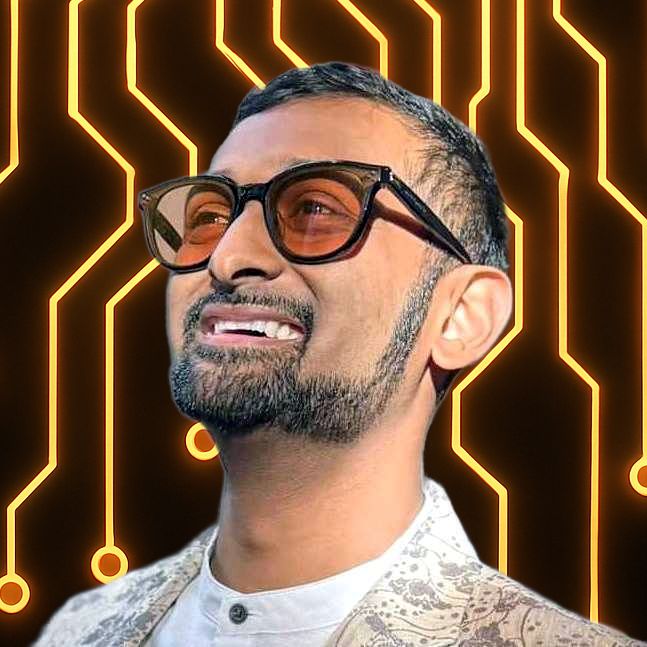
About Dylan Patel
Dylan Patel, founder and CEO of SemiAnalysis, has been speaking at several industry events in early 2026 about AI infrastructure, benchmarking, and market dynamics. At an Aria Networks launch event in April, Patel stated that AI inference demand has grown so rapidly that the rental price of three-year-old H100 GPUs has risen from around $160-170 per hour to over $240 per hour in six months, with no spare capacity available. He also discussed the InferenceX project, which he described as a free and open-source benchmarking effort with over a thousand GPUs donated by companies including OpenAI, Microsoft, and Nvidia. In a March interview at the Daytona Compute Conference, Patel said that hyperscalers like Google, Amazon, and Microsoft were slow to move into AI, creating an opportunity for "NeoClouds" that could skip complex legacy software. He also noted that the entire cloud market had run out of CPUs, with Amazon's CPU server installations tripling year-over-year.
In an April interview with Patrick O'Shaughnessy, Patel said his firm's AI token spend had skyrocketed from tens of thousands of dollars annually to $7 million, driven by non-technical staff using AI for coding. He stated that "ideas are cheap and plentiful but execution is very easy," and warned that people who do not use more tokens, generate value from them, and capture that value will "never escape the permanent underclass." Patel also predicted a "large scale protest against Anthropic and AI," citing a Pew survey that he said showed AI is less popular than politicians. In a panel at the Beyond Summit, Patel asserted that vendor benchmark claims are "lies, impossible to achieve," and that "if you're not pissing off people with your benchmark, then you're not testing something useful."
Source: AI-verified profile updated from Dylan Patel's recent appearances.
Browse all interviews →
✨ AI-enhanced transcript with speaker attribution
F
Fay Hutzel0:14
Hi everyone. Thanks so much for joining us today. I'm Fay Hutzel, VP of product marketing here at Nebius, and I have the pleasure of being joined by Dylan Patel. Dylan, good to see you.
D
Dylan Patel0:25
Thank you for having me.
F
Fay Hutzel0:27
Yeah, absolutely. So Dylan, this is effectively the debut of our cloud here at GTC, and we're honestly thrilled. It's been a remarkable keynote so far. Curious what some of your impressions are or what some of your thoughts are relative to some of the reveals earlier today.
D
Dylan Patel0:43
I think that Nvidia's innovation pace is only accelerating, and that means that cloud companies need to have significant engineering resources to keep deploying what Nvidia has to offer. And so I think that's why Nebius can be quite well positioned, because they have significant engineering resources from the cloud world where they actually have designed their own racks, whereas most clouds don't design their own racks. And so I think there's a lot of innovation around the rack side, around the cooling side, and now around the networking side. All of these things are the incredible pace of innovation that Nvidia is bringing, and the ecosystems are trying their hardest to be able to deploy it.
F
Fay Hutzel1:21
Yeah, that's right. We are absolutely committed to owning our own data centers and effectively evolving with sustainability goals, etc. And we've been very successful at that in Europe and of course bringing that here stateside. But let's talk about the developer experience. We're really committed to smooth DevX, and this is critical for those that are on the forefront of developing Gen AI. I'm curious, how do you compare us to some of the competition? Where do we stand up next to them?
D
Dylan Patel1:57
Nebius comes from having done large scale web search and all these other aspects, like autonomous driving. So there's a lot of varied workloads versus having a GPU purpose-built only cloud. And so Nebius has a lot of features that many clouds don't. Likewise, historically the usability of Nebius has been a little bit more difficult because of all the configuration options, but you guys have been rapidly making it easier to deploy the GPU resources that are required while still offering all that configurability, striking the right balance. I think that's something that a lot of clouds don't have.
F
Fay Hutzel2:30
Yeah, absolutely. Customer centricity is huge for us. In fact, we have a demo right now at the booth that demonstrates how anyone can, via our cloud console, effectively provision an Nvidia GPU cluster in under five minutes. So this commitment will only continue for us. Now, I'm curious, Dylan, as an industry expert, there are areas where we can improve just like anyone else. Where would you say we should focus our roadmap, our innovation, so that we actually bring the change that developers anticipate?
D
Dylan Patel3:02
I think there's a couple areas. Nebius, because they have a broader scope, wants to get into the inference side of the market. There is a service already for Nebius, but it's still behind; it's being built up quickly. So there's a lot of advancements to do there on throughput, on latency, on SLAs that you can guarantee customers. The other area is you've brought the configuration down time down to five minutes, but there are other clouds out there that are doing one-click clusters. You put in your credit card and you can one-click. So these are the sort of things that Nebius is driving down the path for; I know it's on your roadmap, so I know it's coming soon, but there is significant efforts there. And then the last thing is the nice thing about Nebius is you can span from that one-click just a few GPU resources all the way to we can make a purpose-built solution just for you. So continuing to be able to do that latter, purpose-built solutions for large customers all the way down with all your engineering resources leveraged behind that, all the way down to the ease of use single-click clusters.
F
Fay Hutzel4:03
Yeah, absolutely. And inference services.
D
Dylan Patel4:04
Yeah, the inference service is important. It's a software layer that I think a lot of clouds don't have that we bring with Nebius Studio today.
F
Fay Hutzel4:13
So going back to our deep relationship here with Nvidia. Most cloud providers don't have the reference platform status that we do. How do you think that's a difference maker for the end user on the platform?
D
Dylan Patel4:26
I think that the end user on the platform gets to take a lot of these savings and move forward. There's savings on multiple areas. One is just the price of the cluster. Nebius has a lower natural cost than other cloud companies because they don't buy from Dell or Super Micro. They go to ODMs, original design manufacturers in Taiwan, design their own rack in conjunction with Nvidia, and then deploy that rack. So that helps you guys get lower costs, and some of that gets passed on. But more importantly, because you guys are designing your own rack and you have all these resources, you can test the rack more thoroughly, you can make sure that the liquid cooling is working properly, all this. There's less downtime, and downtime is the same thing as paying for a cluster that you're not getting anything out of. In effect, that's saving money.
F
Fay Hutzel5:11
For sure. Yeah, no, absolutely. All really fair points there. One last question for you. We heard so much about AI innovation today. It was remarkable what Jensen had on display on stage. What industry do you think we should be watching most closely for the most transformative experience we can anticipate?
D
Dylan Patel5:28
I think today we see a lot of AI innovation in the software world, in agents for legal and insurance, but I think the most important area that's the next leg of the stool is robotics. Absolutely. Nebius has some innovations in the self-driving industry, and it'll be interesting to see if they can push these into robotics areas or start serving the compute needs of robotics vendors.
F
Fay Hutzel5:51
I'm personally very excited to see what we can actually achieve with physical AI here in the next 5 to 10 years. Thank you so much, Dylan, and I'm Fay Hutzel with the Nebius team. Thanks so much for watching.