CEOInterviews.AI
Start App
Try: AI strategy tariffs earnings guidance layoffs interest rates growth

Markus Villig

CEO & Founder, Bolt

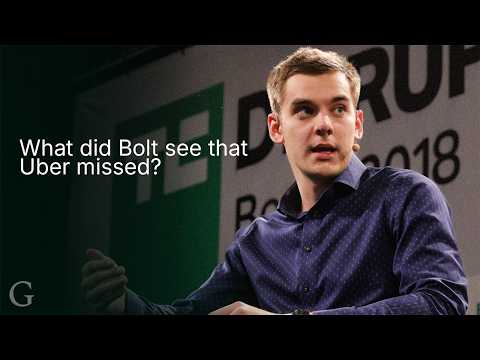
Search every verified Markus Villig interview, podcast appearance, and on-the-record quote — each transcript cross-checked by AI and human review to confirm speaker identity. Markus Villig, founder and CEO of Bolt, appeared at the Panathēnea 2026 conference in Athens and on a podcast recorded around the same period, discussing the company's growth trajectory and his views on the mobility industry. Villig stated that Bolt now operates in 52 countries with 200 million customers and processes 1% of all card transactions in Europe. He described the initial strategy of testing cities via Facebook ads at low cost, which led to expansion into African markets. Villig also argued that Europe should adopt targeted protectionist policies in certain tech sectors to build local champions, drawing a comparison to China's approach. Villig expressed strong optimism about self-driving technology, stating he believes multiple companies will provide the technology sooner than commonly expected, and cited the performance difference between Tesla and Waymo as evidence that "data isn't everything" in autonomous driving. Reflecting on his experience building the company from a €5,000 starting point at age 19, Villig advised founders to "trust yourself" and said that his biggest mistakes came from following external advice against his own intuition.

Recent appearances

Verified interview transcripts

Notable quotes

“I think every VC out there has so bought into this mantra that Tesla and Waymo will be the only companies who can build a self-driving car. But then when you actually start to zoom into it you realize that this is quite a bounded problem. It's not like a driving experience will go infinitely better the more data and the more compute you throw at it, which is what we're observing with LLM, right? So, if you think abou”

“I think the number one thing that's feasible to do is to change the financial market incentives because Europe is one of the wealthiest continents in the world. We have trillions of dollars of wealth that's today sitting in the wrong asset classes. It's sitting in low yield bonds making like a few percent. It's just sitting in like just bank accounts especially in Germany and then some of these western markets. And t”

“If you start a business as a 19-year-old in a small country with barely any VC ecosystem around, obviously, you got to make by with being 10 or 100 times more clever than your competition. Otherwise, you're just not going to be competitive. And that was the situation we were in for the first few years where we were on a budget of a couple of million and they'd raised more than a billion. So it was extremely hard to g”

“The mobility market in general is the least competitive in the world. And that might be a contrarian view, because I think most people here presume that, hey, you already have these existing players, but the reality is, when you zoom into the margins, like I mean, the prices have gone through the roof over the last 3 years. Everybody's extracting a lot of margin from customers and drivers. And it's actually turned ou”

“I think the much deeper issue we have is really the root cause is the cultural bit and I'd say it's more a disease in Western Europe where I think just people have lost the ambition. They don't think they can compete with the US. They have this fatalism. People don't want to work hard. I think in some of these communities making money is a taboo.”

“Constraints really force you to be innovative, force you to be efficient. And when you're starting a business as a 19-year-old in a small country with barely any VC ecosystem around, obviously, you got to make by with being 10 or 100 times more clever than your competition. Otherwise, you're just not going to be competitive.”

The summary and quote tags on this profile are produced with AI assistance from verified, first-person interview transcripts, then checked by our team to confirm the speaker's identity and the accuracy of every quote. See how we verify →