Ep164: Ted Love and Alan Anderson on Raising the Bar for Sickle Cell Disease Patients
Ted Love, chairman of BIO, and Dr. Alan Anderson, executive director of Sickle Forward, on how to improve quality of life for sickle ...
Former CEO, Global Blood Therapeutics
Search every verified Ted Love interview, podcast appearance, and on-the-record quote — each transcript cross-checked by AI and human review to confirm speaker identity. Ted Love, a cardiologist and former CEO of Global Blood Therapeutics (GBT), has continued to advocate for sickle cell disease patients and the biotechnology industry. In 2025, he appeared on a podcast where he discussed his work as chairman of the Biotechnology Innovation Organization (BIO) and his involvement with the nonprofit Sickle Forward, including a planned climb of Mount Kilimanjaro to raise funds for newborn screening in Africa. Love described GBT's development of the sickle cell drug Oxbryta (voxelotor) and a second-generation therapy, GBT601, which he said could represent a potential pharmacologic cure by nearly completely stopping hemoglobin polymerization. He noted that GBT became the single largest investor in fundamental research for sickle cell disease globally, raising over $1.5 billion, and was acquired by Pfizer for $5.4 billion in 2022. Love has frequently spoken about health disparities in sickle cell disease, which he has described as a disease that has been "largely ignored" compared to conditions like cystic fibrosis. He has stated that the delivery of care to sickle cell patients is "fraught with racism" and that patients are often stigmatized as drug seekers. Love has called for the passage of the Sickle Cell Treatment Act to fund comprehensive treatment centers and has encouraged providing comprehensive preventative care. As BIO chair, he has focused on reframing the industry's narrative and has opposed Federal Trade Commission actions that he said could hinder small biotech companies from partnering with larger firms to bring innovations to patients worldwide. Love has expressed hope that within the next decade, early diagnosis and effective oral therapies could prevent people from dying from sickle cell disease.
“I'll start by mentioning that Callen Anderson is someone I met after Oxbryta was approved; he became a very significant prescriber and quickly I realized he was one of the most thoughtful and excellent sickle cell doctors in the United States.”
“GBT became the single largest investor in fundamental research for sickle cell disease in the world — we raised over $1.5 billion and spent a very significant amount of that making products while also trying to change the fundamental ecosystem and mindset about sickle cell disease.”
“Oxryta was working by preventing the hemoglobin inside the red cell from sticking together and forming rods, and we invented a second‑generation therapy, GBT601, that looked like it could almost completely stop the polymerization — it might represent a potential pharmacologic cure for sickle cell disease.”
“The beauty of an oral small‑molecule is that it would be orally available once a day, easily accessible, and one day it'll be generic and incredibly cheap so you could make it available all around the world.”
“One of the sad stories early on was multiple investors told me you can't make any money in sickle cell disease because these patients won't take your medicine — to see Pfizer acquire the company for billions proved you could build a valuable business here.”
“We were on a mission to change everything: making therapies was critical, but we also needed to lead an effort to change the fundamental ecosystem and the mindset about sickle cell disease, including getting rid of stigmatization around drug seeking.”
“Every new therapy has limitations; as you uncover those limitations you can make further innovations — that iterative process will lead to therapies, maybe combinations, that are completely pharmacologically curative.”
“I just got back from Africa and one government I studied had 60% of its budget going to debt service and another 30% to essential government employees, leaving only about 10% for infrastructure or development — asking that government to produce money for programs is like trying to get blood out of a turnip.”
“I'm a physician-scientist by training. For the last 30 years I've been here in California focused on making disease-modifying therapies for some of the world's most egregious diseases, from heart disease to cancer.”
“However, the last 10 years I've focused on sickle cell disease and that's really why I'm here.”
“Sickle cell is in fact one of the most egregious diseases in the world: it affects people starting before their first birthday, many patients have debilitating pain, and essentially all the patients suffer from profound anemia which results in progressive multi-organ failure and death prior to their 50th birthday.”
“Unlike many of the other diseases, however, in this country sickle cell disease has been largely ignored.”
“I compare it often to cystic fibrosis where we provide excellent care to patients — this is exactly how it should be for these patients and it should be the same for patients with sickle cell, but it's not.”
“It has been well documented that if we provide comprehensive preventative sickle cell care we can not only improve the lives of these patients, we can dramatically reduce the health care cost associated with caring for them.”
“I want to encourage you all to do everything within your power to provide comprehensive sickle cell care for patients here in California, and I stand ready to help you in any way that I possibly can to make that happen.”
Ted Love, chairman of BIO, and Dr. Alan Anderson, executive director of Sickle Forward, on how to improve quality of life for sickle ...


... the positions of president and CEO at Global blood Therapeutics from June 2014 until October of 20123 when the company was ...

Ted W. Love, MD, cardiologist, biotechnology executive, and current chair of the board of the Biotechnology Innovation ...

Join us this June to propel sickle cell science into the forward. Our warriors are counting on us more than ever before. Together ...

Cardiologist, CEO of Global Blood Therapeutics, and proud Haverford dad who refined his ethical standards while a student at ...

This is a recorded panel session features Dr. Ted Love and Dr. Kobe Dufu. Dr. Ted Love joined GBT in June 2014 as president ...
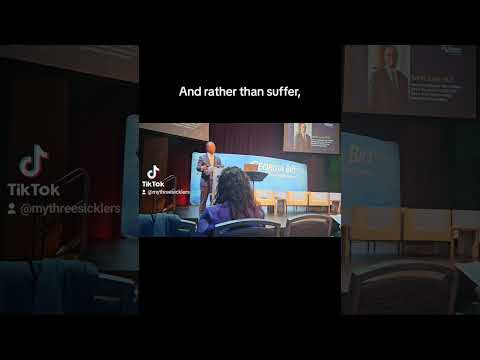


In this rebroadcast episode, we flash back to a previous interview with Dr. Ted W. Love, President and CEO of Global Blood ...... and Pharma today we flash back and listen to a previous interview with Dr Ted love president CEO of global blood Therapeutics ...
Sign in to search the full transcript archive, filter by topic, and access every quote from Ted Love.
The summary and quote tags on this profile are produced with AI assistance from verified, first-person interview transcripts, then checked by our team to confirm the speaker's identity and the accuracy of every quote. See how we verify →