CEOInterviews.AI
Start App
Try: AI strategy tariffs earnings guidance layoffs interest rates growth

Robert LoCascio

Cofounder, LivePerson

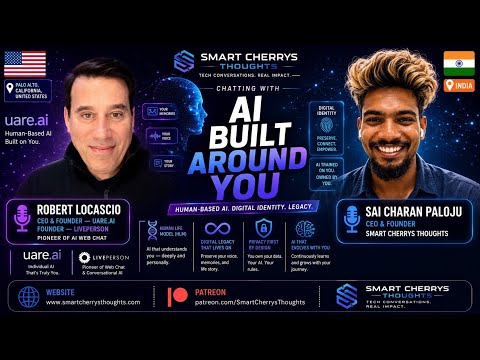
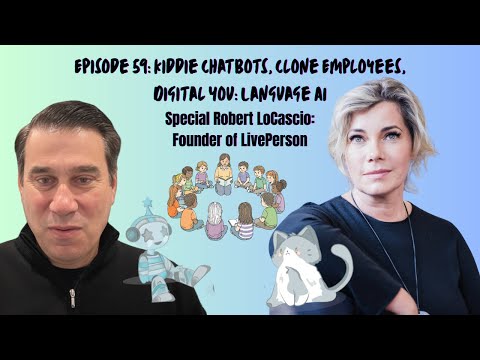
Search every verified Robert LoCascio interview, podcast appearance, and on-the-record quote — each transcript cross-checked by AI and human review to confirm speaker identity. Rob LoCascio, founder of LivePerson and current head of Uare.ai, recently discussed his career and current ventures on the podcast "The Girl Dad Show." He recounted inventing website chat technology in 1997, patenting it, and taking LivePerson public, where it grew to a market cap of around $4.5 billion. LoCascio noted that he took the company public under terms set by others because he was a first-time CEO, and while he acknowledged the constraints of quarterly reporting, he expressed a desire to build his current company on his own terms. LoCascio also spoke about his new company, Uare.ai, which focuses on creating individual AI models trained on a person's own data, stories, and emotions, rather than aggregated internet knowledge. He criticized the dominant AI narrative of job displacement and distrust, arguing that his approach allows users to own and monetize their data. He mentioned that Uare.ai has raised $10 million and has thousands of people on its platform, and he encouraged entrepreneurs to reach out to him for advice.

Recent appearances

Verified interview transcripts

Notable quotes

“I took a public company under a lot of people's terms because I was young. I was a first timer. So like you they write the rules and you're like if you want to go play go play the rules. If you could write your rules and go public. It's a great place because it allows you to compete on a different level. There are a lot of negativities to it, you know, because quarterly calls and everything, but I wouldn't say that. ”

“I previously ran a company for 28 years called LivePerson and I invented when you chat on websites for customer care and I invented that technology in 1997. So if you ever chat on a website, it didn't exist and then I invented it because I was building websites and then I patented that technology and then I took that company public and then we basically became a very large conversational AI company and we were 3,000 ”

“It's not the business model. I mean they have they're making billions of dollars off of aggregated knowledge and for if tomorrow they said oh we gave up on our business model and and they our terms and conditions if you took them and you can and put them into a chat GPT you'll see it'll say like what's unique about this is you own the data it's not so you can if you want to summarize our terms and conditions you'll s”

“The problem with those large models, they're large. So if you try to put your data set inside them, they just take them in and then blend them with everyone else's and their business model is based on the fact that you're willing to give up your data and in some cases they steal it. They have taken it from you to get where they are. They monetize it on your behalf without even asking you and then they're making reven”

“We have big tech owning big models with a lot of big money with a lot of big power and that usually ends up in a really big mess and so I feel like it should be small models, people owning their knowledge, their intelligence, being credited for that intelligence.”

“The end of the journey for me was with an activist shareholder who then we gave board seats to and the company was changed forever. Since I left it's lost 90% of its market cap. I was losing the company I built. I knew all the energy I put into it and I knew it was in risk. That's why I fought very hard.”

The summary and quote tags on this profile are produced with AI assistance from verified, first-person interview transcripts, then checked by our team to confirm the speaker's identity and the accuracy of every quote. See how we verify →