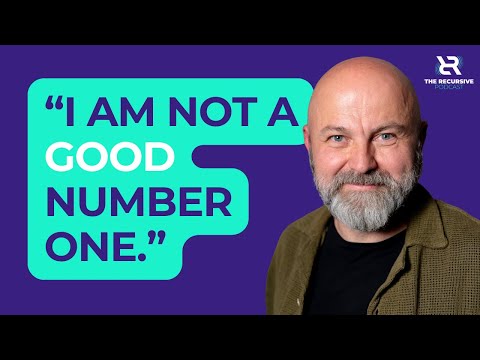
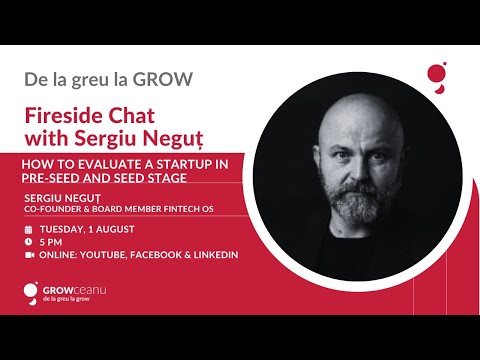
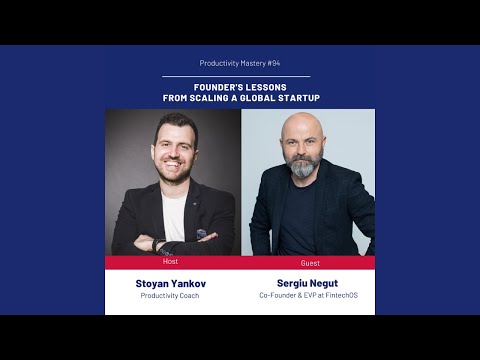
Sergiu Neguț: ”if there is no next level, a step back is the way to grow”
Sergiu Neguț wears a lot of hats. He is an entrepreneur (cofounder of FintechOS, one of the most valuable Romanian scaleups at ...
Cofounder, Fintechos
Search every verified Sergiu Negut interview, podcast appearance, and on-the-record quote — each transcript cross-checked by AI and human review to confirm speaker identity. Sergiu Neguț, cofounder of FintechOS, has discussed his career trajectory and views on entrepreneurship in recent interviews. He described his career as involving multiple simultaneous activities, where a side project occasionally becomes the main focus. Neguț stated that entrepreneurship is vocational and that individuals should not sacrifice their potential in a core skill, as that foundation enables them to build at a different level when opportunities arise. He also said that if there is no next level, a step back can be a way to grow, comparing it to backtracking in programming to try another route. Neguț has commented on the Romanian technology sector, saying it has matured and is now a mid-European level player with potential to be top in Europe. He described the financial sector as a huge market for technology, noting that large banks spend over $10 billion per year each on technology. In earlier interviews, Neguț emphasized that business requires both rational strategy and emotional empathy, and that the story told to partners, employees, and customers must be coherent. He also stated that the most important priority for a business is survival, followed by profitability and then impact, and that he looks for teams where he can add value beyond capital when investing.
“Sometimes, if there is no next level, a step back is the way to grow. It's like backtracking in programming: you go a few steps back and then try another route to create opportunities for growth.”
“As a business or organization, you absolutely need to make money as a measure of the value you're creating. The moment you stop doing that, the other pillars of value start collapsing to some extent.”
“Entrepreneurship is most similar to the job of a salesman because it involves continuous hustle, trying to get the next deal, and building capacity to bring more deals.”
“I am definitely an optimist because I don't see value in pessimism. We can't build better businesses or a better world unless we believe there is a lot of room for improvement.”
“The Romanian economy has grown surprisingly well from a very low base, and the wealth of a country is managed by business people and businesses, not politicians, who sometimes interfere and screw things up.”
“Technology companies are much better valued than traditional service companies and are less confined to specific geographies, so their chances to emerge as global leaders are much higher.”
“The financial sector spends enormous amounts on technology—largest banks spend more than 10 billion dollars per year each—making it a huge market with significant opportunities for companies like FintechOS.”
“Success is relative and is a mix of what you have achieved and are proud of, and what you aspire to but haven't yet reached. Ultimately, success is having a positive impact on the lives of others.”
“Luck is part of the equation but it's more like serendipity—you have to put yourself in the way of luck by engaging, meeting people, and trying new things. Luck is not a strategy.”
“Romania's technology sector is no longer at the bottom of European rankings; it has matured with a growing ecosystem of startups, professionals, and investors, positioning it as a mid-European level player with potential to be top in Europe.”
“I think if you get to the right MBA it's not only about the knowledge — you build an intuition and you build an attitude, and you have the time aside from your day-to-day business to interact with other smart people; that network and practice accelerates your business instincts.”
“Fundamentally the most important priority of the business is survival — just be there two years from now — and too often people overlook survival and take risks that are not calculated properly.”
“Less rules, more values — instead of a thousand-page manual, imagine a two-pager with principles and values that people can apply; values allow judgment in real situations rather than blind adherence to procedures.”
“The most important things for an investor are the team — the entrepreneur, the founder and everybody around — and if you come to me and only need my money, I'm probably not going to give it to you unless I can add value beyond capital.”
“Blockchain is a superior paradigm in some ways, but everything in the banking sector is very well regulated by governments, so it's very difficult for the blockchain paradigm to replace it at sizeable scale right now.”
Sergiu Neguț wears a lot of hats. He is an entrepreneur (cofounder of FintechOS, one of the most valuable Romanian scaleups at ...
I had an interesting talk with Sergiu about his life story, his business experience of building a great brand from almost scratch and angel investing. You can follow Sergiu here: Facebook: / sergiu.negut Linkedin: / sergiu Here are some of the topics covered in this interview: 1. Instincts for business in angel investing and for business in general; 2. The importance of getting an MBA in today's world and society; 3. Building a company: Performance vs. Growth Culture; 4. Culture, People Management and Customer satisfaction & Efficiency; 5. Growing pains and risks that businesses usua…
Sign in to search the full transcript archive, filter by topic, and access every quote from Sergiu Negut.
The summary and quote tags on this profile are produced with AI assistance from verified, first-person interview transcripts, then checked by our team to confirm the speaker's identity and the accuracy of every quote. See how we verify →