CEOInterviews.AI
Start App
Try: AI strategy tariffs earnings guidance layoffs interest rates growth

James Bullard

Former President and CEO, Federal Reserve Bank of St. Louis

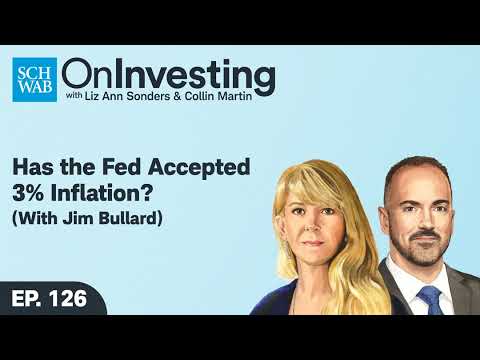
Search every verified James Bullard interview, podcast appearance, and on-the-record quote — each transcript cross-checked by AI and human review to confirm speaker identity. James Bullard, former president and CEO of the Federal Reserve Bank of St. Louis and current dean of Purdue University's Daniels School of Business, has commented extensively on Federal Reserve policy in recent months. He has stated that he considers it a good time to raise interest rates to address inflation, noting that the real economy appears strong with a labor market near full employment while inflation runs about 100 basis points above the Fed's preferred measure. Bullard has also said he believes the Federal Open Market Committee is split roughly evenly on the direction of policy, and he has suggested that a September rate hike would be a reasonable option, while cautioning that a "one and done" approach would likely be insufficient if the Fed is serious about returning inflation to 2 percent. Bullard has also discussed the leadership of Federal Reserve Chair Kevin Warsh, saying he thinks Warsh's approach to forward guidance is "spot on" in seeking to rebalance the influence of the Fed and markets on interest rate determination, moving from what Bullard described as a 90 percent Fed and 10 percent market weighting toward a 50-50 split. He has expressed concern about U.S. fiscal policy, citing 6 percent deficits and a $40 trillion national debt with no apparent plan to address them, and has said that divided government makes action on deficits unlikely. Additionally, Bullard has argued that the Fed risks falling behind the curve by tolerating core PCE inflation around 3 percent for several years, which he said looks like an implicit acceptance of a 3 percent inflation target.

Recent appearances

Verified interview transcripts

Notable quotes

“I would listen to the market here. I think they've got money on the line. They're actually pricing inflation risk directly. So I think it's a better measure of inflation expectations. And the market is giving the Fed the benefit of the doubt. They do think that some factors are temporary that have pushed up inflation. And so I think I would go with that. I think the University of Michigan survey, as long as it has be”

“The committee is split pretty much down the middle. So 10 to 9 or one way or the other. I think a lot of people that are sitting on the fence could be convinced to go either way. And I think the speech today recognized that and stated the case which is basically the main case that the committee is making as a whole which is just that the real economy is doing quite well. The inflation has not come down. They may have”

“I think the committee is very much at risk of falling behind the curve because they've been tolerating 3% core PCE inflation for several years. I checked, and at the end of 2023, it was 3%. At the end of 2024, 3% or higher, at the end of 2025, 3% again, and now they're projecting for 2026 that core PCE inflation will be probably 3.2%, which is actually the highest of all those. So really, no progress over four years.”

“I think it's just been they're a little bit more dovish than they thought they were. And so, they'll have to get tougher in order to get rid of the remaining inflation that they have.”

“I don't think the one and done is a good way to plan for policy. If you are serious that you're going to raise the rate just once, most people would say, 'Well, that's not going to have much effect.' And so, I think if usually the committee wants to realign policy in one direction or the other, so they have several rate hikes or rate cuts in mind in those situations. And then they embark upon that process.”

“Well, it's probably going to take rate increases. I think the committee was too high last year, and they did point to the weakening, apparently weakening labor market in the second half of last year and that was grounds for the 75-basis-point reduction that occurred last year. But as we got into 2026, it's become clearer that the administration's policies are pro-growth. The labor market has firmed up compared to wha”

The summary and quote tags on this profile are produced with AI assistance from verified, first-person interview transcripts, then checked by our team to confirm the speaker's identity and the accuracy of every quote. See how we verify →