
Prof. James Spudich on Building Translational Research Ecosystem.
Prof. James Spudich. Winner of Lasker Award & Distinguished Professor of Medicine , Stanford University. International ...
Co-Founder & Member of Scientific Advisory Board, Cytokinetics
Search every verified James Spudich interview, podcast appearance, and on-the-record quote — each transcript cross-checked by AI and human review to confirm speaker identity. James Spudich, a professor of medicine at Stanford University and co-founder of Cytokinetics, has continued to discuss the translational research pathway from basic muscle biology to therapeutic development. In a December 2023 talk, he described how his laboratory's fundamental studies of myosin, the motor protein driving muscle contraction, led to the discovery that hypertrophic cardiomyopathy (HCM) mutations cause hypercontractility by increasing the number of myosin heads that can interact with actin. He noted that about half of cardiac myosins are normally in a folded-back, inactive state, and that HCM mutations shift this equilibrium toward the active state. Spudich recounted that this work led to the founding of MyoKardia and the development of mavacamten, a small-molecule myosin inhibitor that received FDA approval after Bristol-Myers Squibb acquired the company. He stated that patients on the therapy reported transformative improvements, such as being able to walk marathons. Spudich has also emphasized the importance of sustained basic research funding, noting that his laboratory has received NIH support for five decades. In earlier lectures, he reviewed the history of muscle biology, describing the swinging crossbridge hypothesis and the development of single-molecule laser trap assays that measured the 10-nanometer step and 2-piconewton force of a single myosin molecule. He has discussed the "myosin mesa" hypothesis, which proposes that a flat surface on myosin serves as a binding platform for regulatory interactions, and that many HCM mutations disrupt electrostatic interactions that keep myosin heads in an off state. Spudich has argued that understanding these molecular details makes it possible to design small-molecule therapies that correct the power output changes caused by cardiomyopathy mutations.

Prof. James Spudich. Winner of Lasker Award & Distinguished Professor of Medicine , Stanford University. International ...

https://www.ibiology.org/cell-biology/muscle-biology/#part-3 James Spudich begins his talk with an early history of muscle biology, ...

https://www.ibiology.org/cell-biology/muscle-biology/#part-2 James Spudich begins his talk with an early history of muscle biology, ...

https://www.ibiology.org/cell-biology/muscle-biology/#part-4 James Spudich begins his talk with an early history of muscle biology, ...

https://www.ibiology.org/cell-biology/muscle-biology/ James Spudich begins his talk with an early history of muscle biology, and ...
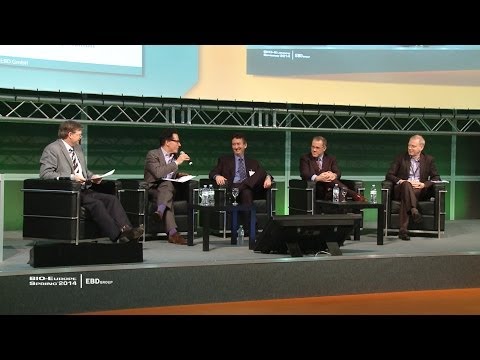
In deciding whether to partner with pharma or big biotech, which one is the better dealmaker? A few key factors to consider when ...

Walter Koch interviews James Spudich, who delivered the Lasker Awardee Lecture at Scientific Sessions 2013 in Dallas.

Along with James Spudich, PhD, of Stanford University, and Michael Sheetz, PhD, of Columbia University, Vale won the 2012 ...

Rob Chess, Chairman of Nektar Therapeutics, led this interactive panel discussion on biotechnology, diagnostics, and genomics.
Sign in to search the full transcript archive, filter by topic, and access every quote from James Spudich.
The summary and quote tags on this profile are produced with AI assistance from verified, first-person interview transcripts, then checked by our team to confirm the speaker's identity and the accuracy of every quote. See how we verify →
Pro unlocks every transcript in full, plus unlimited search across every executive and company we cover.
50% off appliedPulling data at scale? The Data API gives you 30,000 transcripts a month over REST, MCP and JSON.
Compare all plans