🔊 CEOInterviews
Start App
Try: AI strategy tariffs earnings guidance layoffs interest rates growth

Martin Schroeter

Chairman & Chief Executive Officer, Kyndryl Holdings

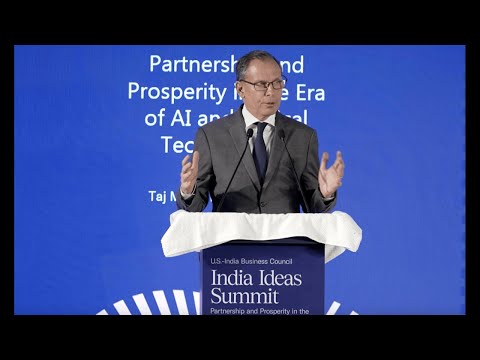
Search every verified Martin Schroeter interview, podcast appearance, and on-the-record quote — each transcript cross-checked by AI and human review to confirm speaker identity. Martin Schroeter, chairman and CEO of Kyndryl, has spoken extensively about the gap between AI experimentation and real-world deployment. He has stated that while there is "universal interest" in AI, many companies remain stuck in the pilot phase and struggle to move beyond it. Schroeter has attributed this to a lack of infrastructure readiness, data architecture work, and skilled talent, noting that fewer than 40% of companies feel prepared for the challenges ahead despite 90% describing their current infrastructure as world-class. He has argued that "the future of AI will not be decided in the research labs or the boardrooms" but by investments made now to close the gap between experimentation and industrialization. Schroeter has also highlighted that about half of people are "scared of AI," and said leadership must make the case for change because "AI itself is not going to make its own case." Under Schroeter's leadership, Kyndryl has focused on improving profitability after its spin-off from IBM, which he said left the company with a $20 billion backlog of unprofitable business. He has described a strategy centered on three areas: advanced delivery, alliances with hyperscalers, and "focus accounts" to renegotiate customer relationships. Schroeter has reported that Kyndryl's hyperscaler-related business was on track to grow 50% in 2025, and that consulting revenue grew 30% in the first quarter of that year. He has also pointed to a customer example where an AI framework reduced a process from 14 days to 14 minutes. On digital trade, Schroeter has called it "the backbone of modern economic growth" and expressed concern about potential disruptions, while citing the USMCA and the Japan-US digital trade agreement as examples of strong policy frameworks.

Selected quotes

Recent appearances