ACWWS Talk Di Tings: With Ana Menéndez (Part 1)
Ana Menéndez, author of "Loving Che", "In Cuba I was a German Shepherd", "The Last War" and "Adios, Happy Homeland".
Chief Financial Officer & Treasurer, Watsco
Search every verified Ana Menendez interview, podcast appearance, and on-the-record quote — each transcript cross-checked by AI and human review to confirm speaker identity. Ana Menéndez, author of works including "Loving Che" and "In Cuba I was a German Shepherd," discussed her career and financial philosophy in a September 2019 interview on the ACWWS Talk Di Tings podcast. She described her role as director of the Humanities Edge program at Florida International University, a Mellon Foundation-funded initiative supporting transfer students pursuing humanities degrees. Menéndez stated that she took the job because she felt strongly about supporting immigrant students and the arts, noting that on the first day, nearly every student raised a hand when asked if they had a parent born outside the U.S. She said the program has required significant imagination to build and has been creatively fulfilling, even though it has taken time from her writing. Menéndez also offered advice on personal finance, saying she aims to help artists become self-sufficient. She recommended that young people save aggressively before having dependents, and advised against borrowing for pleasures, using the example of an $800 purse to illustrate how interest costs accumulate over time. She said she grew up with conflicting ideas about money, hearing that "poverty is a crime" and "money is the root of all evil." Menéndez credited her journalism background as the best education for her writing, and said living in India stripped her of vanities and provided an education beyond tourism. She noted that she writes about Miami only when outside the city, as distance helps her treat the place as a fictional construct.
“It is an absolutely amazing program, funded very generously by the Mellon Foundation — we're very grateful for their support — and it's a big grant to promote the humanities and to support transfer students from Miami-Dade who are pursuing humanities degrees.”
“We feel strongly about nurturing the whole human being in the way that the humanities does and to ensuring that students are supported when they make that decision to pursue the humanities because the wider society doesn't always offer that support.”
“I felt very strongly in our times about doing something positive for the arts for immigrant students — which comprised most of our cohort — and on that first day almost every single person raised their hand when I asked who had at least one parent born outside the United States.”
“There has been so much imagination required to build this program from the ground up — in terms of programming, in terms of what we offer students and how we deliver that — it has filled that need that I have that I think all artists have to create new aims.”
“Sometimes you do have to take time away from the writing to focus on something else that is equally as important; I've been very fortunate in this role and it has been enormously creative.”
“I've since found this book is almost twenty years old now, and it still resonates — that joke, when I tell it to groups, you don't have to be Cuban.”
“My father stepped off the ladder and joined us on the ground, wiping his hands on his jeans — the noise, that's what you remember really; you think about the wind and rain, that what stays with you is the noise.”
“We have a powerful asset in Miami and at FIU and to be able to work with this group of students to nurture their talents and their interests was something I just couldn't pass up, even though it has taken time from my writing.”
“One of my missions in life is to get artists to become self-sufficient as efficient as possible in a time in our time and culture that's not necessarily sort of that and so we have to take care of ourselves.”
“Saving half is not possible for the vast majority of us, especially as we get older; we have parents to take care of, we have children. That's why I like to get to students young and say, at this time of your life before you have kids, you really have the opportunity to save a lot more than you do.”
“Be always conscious of your choices in your life, what you're doing, and then do things with intention. If you want to buy that $800 purse, that's okay, as long as you pay cash for it and in full. Pleasure is important, but do it consciously.”
“You should not borrow for pleasures; be aware that what that $800 really costs you over the terms of your life because interest will grow tremendously over the course of your life.”
“Journalism is the best education I could have had as a writer, not just because of the craft that it teaches you, but because it forces you outside of yourself to literally meet people where they are. That's a lesson I carry to this job still.”
“India stripped me of my vanities because I had grown up very sheltered. Living in another place is an incredible education, more than being a tourist; you have to live in a place to see your own place in the world.”
“I grew up with very conflicting ideas about money in my family. People always said things like poverty is a crime, and money is the root of all evil. So I grew up with these tricky ideas around money.”
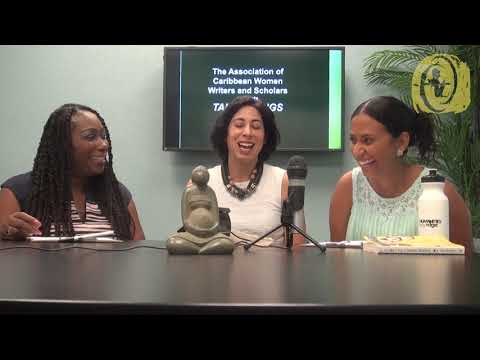
Ana Menéndez, author of "Loving Che", "In Cuba I was a German Shepherd", "The Last War" and "Adios, Happy Homeland".

Ana Menéndez, author of "Loving Che", "In Cuba I was a German Shepherd", "The Last War" and "Adios, Happy Homeland".
Sign in to search the full transcript archive, filter by topic, and access every quote from Ana Menendez.
The summary and quote tags on this profile are produced with AI assistance from verified, first-person interview transcripts, then checked by our team to confirm the speaker's identity and the accuracy of every quote. See how we verify →