
Ricardo Alvarez, ESMO 2018 β Mutational Landscape from Clinical Sequencing
Ricardo Alvarez, Medical Director of the Breast Cancer Center & Director of Cancer Research, Cancer Treatment Centers ofΒ ...
Managing Director of Operation Merit Medical Tijuana, Merit Medical
Search every verified Ricardo Alvarez interview, podcast appearance, and on-the-record quote β each transcript cross-checked by AI and human review to confirm speaker identity. Ricardo Alvarez, who previously served as Medical Director of the Breast Cancer Center and Director of Cancer Research at Cancer Treatment Centers of America, has discussed the use of next-generation genomic sequencing in advanced cancer patients. At ESMO 2018, he presented data from approximately 8,000 samples from 7,600 patients collected over five years, noting that 28 to 30 percent of mutations were actionable and could be treated with targeted therapy. He stated that patients receiving biomarker-directed treatment responded better and that the program helped identify clinical trials, though he cited cost and limited trial access as barriers, with some patients receiving off-label treatments. Alvarez has also described his work at Clinica Esperanza, an HIV clinic in San Francisco serving mostly Latino, uninsured, or underinsured patients. He outlined a multidisciplinary model of care that includes harm reduction counseling and artistic programs to improve self-esteem and medication adherence. He noted that advocacy efforts helped over 120 patients obtain political asylum, which he said transformed their lives by enabling employment and other opportunities.
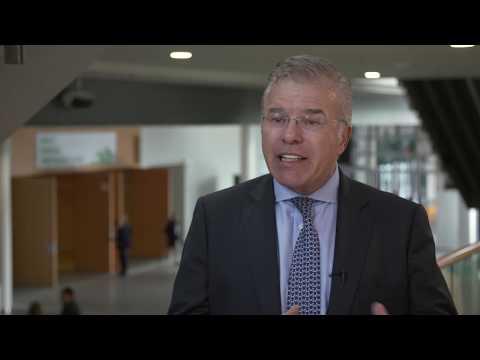
“Approximately 39% of all of our patients had one of these next genomic sequencing tests and by the data that I presented today probably a third or a quarter of these patients have been treated with biomarker genetic directed treatment.”
“The data that we collected within five years includes a total of 8000 samples, approximately corresponding to 7600 patients with advanced cancer tested with one of these molecular genomic platforms.”
“Patients with molecular targeted therapy respond better, and the personalized medicine program helps physicians identify clinical trials, which has been very well received.”
“The majority of patients candidates for genomic sequencing are patients with breast cancer, lung cancer, colorectal cancer, and unknown primary cancer, with a frequency of 28 to 30 percent actionable mutations treatable with targeted therapy.”
“The limitations are primarily the cost, as not all patients have access to next-generation sequencing platforms which are expensive, and access to targeted therapy often depends on clinical trials availability.”
“Many patients are treated with off-label use of drugs due to limited access to clinical trials for all mutations, which is another significant barrier.”
“Large cancer institutions, mostly academic, have complete platforms and can offer next-generation sequencing to selected patients, but this is not universally available.”
“Precision medicine was a research pathway a couple of years ago, but now it is increasingly utilized in clinical routine, with more fluid communication between research and clinical practice.”
“Patients treated under biomarker-guided treatment show increased chances of response and progression-free survival, which is the base approach for patient care.”
“Good morning, my name is Ricardo Alvarez. I am the director of breast cancer research at Cancer Treatment Centers of America (CTCA) in Atlanta and a clinical associate professor at Augusta University in Georgia.”
“The study 219 is a novel combination of two agents ... this study 219 is a randomized phase 1b/phase 2 clinical trial for patients with a HER2-negative breast cancer that failed first or second line of prior chemotherapy.”
“The novel of this combination is the peg PH20 β this is a pegylated compound with a hyaluronidase enzyme; what we try to do in these patients 24 hours later they will receive the chemotherapy.”
“The rationale for the combination of these two agents is the first experimental agent will degrade the microenvironment β the glycosaminoglycans β into a different product, and secondly the chemotherapy will take care of the cancer cells.”
“A patient with advanced cancer receives this new compound and 24 hours later they will receive the chemotherapy β we know that cancer is not only cancer cells, cancer is a need to learn about the context, the microenvironment.”
“The study design is a 1b and phase 2 clinical trial: the phase 1b primary endpoint is to obtain the recommended dosage for phase 2, and the phase 2 endpoints include overall response rate, progression-free survival, and overall survival, with multiple pharmacokinetic and pharmacodynamic time points.”
Ricardo Alvarez, Medical Director of the Breast Cancer Center & Director of Cancer Research, Cancer Treatment Centers ofΒ ...
Ricardo Alvarez discusses the rationale, methodology, and design of the Study 219 phase Ib/II trial of eribulin in combination withΒ ...
Freedom is a Constant Struggle TV Show, May 23, 2008. Our Guest, Ricardo Alvarez, is the medical director of Clinica Esperanza,Β ...
Sign in to search the full transcript archive, filter by topic, and access every quote from Ricardo Alvarez.
The summary and quote tags on this profile are produced with AI assistance from verified, first-person interview transcripts, then checked by our team to confirm the speaker's identity and the accuracy of every quote. See how we verify →