GWF 2013 - Plenary - III : Christopher Tucker
Christopher Tucker Founder MapStory Foundation USA.
Senior Vice President & Chief Financial Officer, Lumen
Search every verified Christopher Tucker interview, podcast appearance, and on-the-record quote — each transcript cross-checked by AI and human review to confirm speaker identity. In a 2013 presentation at the Geospatial World Forum, Christopher Tucker, then founder of the MapStory Foundation, discussed the role of geospatial data in open government and collaborative storytelling. Tucker stated that open government movements have led to "the liberation of a lot of information and an explosion in the utility you can have from geospatial technologies." He argued that understanding data requires knowing its producer, lineage, and social context, and called for building "high attribution social platforms" to enable dispute resolution. Tucker emphasized the importance of composing "spatially temporally enabled narratives" to understand the past, present, and future, and described storytelling as a "preter natural human impulse" that is communal in nature. Tucker also addressed the "Maker's Revolution," which he said focuses on how commoditized parts allow people without technical skills to create what they want. He noted that open educational resources leverage intellectual property to teach future generations, and criticized the U.S. education system for ignoring humanities and geography, which he called "central to how we learn as a species." Tucker described passionate information communities—such as analysts in energy or human trafficking—as groups with intense interests that should be empowered through global data commons and collaborative platforms.
“With open government movements, we've seen the liberation of a lot of information and an explosion in the utility you can have from geospatial technologies.”
“The Maker's Revolution focuses on a shift in how industry works; many pieces and parts have been commoditized and their ability to plug and play has made it so that people without technical skills can now create the things they want.”
“Open educational resources leverage intellectual property regimes to teach future generations about the world using digital resources that can really excite them.”
“In the United States, we talk about education in English and math and wish we were doing better, but we often ignore humanities, social science, history, and the arts, which are all tied back to geography and central to how we learn as a species.”
“Storytelling is a way of making; we often analyze data but then we have to tell a story with it, which is actually making something.”
“We must self-consciously think about change over time and demand that everything we do is spatially and temporally enabled to understand the value of data from the crowd.”
“It's incumbent upon us to build high attribution social platforms that allow us to engage in dispute resolution and understand the lineage and social context of data production.”
“Passionate information communities are not necessarily geographers or historians; they may be analysts from sectors like energy or human trafficking, and they have intense interests that should be empowered.”
“The U.S. Census, collected every 10 years, tells stories of westward expansion, political evolution, and urbanization, but until recently this information was largely lost to the public.”
“Global data commons and collaborative platforms empower the cognitive surplus of smart people who have spare time and want to contribute, but governments and corporations often don't scratch all their itches.”
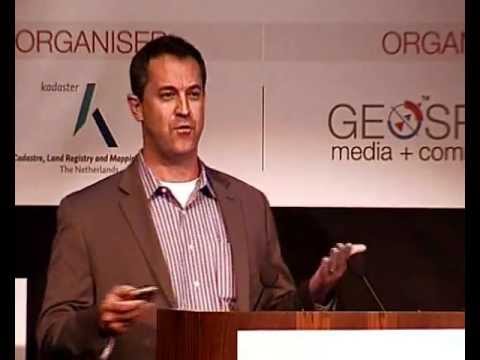
Christopher Tucker Founder MapStory Foundation USA.
Sign in to search the full transcript archive, filter by topic, and access every quote from Christopher Tucker.
The summary and quote tags on this profile are produced with AI assistance from verified, first-person interview transcripts, then checked by our team to confirm the speaker's identity and the accuracy of every quote. See how we verify →