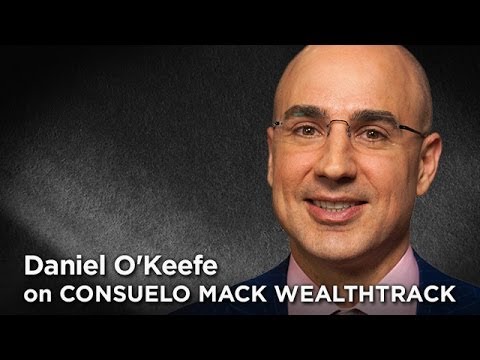
Daniel O'Keefe: Morningstar International Stock Fund Manager of the Year
You won't want to miss our rare interview with the 2013 and 2008 Morningstar International Stock Fund Manager of the Year!
MD and Lead Portfolio Manager of Global Value & Select Equity Strategies, Artisan Partners Asset Mgmt
Search every verified Daniel O'keefe interview, podcast appearance, and on-the-record quote โ each transcript cross-checked by AI and human review to confirm speaker identity. In a 2014 interview, Daniel O'Keefe discussed his value investing approach, describing it as seeking businesses that are cheap relative to long-term intrinsic value, have a competitive advantage, a strong balance sheet, and a management team aligned with shareholders. He noted that after significant market gains in 2013, many bargains had been "wrung out of the market," but he found emerging markets attractive due to their low price-to-earnings multiples relative to developed markets. O'Keefe also highlighted specific holdings, including financial stocks such as American Express, BNY Mellon, ING Bank, Lloyds Bank, and Royal Bank of Scotland, which he said were added during or after the financial crisis. O'Keefe used Google as an example of distinguishing between statistical cheapness and fundamental undervaluation, noting that the firm bought it at 12 times earnings in 2008. He criticized Google's corporate governance and capital allocation decisions, such as the Motorola acquisition and the purchase of Nest, while acknowledging the strategic rationale behind investments like Android. He also discussed the risks in banks, stating that low price-to-earnings multiples do not necessarily indicate true value due to high leverage and potential credit risks.
“For us and for our clients, value investing is about trying to find businesses that meet four different characteristics. So we want something that is cheap relative to its long-term intrinsic value. We want a high-quality business, so a business that has some competitive advantage, that has the potential to grow, that'...”
“Banks were at a low price to earnings multiple. So were they cheap? They were statistically cheap, but were they truly cheap? Because this business is as much about risk as it is about reward. The leverage is 20 times. The businesses have been growing their loan books without interruption. They haven't taken any reserv...”
“We bought Google in 2008, and Google is a great example of what we do, because it gets to the heart of the distinction between something that is merely statistically cheap and something that is fundamentally undervalued. Google at around 12 times our estimate of earnings when we purchased it was not necessarily the che...”
“They got into Android. When they got into Android, investors said, 'Why are you investing in a mobile operating system? Your core business is search,' and they invested a lot of money in Android, and it was controversial, but what they saw was that the search business was going to not go through the door of the desktop...”
“Now, I would criticize them for some corporate governance issues, and I'm not convinced that some of their capital allocation is necessarily so great. So the Motorola acquisition has been very difficult and they have not really articulated how that business is going to generate attractive returns to shareholders. Wheth...”
“Well, a very wise man once told me now is always the most difficult time to invest, and I think that is certainly true today. What we see is we've seen markets that have gone up a lot, and certainly in 2013 earnings grew in high single digits, and in many cases stocks were up 20, 30, 40, 50%. So there's been a huge re-...”
“Emerging markets right now are at a generally low multiple, and record you know, at least over the last seven or eight years a record discount on a P/E basis to the developed world, something like four points on the multiple. And so that gets our attention. In the emerging markets, you have an average P/E of, let's say...”
“We own today across both funds we own American Express. We own BNY Mellon. We own ING bank. We own Lloyds Bank. We own RBS. Those would be some of our more meaningful financials. We also own property and casualty insurance companies. We picked up some of the financials during the financial crisis.”
“Lloyds is the largest retail and commercial bank in the United Kingdom, and it's a phenomenal franchise and, at the end of the day, it's a pretty simple business. They primarily make mortgage loans, retail, unsecured loans and loans to business. They got into trouble in the financial crisis because they were effectivel...”
“One stock that we've recently added where we do see a lot of value is another U.K. bank, Royal Bank of Scotland, and it's a very similar story to the one that I laid out earlier about Lloyds. They were truly the poster child for bad behavior pre financial crisis. They did leveraged acquisitions. They expanded the balan...”
You won't want to miss our rare interview with the 2013 and 2008 Morningstar International Stock Fund Manager of the Year!
Sign in to search the full transcript archive, filter by topic, and access every quote from Daniel O'keefe.
The summary and quote tags on this profile are produced with AI assistance from verified, first-person interview transcripts, then checked by our team to confirm the speaker's identity and the accuracy of every quote. See how we verify →