CEOInterviews.AI
Start App
Try: AI strategy tariffs earnings guidance layoffs interest rates growth

Dylan Field

Co-Founder & Chief Executive Officer, Figma

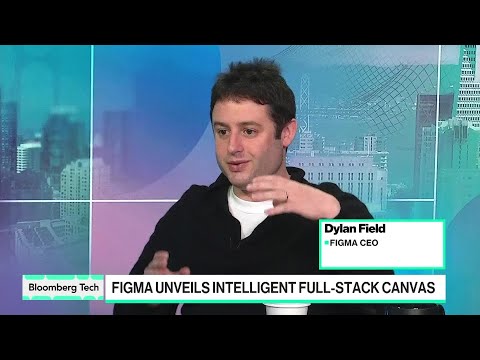
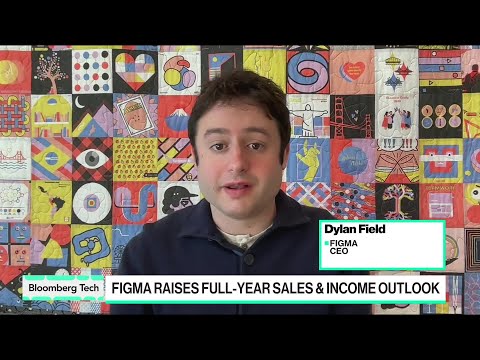
Search every verified Dylan Field interview, podcast appearance, and on-the-record quote — each transcript cross-checked by AI and human review to confirm speaker identity. Dylan Field, co-founder and CEO of Figma, discussed the company's recent performance and product strategy in a Bloomberg interview, reporting 48% year-over-year revenue growth and a net dollar retention rate of about 136%. He said the company is investing in AI agents and code generation, and described plans to bring code layers into Figma's canvas, arguing that as code becomes commoditized, design will become the key differentiator for software. Field also addressed forfeiting $46 million in stock, stating that he did so to mitigate dilution during an investment period. At Figma's Config 2026 conference in June, Field unveiled a platform overhaul centered on an "intelligent canvas" for full-stack creation, including features for animations, AI agents, and native code. He stated that "code is not the opposite of design. Code is material for design," and emphasized that AI lowers the floor for creation but that humans must "raise the ceiling" through taste and a point of view. Field said he is not worried about AI eliminating design jobs, arguing that the value of good design will increase, and he encouraged creative risk-taking. He also announced that the next Config event would be held in Bangalore, India, on October 15.

Recent appearances

Verified interview transcripts

Notable quotes

“I think that a lot of software will do just fine or actually even amazing. And since like what are the properties of that software? Well, I think that network effects matter. I think network effects can show up not just in social in human situations but also in like marketplace liquidity. That is its own network effect. I think the sort of distribution of customer base matters. And I would say that boring software is”

“I think volatility is probably good at strengthening uh companies long term. If you look at companies that have been through very volatile times in the past uh and obviously you got survivorship bias, the ones that make it through are the ones that are resilient. Um and of course we think that uh we're not just going to make it through. We're going to make it through and uh really be excellent. And so I think if you ”

“The number's going to go up, the number's going to go down. We do not control the number. The only thing we've got control over is the inputs. And so we have to keep our eye on the prize and we got to do everything we can to drive those inputs. And we have to take the long-term view.”

“I think that what's actually important is the student experience. And what's actually important is whatever you're learning from your classes. If you've got a class you're taking that you're not actually learning from, like, drop that like it's hot. ... I would argue that in a few years, you're not going to care about the degree. And what you will care about are the people you've met and the knowledge you got to lear”

“There was certainly an era in Silicon Valley, which maybe is still happening, I won't make comments, where everyone's kind of like, 'Yeah, let's sprinkle some AI fairy dust on this and it'll sell better.' And I did not want us to be in that world. It's like we either create utility or we don't. If we don't, it's not shipping.”

“Our AI products have to be good. There was certainly an era in Silicon Valley where everyone's kind of like, 'Yeah, let's sprinkle some AI fairy dust on this and it'll sell better.' And I did not want us to be in that world. It's like we either create utility or we don't. If we don't, it's not shipping.”

The summary and quote tags on this profile are produced with AI assistance from verified, first-person interview transcripts, then checked by our team to confirm the speaker's identity and the accuracy of every quote. See how we verify →