CEOInterviews.AI
Start App
Try: AI strategy tariffs earnings guidance layoffs interest rates growth

Tom Hale

Chief Executive Officer, Oura

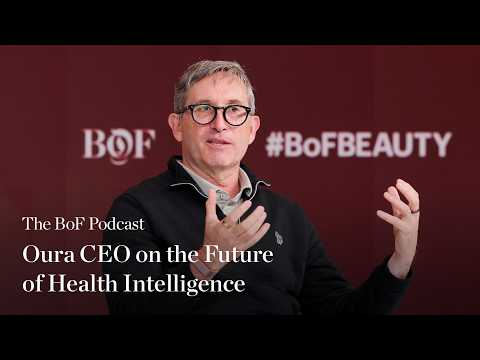
Search every verified Tom Hale interview, podcast appearance, and on-the-record quote — each transcript cross-checked by AI and human review to confirm speaker identity. Tom Hale, CEO of Oura, discussed the role of wearable technology and artificial intelligence in advancing healthcare during a podcast appearance on October 28, 2026, hosted by Stanford School of Medicine Dean Lloyd Minor. In the conversation, Hale spoke about how continuous biometric monitoring could help individuals manage their health and assist clinicians in identifying conditions like hypertension or diabetes earlier. He suggested that wearables could provide clinicians with real-time physiological data and enable more proactive, personalized care beyond traditional clinic settings. Hale also described a future where AI, combined with wearables, could offer round-the-clock health oversight, potentially flagging health risks before symptoms emerge. He cited examples such as detecting pre-diabetic trajectories and supporting recovery from surgery or illness. Hale framed these developments as part of Oura's growth since he joined as CEO in 2022, noting the expanding role of consumer health technology in daily health management and prevention.

Recent appearances

Verified interview transcripts

Notable quotes

“We always thought it was like on our three-year plan. And what's happened is we've been pulled in that direction faster than I anticipated. And I'll give you a couple examples. So one is Essence, a Medicare Advantage provider, small plan, 65,000, 70,000 lives under management. They came to us and they said, 'We want to roll this out to our Medicare Advantage customers and we want to include the ring and we want the d”

“The reality of the healthcare industry is there's just simply not enough doctors to go around. If you were to take all the time of all the primary care physicians of in the US, say, you might have 500 million hours of care that you could provide. Well, there's 330 million people in the US. So each person's going to get an hour and 20 minutes of care a year. That is just not enough to change someone's behavior. And ou”

“The retention of Oura with the subscription membership model is literally off the charts. I've been in subscription businesses my entire life. Our retention at 1 year is 80%. Netflix and Spotify are not. They're below that at 1 year. And by the way, there's convexity after you get to year two and year three. The retention in year two is 85%. So it's like it's a convex curve. Now, why is the question? It's obviously n”

“We are a health intelligence platform that will redefine the future of health care. How? By continuously monitoring everyone's already got a supercomputer. Everyone should have a device on their body. There should be a machine intelligence that is personalized and customized to that individual and a large physiological model. You've heard of an LLM, large language model. We're a large physiological model that is maki”

“If we have a large physiological model that makes predictions about you, and those predictions aren't just like, hey, you're getting sick and in 3 days you're going to be on the couch. It's more like, hey, in 10 years, if you don't change your course, you're going to have a heart attack. That's so powerful. It's powerful from so many different dimensions for the individual, for insurance companies, for your doctors, ”

“We have sick care, we don't have healthcare. How do we optimize health? We talk about this idea of connected care. We're not going to do everything. We're going to find you the partners to make sure that you're getting the right care, to get the kind of care that you need. Our role in this is to be helping with preventative behavior change that bends the curve on the cost of healthcare and bends the curve on your own”

The summary and quote tags on this profile are produced with AI assistance from verified, first-person interview transcripts, then checked by our team to confirm the speaker's identity and the accuracy of every quote. See how we verify →