
CEOInterviews.AI
Start App
Try: AI strategy tariffs earnings guidance layoffs interest rates growth

Erik Torenberg

General Partner; Host, The a16z Show, Andreessen Horowitz

Search every verified Erik Torenberg interview, podcast appearance, and on-the-record quote — each transcript cross-checked by AI and human review to confirm speaker identity. Erik Torenberg, General Partner at Andreessen Horowitz and host of The a16z Show, has been active in a series of podcast conversations over the past two months covering AI infrastructure, education, and industry dynamics. He participated in discussions on the launch of a16z's Machine Age Fund, where he and colleagues argued that AI's bottleneck is shifting from models to underlying infrastructure such as chips, memory, and power. He also hosted episodes on measuring frontier intelligence, the economics of AI innovation, and the potential for AI agents to transform payments, featuring guests such as Replit CEO Amjad Masad, Box CEO Aaron Levie, and Affirm co-founder Max Levchin. Torenberg also helped introduce the Horowitz Andreessen Academy, a new educational initiative co-founded with Ben Horowitz and Gagan Biyani, which aims to offer a project-based, non-degree alternative to college for young people in the AI era. In related episodes, he explored topics such as professional reputation through the new product Cosign, the Paid in Full Foundation's efforts to honor hip-hop pioneers, and Travis Kalanick's vision for industrial AI at Atoms. Throughout these appearances, Torenberg facilitated discussions on AI safety, regulation, and the changing nature of venture capital, often framing these issues in terms of capital intensity and the need for independent evaluation.

Recent appearances

  • Alex Atallah & Amjad Masad on Al's Multi-Model Future

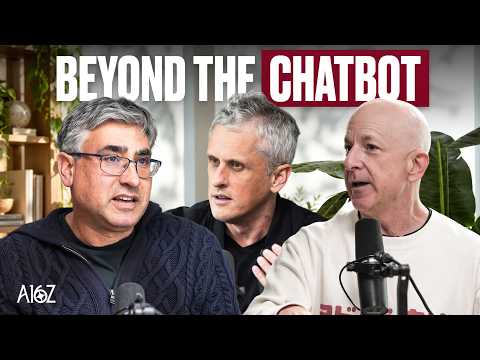
    A16z’s Erik Torenberg sits down with OpenRouter’s Alex Atallah and Replit founder and CEO Amjad Masad to discuss why the future of AI may look less like one all-purpose model and more like an ecosystem of specialized models working together. Alex explains why OpenRouter is betting on “neurodiversity”: different models trained in different ways, routed and combined based on the job at hand. Amjad makes a similar case from inside the enterprise, where companies increasingly need to own their AI capabilities rather than depend entirely on a single model provider. They explore what happens when…
    Read the verified transcript → Watch on YouTube ↗

  • The Next Chapter of AI Is Inside Our Software

    Erik Torenberg sits down with Box CEO Aaron Levie, and a16z’s Martin Casado, and Steven Sinofsky to debate how the AI industry should think about safety, security, and regulation as increasingly capable agents move into the real world. They argue that much of today’s conversation is happening before we have clearly defined the risks we’re trying to regulate. Drawing on earlier waves of computing, from computer viruses and the early internet to aviation and automobiles, they ask what AI can learn from industries that developed safety standards only after understanding how their technologies ac…

    Read the verified transcript → Watch on YouTube ↗

  • How to Spot Exceptional Talent Before Everyone Else

    a16z’s Erik Torenberg sits down with Josh Elman, Olivia Moore, and David Booth to introduce Cosign, a new product built around professional reputation and the people, companies, and products you’re willing to put your name behind. They unpack a simple idea at the heart of Silicon Valley: some of the most valuable professional signals aren’t credentials, but who believes in you. From the mentor who shaped your career to the colleague you’d work with anywhere or the young builder you think everyone should be watching, Cosign is an attempt to make those signals more visible and durable. They al…

    Read the verified transcript → Watch on YouTube ↗

  • Replit CEO Amjad Masad on What Young People Should Learn in the AI Era

    Erik Torenberg sits down with Replit founder and CEO Amjad Masad and Horowitz and Andreessen Academy co-founder and CEO Gagan Biyani to ask what education should look like for a generation growing up with AI. Amjad argues that one of the most valuable things young people bring to society is their willingness to question deeply held assumptions. They discuss how education could create more room for that instinct through project-based learning, intellectual side quests, and giving students the freedom to follow an idea deeply rather than optimizing around grades and credentials. They also expl…

    Watch on YouTube ↗

  • a16z Launches New School in SF | Gagan Biyani & Erik Torenberg

    Gagan Biyani and Erik Torenberg announce the launch of the Horowitz Andreessen Academy in San Francisco, a new higher-education model built around real-world company co-ops, guest lectures from top tech leaders, and personalized student pursuits. They discuss why traditional college models are failing, how AI resets the playing field for young builders, and why structured exploration during formative years beats dropping out straight into the workforce. Check out our sponsor Lovable: ⁠https://lovable.dev.⁠ Turn ideas into software people love. -- ⁠https://x.com/gaganbiyani⁠ ⁠https://x.com/erik…

    Read the verified transcript → Watch on YouTube ↗

  • Why Education Has to Change

    Ben Horowitz and Erik Torenberg sit down with Gagan Biyani to introduce the Horowitz Andreessen Academy and discuss a bigger question: what should education look like when AI is rapidly changing the skills people need to build, work, and create? Ben and Gagan explain why they believe learning should be more focused on doing rather than studying about doing, with students building real projects, developing people skills, and working alongside companies and builders in San Francisco. The goal isn’t to replace college for everyone, but to create a different path for young people who already know…

    Read the verified transcript → Watch on YouTube ↗

  • Why the People Who Built Hip-Hop Ended Up With Nothing

    Ben Horowitz and Erik Torenberg sit down with Nas, Grandmaster Caz, and Steve Stoute for a conversation about the Paid in Full Foundation and its mission to recognize and support the pioneers who built hip-hop. Ben, Nas, and Steve share how the foundation began, why simply giving artists money wasn’t enough, and how the Hip Hop Grandmaster Awards became a way to pair financial support with the recognition many foundational artists never received. Caz brings the perspective of one of those pioneers, reflecting on his role in hip-hop’s earliest history and what receiving the award has meant for…

    Read the verified transcript → Watch on YouTube ↗

  • Why Would AI Companies Want to Slow Down?

    Databricks co-founder and CEO Ali Ghodsi joins a16z General Partners Martin Casado and Sarah Wang for a conversation about AI risk, recursive self-improvement, cybersecurity, and what’s actually holding back enterprise adoption. Ali argues that today’s models are already capable enough to automate far more work than most companies are using them for. The bigger problem is context: models haven’t been in every meeting, don’t understand how decisions actually get made, and lack the institutional knowledge that experienced employees accumulate over years. He explains why building an organization…

    Read the verified transcript → Watch on YouTube ↗

  • OpenAI President on What it Means to Cross Into The Age of AGI

    Ben Horowitz and Erik Torenberg sit down with OpenAI co-founder and President Greg Brockman to discuss why he believes AI has entered a new phase, what OpenAI’s latest models reveal about the path to AGI, and the safety and security challenges that come with increasingly capable systems. Greg explains why computer use represents such an important step for agents, including models that can work coherently for 24 hours and interact with software through the same interfaces humans use. He also shares how OpenAI deployed 10,000 agents to tackle the Navier-Stokes problem, and why advances in mathe…

    Read the verified transcript → Watch on YouTube ↗

  • Why Investors Are Rethinking Everything for the AI Era

    a16z’s Jen Kha and David George sit down with Accolade Partners’ Aram Verdiyan to discuss how AI is changing the power law of technology investing, why the largest companies can compound advantages in ways that weren’t possible before, and what that means for how investors construct portfolios. They explore why AI may be much bigger than traditional software, with applications reaching into labor, healthcare, transportation, services, and other major parts of the economy. David explains why capital itself can now reinforce an AI company’s advantage by buying more compute, while Aram makes the…

    Read the verified transcript → Watch on YouTube ↗

  • Inside the Race to Measure Frontier Intelligence

    a16z’s Erik Torenberg, Ben Horowitz, and Jennifer Li sit down with Vals founder and CEO Rayan Krishnan to discuss one of AI’s increasingly difficult problems: how do you actually measure whether a model is getting better? As public benchmarks saturate and models get better at optimizing for the tests themselves, Rayan makes the case for independent, continuously evolving evaluations. They unpack why self-reported model scores can be misleading, how VALS evaluates models in the hours before a release, and why measuring increasingly agentic systems means testing work that can unfold over hours,…

    Read the verified transcript → Watch on YouTube ↗

  • Why AI Agents Could Finally Reinvent the Credit Card

    Erik Torenberg is joined by a16z General Partner Alex Rampell and Affirm Co-Founder and CEO Max Levchin for a conversation on 25 years of fintech, from the early days of digital payments to the origins of Affirm and the next generation of agentic commerce. Max and Alex revisit what surprised them most about how payments evolved, why the card interface has been so difficult to displace, and why even the smallest corners of payments can become enormous markets. They also trace the early idea maze behind Affirm, from "pay with your identity" and the pajama problem to the realization that install…

    Read the verified transcript → Watch on YouTube ↗

Verified interview transcripts

Notable quotes

“If you regulate AI too early, you actually basically don't solve anything, and you still just kind of have the same risk ultimately, but you don't understand the system. Then you will the thing into being, but you haven't figured out how to control it.”

“I feel like I have long felt this, but as I have invested now for almost a decade, I believe it more and more every week, every day, every month. It's like the most valuable data in all of Silicon Valley is like who has conviction and who can give you kind of a read, a real read on a person for so many decisions, like who do you invest in, who do you hire, what company do you join. And there's such information asymme”

“I think actually if you ask the public intellectuals especially, and I would be in this camp, I think like most 18-year-olds should not go straight into the quote unquote real world. It's awesome to have one to two to three years to explore pursuits that are not purely for the purposes of getting a paycheck or building the next big thing. And so I think one of the things the academy offers is we're actually very pro ”

“The profit motive forces us to deliver to the customer and our job at the end of the day is to make sure that young people who attend the institution go off and do great things because that creates the brand that creates the flywheel that allows us to continue to stay in business. And I think that's very unique in education that we have such incentive alignment. And I think it's a core tenet actually of the academy.”

“I think it's actually — this is a very sensible proposal that they actually have. I actually agree with you. You probably want to make sure it's independent, which is not fair right now, whatever. And there's going to be a lot of arguments, so who you put, and everybody's going to disagree. Right. Right. But you said, you know, why do we have judges? So that's like actually like the state stepping in is actually quit”

“We've looked at the data of 3,000 venture capital firms in the US. Only 20 have achieved consistent 3x net returns over the last two decades.”

Other executives at Andreessen Horowitz

The summary and quote tags on this profile are produced with AI assistance from verified, first-person interview transcripts, then checked by our team to confirm the speaker's identity and the accuracy of every quote. See how we verify →