
CEOInterviews.AI
Start App
Try: AI strategy tariffs earnings guidance layoffs interest rates growth

Timothy Snyder

Professor of History, Munk School of Global Affairs, University of Toronto, University Of Toronto

Search every verified Timothy Snyder interview, podcast appearance, and on-the-record quote — each transcript cross-checked by AI and human review to confirm speaker identity. Timothy Snyder, a historian and professor at the University of Toronto's Munk School of Global Affairs, has been active in public discussions about American democracy, the Trump administration, and the war in Ukraine. In interviews and conversations with figures such as Sharon McMahon, Steve Schmidt, and Anne Applebaum, Snyder has characterized Trump as a weak leader who relies on a "revolving door for more powerful men" seeking wealth, and has argued that the administration's actions, including restrictions on press access and the use of taxpayer-funded advertisements, exhibit fascist ideas. He has also discussed the concept of "superpower suicide," suggesting that U.S. foreign policy under Trump has undermined American power, particularly regarding Ukraine. Snyder has made multiple trips to Ukraine, where he said he visited the front and met with friends and colleagues. He has stated that Ukraine has a chance to win the war but that the Trump administration has missed opportunities to help, and he has criticized U.S. emissaries such as Witkoff and Kushner as acting as proxies for Russia. He has also argued that the U.S. and Russia's foreign policies toward Europe are essentially the same, and that American tech companies and Russian information operations are influencing European politics. Ahead of the midterms, Snyder has urged Democrats to take bold action, including investigating corruption within the Trump administration, and has emphasized the importance of small acts of courage by ordinary citizens to defend democratic institutions.

Recent appearances

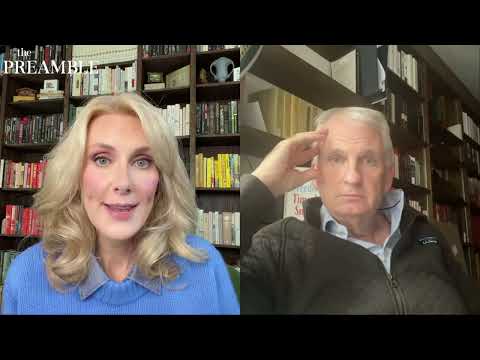
  • Modern Fascism, the Collapse of Truth, and Why Americans Need “Small Courage” with Sharon McMahon

    Dear thinkers: Timothy Snyder joined fellow historian and teacher Sharon McMahon for a sweeping conversation about the state of American democracy, the evolving nature of fascism, and the growing influence of technology and wealth on politics. Below are some thematic highlights and select quotes from Tim during the conversation. I encourage you to watch the conversation in full, as always. I think you’ll learn a lot. How Fascism Is Changing in the 21st Century. Why a Post-Truth Society Is So Dangerous “The fascism is a tool to divide, to divert, to direct people towards a false us and them…
    Read the verified transcript → Watch on YouTube ↗

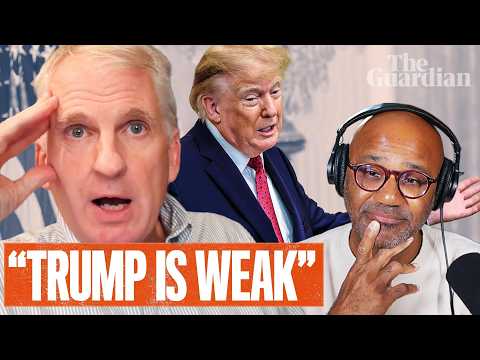
  • Timothy Snyder says Trump is weak. Are Democrats strong enough to take advantage?

    As the midterms approach, Donald Trump is continuing to make strongman moves: banning reporters from the White House; trying to remake Washington DC’s architecture in his name; putting "Dear leader"-style videos on television. But historian Timothy Snyder tells Kai Wright that what this really is, is a sign of weakness. Subscribe ►    / @statesidepodcast   And even as the Democrats seemed poised to win the midterms, Snyder argues that the Democrats need to take bold, decisive action if they do win. They have to investigate cases of obvious personal corruption among the people surrounding Tru…

    Read the verified transcript → Watch on YouTube ↗

  • "As an American, I'M SORRY." Historian Timothy Snyder on BIGGEST U.S. MISTAKES

    Recorded in Kyiv on September 11, 2026, this interview with Timothy Snyder feels more urgent than ever after Donald Trump’s shameful diesel deal with Vladimir Putin. A question I asked a month ago, whether America chose oil over freedom, has taken on a painful new meaning. The historian joins Ukrainian journalist Marichka Padalko to discuss Trump’s performance of strength, his missed opportunity to help Ukraine win, and the West’s responsibility for Ukraine’s future. Why does Putin’s distorted version of history find such a receptive audience among American leaders? Does Europe understand how…

    Read the verified transcript → Watch on YouTube ↗

  • Steve Schmidt & Timothy Snyder: Restoring Rule of Law and Cleaning Up Post-Hegseth Pentagon Decay

    Here is my conversation with Steve Schmidt!

    Read the verified transcript → Watch on YouTube ↗

  • Tim Snyder: We’re Watching the Wrong Things

    What if we’re paying attention to the wrong things? Historian Timothy Snyder thinks we may be. For all the angst over Trump restricting press access, Snyder argues reporters don’t need to follow the president everywhere, especially when his words are being used as “weapons.” The bigger problem, he says, is that the press too often confuses what Trump says with what he can actually do. And AI? Snyder thinks we’re so busy worrying about machines getting smarter that we’re missing what they may already be doing to us: making us easier to manipulate and less capable of thinking for ourselves. T…

    Read the verified transcript → Watch on YouTube ↗

  • Timothy Snyder: America Wasted Ukraine’s Chance to Win on Iran

    Timothy Snyder, historian and author of On Tyranny and On Freedom, joins Scott Galloway to discuss what he saw on a recent trip to Ukraine and why he believes America is undermining its own power. He explains how reduced U.S. support is shaping the war, why Ukraine’s fate matters for Taiwan and nuclear proliferation, and what Canada’s response to Trump reveals about standing up to intimidation. Plus, why he sees the upcoming midterms as a critical test for America. Timestamps 00:00 - In This Episode 01:23 - What's the atmosphere like on the ground in Ukraine? 04:52 - Has the EU stepped up i…

    Read the verified transcript → Watch on YouTube ↗

  • In Conversation with Timothy Snyder: On Tyranny, Trump, Putin, and Netanyahu

    Friends, Five weeks from today, America will make a choice about the future of our democracy. Today I had a chance to talk about tyranny, Trump, and the upcoming midterm elections with Professor Timothy Snyder, author of On Tyranny as well as a number of other important books. Snyder specializes in the history of Europe, the Soviet Union, and the Holocaust. He is currently Chair in Modern European History at the University of Toronto’s Munk School of Global Affairs, and was previously Professor of History at Yale University. His books include Bloodlands: Europe Between Hitler and Stalin (20…

    Read the verified transcript → Watch on YouTube ↗

  • Corruption and Regime Change with Anne Applebaum and Tim Snyder

    Dear Thinkers: We live in trying and testing times, with a lot of noise and information being hurled, which is why there is no better time than a clarifying and thoughtful conversation with historian and journalist Anne Applebaum (Anne Applebaum), built around her September 14 Atlantic article, “MAGA Is Making the World Safe for Corruption.” Tim and Anne had an extremely enlightening conversation that focused on a question Anne wrote about in her article: What does it mean to say the United States is undergoing a genuine regime change, and what does that change look like when it is exported…

    Read the verified transcript → Watch on YouTube ↗

  • Professor Timothy Snyder: What Is Next For America?

    The Trump administration is testing the boundaries of presidential power in ways that are reshaping American politics and raising profound questions about the future of this country's democratic institutions. From a war with Iran with no clear end in sight to growing concerns about the use of public office for private gain, the stakes are higher than ever. In this episode, Katie speaks with historian and authoritarianism expert Timothy Snyder to examine why this moment matters, what historical patterns Americans should recognize, and how the choices made in the months ahead could shape not onl…

    Read the verified transcript → Watch on YouTube ↗

  • Timothy Snyder: Hitler and Stalin Today: Class 2: A world of empire

    Totalitarianism did not emerge from nowhere. It was a response to the world of the late nineteenth and early twentieth centuries, and more particularly to the empires that Europeans had created during the previous four or five centuries. In order to understand the aims of Hitler and other fascists, of Lenin and Stalin, we must first understand the world in which they matured, one in which Europeans dominated others and applied law only to themselves. In some ways the fascists and the Leninists sought to break this world order, in that they wanted to transcend other empires; in some ways they t…

    Read the verified transcript → Watch on YouTube ↗

  • Timothy Snyder: Hitler and Stalin Today: Class 4: What is Communism?

    Communism was a lived reality for hundreds of millions of people in the twentieth century and remains a lived reality for many in the twenty-first century. It is based in an analysis of capitalism and a theory of history proposed by Karl Marx, which is the main subject of this lecture. Marx's ideas were revised by Vladimir Lenin so as to allow the individual (or the party elite) much greater latitude to choose the timing and the place of revolution. Lenin's very success in making a revolution in a country that Marx regarded as backward led to the Stalinist program of accelerated development an…

    Read the verified transcript → Watch on YouTube ↗

  • Timothy Snyder: Hitler and Stalin Today: Class 10: Oligarchy, Neo fascism and Liberation

    1989 was supposed to be the end of all that: fascism had been defeated, and now communism had fallen, first that year in eastern Europe, and then two years later in the Soviet Union. But history did not end; and the belief that it had accelerated some of the more dangerous trends. Communism continued in North Korea and China, where party leaders managed to combine one-party rule with capitalism. That economic system proved compatible with essentially any form of politics. Post-communist Russia became a pioneer of extreme inequality of wealth, bringing with it oligarchy and ultimately fascism a…

    Read the verified transcript → Watch on YouTube ↗

Verified interview transcripts

Notable quotes

“I think a lot of it has to do with American tech and the degree to which American tech companies are able to control conversations inside the European Union. And if I were European, I would be quite concerned with that. Some of it has to do with Russian information influence operations which take advantage of American tech inside Europe. All of it's important to recognize that in Anno Domini 2026, American foreign po”

“A post-truth society ultimately is not about the technology that surrounds us. It's about the conviction or lack of conviction within us. And so, insofar as we don't believe in truth, then we're a post-truth society. So, insofar as we take that view, exactly the one that you cite, that it doesn't matter whether it's true or not, it makes me feel good. It affirms the way that I want to see the world. If we do that, th”

“I think in October of 2026, we have a rare historical opportunity to change the rules of the game. That's where I think we are. Because talented and terrible as Trump is, Trump was only possible because of some anterior conditions. It's like a line in No Country for Old Men. Like if you got if you got here like there are reasons why you got here and we can't blame everything on Trump or even on the people around Trum”

“I think Trump is an essentially weak character, and that's where I would start. I mean, he's the kind of character who can only function in an American environment. Um, he's the kind of character who can only function in the age of social media. He hit his historical conjuncture perfectly, but he and now the way he operates is that he's essentially like the revolving door for more powerful men than he to try to seek ”

“Ukraine has a chance, but it's not going I mean, but it's not it's not I mean, this is like we were talking about, I'm not a diplomat, right? Um Ukraine certainly has a chance, but Trump doesn't. Like, he had a chance to be a winner in history, and he didn't take that chance. Instead, he chose to be someone who, as we were talking about before, sits in a black limousine with Putin and gets lectured about the past. Th”

“Well, number one, like I said before, it was a chance to define what your major foreign policy is. And the way that we went about it was to say someone has committed violence against us and therefore we will commit violence against somebody else. So terrorists from Saudi Arabia attacked us and therefore we're going to invade Iraq. That's our major response. And that response lacked logic and it lacked depth. What we ”

Other executives at University Of Toronto

The summary and quote tags on this profile are produced with AI assistance from verified, first-person interview transcripts, then checked by our team to confirm the speaker's identity and the accuracy of every quote. See how we verify →