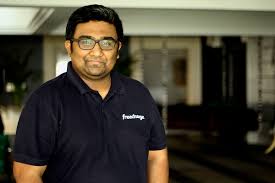
Today's guest Kunal Shah is primarily known as the founder of FreeCharge and CRED in the startup community. He's extremely respected because of his business skills, his business knowledge. But you know what? In the world of Twitter, he's one of India's most influential Twitter influencers. You know why? Because he's one of the most well-read people. He's someone who's got access to some of the world's best minds. And in today's episode of The Ranveer Show, Kunal Shah is going to unleash all that intelligence on you guys. Have fun. This is a very deep, heavy conversation, but I promise you, if you're a young entrepreneur or if you're just someone who wants to get smarter, this is the episode for you. Enjoy yourselves.
Mr. Kunal Shah, welcome to The Ranveer Show.
Thank you so much for having me, dude.
How have you gained this reputation of being one of India's smartest people in general, but also one of India's smartest people in the startup space?
I don't know, man. I don't think I'm the smartest person around. I probably vocalize my thoughts which sometimes appear smart, sometimes they just go above my head and people's head and people assume to be smart. So I guess I am just curious. I would not say I'm smart. I would happily take the title of being the most curious person. I don't know if I'm the smartest person.
How have you built out startups which have been so successful? Like what has been, you know, the work that's gone behind it? And by behind it I mean right from the time you were in college, what has the preparatory period involved?
I became financially independent when I was 16, and not out of choice. The family went through a financial crisis so I had no choice but to find my way into it. I've done anything from selling pirated CDs to selling mango cones to all sorts of things to earn income. I used to run a small cyber cafe. I used to do computer tuition. I've done all sorts of things that made money and I had no choice but to do that. Good news is that it taught me how to make money very early on in life, and I think that is what our education misses completely. We get to learn to sell something so late, and also because we have a lack of dating culture, we are terrible at selling in general. So that makes us a country of terrible salesmen because 98% of the country is doing arranged marriages, which makes us terrible at sales. And I think I learned that doing that extra matters so much in a country where people are just not trying to push for it. I appreciated the effort that you took to get the perfect setting for this podcast and I like people who do that because it's the extra 5% that makes all the difference. To me, all the value that I have seen people create is by the shittat, the detail, that they have in their work. And I do not like to work with people who do not do this to the last level. I like to hang around with people and I think businesses just happen to be happening around the same time. But if I have to look at my journey, I've done 15-20 different types of businesses. I'm known for one or two. But it's been a constant journey of iteration. And if I have to point out to one thing that has helped me create some successful businesses, it's understanding the core concept of human motivation. What do people want and will they pay money for it? And I think most businesses miss exactly these two points. They imagine problems and therefore start solving them, and they imagine the severity of problem that people will pay money for. And I think that is the core two insights through which I have been very fortunate to constantly build businesses. And I don't know anything else to do in life. So I keep building businesses.
I want to know why you think you don't know anything else in life, because your Twitter says otherwise. But would you reframe that sentence as you get your biggest kick out of business? Like you get your biggest life's high out of business.
I think that's a fair point. I think my core need is to be curious and to know things. But do I really know it? Can you only be tested by if I made a business out of it? So let's say business is the application of knowledge, because knowledge for the sake of knowledge is not as valuable because you have not tested it. And I think India has too many Gyanis otherwise. So the application of Gyan is everything I believe. Otherwise knowledge is freely available on YouTube as much as we want, but most people are so addicted to just listening to Gyan and motivational stuff and doing zero things in life. And I think that to me is the biggest problem of India. Way too much knowledge, way too much Gyan, very few people trying to apply and improve that.
Completely agree. While I do feel that's changing, because right before this podcast started I gave you the Gyan that I give most entrepreneurs in their 30s, which is that a 27-year-old and a guy even in his late 30s are way more similar in India compared to that 27-year-old and the 22-year-olds of this country because of the impact of the internet. I want to ask you a very broad question. Feel free to answer it in whatever way you wish to answer: What is India in 2060 going to look like?
Oh, that's a hard one. Either we have an extraordinarily bright future or a very dark one. The reason it could be dark is that what capitalism has done, the world has become like one big superconductor. All of us are connected to each other. A joke becomes popular instantly, everybody knows about it. Saying the joke the next day also is not cool because everybody's heard it already. So the world is super hyperconnected and everything spreads very fast. And when innovations come, they spread very fast as well, and sometimes they take away jobs. When we are not prepared for that change quickly, the skills we have will be irrelevant very quickly. India has this unique curse of terrible education system, not having the curiosity mindset to learn more things. And fundamentally the world will take away the jobs and automate them. But the job losses will happen in India because the world is connected. An American becoming more efficient is taking away a job in India and we don't even understand this connection right now. For example, call centers figure out they can automate this stuff because people are doing IVR on their own and app-based booking. Everybody has learned how to become tech-savvy. Boom, millions of jobs are gone, but they're not gone in the US, they're gone in India. The world's useless jobs are getting accumulated in poor countries. And in 2060, unless we shut our borders, it's going to be very hard. Now the positive side is that we have a very young nation, probably the youngest of all nations. And if people figure out they don't need to depend on the education system to become smart and learn skills, I think we will crack things. The country's biggest curse is that we are all job seekers. If you look at Google Trends, the top 10 keyword searches every day, two are for government exams. The government does not need so many people. And dude, please understand, the largest employer of the world is inefficiency. And when you remove inefficiency, those jobs are gone. There are millions of people guarding ATMs, but what if people stop using cash? What happens then? We are just not ready. Our education systems are not there. Our dependency on agriculture is way too high. And one more scary factor which nobody pays attention to: the number of women working in labor force is dropping every year.
Less than 10% of urban Indian women work and have financial independence. This is lower than Pakistan.
This is lower than Bangladesh. Bangladesh has 68%. We are at 8%. China is at 90%. And we just don't notice it, because we don't pay attention to it. But look at an airport. How many queues for women and how many for men?
How many compartments in metro for women versus men? When you stand in rush hour, how many women do you see and how many men do you see?