When you're running a business, the best days are the ones where priorities stay on track. For midsize and large companies, that isn't always easy. Risk can touch multiple parts of an organization at the same time, often in ways that aren't immediately obvious. It might involve property, liability, or cyber. It could stem from regulatory requirements or challenges tied to a specific industry or the scale of an operation. At that level, managing risk becomes an ongoing discipline, not a one-time decision. At The Hartford, the focus is on helping businesses manage risk before it turns into something more disruptive. That means working with companies to identify where they're exposed, decide what matters most, and put practical standards in place so risk is managed as part of day-to-day operations. And when losses do happen, The Hartford can pair that risk control work with insurance coverage grounded in underwriting, risk engineering, and claims experience developed over time. Learn more at thehartford.com/riskmitigation.
Bloomberg Audio Studios, podcasts, radio, news.
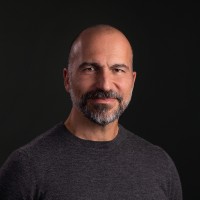
Let's take another look at shares of Uber, down about 6%. I think that's on track for its biggest drop since November. The company said gross bookings for the current quarter are expected to be between $58.25 billion and $60.25 billion. But that figure includes rides and delivery bookings as well as driver and merchant earnings. Uber said it faces some international headwinds, particularly in Brazil, and the next focus, robo taxi. CEO Dara Khosrowshahi's back with us here on Bloomberg Tech. You know, the gross bookings outlook, like, there's a number of stories within it. I'd also note, like, at the same time, rider activity seems to be increasing. You know, help us understand those two data points.
Yeah, the gross bookings results that we had, up 22% in the quarter, were actually very healthy and represented quarter-on-quarter acceleration. Mobility business was stable at 20%. The delivery business actually accelerated quarter-on-quarter as well. So the business continues to grow at pretty extraordinary rates at the scale. We're doing over 300 million trips per week. It drove really strong profitability as well. The pressure that we talked about was really in Brazil, which caused a trip slowdown for the quarter, and that was actually about competition in the food delivery space. In Brazil, actually, we have a lot of mobility ridership that are two-wheelers. We actually don't engage in the food delivery space, but there's a big war going on in food delivery and that took away some of our two-wheeler drivers from mobility to delivery because they're getting paid a lot to engage in that war. It really has no effect on us whatsoever. So, the guidance that we gave for forward gross bookings growth is very consistent with the guidance that we gave last quarter, and hopefully we will meet and hopefully beat those kinds of expectations.
Dar, is there anything to discuss on both like the health and behavior of the consumer that you're seeing going into the second half of this year?
All signs point to a healthy consumer. We look at both our mobility and delivery business in terms of the growth of those businesses. They continue to be healthy. We look at like other indications - are consumers trading down and eating at more affordable restaurants, or are eaters leaving less tips, or riders leaving less tips. We don't see any signs whatsoever of a consumer slowdown. So the consumer remains strong. And then on the labor front, actually, our driver earnings - we've got over 10 million now earners around the world that continues to be very healthy. And in the US, for example, driver earnings are up 8% on a year-on-year basis. So, you know, people talk about the K-shaped economy, but we think both sides of the K continue to be very healthy, and right now all signs point to the same going forward.
Let's take the driver out of it for a moment and talk about robo taxis. You kind of explained the plan for the rest of the year, which is to get into more cities through different partnerships and different lanes, different methods. Let's start with that. You know, are you wanting to see the team accelerate a bit on that deployment, Dara?
Yeah, definitely. So, we're in seven cities already with a number of partners. And just to review, we want to work with all of the ecosystem partners. And just like we want every safe human driver on our platform, we want every safe robot driver on our platform. And we're working with the entire ecosystem to accomplish that. We're in seven markets now. By the end of the year, we'll be in 15 markets and we're on track to be on 15 markets. And we see a lot of advancements as it relates to our partners. I know you're going to have Aisha from Zoox. They got a great approval from the NHTSA to run their really innovative and cool robot vehicles. As well, we got approval for Wayve to start testing operations in London as well. Nvidia, who is a huge partner of ours, announced the release of their AlphaMilo 2 model, which is a physical AI model as well. So the ecosystem around AV continues to move forward, is actually accelerating, and we are helping that ecosystem accelerate through our partnership, through investment, through data collection for a number of these partners, and then ultimately commercialization of these vehicles on the road in the cities in which we live.
Dara, on Zoox, and I'll ask Aisha this obviously, but you know now they can charge a fare, which is a first for a true robo taxi, no driver controls. When does that manifest on the Uber app? When will it be available on an Uber app in whichever city with a fare associated with it?