CEOInterviews.AI
Start App
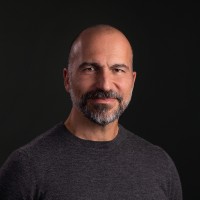
Dara Khosrowshahi
Chief Executive Officer & Director, Uber Technologies Inc

Uber CEO: Why Robot Drivers Will Be Safer Than Humans | Dara Khosrowshahi

📅 Oct 12, 2026 Founder Mode 9 MIN 2 VIEWS 46 SEGMENTS · 2 SPEAKERS
When Dara Khosrowshahi became CEO of Uber nine years ago, the company was not even active in Germany. At Bits & Pretzels in Munich, talks about why he is committing over 2 billion dollars to the German markt even though only 3% of adults in Germany use Uber. You'll learn why Uber changed its business model to fit German rules, how its robotaxi plans for Munich look and why successful people talk more and listen less. 🏦 Presented by our partner Qonto Code: FOUNDERMODE (6 months free) https://qonto.com/de/foundermode 🧾 Also supported by our partner Pathway Say you came through Founder Mode (se...

What Dara Khosrowshahi said

Written from the verified transcript and checked against it. Every figure links to the moment it was said.

Dara Khosrowshahi discussed Uber's approach to Germany, emphasizing the need to adapt to local regulations and traditions rather than seeking overnight success. He noted that Uber's penetration in Germany is only 3% compared to 20% in the UK, and highlighted a 9-year investment journey. He detailed the planned acquisition of Delivery Hero, Uber's largest deal ever, which operates in 50 countries with over $40 billion in scale, and committed to over $2 billion in German investment. On autonomous vehicles, he announced a pilot in Munich starting in October 2026 with partners like Momenta and Auterion, arguing that robot drivers will be safer than humans due to lack of distraction and fatigue, but stressed the need for careful, responsible introduction. He stated Uber aims to run the largest autonomous network by 2030, investing billions in partners and infrastructure, and prefers partnering with companies like Toyota and Mercedes rather than building its own cars or technology. He concluded by advocating for continuous learning and listening regardless of success.

Key takeaways

  1. Uber expects to start an autonomous vehicle pilot in Munich in October 2026, with partners including Momenta and Auterion.
  2. Uber aims to run the largest autonomous network in the world by 2030.
  3. Uber's acquisition of Delivery Hero is its largest deal ever, with Delivery Hero operating in 50 countries and over $40 billion in scale.
  4. Uber has committed to over $2 billion in investment in Germany, partly due to the talent base.
  5. Uber's penetration in Germany is 3% of adults 18+, compared to 20% in the UK.

Numbers and commitments

FigureWhat it refers toTypeAt
3% Uber penetration among adults 18+ in Germany metric 0:28
20% Uber penetration among adults 18+ in the UK metric 0:28
9-year Uber's investment journey in Germany timeline 0:28
50 countries Delivery Hero's operational scope metric 2:07
$40 billion Delivery Hero's scale metric 2:07
$2 billion Uber's committed investment in Germany commitment 2:07
30 Number of autonomous technology partners Uber is working with metric 4:21
2030 Target year for largest autonomous network timeline 6:05

Chapters

  1. 0:00Uber's approach to Germany
  2. 2:01Delivery Hero acquisition
  3. 4:18Autonomous vehicle pilots in Munich
  4. 4:55Safety of autonomous technology
  5. 6:05Future of autonomous network
  6. 7:04Partner ecosystem strategy
  7. 8:01Personal belief on listening

Questions asked in this interview

6
  1. 0:21How's the market in Germany different?
  2. 2:04How does that fit into Uber's vision?
  3. 3:28And you got him to come back basically, right?
  4. 4:10To talk about mobility, we have to talk about autonomous vehicles, of course. Like, what do you think?
  5. 5:55Like is every Uber going to be an AV?
  6. 7:47What is something you believe that everyone else tells you is wrong?
Interviewer 0:05 ↗
Dara, thank you so much for being here with us.
Dara Khosrowshahi 0:07 ↗
Thank you for having me. It's very exciting. This is a big event. I had no idea.
Interviewer 0:11 ↗
Yeah.
Dara Khosrowshahi 0:12 ↗
And it's even bigger on the internet.
Interviewer 0:13 ↗
Yeah. Streaming it.
Well, it's really great to meet you and thanks for coming to Munich for Bits and Pretzels.
Dara Khosrowshahi 0:20 ↗
Thank you.
Interviewer 0:21 ↗
Obviously, we are very keen to know what makes Uber in Germany different. How's the market in Germany different?
Dara Khosrowshahi 0:28 ↗
You know what? When I asked my team, why aren't we in Germany? It was, well, the regulations don't allow our business model. And I said, well, why don't we change our business model to comply with the regulations? And I think to some extent there was a strength in what we had in the entrepreneurial culture of Uber, which was we were impatient. We wanted success overnight. And overnight successes don't happen that much. And in Germany especially, you know, for me the investment was worth it. We didn't need an overnight success. We needed a success over a number of years which required us to operate differently, to respect local traditions, local regulations, etc., which we did. And you know, it's been a 9-year journey for us investing here. The penetration in Germany is still very low. Well, so for example in the UK about 20% of adults 18 plus use Uber; in Germany it's 3%. So we have a very, very long journey left in front of us. We started with mobility which really worked and Uber Eats now is really, really working in Germany. We've got lots of competition, but you know, would I say Germany is that different? Germany is not that different. You just have to respect how things are done locally here. What we're seeing is that the talent that we're finding here is pretty extraordinary. We made a huge, huge investment and commitment to Delivery Hero.
Interviewer 1:56 ↗
Yes.
Tell us about that. A billion-dollar offer.
Dara Khosrowshahi 2:01 ↗
Our largest deal ever. So we're hoping it closes.
Interviewer 2:04 ↗
Yeah. Fingers crossed. How does that fit into Uber's vision?
Dara Khosrowshahi 2:07 ↗
Well, buying Delivery Hero. Delivery Hero is a spectacular company. They operate in 50 countries. Uber's a global brand. So Delivery Hero only increases the scope of our business. The scale that they've built is extraordinary. It's over $40 billion. So it certainly adds to our overall scale. And the thing that I love about Delivery Hero is that even though obviously they operate in Berlin, it's an incredibly talented team there, they have mastered the art of kind of being hyper-local in the markets in which they operate, and building what I want to achieve with Uber and Delivery Hero together is the best of both worlds: global technology stack that can truly scale, but with the local know-how and kind of that local love that their brands have achieved. If we can bring that together between the two, it'll be pretty extraordinary. And then of course the talent base was something that was quite attractive to us. We've committed to over $2 billion investment in Germany going forward. And a lot of that is because of the talent base that we see here. It's something that we want to double up on. It's really exciting. I mean, for us, Delivery Hero is like kind of like an iconic one of the companies started here, went public. And Niklas is like one of the most incredible founders out there.
Interviewer 3:28 ↗
And you got him to come back basically, right? Or stay at the company.
Dara Khosrowshahi 3:31 ↗
He actually extended his stay, thank God. You know, I had no idea, but it happened, which is great. And I knew Niklas actually before I joined Uber. We both were on the board of Tvago. R is... R is...
Interviewer 3:44 ↗
Yeah, R is a good friend of mine. He says hello. Yeah, absolutely. I haven't seen him in a while. I really should catch up with him.
Dara Khosrowshahi 3:51 ↗
But that's how I got to know Niklas. We always kept in touch. When I joined Uber, he's like, "Welcome to the jungle, bud. You know, I'll show you around." And it's just great for us to have the opportunity to continue the journey that Niklas started with the Delivery Hero team. So, I'm really looking forward to it.
Interviewer 4:09 ↗
We're excited.
To talk about mobility, we have to talk about autonomous vehicles, of course. Like, what do you think? When will the first time be that here in Munich we can enter a vehicle...
Dara Khosrowshahi 4:18 ↗
Here this year in October, hopefully. So we are...
Interviewer 4:20 ↗
Next month.
Dara Khosrowshahi 4:21 ↗
Absolutely. I can't give you an exact date, but it's happening. And you know, for us with autonomous mobility, we are partnering with an entire ecosystem. There are 30 different companies that we're partnering with. One of our partners is Momenta here. So we expect to start a pilot here in Munich. Hopefully we'll get to more cities around Germany as well. We're also working with another company, Auterion, that has a big presence here as well, and we're going to be starting a pilot there. So it's happening now.
Interviewer 4:53 ↗
I'm always in a hurry, of course.

21 more exchanges in this transcript

Sign in free to read the rest of this interview. No card required.

Sign in to read the full transcript

Cite this transcript

APA, MLA, BibTeX
APA

Khosrowshahi, D. (2026, October 12). Uber CEO: Why Robot Drivers Will Be Safer Than Humans | Dara Khosrowshahi [Interview transcript]. Founder Mode. CEOInterviews.AI. https://ceointerviews.ai/interview/3049371/

MLA

Dara Khosrowshahi. "Uber CEO: Why Robot Drivers Will Be Safer Than Humans | Dara Khosrowshahi." Founder Mode, 12 Oct. 2026. Transcript, CEOInterviews.AI, https://ceointerviews.ai/interview/3049371/.

BibTeX
@misc{khosrowshahi2026_3049371,
  author       = {Dara Khosrowshahi},
  title        = {Uber CEO: Why Robot Drivers Will Be Safer Than Humans | Dara Khosrowshahi},
  howpublished = {Interview transcript, Founder Mode. CEOInterviews.AI},
  year         = {2026},
  month        = {oct},
  url          = {https://ceointerviews.ai/interview/3049371/},
  note         = {Speaker-attributed transcript with timestamps}
}