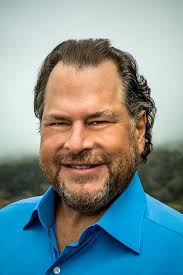
is our new president of engineering and platform. But we are especially welcome, please welcome Jensen Huang, the CEO of Nvidia is here. Jensen, great to have you, Jensen. Thank you for being here.
We all have to learn how to walk and talk at the same time.
How are you guys doing this? Jensen, we can do that. Do you want to walk here? Come on. Let's walk and talk. I'll do, I'm going to do the training myself. Jensen, you have to take a left now.
I have a hard time. This is an exciting thing to be a complete sentence.
So, Jensen, congratulations on everything that you are doing for the whole industry. The GPU, it's a huge success. It's transformed everything. You're sitting next to David Kirk on our board who I think was at NVIDIA for a while as well.
That's right. Love David Kirk.
And now give us your vision of the future. You know, where are we going? Because of course you've got these critical components. You've got the GPU and now you've got the number one open-source platform in the world that companies like ours can fine-tune. You know, how do you think this can go ahead? Look, we can go this right here. Do this.
Well, you had to stop so you could think. I could do this all day. And so first of all, as you know, we're going through a new industrial revolution. Just as a few hundred years ago, with electricity, we could power everything. With the internet, we can find anything. And now with artificial intelligence as an infrastructure layer across the planet, we can know everything and do anything. And so this layer, you want to go this way.
See, now you got it. Training has come to a complete. This is good. This is good. And so now that's the first part. Now the work that we do together, what we see is that every company, every enterprise, every country would become an AI company. Everybody would be, you're an AI company. I'm an AI company. We're going to have, it's going to be an agentic enterprise. And so what we did was we said listen, we took the GPU and we evolved it into these giant systems that are now essentially full stack AI factories. And so just follow me. You've got this now. You've got this.
Jensen, we're all following you, bro.
We got this. And so listen. So what happens is we evolved our company from a GPU company to an AI full stack AI infrastructure company. We build out these giant systems that are essentially AI factories that turn electricity, that turns the data that are stored in all the enterprises and we turn it into intelligence. And I was just amazed that the way you were doing it was, I was kind of, did you read that? I don't think so. You guys were just doing it. So anyways, so what we did was we created this full stack AI factory and then on top of it we said listen, how can we turn every single enterprise into an agentic enterprise. And so we did several things. The first thing that we did was we created the frontier AI models. Neotron is for language but we also lead five other frontiers. Neimotron, now you guys are going to make me nervous. And so we have Neotron. You can also pause and just stop. You can pace, pause, go forward, whatever you want to do.
Is that a metaphor for the AI industry? Do you think we can go anywhere?
And so the first thing is Neimotron is a language model. Cosmos is a world foundation model. It's at the frontier. It is the frontier. Alamo for navigation systems, autonomous vehicles for example. We have BioNeMo with a protein complex at the frontier of protein models. Incredible. And then of course Groot, our human robotics models. And so we're at the frontier of these models all completely open. That's the first thing that we did. The second thing we did was created an agentic harness system. It's completely open. You could put your model inside of it, create amazing harnesses around it and the runtimes that do it. And then the third thing super important is this thing called OpenShell. It is the world's first secure sandbox but also secure runtime and so that you could deploy these agents at scale across enterprises safely. And so these are the things that we did and now we can turn every single enterprise, every single company into an AI company. And of course, we believe we see a future where the world uses closed models, but every company would also be able to build their own private models, your own customized models, which is the work that we're doing with you guys. Salesforce is going to be an AI company.
Jensen, we have been seeing an incredible debate for the last day on pacing and safety and the future of these models. You've had some time to think about what everybody is saying and kind of bring it all down to us and explain, you know, how do you see that?
Well, safety is paramount in a lot of ways. It's job one. However, safety is an engineering problem. We're developing software after all. We're developing computing systems after all. It's a complicated computing system, but is ultimately a computing system. And so the first thing is to make sure that we create the test environments for testing these complex systems and those test environments have to be built in a good way, built in a safe way. And then the second thing is we have to test these products. If we're not confident about the safety of the products, like all companies, like you and I, any company, all the companies here, if you build a product or a service and you're not confident in its functionality, capability, or safety, then don't release it. And so that's a very obvious thing to do. You pace yourself until you are confident you're releasing something that the market would appreciate. The market forces are already there. We don't need any new laws. We don't need new regulations. We just need companies to decide that when it's, you know, run as fast as they can. I think innovation speed and safe products are not, it's a false choice. You could definitely have both at the same time. So run as fast as you can, but if you feel at any given point in time the company's out of control or the product's not going to be safe, you know, take a pause and make sure you get it right.