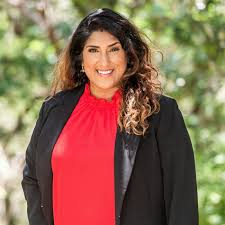
Hello, I'm Jean-Philippe Courtois and this is the Positive Leadership Podcast. The podcast that helps you grow as an individual, as a leader, and ultimately as a global citizen. Today I have the pleasure of speaking with a true trailblazer in the world of responsible AI and positive leadership. She's a technology veteran with nearly two decades at companies like Microsoft and Qualcomm, and now she's at the forefront of ensuring that AI is developed with trust, transparency, and human values at the core. Beyond her company, our guest also advises governments and global organizations on AI policy. From sitting on the US National AI Advisory Committee to working with the OECD and the United Nations, she was just named one of Time's 100 most influential people in AI. And she's widely recognized for her mission to make tech work for everyone. She's the founder and CEO of Credo AI, the company leading the charge in guidance and ethics. Navrina Singh, everyone, welcome to the Positive Leadership Podcast.
Well, thank you for having me.
So, Navrina, let's start at the beginning. I always love to start with the roots of my guest. In your case, you grew up in India in what you described as a humble yet empowering family environment, with a father who served in the military for 40 years and a mother who continually reinvented herself in her career. Can you tell us more and give us some color about your early life and family background? What was your childhood like, and how has it shaped some of your key values?
Yeah, you're taking me back a long time. I grew up in a very humble home in India. As you articulated, I grew up in a family that didn't come from sciences or technology; they came a lot from service. My dad was in the Indian military for 40 years, and my mom was a school teacher, and then she reinvented herself to be an interior designer and a fashion designer. So between the two of them, there was no ounce of science and technology. But what was really exciting was growing up in this household. There were a few things which have shaped me significantly in my career. One was about really thinking about solutions to problems that existed in growing up in India. We were constrained economically, and as a woman growing up in India, there were a lot of societal pressures. So bringing a solution mindset to problems rather than just focusing on problems and getting bogged down by that was a pretty big deal in my family. The other thing, which is really rooted in any veteran family, is the deep sense of service. It's high accountability and loyalty to people around you so that you can actually lift all the boats rather than just one boat.
Love it. Any story you'd like to share, either from a family dinner or an event in your childhood, that left a big impression on you?
Yes, absolutely. There are so many stories, but I still remember the first time my dad had to sell a lot of our stuff to get me my first desktop computer. I got my first computer in 1998. I still remember it was an IBM Pentium running Windows 95. For my household, it cost $1,000, which was a lot. But what was really interesting was my parents always wanted to give me a window into the possibilities, and this computer was a symbol of the window into the possibilities of what I could create. The fascinating thing was, after two days of working on this computer, the third day my dad comes to my room and it's dismantled. The motherboard is out, everything's taken apart. I completely opened it, and he's like, 'Oh my god, I spent so much money. What are you doing?' And I said, 'I'm looking into the future because I always like to figure out how things were built.' The reason it's a very strong memory for me is it shows the possibilities my parents wanted me to see, but it also showed the little bit of renegade in me. I always had a chip on my shoulder to figure things out and didn't want to live in constraints. I was encouraged to figure things out, to not take no for an answer, and to chart my own path.
A wonderful story. Many of our guests started by opening up those PCs. Did you actually bring it back as one piece of hardware, and did you end up developing some apps at home and showing your application to your parents with pride?
I took a different route. I did put it back together because it was too expensive. But I was known as the robotics kid in the house. I would literally dismantle everything, and I loved to create very early, primitive robotic applications at home. There was a lot of firefighting in my house because there were literally things on fire all the time.
So let's talk about another step in your life where you made a pretty big leap. You made a bold move at age 19, leaving India to pursue education in the US. What was that transition like for you, and how did it feel stepping into the tech world as a young woman far from home?
When I was growing up in India, we moved around pretty much every year because my dad was posted in different posts. I changed over 10 schools in a span of 9 years, so I had a lot of resilience and adaptability to adapt to new situations and meet new people. When I decided to move to the US, my mom actually was not made aware because my dad knew how hard it would be for her. So one fine day she wakes up and sees these luggage outside the bedroom and she's like, 'What's happening?' And my dad and I are like, 'Oh yeah, I'm moving to the US. Yes, today.' That was a pretty big shock. But I just assumed this was another step, just like I had done in my childhood. I didn't recognize the 24-hour plane ride, which by the way was my first plane ride ever in my life at the age of 19 leaving India. I didn't realize how consequential that was at that moment. Sometimes not knowing what's on the other end is actually really exciting because you just power through it. I went to the University of Wisconsin Madison for my master's in electrical and computer engineering. It was a big step, but I never thought of it as a big step. I thought of it as just another step in my journey to go solve big problems. That mindset has always helped me because I just take the next step to solving my problems.
That's a pretty amazing story when your mom doesn't know that you're leaving the country. She must have had some pretty big emotional shock that day and after. Anyway, stepping into a new country and into a very male-dominated tech industry probably hasn't been easy for you. You mentioned in your early career as an engineer that there were not many women in leadership roles, and the few that you found, you held them tightly. Despite the odds, you not only built a successful career, but you also discovered a passion that would define your mission. The pivotal moment came when you started working with AI around 2011 and noticed what could be done with AI. I'd love to understand that lightbulb moment. What happened at that moment in your career?
Even though I say that's a moment, there were so many other million moments that led to that moment. I went to school in Wisconsin Madison. Right out of school, I joined Qualcomm in the research and development team, initially building cell site modems, which are the base stations that connect to your cell phones. I joined that company because the solution excited me. The solution was that I was creating the fabric that is going to connect the world. For me, that was really powerful because, growing up in India and moving to the US away from family, I saw that as a connective tissue. So the mission of Qualcomm was something I got really excited about. I spent the first eight years at Qualcomm in the R&D team building some amazing technologies which are the foundation of today's mobile tech. Then I moved to product management and became the head of innovation for the company. There was a very interesting moment in 2012. Dr. Fei-Fei Li had just released ImageNet, one of the largest datasets of labeled images. ImageNet became the foundation of how we started to understand that GPUs could be applied to solving deep learning problems. Suddenly, even on something as small as a cell phone, you could do very powerful computer vision. In 2011, AlexNet and Dr. Li's work became pivotal to how we were thinking about the next frontier of compute and connectivity, powered with a lot of computer vision technology. The reason it was pivotal was that prior to that, AI had existed for 47 or 50 years, so it wasn't new. But a lot of ingredients were coming together: the labeled dataset, the GPUs that we could now apply to deep learning rather than just gaming. That moment was really important because my team helped build the first robotics development platform at Qualcomm, which became a way for us to test out the art of the possible in manufacturing and cell phone manufacturing. It was a big moment for us in 2011 and beyond.
And it was really the moment where you started digging pretty deeply into AI.
Yes. I am a hardware engineer by training. This 2011 moment was this big aha that I could see where the puck is going. The puck is going in this new machine learning technology, and that's not going to happen on-prem, it's going to happen in the cloud. That was another pivotal moment to move to Microsoft, because Microsoft was leading the cloud revolution. There was no better place to bring cloud technologies and machine learning technologies together and create the next.
That was certainly an important moment, and we'll come back to that in terms of leadership lessons later on. Navrina, I think you also said that with AI, you discovered that women and some other groups were essentially becoming invisible in the data being used. Can you describe that realization? What was the moment when you found out that your group was one of the many groups not really included in that view of the world?
There were a couple of early moments. There was some research we were doing initially at Qualcomm looking at early vocoder designs. What we found very quickly was that women's voices were getting chopped off because women generally speak at a higher frequency than men. As we tried to figure out why that was the case, it went back to the fact that products are a reflection of the people who worked on it. The testers were all male engineers. When you have a dataset focused on a certain demographic and you haven't tested for the remaining demographic, you end up missing it. That was an important moment. But what became very interesting was when we were building facial recognition systems in the AI and research team at Microsoft. We had a prototype in the hallway, and every time I would walk by, it would either not recognize me as an Indian woman or it would always mistake me for another Indian woman. I thought, 'Wow, this facial recognition system that we have, which is a prototype we're going to put out in the world, cannot reliably uncover who I am, and I'm one of the project leads here.' As we went back to the provenance of the problem, it was a combination of a dataset that wasn't demographically diverse and the people building those products were from a majority certain demographic. So diversity became a pretty important conversation for me in building tech.
Could you share a story or a moment when you confronted some of your colleagues, probably male colleagues, who were part of that development team to look at the reality of what was going on with the model? How did that conversation actually work?
I don't think gender plays a role in engineering as much as we think it does. But there was a recognition, and this is a little bit of the chip on my shoulder, the need to always prove that I can build stuff. In India growing up, there was an assumption that women are not smart, that they are just going to be housewives and not end up being scientists and technologists. That chip on my shoulder has existed. But when I found some of these problems with my team, the discussion was actually very mature and very science-based. It was about what we can do, where the gaps are, and how we can make this technology more robust and reliable, especially as we were starting to see the early innings of machine learning and AI and the scale and impact this technology would have. It was literally putting your engineering mindset and solution mindset back on to see what we could do to solve this problem now that we've uncovered it. That was the genesis of trusted AI way back in 2017, 2018 for me.
Before we get into the Credo AI discussion, Navrina, I'd love you to reflect a little on your leadership insights and key lessons you learned working with two great companies, Qualcomm and Microsoft. What are the takeaways that you've been bringing to your CEO role as an entrepreneur at Credo AI?
A lot of our early childhood ends up shaping who you become. A lot of these leadership lessons are things I saw in my household. One of the core leadership principles deeply ingrained in me is the notion of servant leadership. When you have assembled some of the best minds in the world, you have to create a psychologically safe environment for them to be able to lead, and you as a leader have to lead from the front. I would never ask my team to do something that I can't do. Showing up for people and leaving no person behind is a very important leadership value that I embrace at Credo. High accountability is also key. I work very hard. I have a lot of discipline. I wake up at 3:00 AM and work till 7:00 PM. As a leader, it's not about the values that you just talk about; it's the values that you demonstrate in your actions. A lot of those values about hard work, how you keep yourself accountable to the outcomes even when you've screwed up, and how you take ownership. Living your values through actions and showing that to your team is a big way we've created the culture here at Credo AI.
And you think this is something you learned by being a mentor or by doing some of that yourself at Microsoft and Qualcomm?
Absolutely. I don't think I can ask someone to do something if I'm not living and breathing those values. Throughout my career, whether it's deep accountability, execution, committing to something and following through, or having that customer obsession around a problem and making sure your customers are successful. At Credo AI, we've codified that in our credo. Everything from being result-oriented to execution-focused to making sure we are creating an environment for the best people to do their best work. We are creating something really groundbreaking here, so I as a leader have to live those values and show them in action rather than just in a blog post or a marketing moment.
So let's get into the next chapter in your life. I'd like us to focus on that moment during the pandemic in 2020 when you decided to found Credo AI and say goodbye to Microsoft. Tell us more about that moment. What came to your mind, and why did you decide to move on and become an entrepreneur?
This goes back to my upbringing in India. When I was growing up, safety was very important. As humans, we are either driven by ambition or by fear. In my life, I've been driven by both: the ambition to create something more of myself and to uncover or build new technologies, but also the fear of being stuck, of not innovating, and of not disrupting. While I was at Microsoft, I learned from some of the best, including Satya and his leadership on driving clarity and energizing people. As I saw machine learning and AI take off, it became very clear that we are at the start of a technology which is going to change humanity. From my experience over the prior decade, I had seen everything that could go wrong when we don't take accountability. In 2019, I really started to think about whose responsibility it is going to be to get AI right. As I looked inside the hood at Microsoft and the way we were building products, all the way to things happening outside, there was enthusiasm for technology but no enthusiasm for accountability when things go wrong. I really needed to lean in on myself and my ideas and go create something which can keep this technology very accountable. I didn't know what was coming next year in terms of the pandemic, so the timing was wrong, or maybe even right as I reflect back. In 2019, I left Microsoft to take a bet on an idea I had for the past seven or eight years to bring accountability to this technology.
So let's talk about Credo AI. For listeners who are not necessarily all coming from tech, can you explain what Credo AI does, what your mission is, and what problem you are trying to solve?
We have a very big mission: to ensure that AI is always in service of humanity. I am a big believer that AI is one of the most powerful tools we are ever going to have that helps us in the evolution of who we end up becoming. Everything from this future of abundance to the future of growth and how humans are able to innovate very quickly in this new world is going to be powered by AI, but only if we are able to steer and guide this technology the way we want to. The foundation of our mission is ensuring that this technology continues to work for us and not against us. In terms of our product, we are a venture-backed software company. We've built a software platform that does three things. First, it helps define what good looks like, as measuring these systems is still very undefined and use-case specific. Second, once you've aligned on what you need to solve for, it helps you measure the risk within that context and mitigate that risk. Third, many companies have a set of values, but there are also guardrails from AI standards and regulations. Our platform helps ensure that every AI you build aligns with the values you as a company or ecosystem hold through regulations and standards, helping you get to compliance. Our software is used by global 2000 organizations like PepsiCo, Mastercard, Cisco, and McKinsey, and we partner with great technology companies like Microsoft and Databricks. We are at the onset of creating this transformational trust in AI today.
Let's get even deeper into the discussion on governance. Over the past decade, AI governance has evolved from broad ethical tenets to formal risk frameworks. Visionaries like Yoshua Bengio pushed early ethical guidelines at the Montreal Declaration, and international bodies followed suit with UNESCO in 2021, the OECD's non-binding AI principles in 2019, and the US NIST AI Risk Management Framework. With so many guidelines coming into place, where do we stand globally on reaching a commonly agreed AI governance framework, or is that pure utopia?
This is a more nuanced discussion than the world and media make it out to be. At Credo AI, we strongly believe that you cannot control something you can't measure. Everything we talk about, whether it's in a risk management framework from NIST or a regulation like the EU AI Act, has to be scientifically measured and embedded in the way AI is built and deployed. If you ground that in first principles of how you want to build an AI system, a lot of the declarations and risk management frameworks have certain common ground principles. The common ground principles are that you can put guardrails, but you have to understand the context of use. The utopia part is that I don't think you can have a peanut butter approach to solving all of AI with one set of guardrails. One size does not fit all in AI. If the expectation is that there will be one beautiful regulation globally applied, that's not going to happen. What is going to happen, and the reality that results in a lot of fragmentation, is that we will have industry-specific, application-specific, very measurable guardrails emerging from standards and hopefully regulation, and also driven by companies and organizations. That is a reality we need to be okay with to even get to this future. The second reality is that building AI is an iterative process. You're never going to get it right the first time. You put technology out, get feedback from customers, and iterate. We need to give a little bit of grace even in policymaking and standards that we will need to put something out and iterate over it. Adaptive policymaking is something we need to get okay with and start to put mechanisms in place to create that, and we're not there yet.
Any particular view on the EU AI Act, which has been talked about a lot?
Yesterday it was interesting. The EU AI Act has been postponed by almost a year in terms of enforcement. My viewpoint is that we have to be very careful about what we are trying to solve for. We want to give everyone a tool to figure out what the risk within these systems is so that you can leverage the opportunity from these systems effectively. The EU AI Act's risk framework, from low risk to prohibitive risk, is an interesting one. In terms of implementation, there are so many gaps. How do you figure out what the deployers need to do, what developers need to do, the certifying body, the right standards? There's a lot of work that needs to happen. We need to be very careful about just throwing out regulation for the sake of regulation versus creating those specific guardrails for each use case.
By the way, talking about particular use cases or industry cases, would you like to share one of the industries where you see great work being done on AI governance that is paving the way for others?
Absolutely. We work across nine different sectors, from healthcare, pharma, and insurance to CPG. A simple example that is sort of horizontal is around customer service chatbots. Whether you are in healthcare or financial services, everyone has a customer service chatbot. The customer service chatbot is such a strong representation of the value and the brand that you as an organization have. You want to make sure that interface with the consumer is trusted, fair, and reliable. All the characteristics you are looking to govern fall really well in this use case. A lot of our customers are using Credo AI for managing governance of the customer service chatbots they are launching, so that not only the company values are safeguarded, but there is also transparency in how you have built this AI system that is interacting with a very important stakeholder: your consumer.
That's a very interesting case, and it's such a transversal case across any industry. Looking back at the last few years, what are the milestone achievements that you are the most proud of since starting Credo AI? Are there any moments that stand out where you felt, 'Yes, we are really making a difference'?
Every morning I wake up thinking we are making a difference. There was no AI governance category in 2019. We created the AI governance category. We educated global governments on what AI governance is and why it is paramount. The G7 using AI governance was a lot of the work we've been doing on the ground. Educating public company boards on why AI governance should not only be a priority for enterprises but also now starting to be reflected in their 10-K filings and earnings reports is a lot of our work. But the proudest moment for me is that we have been able to constantly attract very mission-aligned people who believe in the power of this technology to create an amazing future for us but are also grounded in the fact that we have to put the right governance and accountability structures across this technology. That is the biggest privilege of my life, to have the Credo AI team members. We are 60 strong and growing very rapidly to make sure that this technology, which everyone is excited about and which is going to change our lives for the better, is safeguarded, trusted, and accountable to humanity.
That's a big mission for 60 people, and more to come. In addition to running Credo AI, you are taking on roles like advising the US government on the National AI Advisory Committee, working with the UN's AI board, and guiding initiatives at Montreal. What do you hope to achieve through your work on these national and international bodies?
Companies come and go, but missions stay. The mission here is so important. Our work at the intersection of regulation, policymakers, standard-setting bodies, and AI technology companies is a recognition that trust in this technology is critical. Our hope is that we are innovating with eyes wide open and with the understanding that everyone believes this is the most transformational technology. It is going to create this future of abundance only if we make sure we have the right guardrails around it. Did you read the report from Anthropic yesterday about the first completely AI-generated cyber attack that Anthropic's Claude just executed? It is a fascinating read. For the first time, AI was able to independently, with very light touch from humans, target cloud infrastructure from Anthropic and do so over three to four days, targeting 30 different endpoints all run by AI. We are entering a very interesting world. In terms of cyber security and our national security posture, when the war is all going to be AI-based, how do you make sure that these AI agents actually represent our objectives and goals appropriately? That is the mission that Credo AI wants to keep bringing to the forefront for everyone.
It's obviously scary, but it's also a great segue into my next conversation with you. Today's leading powers are forging very different AI regimes in the world. We just touched on the EU, but if you look at the US and China, each one has a very different...
The US is emphasizing market-led innovation and deregulation in many ways. Europe emphasizes rights and legal safeguards across everything, which seems like mission impossible, but that's a different discussion. And China treats AI as a tool of state control and security and also entails their role in the world. So where do you see AI governance heading worldwide over the next decade? That's probably too long of a time frame. Will we converge, or should we just forget that and agree on some common principles to govern the world with AI, given all the risks coming with it as well?