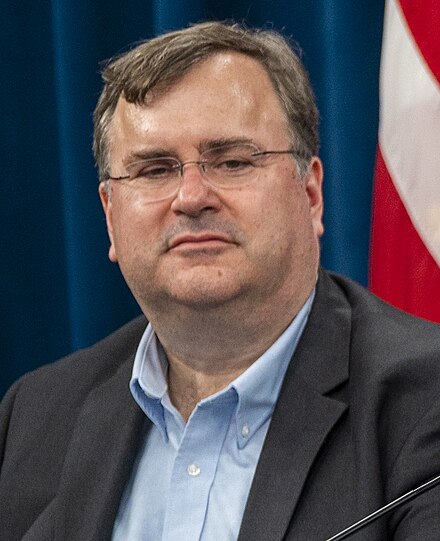
People like to have a cause celebre and kind of virtue signaling of 'I'm really good and that AI thing is bad because it's bad on energy. It's bad on climate. It's bad on local electricity costs.' And by the way, doesn't mean that there won't be something there, but it's the greatest human amplifier in education and a number of other things for quality of life that's been built in human history. You're saying go somewhere else. It's like the Bernie Sanders stupid. There's no data centers here. Build them all in Canada. Have Canada get all the economic benefit. Let's make sure we Americans don't.
That's Reid Hoffman, of course, founding host of Masters of Scale, co-founder of LinkedIn and tech investor. I've had Reid as a guest on the show many times. Rarely has he been this animated with the World Economic Forum in Davos as a backdrop. Reid and I talk about the latest in AI as well as the leadership challenges and opportunities facing the business community. We talk about music and medical care, how the prospect of a tech bubble is and isn't impacting his own investing right now, and we dip into the roadblocks posed by political headwinds from ICE activities to Denmark. It's been a busy start to 2026. So, let's get to it. I'm Bob Safian and this is Rapid Response.
I'm Bob Safian. I'm here with Reid Hoffman, co-founder of LinkedIn, partner at Greylock, founding host of Masters of Scale, co-host of Possible. Reid, great as always to chat with you.
It is always great to see you, Bob.
Well, I have to start by thanking you. You sent me a holiday gift of Christmas music, an album of all AI-generated songs. Here it is. Your own creations. What sparked that project?
We're actually going to put it up on Spotify because we got such positive responses to it. It was a couple things. So, one is when you look at AI and you look at the kind of super agency of increasing human expression, whether it's text, picture, video, music is another really central thing. And you know, me as a startup guy, I was thinking, is there startup opportunities here? Is there something could be done? And I haven't yet figured any of that out. I've talked to a number of different interesting people. But what I did realize is I could just use the tools to start showing that expression, that expansion of the scope of possibility amongst our imagination that's now with AI massively extended. And I was like, well, I could use music even though I am not a composer of music. I am not a player of music and I could use it to create something that's human expressive. And I said, oh, that's a good idea. What should I do with that? Most Christmas music, there's maybe like five Christmas songs I would want to listen to once or twice the season and that's it. And most of which is schmaltzy happy Christmas, best time of the year, and you're like, 'Oh my god, it's mall music.' Especially as it's massively overplayed. How could I use being affectionate to the holiday but creating the kind of music that we would want as part of kind of human gesture? You know, days from now, maybe even before this podcast airs, we will have it up on Spotify.
We recently had Harvey Mason Jr., the head of the Recording Academy on the show to talk about the Grammys, and he was surprisingly open to AI-generated music. Are you hoping for a Grammy in your future?
Look, I'm not sure that I would ever even potentially be within like, you know, the same planet as a Grammy. I actually sent them the record so that they'd get a little exposure to it. But I do think that one of the things that people have to get through is like look, not try to retroactively try to hold on to the past. Part of art and everything else is how do we create the future? If you have ideas and imagination, the toolset for creating stuff completely changes. So, example, lots of people can code who didn't know how to code before because of coding tools. Do engineers go, 'Oh, down with these evil tools because we should have a monopoly on our own coding.' It's like, no, right? It changes the landscape. If you can't afford a lawyer and you're looking at a lease, you can use the AI tools. All of these things are part of the human world that has opened us to it. And music and creativity is some of it. I actually think like one of the things I told a multi-Grammy winner, I said, 'Look, let me tell you two things. The first thing is going to terrify you and the second thing I hope will make you insanely optimistic and curious.' The first thing is I can create a knockoff of your music and song today in fairly simple prompting and go here and here it is. And you go, that's kind of my voice and that's my kind of song and I'm known for that. And you go, right? What makes the AI tool interesting is there is an award-winning global architect in Japan. The way this architect creates his initial thing when someone says hey I might want to hire you for a building. Please come give me some ideas. He literally will go in a ChatGPT and you know actually I think DALL-E and Midjourney and I think probably is using Nano Banana now and say create me 20 things in my style right with different kind of prompts and then it goes okay three, seven and 15 are really good let's iterate those some let's pack you up let's bring them right and that's kind of like it's my style it's actually massively helpful and the same thing is true for music so when I was talking it's like look you can now create stuff often your style and you can create hours of interesting music in minutes, right? And then you can go, well, okay, that song's not so good. Hey, actually, this bit, seconds 32 through 57 are really good. We're going to pull that out and we use that as an anchor for the next genius thing that we're doing. And that's part of the creativity that this increases. And so, you know, part of Super Agency, the book, as you know, is I'm trying to not just tell, but show. I'm going to do another minimum six records this year and maybe a lot more because it's given me all kinds of different ideas about what kinds of things could create the light and sharing and community within the human experience. And, you know, that's a great use of music.
You know, I started with the music because I wanted to hear your spirit and have some good news to start because the early part of 2026 has been quite a hit. I mean, between vaccines in Venezuela and Minneapolis and Greenland, like how are you feeling these days?
Well, it's roughly can we hold it together to get the amazing thing that's coming with AI because obviously the political world is going to hell in a hand basket. All these kind of really terrible terrible things happening but like AI's capabilities for human empowerment I mean imagine the world has changed that your smartphone is essentially a good doctor doesn't have to be perfect doesn't have to be anything else but is there always like if you're not doing a second opinion today whenever you have a major medical issue first opinion if you have an excellent doctor is still the right thing to do but if you're not doing a second opinion you're making a huge mistake that's like amazingly good can we get that amazement built and spread to billions of people.
I mean the World Economic Forum is going on in Davos right now and along with the geopolitical issues, AI has been a central topic, but it feels like the conversation has been around things like AI security and the impact on jobs and economies and sort of like is the state of the conversation there kind of what you expected?
Well, it's what I expected, but it's also one of the reasons why I do, you know, books like Super Agency, podcasts like Masters of Scale and Possible and other things in order to try to say, look, you can't avoid the bad futures by just trying to avoid the bad future. You have to steer towards the good futures. Doesn't mean you ignore bad. It doesn't mean you don't ignore cyber risk or you ignore issues of digital sovereignty or you ignore issues of geopolitical power imbalance but you try to say hey how do we get to a really good future? I constantly talk to people who are like well I'd really like just like us to pause like until we sort out this particular problem we should all pause and you think 8 billion people are going to pause. So it's like no no we're going in that direction and it's a question of like you know you're kind of going with the rapids and it's a question how you row your boat where you're going to what you're trying to do and it is shapable you just kind of have to take agency in doing it and so the Davos conversation I think 80% of it is a non-productive conversation or even a counterproductive conversation we're squandering this huge opportunity to say hey AI is American intelligence and this is just like the American world order this is something we want to build collaboratively and to be helpful to all of you know every society that we're not enemies with.
Enemies is not necessarily Denmark is what you're saying.
No, Denmark should be at the top of the friends list, right?
I mean, you know, you and I have talked about some of these issues now for so long that I sometimes forget like you have been at the center of so many key AI developments. Your co-founder and early board member at OpenAI played a role in bringing Microsoft and OpenAI together. You helped launch Inflection AI and Mosaic ML and your investments and your books and your podcast and all of it is like helping to usher this new era into being and you've sort of you've taken on that role. How conscious was that choice and like why? And do you feel the weight of it?
Well, I definitely feel the weight of it. And you know, part of the thing that I think is a mistake about how some people think about this is we are better as a society when you have a very broad conception of self-interest. It's like the way that I think of things I think humanity, society and then me and it doesn't mean me not present, right? It means me as part of industry, part of society, part of humanity. And you focus on the whole thing. And some of it is obviously to your own benefit too. And then when it's aligned, this is part of what makes, you know, the kind of the genius of capitalism. This is part of what makes certain societies so much more productive because they go, hey, let's align the areas where there is a me that also goes to a very broad us. And so when I approach kind of AI and technology, I think of it in that level. Like for example, I would trade off my own economic interests in a heartbeat against you know society and humanity. And that's the journey we are on with AI. Like it's the greatest human amplifier in education and a number of other things for quality of life that's been built in human history. It's like the same reason why we have cars and not horses and buggies and all that kind of stuff. It's like well hey I make my living you know kind of grooming horses. It's like well you know horses role in society has changed. It's no longer primary transport and you have to go through the change. Well, I would like the change to happen after my generation. It's like, well, that's never the way it works. Those folks who adopt these technologies and shape them to how you live good human lives is part of how you enable the next generation and the next generation obviously deploy commercially when it makes sense because commercial models are part of what you know get you to scale. But what matters first humanity, what matters second is societies. What matters third is functional industries which matter for economic and as part of that gets down to matters for me.
Your optimism, what you call reasoned optimism about AI. There's also at the same time this constant talk about an AI bubble and this talk comes and goes valuations and hype about some use cases. I want to ask you like is an AI bubble or some bubbly parts of AI sort of inevitable? I mean, in any tech cycle, there's overinvestment in hindsight, right? And some big bets that don't pay off. Or is bubble like a word that's too loaded and you would describe it a different way?
A good use of the term bubble is when you think the economic frenzy has got to a point that when it breaks, it will take the economic system down with it. It's horrific, you know, suffering across the, you know, frankly, the globe. So a bubble is a substantive risk of that. It is not hey valuations are higher this month than they should be and they'll be corrected in four months or 12 months. Bubble is this kind of catastrophic unwind. Whereas it might be in various ways we have speculative investment like for example you say hey if you're managing a pension fund should you be buying the stock market at the top of the stock market? The answer is probably not. Even though by the way buying the stock market over 10 20 years is exactly what you should be doing in a pension fund. And so there's like there's some timing issues. I've passed on a number of investments because of valuations because I've gotten look the risk reward on that valuation is not right. I'm still making other investments. Some people go well the AI revolution you should buy at any price. Once a lot of people start thinking buy at any price you know that you're at risk of a bubble. Whereas when people are going, 'Oh, no. This one's a good bet. That one's not a good bet.' And some of these will be wrong. And by the way, some of them like say we built data centers 2 or 3 years earlier in the full capacity of what we needed. By the way, no, nothing suggests that there's huge demand for training, there's huge demand for product development, and there's huge demand for inference, right? The expectation is that data centers are going to be that we're going to be multi-year. Can we have 5x the number of data centers? Can we have 10x the number? And by the way, you know, there's this US political thing. Oh, is this data center bad for communities? It's like look, I would allow any community to build data centers they want. But actually, it's like having industry. It's like it's useful to have local power plants. It's useful. And yes, but they say, hey, you got to be careful about, you know, individual citizens electricity prices going up. Yeah, sure. The data center thing should be that you need to add as much power as you're going to use or more on a green effective basis for doing it. Great, right? Because then you get, you know, generally more power in the grid and having compute available. This is precisely what's going on. Davos is going, 'Oh my god, it looks like the two countries that are taking the lead at having a lot of compute available are the US and China. We all need to be included, too.' And yet you've got idiots like Senator Sanders in this country who are like, 'Oh, no, no. We'd rather have horses and carts. Please, don't have data centers here.'
When you look at AI startups today versus say two years ago like is what defines a defensible attractive AI startup today has that parameter changed for you whether it's valuation or whether it's sort of what a moat is?
So moats more important. Valuation is a risk reward thing like if you for example you can take a big risk on whether or not it works or not or a big risk on valuation when you get to something that's a really good moat when you don't are uncertain about moats then you want to take less risk. The mistake people frequently make is that like they go well coding says it's going to be really valuable my first round will be raising at a $10 billion valuation you know and I want to raise $2 billion and you're like well okay there aren't that many companies that are worth more than $10 billion Right. And so you're saying that you are on a risk adjusted basis, you're going to be so high on that list that you're going to get a multiple from where you are now, even though you haven't built any product. Part of the being smart about investing is, and this gets to your moats question, is like, well, what is everyone else doing in coding? And by the way, what is Microsoft doing in coding? What is OpenAI doing in coding? What is Anthropic doing in coding? What is Google doing in coding? And you have to kind of analyze that risk return in terms of how you do it. Now sometimes, you know, part of how some growth investors, you know, epic careers are made is they say, 'Well, everyone else thinks that this investing at this thing at $10 billion is nutty, but I know this is going to be has a actually pretty good shot at a multi-hundred billion valuation without tons of additional capital.' You have a reasonably high probability of that because then you can go, if it's a 1% probability, you got a problem. If you got a 50% probability, woo, that's probably a really damn good investment. And I know something other people don't know. Part of being a good investor, it's not just do you identify a technology trend. Do you identify good founders, but also valuation is one of the things that makes good investors. Part of the reason why we have a lot of people talking about bubble is they go, 'Oh my god, there's these new valuations that we've never seen before, ever in the history of technology investments.' And the answer is yes. And by the way, some of those will be absolutely right. Right? Like you know people who have invested in OpenAI Anthropic earlier where people like oh that's totally crazy are now like have made historic returns already today you can't presume that you pick 100%. You have to have that's part of investors having a portfolio is like I go okay I try to pick 20 things and I try to make four plus of them epic and I try to make as many of them money-making as possible but by the way probably in my 20 I probably have five to 10 that are like oops right but that's because I'm being bold enough in my investments.
For a public markets investor and I've tried to explain this sometimes to my kids like sometimes you can lose money on a good company and make money on a crappy company because of when you get in and when you get out, but what you're talking about for venture investing, it has to be a good company, right? I mean, you can lose good money on a good company, but you're never going to make money on a bad company.
Actually, occasionally it does happen because occasionally you're lucky, right? Random company is bought strategically for a ton of money that you're like, 'Oh, good. You take it.' Woo.
Got out of that one, huh?