I think AI is much more dispersed than people think. AI can make it possible to give every Indian a personal doctor that's available to them 24/7, right? And provide a level of health care that's not been possible. Many, many Indian farmers, hundreds of millions of them, they can have a PhD-level agronomist available to them for free. All 230 million children and every adult learner can use AI tutors for their education. The world isn't as well equipped to adapt AI as India is. 2047 is a great day. I think that's a good time to shoot for nobody in India needs a job. I am allergic to a big title in a big company because they're uninteresting people. They're not creative people creating new things. They're following last year's paradigm. I think the problem isn't with entrepreneurs. The problem is with the investors. The biggest worry I have is people like President Xi in China using AI for the wrong purposes. I think MAGA is a really, really bad idea. I am a huge critic of Trump. He's truly idiotic.
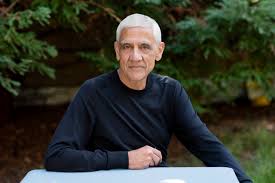
Vinod Khosla does not do incremental. He doesn't do cautious and he has very little patience for AI optimism that stops short of actually changing who gets to live well. In a conversation with Suri Agarwal and Swati Murthy at the ongoing India AI Impact Summit, he spoke about AI as public infrastructure and how it will transform or nullify the concept of wealth as we know it now. He shared his optimism about India's adaptability to AI and he spoke about his one biggest worry: political might as hindrance to human, technological, and entrepreneurial progress. Listen on. It's Friday the 20th of February. I'm Anand Chandrasekaran. This is the Morning Brief.
Mr. Khosla, thank you so much for talking to The Economic Times. It's a real pleasure. You had a meeting with the Prime Minister yesterday. What were some of the key takeaways? What can you tell us about the discussions?
Well, the main thing I'd say is what I talked about today in my presentation: the idea that AI can make it possible to give every Indian a personal doctor that's available to them 24/7, right? And provide a level of health care that's not been possible. Yeah, and it's very, very affordable, much less than what health care costs in India today, to reduce the burden of health and to make people better faster and manage chronic disease, manage mental illness, manage physical therapy. All these things can be done by an AI and done today and probably implemented to every Indian through a system like Aadhaar, right? Very, very quickly in a couple of years. So Aadhaar has been a huge success with UPI and financial services. I think it can be as successful for AI doctors, right? Available to every Indian citizen. And the other thing is all 230 million children and every adult learner can use AI tutors for their education. Those are two big ideas. Of course, there's many, many Indian farmers, hundreds of millions of them working small plots. They can have a PhD-level agronomist available to them for free. So these are not things we have to wait for in the future. I think they're available as soon as we adapt them from what is being done in the West or our country.
Sure. Mr. Khosla, you've been here for a couple of days. Did you get a chance to look at some of the work that is happening by Indian startups in some of the areas that you just spoke of?
I haven't had a chance to meet many startups yet. We have a lot of portfolio companies here and they're doing a fabulous job. Sarvam, of course, in the AI space is the dominant model for the sovereign model for India. Yeah. Emergent, which is eight months old since they launched their product, just announced they are doing 100 million in revenue ARR in only eight months. This is unheard of, maybe the fastest-growing company ever. My wife runs CK-12, which is a nonprofit AI tutor. You already have probably four or five million students in India who, on their own without any help, have found and used the AI tutor from CK-12. About 12 or 13 million users and those are mostly children. So it's really, really useful. Now, can that be scaled to 250 million children? Pretty trivially with a little bit of work.
Mr. Khosla, you've been talking about AI for a really long time and now that it has come into play and the scale, and the last few days you've been talking about the job losses. India is a money-poor or maybe even like people-rich, time-rich economy. So what does it mean for a country like India? And if you're talking about Asia, you have spoken about AGI on multiple forums. So what is the post-AGI, if as predicted by Sam Altman today in a couple of years or other person in like five years, what does the post-AGI economy look like for a country like India?
I think the next five years will look very great to economists. They measure things like productivity growth, right? They measure GDP growth. They measure, you know, things like that. That looks great. I think at some point the disruption AI causes, and my bet is from 2030 to 2040, we will see strong political forces and politics influencing whether AI gets adapted in each country. And it'll be different in each country. You'll see chaotic policies, politicians pushing certain benefits, politicians saying there can't be job losses, which slow down the AI adoption. It'll be a complex mix. The fact is, and that's why I'm talking about free AI doctors to everybody, free AI tutors to everybody, free education, free agronomy. Those are things at massive scale and should come before the job losses and the disruption. But I have no question GDP growth will accelerate because of it. Because productivity is growing, you might see job losses or disruption in jobs. People will have to move what they do pretty dramatically. I think there will be such a large production of goods and services. Things like food will be cheap. Entertainment will be cheap. Almost every service will be near free. And I know it sort of seems odd to believe, but by 2050 it's going to be very, very exciting. It'll truly be an era of abundance if the politics allows it to happen. And so you get geopolitical influence, not through brute force or Trump-like characters. You get it through doing good for everybody that people appreciate.
What do we do in the short term? Building on what Swati asked you about, you know, and you made a very strong statement yesterday where you said that perhaps by 2030 there would be nothing like IT services or BPO industry anymore.
Well, let me put that in context. If you're providing it, the thing with technology is either you change with it and leverage it or it leaves you behind. The notion that there will be IT services, I think over some period of time, whether it happens by 2030 or 2035, hard to predict, right? Those, the idea of providing software services to Western enterprises will go away. Already there's AI bots, agents who are doing that work and they'll only get better and get better very, very rapidly. More importantly, the world isn't as well equipped to adapt AI as India is, especially the developing world. You know, they have either very high costs in the West or very little knowledge like in Africa or Southeast Asia. So Indian services companies can do AI services all over the world and that's a real opportunity. But only those who move rapidly and quickly, yeah, will take advantage of it and probably be a bigger opportunity than what they're leaving behind. We are starting to see people come up with very creative solutions that are not based on spending a billion dollars to develop one market. So I just want to give you an example of DeepSeek. Yeah. Yes. Completely changed the paradigm of how much money it takes to develop a state-of-the-art model. Right. Sarvam's models today are ahead of where DeepSeek was a year ago today. So if you talk to them, right, that's pretty exciting. So I do think creativity is as important a tool, not the only tool, as money. Money is an important tool. Creativity is an even more important tool and talent and knowledge is an important tool. And India clearly has the talent and knowledge and expertise to do these things. In fact, most labs mostly have a huge percentage of Indians in their labs.
True. I want to understand from you if we zoom out a little bit and look at, you know, how the world order on AI right now. What does it mean for a country like India which has ambitions to be a developed nation by 2047?
2047 is a great date. I think that's a good time to shoot for nobody in India needs a job. They can work jobs because they want to work them. If you're a farm worker laboring in 110-degree heat, it's not really a job. It's servitude to survival. Can the bottom quartile, the bottom half of the Indian population, have 10x better standard of living than we have today by 2047 without having a job? Yes, by 2047, which would be an awesome goal for India. We can declare minimum standards of living in the country that are so high that nobody needs to worry about survival. That will be possible by 2047.
Right. What does this mean for wealth creation as a whole? Because if everything is free like what you're saying, you know, also seeing sort of wealth concentration with just a few companies holding a lot of power, so wealth and power, what is that dynamic?
I think the focus on wealth is the wrong focus. I think what is the right focus is what happens to the bottom half of the population. How well are they and do they have freedom? Wealth concentration is only a problem if it imposes lack of freedom on the other 90% of the population. And I think we can have both. Now it's very hard to predict what happens to the notion of wealth. I think very likely starting 2035 to 2050 we'll have a hugely deflationary economy. So if onions cost 10 paise a kilo, do you care about wealth? No. You care about relationships. You care about what you have time to do. Time when you can follow your passion, whether it's competing in the Olympics or, right, doing your own photography. So I do think people will have a lot more freedom. That's why I say 2030 to 2040 will be very, very chaotic, right? And very, very dependent on policy from the government and policy depends on politics. So this is complex, this is not going to be easy. Transitions are always hard, right? I like to tell people in the US in the year 1900 the majority of jobs in the country were in agriculture. Right? By 1970 it was 4% of jobs. So most people got dislocated out of their jobs and nobody could define what those jobs would be. Right? I think people are happier in the year 2000 than in 1900s.
Right. I have just one thing there. So if we are talking about the prices are deflationary, but what it has also done is it has the disparity between the wealthiest and the poorest have only increased. So do you, are we...