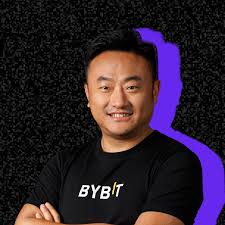
Hello everyone. A few interesting facts about my guest today. One of the most influential people in the blockchain technology world, founder and CEO of Bybit, the second largest crypto exchange in the world, which serves 81 million users worldwide. He built a global infrastructure covering 243 countries with an average daily trading volume of over $19 billion. A man who in 2025 proved that radical honesty and steel nerves are the most valuable assets in business. Ben Zhou, thanks for coming, buddy.
Thanks, Alex, for the warm introduction. Right now, if you're doing an international transfer, it takes 3 days. The financial world will be turned upside down in 5 years. Why didn't you stay in New Zealand? You can't take a shower for more than 5 minutes. I absolutely can't imagine that. Mom pays with cryptocurrency in a regular store for groceries. If you look at the top five global crypto exchanges, they are all run by Chinese people. Crypto, crypto, crypto, crypto. I believed that crypto would turn the financial world upside down. That very situation with the Bybit hack. You were saying then: 'I never want to fire people again.' You lost $15 billion. Number one. We are number one. In what? Forex is a complete scam. Forex is always suits and ties, and crypto is a scam. Worried about the threat of quantum computers. Everyone around is constantly talking about legalization, about licenses, about regulation. You still feel like the most responsible person. The feeling is disgusting. Stablecoins are currently controlled by the American government. None of us knew how to build an exchange. Crypto is an industry that moves so fast that if you don't create a product and catch the wave in time, it could cost you the future of your entire company. I like the expression 'steel nerves.' Some call my nerves something else. Yes, you proved that. We'll talk about that a bit later. Well, we've recorded together many times, and usually we talk about crypto and the crypto market, what's happening there. But today I want to delve deeper into your path as an entrepreneur, as a person, and talk more about how you think, how you make important decisions, and how exactly you built such a large and successful company.
Mhm. Let's start from the very beginning, because I was shocked when I found out that you moved to New Zealand at a very young age, although you were born in China. And, as far as I understand, you moved without your parents, just went there to study. Yes, how did that happen, tell us.
Yes. Well, in general, it was when I was 12, I moved to New Zealand. Well, fortunately, at that time it was, well, approximately somewhere around the beginning of the 2000s, there was a whole big wave of Chinese kids going to study abroad. Yes. And fortunately, it so happened that my parents ran their own agency. They were among the very first to start sending students to study abroad.
Seriously? They had their own company?
They had a company, and they were among the first in China to do this. They sent kids to the UK, the USA, Ireland, New Zealand, Australia. And my parents had the opportunity to travel to all these countries, look at schools, and essentially evaluate the education system. And in the end, after all the research, they decided that New Zealand was very safe because they were worried that if you send a very young child somewhere where there are lots of guns, it's dangerous, right? And in the end, New Zealand became the choice. And they also did this, starting from age 10, every summer vacation they sent me to some country, just to try out what it's like to live there. First I went alone or with them alone. I went to language schools. First to Australia for 2 months, then, I think, to Ireland for 2 months, to the UK for 2 months, and then to New Zealand. And I liked New Zealand the most because it was the last one. And by that time I already spoke English a little better. Yes, the experience was good.
Well, I understand that now in China many people speak English, but back in the early 2000s it wasn't that widespread, right? And you didn't speak English at all.
Oh, no, I didn't speak at all. But, in general, New Zealand turned out to be a very memorable place, and I chose it. And the idea was that they didn't want me to just live in dorms, because that way you don't really gain experience. And they said: 'You'd better live with host families.' That is, local families who take you in and you live with them, and they usually have kids, and you communicate. And this is essentially the best way to learn English. But if you think about it now, it's also a lottery. Well, I wouldn't send my twelve-year-old son. You never know what kind of family will be on the other side. They could deceive you. I don't know, drugs and all that, yes. So it's a kind of lottery. And my parents were quite brave, probably, adventurous.
They ran some kind of business model tests on you, it turns out.
Yes. Yes, that's exactly how I would put it.
And how long did you stay there?
I think I lived there for about 6 years. Yes, 6-7 years approximately. Essentially, from 12 until almost 18. Yes. Yes.
I think it's a pretty interesting experience because I had a similar story. From first to seventh grade, I studied at a boarding school. That is, essentially, I lived there five days a week, was there constantly, and on weekends I would come home literally for a couple of days to see my parents, be with the family, and so on. Yes. And I remember that time because it was really strange. Now, looking back at all of this, I was probably scared. I didn't really understand what was happening around me. Of course, sometimes it was fun because there are a whole bunch of kids around you, and you can feel free, right, because nobody is really watching you. But on the other hand, it's a really very difficult period because you are completely alone in this huge system where absolutely everyone around is trying to find their own place. And, by and large, nobody cares about you at all. The only people who really need you are your parents, but they are far away from you. How did you feel at that moment?
I think here you either survive and eventually thrive, or you just disappear. That's how it is, most likely. Because when you're still so small, especially finding yourself in a new country, not knowing the language at all, and you have to somehow cope with all the difficulties and problems on your own. I remember one of the difficulties I faced when I first arrived in New Zealand. Well, in the host family there were always many rules. Mhm. One of the rules: you can't take a shower for more than 5 minutes. And there was also a rule that in the morning you could drink a little milk, but you couldn't drink too much so that the host parents wouldn't run out of milk for their coffee. And I noticed that every morning when you open the refrigerator, there was always just a tiny bit of milk left. That is, I couldn't touch it at all, and it annoyed me terribly. And one day I left the house, but forgot something, and I had to come back. Half an hour after I left for the bus stop, I returned.
And you saw them drinking that milk?
I saw full cartons of milk. That is, essentially, the host mom would get up half an hour before me and hide the milk so I wouldn't drink it. I was furious and went to school to complain, but my English wasn't very good. And when I got there, my host mom was already there. She was one step ahead of me and was already complaining about me. I went to the principal, and they tell me: 'Well, it seems someone here is unhappy.' And I couldn't explain myself. So in the end, I had to change host families. And there were many such little things that I had to deal with on my own at such a young age. And even if help could be obtained, it was very far away. My parents were far away. And I think this helped shape the character that you have to solve problems yourself. Mhm. And I think that's a skill that's great to have, 100%.
I, by the way, have very similar feelings about this. I also had my own experience of living with a host family after school. I was in Dublin, in Ireland, for a couple of months, studying at a university. And I lived with a host family. And I didn't have a story like that. Of course, they allowed me to drink milk. But the thing is, I constantly complained about the food because the family I was living with at the time ate some kind of strange food. Like every time it was some kind of pies with carrots and, I don't know, stewed beef or something like that. It was completely unbearable for me, you understand? I came from Moscow and I want shawarma. Ireland is not a place famous for its food, it's clearly not a place where the food is good. And we were young, we were about 17, no more. We always wanted to go to a pub, drink beer, and all that. And I thought then: 'Okay, how can I make them understand that I'm perfectly fine and that they really don't need to watch over me.' Yes, but I remember well that feeling when you're really uncomfortable and you can't always handle it, can't always control it, and you need to somehow, I don't know, just try to figure out how to live on in this difficult situation. It's so annoying. It's so uncomfortable, but I completely agree with you. It really teaches you real life because we constantly face similar situations in life and in business. Yes, it's actually really useful experience, but then you studied at school there, and then at some point you moved to the States, right? Went to college.
Yes, I went to the States to study at university.
Why America? Why didn't you stay in New Zealand?
Well, there were several reasons. I lived there for so long, and of course, I love that country, but it's so far at the edge of the world, right? And one of the things you notice immediately is that people around you usually discuss rugby and some local matters. It has nothing to do with what's happening in the world, you understand? The country is completely disconnected from the rest of the world. And I asked myself: 'Do I want to grow up and see myself as a farmer in New Zealand? Do I see myself...' And the problem is that I already saw my future. If I continue studying in New Zealand, I can certainly get a good job and all that, but I felt that I could already clearly see myself in 30-40 years. It's a life with no unpredictability, and I wanted to go where I could be truly at the center of events. And then, yes, and now, I think, in finance, in innovation, Silicon Valley, the States, they set the tone for everything, right? So I decided that I really wanted to go study in the States. And another plus. In the States, they offer good scholarships. I applied to 10-12 different universities and in the end chose the one that offered me a good scholarship. Well, why not, right? You get a scholarship, you go and study. Yes. Yes.
Did you already see yourself in entrepreneurship back then, or did you still not fully understand what you would really be doing in the end?
No, no, I never, well, even in university, when I was just starting, I didn't know what I wanted.
Tell me, what did you study at university?
I chose economics, but it wasn't, it wasn't a lifelong dream. Like, I definitely know I want to study economics. And again, if you got into crypto, it was impossible to plan because when you were entering university, crypto didn't even exist yet. Crypto, crypto college. Crypto appeared much later, much later. So I just went with my gut, doing exactly what I liked.
Mhm. Imagine, you walk into a room with the co-founder of Apple and the VP of HR at Tesla. There are founders of international startups and investors whose decisions change the industry. And you, as a participant in a discussion that will impact your business. Sounds like a club for the chosen few? Actually, it's a matter of format and access. That's how Silicon Valley Camp 1440 is set up. It's a five-day business camp in Silicon Valley for serial entrepreneurs, investors, and business owners with capital over $5 million. You get live communication with those who launched and scaled global products, invested in technology, and were at the forefront of decisions used by millions. Among the guests are Steve Wozniak, Gary Vaynerchuk, David and Daniel Liberman. Important: this is not a conference, not a classic entrepreneur camp. It's an environment where people of the same scale spend several days together. The event concept allows you to choose how to fill each hour yourself. Several tracks run in parallel, and each is a space for experimentation and networking. Artificial intelligence, biotechnology and longevity, space and robotics. Inside are workshops, panel discussions, and intensive networking with top corporate executives, startup founders, and venture investors. If you're traveling with family, there's a separate track for teenagers from 12 years old called the Founder's Teen Club. A special feature is the location. A closed territory among redwoods, hiking trails, and full infrastructure for work and recovery. The organizers are Ruslan and Alina Gafarov, founders of the San Francisco Innovation Hub. They have over 50 bootcamps for 1,500 entrepreneurs behind them. The number of participants is limited so that everyone is on equal footing, can breathe, and discuss deep questions rather than limiting themselves to superficial contacts. Participation in the camp is only through an interview with the organizers. You can sign up for a personal interview via the link in the description. All details and a direct Telegram to the founder are there in case you have clarifying questions. Let's go.
I tried many different subjects, tried to feel them all out, you understand? At first I thought about going into psychology because everyone was going into psychology for some reason. And there were also a lot of cute girls. I was like: 'Okay, let's try.' Went to a couple of classes and realized...
You had motivation in psychology.
I didn't choose psychology even for the girls, but then in economics I had a very interesting professor, and I really liked him. And in the end, I chose economics as my major.
So, you studied at college, but then you didn't have enough work experience in the States, right? Am I understanding correctly? Yes, because you essentially just finished university. Did you have any real work experience there at that time or not?
Well, I read one of your interviews, and it mentioned that you had some kind of job there, but then you still decided to go back to China.
Yes. Yes, the story is like this. When I finished my studies, I also didn't know what I wanted to do. Ah, and I thought: 'Okay.' At least when I don't know my long-term goal, I always ask myself the same question: what do I definitely not want to do? Mhm. Because 4 years in university, my university was in Indiana, in a tiny town called Richmond. And I thought, I spent 4 years in the States, and never lived in a big city. I definitely knew I didn't want to stay in a small town. I wanted to see a big city. So I specifically moved to New York. Not because I knew what would come next, I had no idea. Just moved and started looking for work. Again, I started sending out my resumes to 20-30 different companies.
This was 2010. So Bitcoin already existed. Yes, but how could I have known that? Right. I studied at a Quaker college. Everything there was about non-profit initiatives and all that. Seriously? Yes, yes, yes. And then I moved to New York, started applying. In the end, I got into a large company called WESCO. And I worked there in procurement. I was a procurement agent. That's when you buy things for large companies, right, you work in a system like IBM, and my specialization was avionics. I bought parts for airlines, various aircraft components, and found suitable suppliers among manufacturers like Eaton and others. That's exactly what I did for about half a year. In New York. In New York, yes. Well, so when I first started working there, I was sitting in my little cubicle, and next to me was an Indian girl. And right across from me sat a local guy who by that time had already worked there for a whole 15 years. And he, my position was something like procurement agent, and he was a procurement manager. That's two levels higher. And I look at him and think: 'It will take me 15 years to move to the cubicle across.' Then I turn to the girl next to me and ask: 'Have you been here long?' She says: 'Well, 5 years.' I'm like: '5 years I'm a junior buyer.' She's a senior buyer. I think: 'Okay, this is me in 5 years, in 15 over there.' And what about the guy in the private office? His name was Greg. He came to work on a cool BMW motorcycle and looked like the coolest guy in the world. Really unflappable, but I felt this guy was bold, riding a motorcycle. He had worked there for about 30 years, you understand? I thought: 'Okay, so it will take me 30 years to get my own office.' So you clearly understood what your career path was there? Exactly. I worked there for 3 months and already see my future. And that's my problem. If I see myself in 15 years and I don't like it, it's decided. Went to Greg's office, knocked on the door. I say: 'Listen, I've been here 3 months. I know I'm still young, but I want you to notice me. If you can give me more work, more tasks, I want to take on more responsibility. And by the way, I speak fluent Chinese and so on.' He's like: 'Yes, okay, I'll remember you.' And that was it. We didn't communicate again until half a year later when he came to me with another guy, and they dragged me into the office and said: 'Listen, we have a project in China, and we need someone who understands our system to go there and take on this project. Do you want to go?' Ah, seriously? So they offered you to go to China from them? Yes. And they sent me back to China. Yes. Yes. I ask: 'Will you raise my salary?' He says: 'Yes, I'll double it. It was from $1,500 to $3,000.' I'm like: 'Great, $3,000, cool.' For a graduate after half a year of work, it's really great. And they sent me. It was assumed that a completely different operation was starting there in China, right? That is, they didn't have a big company there yet at that time. No, they had a big company. Just a company so huge, it's in the Fortune 500. Mhm. The parent company is just a giant. And we were a small company inside that was acquired about 10 years ago. Something like that. The parent company had a big office in China. But they needed specifically this procurement part to help. And none of the buyers could go. So they sent me. I had to come and help set up the entire operation from scratch. That's how my Chinese story began. When I arrived, the project dragged on forever. I spent another 3 months there, and it still hadn't started. Signing contracts, negotiations. All this time they were just paying me for sitting there. So you didn't see any progress at all? Yes. You just, well, just day after day did some routine operational work and at the same time saw absolutely no results. Yes, played games all day long. Played right in the office. Yes. And, by the way, that's where I met my wife. And she hated me. She also played games. No, she hated me. She worked at a regular company. Yes, because she had to work, and the office manager Nancy was this tough Chinese woman who drove everyone. She made people work overtime constantly, and then she looks at me, I'm sitting, playing games, and she couldn't do anything to me because formally I didn't report to her. Uh-huh. In general, everyone in the office hated me because I just sat and played all day. Yes. That's how it was. But I was so bored that I started looking for other opportunities. Uh-huh. In the end, I found a startup that wanted to enter the Chinese market. And initially they were looking for, was it an international company? No, it was a startup. Now it's an international company that's in the top three in the world. Then it was still a startup, and the CEO was looking for a translator to work in China. The CEO was looking for a translator to enter the Chinese market. No, he was from Cyprus. Cyprus. Ah, from Cyprus. Yes, yes, yes. Now you're in finance. Cryptocurrency is also a financial sphere.
And New York is like the biggest city. For such opportunities, practically all the largest financial companies and corporations are based there. And it's really interesting that you didn't go back in the end. So it turns out you had about 6 years spent in New Zealand, then another 4-5 years in the States, and after all that, you ended up going back home. What exactly did you see there for yourself? And what key differences did you notice between the States, their opportunities and conditions, and the local market where you were before? Well, you were completely immersed in that culture, spoke Chinese, and all that. And I think it's much easier to understand the people around you when you are directly in China. Tell me, did you notice any significant difference in the opportunities that opened up to you?
I think that China, at least from 2010 to 2020, those 10 years were really a truly explosive decade. Yes, exactly. If you look at the economy, literally everyone around was only talking about: 'How can I become an entrepreneur? How can I start my own business?' Right. And that was exactly the environment, the atmosphere in which Tencent, Alibaba, all these major Chinese internet companies grew up. So there was an excellent environment for many strong developers who came out of Tencent, Alibaba. That's why if you look at the top five global crypto exchanges today, they are all run by Chinese people. Yes, of course. The reason is that they fully took advantage of the fruits of the Chinese economic boom, where there was a huge pool of developers ready to work hard. Of course, there are good developers in other countries: in India, in Vietnam, even in Russia. But in Chinese internet companies, there was this thing called 996. You start working at 9:00 AM, finish at 9:00 PM, 6 days a week. And this was the norm, which was essentially set by Alibaba and Tencent, 12 hours a day, 6 days a week. So this was absolutely normal. It's just impossible to imagine such work somewhere in Europe or in the States. It's just completely unthinkable. Absolutely unthinkable. Yes. And this means that if you take absolutely any existing model from the West or anywhere else, China will just outwork everyone else. Mhm. So I think that's how many crypto exchanges captured the market. But back to that time when I was in China, I wasn't into crypto yet. I started doing forex and noticed that everyone around was discussing how not to do this, how to do that. And I realized that was the vibe. And if you ask me what the difference was that I felt? Being Chinese, I felt that I could really use all these resources in China and at the same time speak English fluently and understand what was happening on an international level. I think that was my main advantage. I also did forex for a while. It was something that came from abroad and over time became quite popular here in China. Yes. So American companies weren't in such a hurry, right? But Chinese companies, Chinese people, they were actively looking for opportunities, right, and tried to launch their business as quickly as possible. Everything happened much faster and everything was growing. Everything happened faster. Work was a huge phenomenon there. And you would come to work, people there were brainstorming, discussing ideas, implementing. Just different people who don't work in your company, just don't know, if you came to Shanghai, people just had ideas bubbling about what they wanted to do, what they wanted to live for. You were in Shanghai? I was in Shanghai, yes. Fortunately, the forex business took off. We had our own office in Shanghai, and I was completely immersed in this business environment. Mhm. I think it was this environment that planted the idea in me that someday I want to become an entrepreneur, because before that I didn't have such an idea. I was fine working at a company. I worked in New York. They sent me here, and I was happy. But the problem is that I'm uncomfortable when I already see what will be in 5-10 years. That's the challenge.
And tell me, when you moved from the States to China, did you already have that inner mindset, well, were you ready to work from 9 to 9, 6 days a week, or was it still uncomfortable for you because you grew up in a completely different mentality among completely different people? I'm 100% sure that New Zealanders are simply not ready to work that hard, right, so diligently and so intensely. But in the States, the market was already quite mature. And at that time it was really an excellent place because there was too much money, too many startups, everyone around was paying really well. And what did you feel when you moved to this fast-growing market?
I was very lucky because in that very forex company, I turned out to be one of the very first employees, somewhere around number seven or maybe number eight. So you joined them right at the very beginning? Yes. At the very beginning, I was only 22 years old, and the CEO really showed me enormous trust. He told me then: 'Ben, I like you. You're still young and, it seems, a very capable guy.' And just like that. From a simple translator, I gradually moved to full-time and over time, step by step, grew to the position of director for the entire Greater China region. Mhm. I started hiring people. At some point we had 200 people. Although I worked for the company, I had a very similar experience to entrepreneurship. I was the only one making all decisions for China because in Cyprus they didn't know what was happening in China. They had to listen to me and trust me. And with that trust, I didn't really think about money. I just wanted to prove what I was capable of. That's what I was doing. And it was this experience that ultimately helped me become an entrepreneur.
There's a principle that strong entrepreneurs understood long ago. Big business is not built with local thinking. Back in the sixties, investor Harry Browne described a distributed approach where a company is originally designed for multiple markets, not adapted to them post-factum. Today, this is a growth strategy. Hire the best regardless of location, test demand in different countries, scale faster than competitors. And this approach works not only in business. Education, career, investments can be built the same way. An important working tool for expanding international opportunities for business and life in general. The second is neutral citizenship for an entrepreneur. It allows you to move more freely around the world, open accounts, branches abroad, and resolve issues with partners. You can get it legally and quickly through government citizenship-by-investment programs. They are also metaphorically called golden passports. One of the most accessible programs for Russians today is the citizenship of Saint Kitts and Nevis. This is a small island state in the Gulf of Guinea that offers a clear and official procedure. An investment in the state fund from $90,000 and completely remote processing. Citizenship can be obtained in a few months. Such a passport is used as a practical tool for simplifying visa issues, travel, opening accounts, and if necessary, as a step towards obtaining European residency. For example, through the Greek Golden Visa program, which is not directly available to Russians. To build an immigration strategy tailored to the needs of business and family, experts from Astons help. This is an international company with offices in Dubai, Istanbul, Athens, Moscow, and other cities. They accompany the process from situation analysis to obtaining citizenship or residency by investment, and also help with purchasing real estate abroad. If you want to get expanded access to international opportunities for life and business, right now follow the link in the description, and experts and lawyers from Astons will consult you for free. Let's go.
And were you really making some big money at that time or what?
I think, for my age, I was making very serious money. When I moved to full-time, after 2-3 years I started making about $10,000 a month. For a 22-24 year old guy in China, that's incredible. That's really good money. Yes. And at that time, the job market in China was really very competitive. People were just trying to find any job. Yes, I was very happy with the salary, the income. I felt it was a rare opportunity. But most importantly for me was that I had complete freedom to make decisions on my own and hire the people I wanted. And I started hiring people in support, in operations, in business development, putting it all together, and even a legal department, a compliance department. I had to communicate with local authorities, bring clients, develop products, come up with marketing campaigns. Essentially, like running an exchange. I did this for about 7 years in this forex company. Everything I know today started right there. So for me, real money is not the money I earned back then, but that experience. Without this experience, I wouldn't be here today. That's how I see it. Yes. And, by the way, I think the forex market and the cryptocurrency market are actually quite similar to each other. Well, at that time, at least, now forex hasn't really changed much. Yes, that's really true. But I still think there are quite a lot of very similar business practices there. And I remember very well that time when forex was incredibly popular. A lot of people traded forex. And then I remember very well that moment when everyone started saying that forex is a complete scam. Any platform can cheat you if it wants, because they just draw these charts and all that. Do you remember that time?
Yes, of course. Our main competitor at the time was Alpari from Russia and also Exness. Also a Russian company. Yes, exactly. Yes, we competed with XM, as they were called then. Fiercely competing with each other. Even today in the forex industry, people still discuss this because it's a broker model. If it's a broker model, then you can trade against the client. But many people get confused by this. Even banks trade against clients. If you're trading anything other than an exchange model, where everything is like on an exchange... Mhm. If it's a broker, then its license usually allows it to take on client exposure. That is, if you bet on a rise, someone has to bet against you. And usually the broker itself provides liquidity for better execution and so on. But what regulators really prohibit is when you deliberately put your clients at a disadvantage, give them extra slippage, intentionally slow down their order execution, or worsen conditions. Essentially, finding ways to cheat them and profit from it. That's already illegal, and that's what people are talking about. But usually they confuse it and think that being a market maker is already a conflict of interest. But in the end, if you're trading, especially through a broker, who do you think you're trading against? That's how it is. Yes. Especially since now you're trading against professional market makers and against artificial intelligence technologies. And I think all people should understand this very well, because I think that era when people just traded directly against each other is gone forever. No, no, no. Clients should care about one thing: am I getting the entry point I wanted? Yes. If I want to enter, let's say, at a gold price of $10,000, and I enter at the price I requested, and exit at the price I want. What difference does it make to you who you're trading against if the price is what you need? Right. Yes. Yes, of course, of course, of course. But this is an interesting point because you were quite young, 24-25 years old, and you were in a good position. You could build a company, manage a company in China, right, make decisions, and you were making money. And it seemed to me that you had really a lot of different opportunities there. Did you manage to get any options or, I don't know, maybe some equity in this company in the end?
No, it was mostly just shares. That is, sorry, commissions, that is, they set you a KPI plan and paid commissions from broker deals. Yes, I think over those 7 years I earned somewhere around 1-2 million dollars.
So you worked there for a whole 7 years. Well, that's really an enormous experience, I must say. Yes, yes, yes. Uh-huh. Okay. And what finally made you leave the company? Did you see an opportunity in crypto or what happened?
Yes, exactly that. So the story is like this. My wife gave birth to my first son. And when I first saw him, I thought, but this is just an enormous responsibility. I'll call him Bitcoin. No, no, no, no, no. Like I saw a Bitcoin symbol on his forehead. No, I wish it were that simple. No, but when I saw my first son, I felt that the responsibility was colossal, and again asked myself: 'How much longer can I keep doing this forex?' And by that time, the forex industry was already approaching its ceiling. If you look at the period from when I left forex, that's 2018, to today, the forex industry has essentially not changed. Everything is about the same, right? So the industry reached its peak and then... Yes. Yes. But if you look at the period from 2010 to 2018, over those 8 years, competition in forex became enormous. Many new platforms appeared: XM, IB, Forex.com, Alpari, Exness. They all grew rapidly, right? But then stagnation set in everywhere, the market became oversaturated, and I thought, again, I saw myself in this industry for another 10 years. Yes, I would be comfortable, but I didn't see explosive growth and didn't feel that I could learn something new. And when my son was born, I started looking for something else and stumbled upon crypto. And it immediately hooked me. Not because I thought I'd make a lot of money. I just felt that this technology was something incredible. I believed it would change the world, change the entire financial system, because I understood how forex works, how the banking industry is structured, and I believed that crypto would turn the financial world upside down. Mhm. So I just went to my boss and said: 'I want to quit.' Didn't ask for anything, just left. And did you get any bonuses when you left? They probably gave me something, I don't remember anymore, but again, I had no plan. I had no plan in crypto. You didn't make any MVP or anything like that when you left there? You just took and... No, again, I didn't know what I would do. I just knew I was interested in crypto. And for about half a year, I was something of a YouTuber. I had my own YouTube channel. Uh-huh. Were you talking about crypto then? Yes, yes, yes. Yes, I talked a little about crypto, but this was 2017. Analyzing projects, studying them, but I was incredibly fascinated by the technology itself.
Yes, two points. First, I really like that you always ask yourself this important question about your own future. Well, for example, in the States, when you look at your colleagues around and try to predict what will happen to you in 15 or 30 years. And here, essentially, the same situation. You just saw this ceiling and asked yourself the question: 'What's next?' Yes, what opportunities, what lessons can I still extract and get here for myself? It's really interesting, right? Mhm. But the second point, I remember when I first encountered crypto, it was December 2016. I had heard about Bitcoin before, but it was in December 2016 that I first bought some Bitcoin. Yes, early, early. At a price of $650. I still remember this perfectly. When you sold. This is a story about how I was in Los Angeles and I had a friend there who was really crazy about crypto because he had a buddy who had already made millions on crypto by that time. This was 2016, just imagine. So early, so early. And I remember he told me: 'I know a guy who made $50 million on crypto.' I was like: 'Are you crazy? Are you on drugs or something? I don't know what you're doing, but that doesn't happen.' But he kept telling me about Bitcoin every day, every day. I was in Los Angeles for a month. And every day we met, and he told me: 'You need to buy Bitcoin, you need to buy Bitcoin.' He told me about the limited supply and all that, mining. And I tried to understand all of this, but for me it all looked 100% like a scam, right, 100%. And I bought a little Bitcoin, but I traded it. I remember there was an exchange called BTC-e, remember that one? No. They were eventually shut down, right? Well, I bought at $650 or somewhere around there. And of course, sold a couple of months later when the price reached $1,200. So I essentially doubled my money, right? And I remember my feeling very well. This is 100% a scam, but I doubled my money. Better to take the money off the market and run from there. Yes, that was exactly the feeling at that time. And I sold then, and the next time I caught myself being interested in crypto again. And it happened about a couple of years later. Maybe it was 2018 or somewhere around there, just when the next bull market started. And for me, honestly, it was some super strange industry. I couldn't understand at all how it could possibly grow and develop, because at that time only some very small, rather strange guys on internet forums were seriously interested in it.
How did you manage to catch this opportunity so early? Why did you realize and understand so early that crypto is really the future of financial markets? What exactly was telling you from within that this is a really promising topic?
I, in general, always knew about Bitcoin because I worked in the forex industry, and people really discussed all of this in the industry. Yes, of course. Somewhere around 2012, I think, I first heard about it, not counting that everyone said it was a scam, and I just ignored it. By 2017, I noticed something completely different because, remember, 2017 was the ICO era, when Ethereum ICO appeared, and this whole crazy boom of initial offerings began. And then one of my friends, also from the forex industry, a person I really respect, started telling me: 'You really need to get into this.' Mhm. And when I started digging, I realized that many of my smart friends had already entered crypto. I thought, okay, maybe it's not because you look at the people around you and think: 'These guys are far from fools.' So, probably, it's not a scam. It's definitely worth paying attention to. Or we'll all get scammed together. Yes, exactly that. Yes, friends, dozens of economic events happen every day, but only a few really affect our lives. Sometimes directly, and sometimes through a chain of consequences. In our Telegram channel Falcon Finance, we explain every day which global trends really matter for each of us. The link will be in the description under this video. QR code on the screen, definitely check it out. But when I got into this, my main idea was not to make huge money at all. I started studying projects. So, the ICO era attracted many talented people, like me, because it opened everything up. It was decentralization of everything. Decentralized mail, decentralized phone, decentralized Apple, decentralized coffee mug. If you could write a white paper, you could do an ICO. Although 90% of them were scams, but I read every white paper and started a YouTube channel. Remember, I was talking about it, and it fascinated me because it was like reading fairy tales from some imagination. Because when you write a white paper, you need to put some logic into it so that people believe. At least on paper, it should look reasonable. How water becomes decentralized, how telecom or a laundromat becomes decentralized, and you start thinking: 'But the world really could be completely...'
Decentralized. There was IoT, artificial intelligence, all of this for me was a complete immersion in these ideas day after day. That's why I thought it would change the world forever.
Not because of the money, but because I saw all these technologies with my own eyes. Although much of this was dreams, you could say fantasies, but it really drew me in. I thought: 'Okay, this is probably the future,' and that was enough for me to quit my job and go all-in on crypto.
Even though I had no idea what I would be doing. I just kept reading whitepapers and diving deeper. That was the goal.
So, do I understand correctly? Basically, whitepapers, just people's ideas, their thoughts and fantasies - that's what truly inspired you?
It truly inspired me. It was inspiring that some of these ideas could become reality. Yes, materialize. Although many of them were wild, you could really see the potential in some of them, right?
Uh-huh. I remember that time because I had sold my bitcoins back then, but I kept following and reading what people were trying to do. And it was a pretty funny period for crypto because teams could just throw some notes in a Google doc, publish it all, and easily raise like $100 million literally for just an idea. It was just complete madness. 99% of them ended up doing nothing at all.
But 99% of them are dead today. Yes, yes, yes.
But for the crypto community as a whole, I think the 2017-2018 period is probably the most important era in all of crypto history, because that's when many people truly understood and realized that you could really make money here. In 2017, smart contracts appeared, and that really changed everything.
Right. Before that, there was only Bitcoin, and then Ethereum really changed the game. A lot of things started appearing, so yes, yes, yes, it was cool.
Alright, I get you, it's all clear. And then you started trading yourself, right? On those very exchanges that already existed by that point. And at some point you discovered a serious problem: they didn't have enough liquidity, or orders simply weren't executing properly, or... Yes. So how did that happen, how did you decide to launch an exchange?
Well, of course, I was captivated by all these ideas, and once I was convinced, I started investing. And in the end, I lost almost all my money.
So you started investing your money in altcoins, buying all kinds of shitcoins left and right, and lost a ton of money, so you don't buy them anymore.
No, no, listen, that's one reason. And that's exactly why I launched the exchange, because I'm convinced this technology will change the world. And at the same time, I'm convinced it's full of fraud, because I've been on both extremes. But all those altcoin investments brought me back to earth. But I thought: 'Okay, the opportunities in this technology are still there.' And I asked myself: 'What can I do that will really impact the situation, rather than just buying shitcoins and reading whitepapers?' And I was like: 'Well, I'm good at trading and I know how to run an exchange.' So I started trading, and then the logic came.
Back then, there was only BitMEX, the biggest, with about 80% market share. Binance didn't exist yet. And they mainly traded Bitcoin, as far as I remember, perpetual contracts and Ethereum contracts based on it. I did a few trades, and the entire trading experience was just terrible at that moment.
Because I came from the Forex world, where everything is very mature, the whole industry, and here, well, you know, BitMEX was like blue and white, looked like Windows 95. It's like if you're used to a Mac and suddenly you're forced to work on Windows 95, and you're like: 'Stop, this world, this technology should be moving forward, but it's dragging me back.' And I thought: 'Okay, this is something I can do, at least push the exchange standards forward a bit.' That's how the idea to launch my own exchange came about.
Yes, but as far as I remember, you didn't launch a full-fledged exchange right away. You did just one single function. You launched inverse contracts, right, and that's how you started your journey. But let's talk about how you did it all yourself or if you found a team, because I remember there were four founders, right, co-founders. How did you even find these guys? The industry was still very young, and few people truly believed in crypto back then. How did you manage to convince and inspire them to start building something with you? Or were they all originally from the Forex world?
No, no, no. None of them were from Forex. Forex people hated crypto back then because it was essentially a pretty big competitor. Right? They didn't see any competition at all. They said: 'Small industry, damn scam.' It's interesting because if these guys truly believed in crypto, they could have easily launched their own crypto exchange with their own capabilities. Yes, I think I'm probably the only one here who came from the Forex sphere.
Yes, that's interesting because now for traders, for users, it looks like they're competitors. Right?
No, it wasn't like that back then. Back then, nobody looked at Forex and Crypto. I mean, at crypto. Forex was always suits and ties. You're at a conference discussing fundamental analysis, what the Fed is doing, what's up with non-farm payrolls, all those things. You have analysts on CNBC, and crypto is a scam. Well, that's what was believed. So they were different worlds.
How did you find your partners?
Actually, two of them saw my YouTube. Really? Yes, yes, they reached out to me themselves. They had an investment firm, but they were too busy and were looking for projects. They said: 'Hey, can you help us figure out projects?' I was like: 'Yes, of course, I'll help you, we'll work together.' That's how I met two of them, and we immediately hit it off, met, discussed ideas and different things. And at some point they said: 'We shouldn't just do investments,' because they had an investment firm, and I was just helping.
So they were already investing in crypto, right? They had a fund that invested here and there, and they were also making good money.
And then, well yes, we teamed up, and I asked them: 'Listen, I see an opportunity, want to do this together?' And they were like: 'Yes, of course, we'll finance it, we'll do it together.' So initially they helped me finance this project until Bybit grew, and then they joined full-time. Well, not exactly grew, but about 3-4 months after launch, they switched to full-time. Yes.
Cool. So it turns out they were ready for crypto.
Yes, they were in crypto, but the hardest part was finding a technical partner, because none of us knew how to build an exchange. Yes. And I think back then few people knew how to create smart contracts. Practically nobody understood how it all worked.
Yes, no, but in Forex everything is already mature. There are companies that provide trading platforms, so essentially you just bought that software and then used it. Then there were bridging companies like... I looked for similar companies in crypto, but there were none at all.
What are we going to do? We need to write it ourselves. Okay, so we need to find someone who knows how to code. We searched, searched, searched through friends of friends, and eventually found our technical partner who came from Tencent. He was one of the first ten employees of Tencent. A very cool tech guy. He was trying to do his own business. He had a team of ten people following him. He had just launched one project, but it didn't take off, and they were kind of in limbo. And then we found him like: 'Hey, try this side. It's much more interesting here,' and he decided to join.
And as soon as he came, we all gathered together, spent, I think, three months in a small apartment where nobody left, and just studied BitMEX's documentation. What is a perpetual contract, let's figure it out. But one thing BitMEX did really well and for which I truly respect them, they put absolutely all their documentation in the open. Seriously? Everything without exception. So they really had an open-source idea, essentially?
They didn't explain the order matching mechanism itself, but they described the architecture in general terms, that there's a cross-engine and an order matching mechanism.
And from these details, we gradually started to understand how everything works. And then, after digging around, we were able to put it all together. And when we were building it, we were actually trying to solve the overload problem that BitMEX had.
Yes, I remember that difficult time well because literally every time Bitcoin shot up and people started trading actively, everything just crashed.
Yes, they constantly crashed, it was regular.
And so you finally launched your product, how did you get your very first client? Through your YouTube channel or what exactly did you start doing to attract them? Because back then there weren't that many influencers, there weren't as many social networks or people actively talking about crypto and promoting it. How exactly did you attract your clients back then?
We launched our very first inverse contract on Bitcoin in December 2018. And for 3 months we had no clients. Some scammers would come because we were giving out small bonuses, but there were no real users who were trading. And the whole company was telling me: 'Ben, we need to launch Ethereum, Ripple, the next tokens that were on BitMEX.' And I told them: 'Guys, you can launch 20 coins, nobody will care. Nobody knows who we are. We're too small.' I looked at the books, we had 3 months left. If we don't survive the next 3 months, the company closes.
After development, we had about half a year of runway. The development itself also took half a year. We had capital for a year, so about half a year was left. Okay, we needed to figure out how to attract people to this product. And then we looked at where our clients were actually coming from. They watch YouTube or they go to Twitter. Right, so we started reaching out to YouTubers and Twitter bloggers to promote Bybit. And they charged us $500 for a YouTube video or a Twitter post.
Uh-huh. And these were accounts with half a million subscribers.
For me personally, this was just astonishing, because in Forex, if you have half a million subscribers and I pay you a commission, you'd be earning like $500,000 a month. You wouldn't charge me $500. If you're charging $500, it means you don't know how to monetize your audience. Uh-huh. You're literally taking money the wrong way. And I told the team: 'Stop developing Ethereum and all this crap that nobody needs. Give me a full affiliate program system, which nobody had back then.'
So you really were the very first.
We were the first to implement all this affiliate marketing in crypto. I honestly don't even remember that. I always thought Binance was the first to do it, and now they completely copied us, our affiliate program. Yes, exactly. We were the first to do it, because BitMEX, OKX back then had a referral code. You just sign up, you have an account, anyone can have an account. You have a referral code. You give it to a friend, the friend gets a 50% discount and that's it. But how much you earn, you don't know anything, there's no affiliate marketing. I remember they paid like around $5 per registration or something like that. Very bad. Very bad.
So if you're a YouTuber or influencer, you don't know how to monetize in crypto, right? And of course, back then there were no professional influencers. Everyone was just discussing crypto as a hobby.
And we spent another 2 months developing exactly the same affiliate program as I had in Forex. Because in Forex I designed it myself and this one too. So I knew exactly what influencers needed. They need a CRM system to generate multiple links. One for Twitter, one for YouTube, to see clicks, click conversion, how many registrations, what percentage of deposits, and what commission rate. We spent 2 months. And after we designed everything, we attracted several major influencers. I invited them to our office in Shanghai because they didn't trust us.
I remember, I remember that first guy in a mask who came to you.
Yes, yes, yes. There was one guy in a mask who came to your office, and there were, I don't know, 15 people or something. Anyway, these guys were really afraid we would run away. So what do you do? You bring them in. They see me, sit face to face with me. I take them to dinner and say: 'Here's your commission.' I show them the backend and tell them this will make them rich because it will help convert their audience. Stop charging people $500, better work on commission. And in the end, it really took off, and then we started signing all the influencers.
Back then it was so easy. Now the competition is just enormous. Now it's almost impossible to get in. But back then you just DM'd people, and all the major influencers signed up, replied almost instantly. It was a real blue ocean. We essentially signed all the influencers on Twitter, on YouTube. And that's how Bybit originally started. Yes, yes, yes.
This is just madness. So you really took this from Forex. Seriously? That's exactly how the Forex market works. Forex relies heavily on affiliate marketing. That's for sure. It's just absolute madness that nobody did this for you in crypto, because for me, the Forex industry and the crypto industry are really very similar in many ways.
Yes, but it really was cool. Actually, this thing really changed the industry, because as soon other competitors realized it really works, they also started building their own affiliate portals. And of course, the market became much more competitive, but at the same time the whole market grew so fast because so many people came into crypto and learned about crypto through all this Twitter, all this YouTube. You literally saw crypto, crypto, crypto, crypto every day. There were, I think, around 2,000. Most people came around 2020, maybe 2019. Well, something like that. It's just madness.
And at that point, Binance already existed, right? So by 2018, in 2017-2018, Binance and we appeared around the same time, but we went different paths. We focused on derivatives, they on spot, right, so we went parallel. We never crossed paths until 2020.
So it turns out BitMEX was essentially your very first competitor. Do I understand correctly? Yes. Oh, yes. BitMEX was my main competitor. Not Binance at all. It was BitMEX. And we were lucky, we were able to take a large market share from BitMEX because they had problems in the US. And, you know, Arthur Hayes had problems with the US government, and he had to leave. And when he left, many hardcore guys from crypto Twitter started looking for alternatives. And that's when Bybit appeared.
So we took a lot of users from BitMEX, but at the same time FTX launched. FTX was going down the same path as us. FTX also focused on derivatives, so we were competing with them too.
If we look carefully at this entire journey from the very beginning, starting from the very first inverse contract up to today, let's try to highlight the three most important strategic decisions you made that helped make Bybit what it ultimately became. As I understand it, the first one is the affiliate portal, right, because it helped you grow much faster. And it was a blue ocean where you could get a huge number of clients. What were the other two strategic decisions?
In 2021, at the very beginning of 2021, we made the decision in January to expand beyond just derivatives. We needed to go into spot, savings products, Fiat, and all these other directions. By the end of 2020, we had about 700 people. We were number two in... You mean employees, right? Or 500. We were second in derivatives. We were very good. Profitability, everything was top-notch, but then something changed. The whole industry started being called Web3.0.
Everyone perceived crypto as something small. And I asked everyone, asked my shareholders and my top managers. I said: 'This industry is becoming the next generation internet. We're really changing the world.' And how many new users coming into crypto are derivatives traders? Let's ask ourselves. And we answered, maybe one out of a hundred? I say: 'Okay, and what do these new users need? They need Fiat, they need spot, they need savings products, they need a crypto card, all these new things.' We thought: 'Okay, if we're really good at building products, we need to use this advantage and grow as much as possible.' So we made the decision to scale up massively.
In one year we grew to 3,500, meaning we hired 3,000 people in a year. Uh-huh. We weren't hiring people, we were hiring entire companies. We'd go to a company and literally say: 'How many people do you have? 500. Join us. We want to build this. Help us build this and this.' That's how it all started. By the end of 2021, we launched spot, Fiat, savings products, options, all these crazy products you see today. Many of them were created from 2021 to 2022. Uh-huh. And it was a crazy sprint for the exchange.