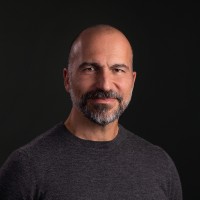
In 2025, Uber had its best year ever.
I expect every year to be your best year, right? If next year is not our best year, then it failed.
At the center of that turnaround is Dara Khosrowshahi, the man who took over Uber as its CEO in 2017 amid the chaos that followed the ouster of Travis Kalanick.
I'm not looking to establish moats. It means I'm playing defense. I like playing offense. Our largest competitor in the end is a personal car.
We sat down with him during his 5-day India trip and the timing couldn't be more telling. On Friday, Uber's closest challenger in India, mobility startup Rapido announced a 240 million fund raise. India is Uber's third largest market by trip volume and by Khosrowshahi's own admission, it's toughest.
The Indian consumer is super demanding. The one word I would use to describe the Indian market is dynamic. If I look 10 years forward, I think India is going to be our largest market.
On today's episode, we ask Khosrowshahi about Uber's big India bets.
India is the second largest talent base that we have other than the US.
Its new data center partnership.
Building out data centers on a local basis here. I think it's strategic. I think it's strategic to the country.
A possible return to food delivery.
It's something that we're going to revisit.
And what AI and autonomous vehicles mean for millions of gig workers whose livelihoods depend on the platform.
We see autonomous vehicles, for example, has actually introduced new entrants to the transportation space and human drivers on our platform are earning more.
And the question that nobody in Silicon Valley can quite stop asking is there a partnership coming with the man Khosrowshahi replaced Travis Kalanick.
I will absolutely look to partner with them because there are very few entrepreneurs like Travis.
Thanks so much, Dara. We're meeting after 2 years. You've had a packed 5-day trip here in India. Tell us, how's it been over the past week here?
It's been terrific. The one word I would use to describe the Indian market is dynamic. Change is coming fast. There's been a huge amount of growth for us in terms of our business and I've gotten to understand both opportunities and challenges in India generally here. But this remains an incredibly important market for us both in terms of our talent, it's our largest talent base outside of the US hence the investment in the technology centers, and it continues to be one of our largest and fastest growing markets as well.
So tell us a bit more about, you know, on the policy side. I mean you obviously met the finance minister. What is it that you're looking at in terms of policy changes or your discussions with the policy makers this time around?
Well, I think one of the definitional reasons why so many people join Uber, including myself, is the impact that we're having on the greater society on a global basis. We've got over 10 million earners on our platform. We now have in India over 2 million people earning on the platform. The last time I came here 2 years ago it was a million, which is a big number but the expansion here is pretty extraordinary. So we want to be aligned with policy makers as far as how we grow. The goal of this company isn't just growth and profits but it's to make sure that our impact on society continues to be constructive and positive. And those are the discussions that we're having with the ministers as far as how we grow.
What is it that they have to say to you?
Well, part of it is, for example, discussion on social security benefits now and the new policies here which are quite supportive. If you look at historically in many countries people look at full-time work with benefits and then let's say part-time flexible work with no benefits. We think the solution that we're talking about which is part-time flexible work with benefits including social security is quite constructive. So we were having some dialogue there and then also talking about the benefits of offering mobility and economic opportunity to a greater percentage of the population and how we continue to do so in an environmentally friendly way as well. We very much support the shift towards electrification and EV but at the same time we are humble and also realize the challenges therein. We want to be a constructive part of that equation and that has been certainly a part of the discussions that we're having with ministers even more so now with the challenges in terms of the cost of fuel now.
So I'm just going to use that as a segue to understand from you how do you look at fuel prices sort of going up. I mean there was some announcement yesterday here as well. How does that impact the business not only in India but globally for Uber because that's at the center of what you do?
Yes, it's very early here obviously. Yesterday was I think the first announcement as it relates to fuel price increases so it's difficult to predict the impact on our business here generally. Globally fuel prices have been a headwind especially more recently as it relates to our earners and the cost of transportation but they've been relatively modest. What we are seeing consistently is the demand for transportation of all types, personal transportation in other parts of the world, food delivery, grocery etc continues at a very robust pace. We announced recently our Q1 earnings, you know, transactions growing over 20%. Top line growing well over 20%. So, while it's a headwind, it is a relatively modest headwind compared to the increase in demand for all things on demand in the physical world. So, the business continues to grow. It continues to grow at very very healthy rates. But it is something that we take into consideration and you know we think it just underlies this transition to EVs as being healthy for the environment but also healthy in terms of the diversification of energy sources for India and many other countries in which we operate.
Dara, what you said earlier about you wanting to sort of create more livelihood in India, expanding mobility in a more environmentally friendly way. One of the ways we've seen mobility companies do that is bike taxis, you know, two wheelers. And just very recently there's been some sort of threat from the state government over taking criminal action against bike taxis. What message do you take from that?
Well, I think what we want to have is a dialogue with the local authorities. There is no question to us that bike taxis are making transportation more affordable for a greater percentage of the population. Bike taxis are often a complement actually to mass transit. About a quarter of our bike taxi trips either start or end with mass transit of one sort or the other. And we're investing now in moving beyond just being, let's say, a car hail service. We used to just start with four-wheelers. Now we have four-wheelers, three-wheelers, bike taxis, and through our partnership with Ola and DC are connecting with buses and mass transit as well. So, we think that bike taxis should be a part of this entire transit ecosystem. And of course, it's a much more affordable way for earners to come onto the platform and start and start earning. Some of them then graduate up to four-wheelers either through our fleet partnerships, etc. So, we're hoping that we can find that win-win solution where the policy makers make sure that they get what they need in terms of following rules and regulations. But also we continue to expand the availability of affordable mobility as well as a way to earn for a greater segment of the population here.
But in the overall scheme of things now of course at the Go Global event you announced Uber being an everything app. In India, I mean how does that trickle down beyond just mobility or will you sort of stay razor sharp focused on mobility in India?
The opportunity for mobility in India is enormous. So we do want to stay focused on the mobility sector. That said, we are exploring other areas. For example, logistics. And in particular, what we're quite interested in is hyperlocal logistics within your city and empowering especially small businesses to be able to deliver on-demand transportation just like what you see in quick commerce and/or the large companies like a Flipkart or Amazon. What we don't want is that local business, the local grocer, the local merchant to get lost in this transition to on-demand everything. We want to empower the local businesses to also offer on-demand very quick delivery as well of their goods because we think that a commerce ecosystem that includes large companies, there's nothing wrong with that, but also small businesses is a healthy ecosystem. And we are very early in our investments in commerce but we think it's a very interesting area for us to explore.
So just wanted to double click on that, Dara. We spoke last time around as well. Uber Eats for you in the US is as much as 50% of your revenue now, huge. And I remember asking you last time as well, is food something that you will look to do again in India considering you want to be in the delivery ecosystem and food and grocery has become a large part. Whether you look at Amazon, Flipkart, I mean Amazon's now doing quick commerce in the US taking a leaf out of what they're doing here in India. So is that something that you will revisit at all?
We, you know, I believe in continually asking myself hard strategic questions. At this point when we look at the ecosystem in India, the mobility ecosystem and the logistics sector, local logistics sector is quite promising and has enormous potential growth ahead of it, but it's something that we're going to revisit. In Europe for example we have relaunched in food in a number of markets that we pulled out of and there's so much potential here in India but at this point I think to the extent we get into food it'll be through partnership not through ownership.
Is there something on the anvil?
You seem to be very focused on partnerships as a company and I just want you to talk a bit more about the Adani partnership on the data center. Is that the stack which will play out in India on the AI space, the infrastructure part because obviously the foundation and the models and the labs are mostly between the US and China. And how do you see it sort of unfolding here?
Well, I think that AI generally is going to be empowering a greater and greater percentage of the information economy. I think the changes that are going to come are extraordinary. Building out data centers on a local basis here. I think it's strategic. I think it's strategic to the country. And India is quite strategic to us on a global basis. And I can't think of anyone better to partner with than the Adanis. I have known them for some time now. We have built a lot of trust together. And building out a local data center here to power the entire business, but also the AI innovations that are coming up is something that I'm very excited about and I'm thrilled to do it with Adani Group.
And what's the kind of timeline that you've set for putting this together?
Well, based on the discussions that we had with them, we all want it to happen tomorrow. We know that may not be possible. So, the timelines aren't clear here, but the intent certainly is.
And just talk me through, you know, the two tech centers also you've announced between Bangalore and Hyderabad. How much of Uber's engineering and product etc. are already being done out of India and with these two being set up. Where will it sort of take it?
Well, India is the second largest talent base that we have other than the US. We always believed in the entrepreneurial talent here. The education system is incredible. But there's an entrepreneurial spirit here that we wanted to plug into. And so our approach here in India was always building engineering teams that are what we call full stack that are entirely responsible for the products that they are building. So they don't have to check with the US etc. they can just go. One of the changes that we're seeing here is, you know, frankly, early on we had a hard time. We were able to attract top engineers, but we had a hard time, for example, attracting product managers, first rate designers. That's all changed. Now we're very much swimming with the current. And the new tech centers represent that to some extent, which is we are early making investment. We want only the best. We're seeing the rewards of that. The product innovation that we're seeing here is core to the business like they are building every part of Uber whether it's the rider app or two wheelers or merchant tools or actually the AI stack, the core AI stack. And so when I see return on investment and I see extraordinary talent I want to lean in. And so the investment in the tech centers are a reflection of that. I wouldn't be surprised if we add even more tech centers. This is just the beginning here. The talent, the technical talent and the entrepreneurship and the hunger that I see here is wonderful and I want more of it.
How does that tie up with the fact that your CTO very recently said that you had exhausted all your tokens in four months of the year?
Our engineers are working, they're working hard and they're building agents to work for them as well.