CEOInterviews.AI
Start App
Try: AI strategy tariffs earnings guidance layoffs interest rates growth

Paul Buchheit

Creator of Gmail, Y Combinator

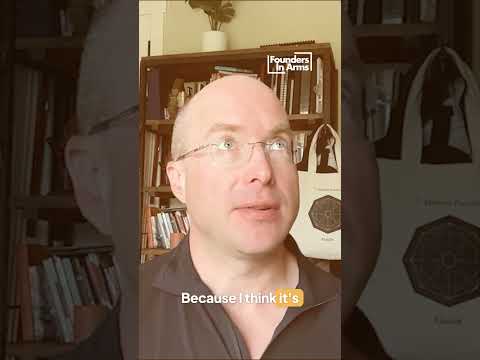
Search every verified Paul Buchheit interview, podcast appearance, and on-the-record quote — each transcript cross-checked by AI and human review to confirm speaker identity. Paul Buchheit appeared in several podcast episodes in late 2026, discussing his creation of Gmail, his time at Google, and his investment career. He described building Gmail with hand-rolled JavaScript to avoid server round trips, saying early versions crashed browsers and faced internal skepticism, including an executive who said a friend's similar attempt had failed. He said one objection inside Google was that Microsoft would break JavaScript, but that Microsoft instead updated Internet Explorer 6 to work better with Gmail. He also discussed the acquisition of FriendFeed by Facebook in 2009, saying he walked away from an initial lowball offer, nearly sold to Twitter, and closed a deal with Mark Zuckerberg over a weekend after becoming convinced Facebook would be "the biggest thing since Google." He recounted that after leaving Facebook in 2010, Paul Graham convinced him to join Y Combinator as its first non-founding partner, and he later invested in early YC batches when few others did. Buchheit also reflected on early tech industry norms and the evolution of startups. He said Gmail's offer of a thousand megabytes of free storage changed expectations for email users, who were often subject to quotas of around 30 megabytes. He described early YC demo days as featuring less ambitious companies, such as websites for rating professors, compared to later batches involving projects like manufacturing solar cells on the Moon. He also discussed AI as a potential "fourth thing" of societal-scale change, saying it could expand or crush individual liberty, and he advised founders to look for things that "just barely work" as opportunities.

Recent appearances

Notable quotes

“So, yeah, we spent uh you know, went for a walk and spent several hours just like talking through the deal and like figure out how to improve it um in a number of different ways just to make it a very attractive deal for everyone. Um and then essentially did a handshake deal that night on selling the company. Um and then Saturday we discovered that our lawyer was like on vacation like rafting, I think, and completely”

“So, we had like a pretty good offer from them as well. But then kind of what happened to me actually was I was like laying in bed at night and I just became like convinced that Facebook was just going to be like the biggest thing since Google, you know, this is this is 2009. This was not the consensus. This was at the time when the headline, you know, on Hacker News was all these articles, there's no way Facebook is ”

“Traditionally series A is the most expensive round. Uh venture firms usually want 20 to 25% stake in a company. Um and you know when that's combined with the employee option pool and everything else that causes a lot of founder dilution and our view is there's no reason why why should series A be more expensive than seed or more expensive than series B. So 10% is the number we chose because uh you know we think that ”

“We are not going to charge any legal fees to founders. And that may seem obvious, I don't know, maybe some of the listeners out there, but one ugly truth about the VC industry is that VCs bill to the founders their own legal fees. It's usually about $30,000 per transaction. They invest in you and then they give you the bill for their legal fees every time.”

“The really only job of a board member or the most important job is to fire the founder. if we're just helping you, we actually don't need a board seat to help you. And obviously, um, one thing we've learned through the many years is that, uh, founders actually don't like being fired. So, we we think that'll be a big feature.”

“Standard Capital has an application process and anyone in the world can just apply and you don't need permission and maybe please don't email us like we don't want pitch decks. I know this is the opposite of most firms. Please don't send us your pitch decks uh or cold emails or warm intros. Use our application process.”

Other executives at Y Combinator

The summary and quote tags on this profile are produced with AI assistance from verified, first-person interview transcripts, then checked by our team to confirm the speaker's identity and the accuracy of every quote. See how we verify →