President, Chief Executive Officer & Director, Greif -cl A
Search every verified Ole Rosgaard interview, podcast appearance, and on-the-record quote — each transcript cross-checked by AI and human review to confirm speaker identity. In a September 2024 two-part conversation with Hubert Joly, Greif CEO Ole Rosgaard discussed translating corporate purpose into strategy and leading through uncertainty. Rosgaard described his view that business needs an "urgent refoundation" around a noble purpose, placing people at the center, and treating profit as an outcome rather than the goal. He attributed many problems in the business world to shareholder primacy and top-down scientific management, as advocated by Milton Friedman and Bob McNamara. Rosgaard stated that a leader's role is to create an environment that unleashes "human magic" and that actions speak louder than words in making purpose real. Rosgaard also addressed leadership during challenging times, saying that "pressure is privilege" and that leaders should take care of themselves physically, mentally, and spiritually. He emphasized the importance of inclusion, stating that everyone needs to feel they belong, and that diversity efforts are ineffective without it. Rosgaard noted that his company changed its executive team and how they work together, and he described writing a leadership philosophy that he revisits to check his own actions. He said that in a volatile world, leaders must learn humility and that resilient organizations will thrive in new environments.


Greif, Inc. (NYSE: GEF) reported Q2 2025 results on June 5, 2025, delivering adjusted earnings per share of $1.19—up 43% year-over-year and well above analyst expectations of $1.08–$1.12. Net income rose 6.5% to $47.3 million ($0.82 per share), while adjusted net income jumped 42.8% to $68.7 million ($1.19 per share), reflecting robust operational execution and cost optimization. Revenue increased 1.1% to $1.39 billion, slightly below forecasts, as growth in the Polymer and Fiber Solutions segments offset softness in North America. Adjusted EBITDA surged 26% to $213.9 million, with margin exp…

In part 2 of this 2-part conversation Greif CEO Ole Rosgaard and Hubert Joly, senior lecturer at the Harvard Business School and ...
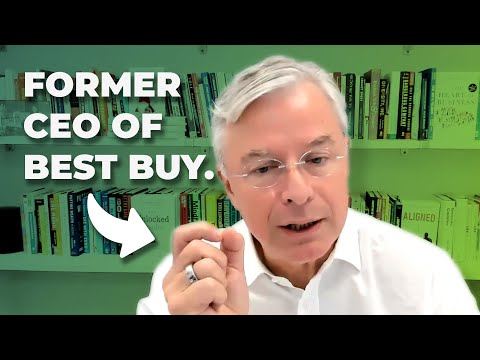
In part 1 of this 2-part conversation Greif CEO Ole Rosgaard and Hubert Joly, senior lecturer at the Harvard Business School and ...
Sign in to search the full transcript archive, filter by topic, and access every quote from Ole Rosgaard.
The summary and quote tags on this profile are produced with AI assistance from verified, first-person interview transcripts, then checked by our team to confirm the speaker's identity and the accuracy of every quote. See how we verify →
Pro unlocks every transcript in full, plus unlimited search across every executive and company we cover.
50% off appliedPulling data at scale? The Data API gives you 30,000 transcripts a month over REST, MCP and JSON.
Compare all plans