CEOInterviews.AI
Start App
Try: AI strategy tariffs earnings guidance layoffs interest rates growth

Daniel Litt

Assistant Professor of Mathematics, University of Toronto

Search every verified Daniel Litt interview, podcast appearance, and on-the-record quote — each transcript cross-checked by AI and human review to confirm speaker identity. Daniel Litt, a mathematician at the University of Toronto, has recently appeared in several podcasts discussing the impact of artificial intelligence on mathematics. In a March 2025 bet with Tommaso Tomasoglu, he wagered that AI would not autonomously produce a paper publishable in the Annals of Mathematics by 2030; he has since conceded the bet, stating that AI models have become superhuman at certain tasks such as navigating the literature and executing technical arguments, though he noted they remain weak at determining which questions are worth asking and that the papers they produce are not yet usable by human mathematicians. He has also expressed concerns about the allocation of prestige and credit in mathematics, saying that "prestige and credit are dead" due to AI, while emphasizing the importance of human understanding and community in mathematical practice. In October 2026, Litt delivered two lectures at Harvard University as part of the Math Science Lectures in Honor of Raoul Bott, where he was serving as the Benedict H. Gross Distinguished Visitor. The first lecture, "The arithmetic of differential equations," discussed conjectures by Grothendieck, Katz, Ekedahl-Shepherd-Barron-Taylor, and Bost regarding when algebraic differential equations have algebraic solutions, including joint progress with Josh Lam on isomonodromy equations. The second lecture, "Non-abelian motives," explored analogs of Hodge theory structures for representations of fundamental groups, discussing open questions related to algebraic subvarieties and the p-adic Hitchin map.

Recent appearances

  • Phymaths podcast # 78 || Dr. Daniel Litt

    Description Dr. Daniel Litt is a mathematician at the University of Toronto, working on algebraic geometry, number theory, and Hodge theory. A list of his works is given below. Some links 1) His works: https://www.daniellitt.com/publicatio... 2) Link to the high-energy physics resources page on my website: https://hassaansaleem.com/graduate-le... Contact Info My website: hassaansaleem.com Follow on Instagram:   / hassaan.3142   Join the WhatsApp channel: https://whatsapp.com/channel/0029Va9D... Follow on Twitter:   / hassaan_phy   Email Queries: [email protected] Time stamps 0:00 Gues…

    Read the verified transcript → Watch on YouTube ↗

  • Learning to Live with AI (with Daniel Litt) - Numberphile Podcast

    Daniel Litt is an Assistant Professor of Mathematics at the University of Toronto. Visit his webpage here - https://www.daniellitt.com/ And check out his blogposts here - https://www.daniellitt.com/blog/ Numberphile videos and event podcasts about AI -    • The Math/AI Crisis   Numberphile is supported by Jane Street - https://www.numberphile.com/jane-street With thanks to the Ben Delo Foundation - https://delo.org/ You can support Numberphile on Patreon -   / numberphile   Here are our Patrons - https://www.numberphile.com/patrons Numberphile is created by Brady Haran

    Read the verified transcript → Watch on YouTube ↗

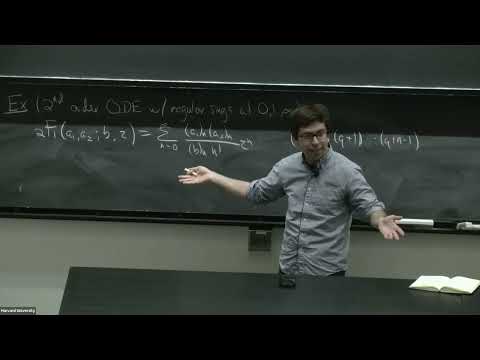
  • Daniel Litt | The arithmetic of differential equations

    Math Science Lectures in Honor of Raoul Bott 10/19/2026 Speaker: Daniel Litt, U Toronto Lecture 1: The arithmetic of differential equations Abstract: When does an algebraic differential equation have solutions which are themselves algebraic functions? This question goes back at least to Fuchs, in 1875. Its conjectural answer, due to Grothendieck and Katz in the linear case and Ekedahl-Shepherd-Barron-Taylor and Bost in general, situates it as one of number theory. I’ll explain these conjectures and some progress towards them, joint with Josh Lam, for isomonodromy differential equations. Th…

    Read the verified transcript → Watch on YouTube ↗

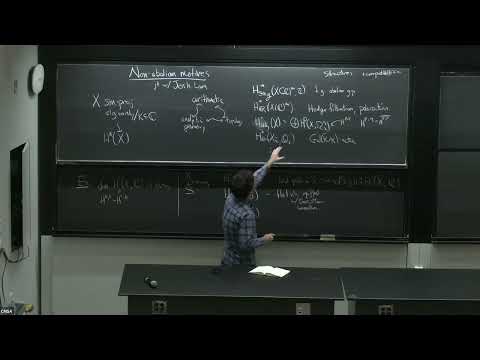
  • Daniel Litt | Non-abelian motives

    Math Science Lectures in Honor of Raoul Bott 10/21/2026 Speaker: Daniel Litt, U Toronto Lecture 2: Non-abelian motives Abstract: Non-abelian Hodge theory, due to Corlette, Simpson, and others, develops structures on the space of representations of the fundamental group of a complex variety analogous to the structures on its cohomology. Taking this analogy seriously, we should expect every structure on cohomology to have an analogue in this “non-abelian” setting. I’ll discuss some work in this direction, as well as a number of related conjectures and new structures whose “abelian” analogues…

    Read the verified transcript → Watch on YouTube ↗

  • What’s Left for Mathematicians? | Daniel Litt

    In this episode, we talked with Daniel Litt, a mathematician at the University of Toronto. In March 2025, Daniel bet that AI would not be able to autonomously produce an Annals of Mathematics-level paper by 2030. He has since conceded. He told us what changed and why. The models became superhuman at a small set of skills, like knowing the entire literature and grinding through technical arguments, and that turned out to be enough to do real math. They are still weak at the fuzzy part of the job, like figuring out what is actually true about an object or which questions are worth asking. We al…

    Read the verified transcript → Watch on YouTube ↗

  • Daniel Litt: The arithmetic of differential equations (NTWS)

    Abstract: Grothendieck and Katz gave a conjectural arithmetic characterization of linear ODEs all of whose solutions are algebraic; this was generalized to non-linear ODEs by Ekedahl, Shepherd-Barron, and Taylor. These "p-curvature conjectures" are broadly open, though beautiful work has been done on them by Katz, Chudnovsky-Chudnovsky, André, Bost, and others. I'll explain new work in progress with Josh Lam proving these conjectures for a class of nonlinear ODE coming from algebraic geometry, and, time permitting, say what this has to do with the original conjecture of Grothendieck and Katz.…

    Read the verified transcript → Watch on YouTube ↗

  • Daniel Litt | Working with LLMs to do high quality math

    AI for the Working Mathematician 9/9/2026 Speaker: Daniel Litt, University of Toronto Title: Working with LLMs to do high quality math Abstract: Much hay has been made of the capabilities of LLMs to do math autonomously, and indeed frontier models have resolved some long-standing, interesting open questions. But our goal is not to produce papers, but rather to do high quality mathematics. I’ll discuss some experiments over the past year in trying to get LLMs to help with producing high quality mathematics, non-autonomously, and speculate a bit about the future.

    Read the verified transcript → Watch on YouTube ↗

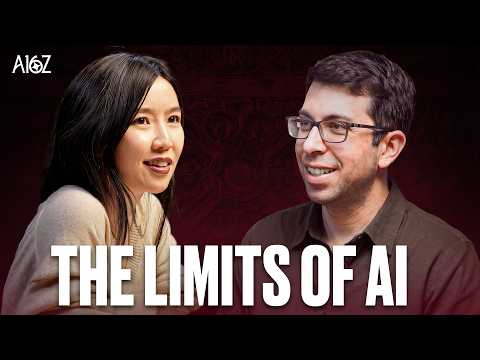
  • What Today’s Best Models Still Can’t Do in Math

    a16z’s Lisha Li sits down with Daniel Litt, Assistant Professor of Mathematics at the University of Toronto, to unpack AI's rapid progress in mathematics, what today's frontier models can actually do, and what they're still missing about the way mathematicians think. Daniel explains why some recent AI-generated results are genuinely impressive, including an autonomous solution to the Erdős unit distance problem, but argues that solving problems is only one part of mathematics. Today's models can grind through calculations, combine known techniques, and search enormous spaces, but still strugg…

    Read the verified transcript → Watch on YouTube ↗

  • Daniel Litt -- Human Mathematicians in the Age of AI

    In this video, I interview Daniel Litt, who is an Assistant Professor at the University of Toronto. This interview was recorded on June 4, 2026. This video is part of the "Human Mathematicians in the Age of AI" project, a collection of video interviews with human research mathematicians, math educators, and math students, about what the new developments in AI/LLM's in mathematics means for them, and about what changes if any we should be implementing in the near future. #math #interview #ai 00:00 Intro 00:05 Do you use AI tools? 02:20 How do you feel about the growing role of AI in math? 03…

    Read the verified transcript → Watch on YouTube ↗

  • Begin Proof - Daniel Litt

    AI has solved the 180-year-old Jacobian conjecture, producing a counterexample so simple that mathematicians immediately wondered how it had been sitting in plain sight the entire time. In this episode of Begin Proof, Slater Stich talks with Daniel Litt, a mathematician at the University of Toronto, about what it's like to watch a machine casually disprove something your entire field assumed was true. They get into why the Jacobian conjecture went unsolved for so long, why the models seem to have plenty of stamina but not much taste, what happens to peer review when an AI can crank out a doze…

    Read the verified transcript → Watch on YouTube ↗

  • Erdos's Conjecture Was Just the Beginning (With Daniel Litt)

    https://www.scientificamerican.com/article/ai-just-solved-an-80-year-old-erdos-problem-and-mathematicians-are-amazed/ ...

    Read the verified transcript → Watch on YouTube ↗

  • Arithmetic of Differential Equations - Daniel Litt (University of Toronto)

    These videos correspond to talks given during CTNT 2026 as guest lectures and during the research conference. For more information about CTNT see https://ctnt-summer.math.uconn.edu/

    Read the verified transcript → Watch on YouTube ↗

Verified interview transcripts

Notable quotes

“I think human understanding is very important. I don't think it's necessary in the following sense. Right. So there are a few things you could have. You could have a problem we don't have an answer to, a problem we have an answer to that no one understands, and then a problem that we have an answer to and that people understand. And it seems to me the first is worse than the second is worse than the third. So I don't”

“I think that it's true that major open conjectures are an imperfect operationalization of what we care about, which is like something like human understanding. And, you know, there are these basic concepts we want to get at better. And like I was saying, like the Millennium Prize problems are like these basically arbitrary things that like do a very, in my opinion, poor job of operationalizing that. Okay. Nonetheless”

“So the goal of the talk will be to explain an analog of this theorem in this non-abelian setting. Before I do that, let me explain some analogs of other things that might be more familiar and then we'll return to this. Goal will be to explain a non-abelian analog of this result. Before that, let me explain non-abelian analogs of some other statements you might know and love and that have been the source of some contr”

“I think it's wrong. What is true is that the RL loop in math is fast. That's clearly right. What is not true is that math is uniquely verifiable. It's actually very hard to tell if an informal proof is correct. That's a difficult task. You can try to formalize it, but it's not as if, I understand what the frontier labs do in order to improve math capabilities, and in fact until quite recently it was basically impossi”

“I think prestige and credit are dead. Like there's just no way they survive what's coming. I think that in fact not only will solving a problem with AI be less prestigious, solving a problem at all will be less prestigious because we won't know whether you did it. Nonetheless, as you say, we still would like to allocate, to the extent that we have scarcity, we need to allocate scarce resources and to some extent we p”

“I think mathematical journals have no future. I think that papers will be the domain of AI primarily. I think that we will continue to add value as long as the expositional capabilities suck which will be probably be for a couple years at most. And then we'll just ask the models to write it and there will be no reason for us to write a paper except to learn the material ourselves. And then I also think let's just thi”

Other executives at University of Toronto

The summary and quote tags on this profile are produced with AI assistance from verified, first-person interview transcripts, then checked by our team to confirm the speaker's identity and the accuracy of every quote. See how we verify →