
Sen. Alan Armstrong (R-Okla.) VIP Dinner & Reception Remarks
Sen. Alan Armstrong (R-Okla.) VIP Dinner & Reception Remarks.
Former Executive Chairman of the Board, Williams Companies
Search every verified Alan Armstrong interview, podcast appearance, and on-the-record quote — each transcript cross-checked by AI and human review to confirm speaker identity. Alan Armstrong, a former executive chairman of Williams Companies who was appointed to the U.S. Senate in March 2026 to fill a vacant Oklahoma seat, has focused his recent public appearances on advocating for permitting reform. In interviews and events, he has described delays in approving energy infrastructure projects as a central problem, citing a McKinsey study that he said identified $1.5 trillion in projects held up by permitting issues. He has also discussed the impact of litigation on projects, recounting instances where courts vacated permits for pipelines, and has argued that such outcomes add costs for consumers. Armstrong has stated that his primary goal as a senator is to pass permitting reform legislation, and he has expressed confidence that a bipartisan deal could advance, while noting that he has no other political ambitions beyond his current term. Armstrong has also addressed related energy topics, including diesel prices and market dynamics. He has opposed proposals for a diesel export ban, arguing that such measures could have unintended consequences on gasoline production. He has attributed price differences between states like Oklahoma and California to infrastructure constraints and state policies, and has advocated for building redundant infrastructure to reduce dependence on foreign energy sources. In discussing the Senate, he has said there is too much focus on partisan wins and losses rather than long-term national interests.

Sen. Alan Armstrong (R-Okla.) VIP Dinner & Reception Remarks.

On this week's Capitol Conversations, NewsNation Washington Correspondent Vinay Simlot sits down with Oklahoma Senator Alan Armstrong to discuss his one priority as a lawmaker - permitting reform. They also discuss what Armstrong says is wrong with the Senate and how to fix it.

Sen. Alan Armstrong (R-OK) joins 535 for a conversation on the future of permitting reform, followed by a panel with leaders from across the energy industry. The discussion looks at what could come next for permitting legislation, the challenges facing energy infrastructure development, and how changes to the permitting process could affect natural gas, power generation, renewable energy and the broader U.S. energy system. Featuring: Sen. Alan Armstrong (R-OK) Amy Andryszak, President & CEO, Interstate Natural Gas Association of America Jason Grumet, CEO, American Clean Power Association Tod…

September 17, 2026 Bloomberg TV -- Balance of Power.

Sen. Alan Armstrong joins 535 to discuss the push for permitting reform and why he says delays from litigation and interconnection backlogs are making it harder to build the energy infrastructure the country needs. Armstrong also talks about the growing electricity demands of artificial intelligence, the pressure facing energy-intensive industries like steel and aluminum, and why he believes permitting policy is increasingly tied to U.S. economic competitiveness with China. Watch the full conversation from Capitol Hill. #535News #AlanArmstrong #PermittingReform #EnergyPolicy #ArtificialInte…

Oklahoma Senator Alan Armstrong joins Adam Goodman on 13th and Park for a candid conversation about what happens when a career energy executive trades the boardroom for the Senate floor with a singular mission and a nine-month clock. Armstrong spent nearly four decades at the Williams Companies, rising to CEO of the Tulsa-based firm that handles roughly one-third of America's natural gas, before Governor Stitt tapped him to fill the vacancy left by Homeland Security Secretary Mark Wayne Mullen. His focus from day one: the most comprehensive permitting reform proposal in congressional history.…

What will it take to build the energy infrastructure America needs to stay competitive? Power demand is outpacing supply throughout the U.S. Competitive power suppliers have billions in private capital ready to invest and tens of gigawatts of new generation in the development pipeline. But turning those investments into operating power plants requires a policy and regulatory environment that provides greater certainty and allows projects to move forward. In this episode of Energy Solutions, EPSA President and CEO Todd Snitchler sits down with Senator Alan Armstrong of Oklahoma to discus…


July 19, 2026 Sen. Alan Armstrong (R-OK) joins Fox News' Sunday Night in America with Trey Gowdy to discuss his recent ...

Oklahoma's newest U.S. senator, Alan Armstrong, joins Oklahoma's Own Political Analyst Scott Mitchell on Hot Seat to discuss his ...
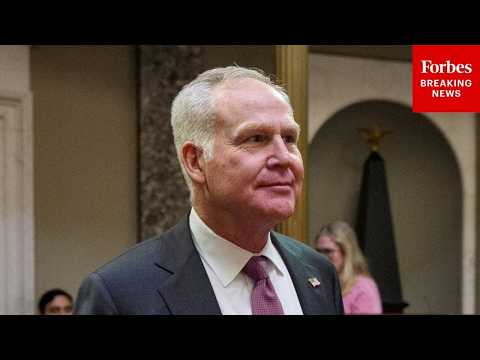
During Senate floor remarks on Thursday, Sen. Alan Armstrong (R-OK) spoke about energy security in the U.S. Stay Connected ...

We are excited to share this Special Edition featuring Senator Alan Armstrong (R-OK). Senator Armstrong, alongside Senators Rick Scott (R-FL), Cynthia Lummis (R-WY), Katie Britt (R-AL), and James Lankford (R-OK), recently introduced the American Energy and Mineral Infrastructure Act. The legislation seeks to modernize the federal permitting process for energy and mineral infrastructure projects while preserving strong environmental protections. We were delighted to host Senator Armstrong to discuss his experience in Washington, the motivation behind the legislation, and what it could mean for…
“I saw there's a study that McKenzie did that says there's one and a half trillion dollars right now of projects between pipelines, transmission lines, power plants that are held up right now waiting on permitting. That's a big number. And and what you know I like to communicate with people is let the floodgates open. You talk about lowering prices. If you overbuild pipeline capacity, when I started in the space, the ”
“I think first and foremost is judicial reform under NEPA and you know hate to get super technical and boring on for people on that but today the litigation environment that exists is not constructive for everybody. I always tell people you think you know you that if you go beat a big bad pipeline company or you stop a transmission line or you stop a mine that you've beat up on that big bad corporation. in reality is ”
“Yeah, that's actually a great question. So, today, well, just to just to explain Constitution pipeline, Constitution was a pipeline that was started to being permitted back in 2013 or 14. Um, and it was a gas pipeline that would take gas from some of the lowest cost natural gas, not in the nation, but in the world in northeastern Pennsylvania, and move it to places like New England, where during the wintertime that's”
“Well, you know, first of all, this is one of those things when you start messing with markets, you know, there's always unintended consequences. I mean, these refiners are very finely tuned for a specific grade of crude. And so, you can't just say, 'Oh, I want to make more diesel today and less gasoline.' It's not the way it works. So, if you cut the diesel, you're going to cut gasoline production with it. And so ins”
“If you think about what that does to it, now I'm not asking for your sympathy for a big, multi-billion dollar company. I'm not begging for your sympathy for that corporation. But if you think that that's where the pain stops, you're dead wrong. The pain of that actually goes directly to the consumer. Because it just means constrained supplies. And it means if you ever do get infrastructure built, don't think that all”
“What this sounds like in a boardroom today is take Williams journey on this. Williams just had the now third project in the northeast have a certificate vacated by a court that was issued by a federal agency that had the jurisdiction to issue it. Now what does that mean? That's a lot of like jargon. It means you spent a lot of money and you don't have the right to operate your facility any longer because your certifi”
Sign in to search the full transcript archive, filter by topic, and access every quote from Alan Armstrong.
The summary and quote tags on this profile are produced with AI assistance from verified, first-person interview transcripts, then checked by our team to confirm the speaker's identity and the accuracy of every quote. See how we verify →
Pro unlocks every transcript in full, plus unlimited search across every executive and company we cover.
50% off appliedPulling data at scale? The Data API gives you 30,000 transcripts a month over REST, MCP and JSON.
Compare all plans