
PRESIDENT HICHILEMA COMMITS TO TRIPLING THE SIZE OF ZAMBIA’S ECONOMY
President Hakainde Hichilema has been sworn in for his second term at the National Heroes Stadium in Lusaka, committing his ...
President, Zambia
Search every verified Hakainde Hichilema interview, podcast appearance, and on-the-record quote — each transcript cross-checked by AI and human review to confirm speaker identity. Hakainde Hichilema was sworn in for a second term as President of Zambia on September 1, 2026, at the National Heroes Stadium in Lusaka. In his inaugural address, he described his administration as moving "from stabilization to growth" and outlined a policy framework he called the "10 10 5 3 3 1 1 1 vision," which sets targets including 10 million tons of maize, 10,000 megawatts of electricity, 5 million tourist arrivals, 3 million tons of copper, and $1 billion in beef exports. He stated that the goal of this agenda is to triple the size of Zambia's economy during his five-year term. He also acknowledged that many families still face challenges with the cost of living and said the benefits of economic stabilization have not yet been felt at every level. In the period leading up to the inauguration, Hichilema spoke about his first-term record, citing debt restructuring, a return of 2.6 million children to school, and increased maize production. During an August 2026 BBC interview, he said his government inherited a "broken down country" and had delivered on restructuring debt with a saving of $1.9 billion per year. He also visited Zimbabwe in late August 2026, where he described Zambia and Zimbabwe as "Siamese twins" and called for deeper cooperation on shared resources, including joint management of mineral deposits and development of the Batoka Gorge hydroelectric project. In November 2025, he received an honorary doctorate in agribusiness from Mulongushi University and spoke about his background in cattle ranching, setting a target of $1 billion in beef exports by 2030.

President Hakainde Hichilema has been sworn in for his second term at the National Heroes Stadium in Lusaka, committing his ...

President Hakainde Hichilema Inauguration, National Heroes Stadium, Lusaka, Zambia.

Join this channel to get access to perks; / @_kenyanewsline Kenya Newsline is the leading News channel that brings you 24-hour latest news locally and internationally.Reach out to us through the email: [email protected] Subscribe to our YouTube channel to get news and updates as they unfold. Click here to subscribe to our YouTube Channel: / @_kenyanewsline .................................................................... Copyright Disclaimer Under Section 107 of the Copyright Act 1976, allowance is made for fair use for purposes such as criticism, comment, news report…

Join this channel to get access to perks: / @kenyadigitalnews Kenya Digital News brings you the latest news as they happen in a DIGITAL way. For more news, subscribe to our YouTube Channel because the future is Digital. Click here to subscribe to our YouTube Channel: / @kenyadigitalnews #KenyaDigitalNews

President Hichilema Hails Zimbabwe Zambian President Hakainde Hichilema has hailed Zimbabwe, highlighting the strong historical, cultural and people-to-people ties between the two neighbouring countries. Hichilema has previously described Zambia and Zimbabwe as sharing deep bonds, calling for stronger cooperation and closer relations between the two nations.
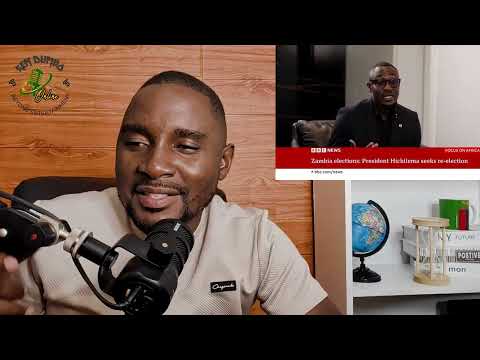
PRESIDENT Hakainde Hichilema BBC INTERVIEW ❤️❤️❤️❤️ NI SUPU MUDONYELE 👏👏👏👏 #BeyondEntertainment

hakaindehichilema #zambia #documentary #agriculture @Hakainde.Hichilema.

By Ruth Chayinda Residents of Lusangazi District have pledged their support for President HAKAINDE HICHILEMA ahead of the forthcoming general election. One of the residents, ISAAC ZULU, says President HICHILEMA deserves another five-year term, saying his administration has delivered development over the past five years. Speaking to ZNBC News in Lusangazi District, Mr. ZULU said re-electing President HICHILEMA will allow the Government to build on the progress already made and accelerate national development. Meanwhile, STELLA PHIRI said residents have seen improvements under the current ad…

By Ruth Chayinda President Hakainde Hichilema has urged Zambians not to be swayed by opposition politicians seeking to return to power, saying they failed to deliver when they were previously entrusted with governing the country. President Hichilema says the opposition's interest in returning to office is driven by a desire to benefit from the progress made by the current administration rather than serve the interests of Zambians. He has since called on voters to reject politicians that failed to improve the lives of Zambians. President Hichilema said this when he addressed thousands of p…

🔴 LIVE: President Hakainde Hichilema Engages Mwinilunga Residents | North Western Province

By Ruth Chayinda President HAKAINDE HICHILEMA has officially launched his 2026 presidential campaign, calling on Zambians to safeguard the country's economic gains by supporting the UPND in the August 13, 2026 general election. President HICHILEMA says continued support will ensure the implementation of policies aimed at promoting economic growth, education, peace and national unity. The President has thanked Zambians for the trust they placed in his administration in 2021 and acknowledged that many citizens continue to face economic challenges, which Government is working to address. He s…
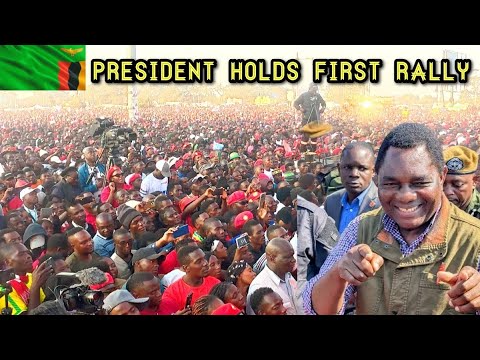
#upnd #upndrally #hakaindehichilema #hakaindehichilema #zambianpolitics President Hakainde Hichilema launched the upnd campaign today.
“Let me address the change of mindset. Fellow citizen, we are emerging from an era that taught many of our people to think only of today and not about tomorrow. The entitlement culture or that of handout syndrome is something we must attack consciously, deliberately, intentionally. This culture was engraved over many years and it cannot be done with away with overnight. As a nation, we have to think differently. We ha”
“Our own flagship policy of what we call the 10 10 5 3 3 1 1 1 vision. Very clear. 10 million tons of maize for food security. 10,000 megawatts of electricity to power our economy. 5 million tourist arrivals. 3 million tons of copper. 3 million tons of soybeans. 1 million tons of wheat. 1 million tons of sugar. And a billion dollar or more worth of beef exports outside of our country in the region. Through this agenda”
“We will grow and diversify our mining sector, agriculture, tourism, energy sectors amongst others. We will accelerate infrastructure development and industrial transformation through reforming institutions that have stood in the way of the country's growth for too many years.”
“We are moving from stabilization to growth effectively. Fellow citizens, we know that many of our families have challenges with the cost of living and that the benefits of our stabilization have not yet been felt at every level. We hear you, the citizens of Zambia. We're listening attentively.”
Sign in to search the full transcript archive, filter by topic, and access every quote from Hakainde Hichilema.
The summary and quote tags on this profile are produced with AI assistance from verified, first-person interview transcripts, then checked by our team to confirm the speaker's identity and the accuracy of every quote. See how we verify →
Pro unlocks every transcript in full, plus unlimited search across every executive and company we cover.
50% off appliedPulling data at scale? The Data API gives you 30,000 transcripts a month over REST, MCP and JSON.
Compare all plans