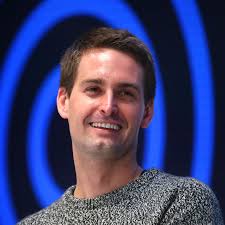
You became one of the youngest billionaires in the world age 25. You said that Meta has stolen some stuff.
Mark Zuckerberg recorded himself saying the word Poke. That was the notification sound for the app. Such a big company was so focused on what we were doing.
My mom was like, "You can have your own computer if you build it." And I was like, "Okay, you're building a computer. What age is this?"
11, 12.
You've gone into one of the best colleges and then you're saying you want to drop out for this idea.
It seemed obvious to work on something I was passionate about.
So, what are your hopes for the future of Snap?
Oh my gosh, I have so so many.
Hey guys, and welcome to our brand new miniseries, Founders Friday. Now, I've been an entrepreneur for the last 14 years with Candy Killins, with Jampol, with Tuck Shop, my other businesses. And honestly, it's been one of the hardest journeys I've ever been on. And that's coming from a new parent, okay? And I'm learning every single day, making mistakes every single day. So, for the month of July, I want to do something special for you, our community, our amazing community, okay? But also for myself. I'm going to be sitting down with founders I admire, people who have built brilliant businesses and who have been generous enough to share the lessons they've learned along the way. Trust me, you do not want to miss this. The things that I've learned have been incredible. My first guest is someone who genuinely changed the way we communicate. He's one of the youngest billionaires ever. It's Evan Spiegel, the founder and CEO of Snapchat. Evan launched Snapchat in 2011 when he was still a student at Stanford University. Since then, he's built one of the biggest social platforms in the entire world, used by more than 400 million people every single day. We sat down together in April at a Snapford event I was hosting in the Cotswolds. It was incredible. And our conversation just went everywhere. Evan opens up about the early days of building Snap, the biggest business lessons he's learned, and how he thinks about social media when it comes to his own children. A huge conversation. So, here it is. Our first ever great company presents Founders Friday with Evan Spiegel. Enjoy it.
It feels like we're about to do a cooking show.
That'll be the next episode.
Evan cooking. This is how we're doing about how to make sourdough.
What's your favorite sourdough? Let's go do it.
Great company MB.
You know I want to start with some quickfire questions for you. What's one belief you had as a younger founder that you've completely reversed?
You know, when we were starting the company, we were so focused on secrecy. We were incredibly secretive about the products that we were working on. You know, even inside the company, people really wouldn't talk with each other about what they were working on. And obviously there was an enormous amount of fear partially informed by our competitive experience, right? With Meta always knocking off our products that we really should not, you know, talk about what we're building even internally. And I think that was a huge mistake because one of the most important things that I think, you know, leaders do or at least that I do is communicating with our team and of course facilitating that inside the company. It's so important to the culture. It's so important to furthering the vision. It's so important to making sure we get the best ideas from all over the company. So, one of the biggest things we've changed has gone from being like a very secretive siloed company internally to one that is way more transparent and open about what we're working on.
That's it. So, you were always secretive at the beginning. You just you didn't want to say anything.
We didn't want to say anything publicly. We didn't really want to say anything, you know, internally. Where we were really focused on was our customers. And as long as our customers were happy, we were like, you know, that'll kind of take care of the rest. And then you know as the company got bigger and the company's profile grew it became much more important obviously to communicate externally but also internally to really align the team. So that comes with, you know, building a lot more trust inside the team and relying on folks not to share all the fun stuff we're working on. But it creates a much stronger and more cohesive team internally.
What was the thing you said that Meta has stolen some stuff before. What was the thing that really hurt the most when someone took it?
It's not so much what hurt the most, just, you know, from the earliest days. I mean, I think there were four of us living in my dad's house working on Snapchat when they created a ripoff called Poke and put it at the top of Facebook. So, every time you open the app, it told you to download Poke. Mark Zuckerberg recorded himself saying the word Poke. That was the notification sound for the app. And we were like, "Wow, this guy's really into Snapchat." So, I think just like learning so early on that even as such a tiny team, just, you know, four of us working out of my dad's house, maybe five of us, that such a big company was so focused on what we were doing made us really feel like we needed to, you know, protect our ideas at least until we shipped them to our community.
Who's your business idol?
Wow. I think my business idol was Steve Jobs. I mean, that's who, you know, growing up I had the Think Different posters on my wall. I even had the posters of like the G3 Mac tower on my bedroom wall. So I think for me, you know, Steve was just such an incredible inspiration and yeah, that story is always really really deeply.
What was it about him that you just admired so much?
That he cared so deeply about design, that he cared enough about the way things actually worked. Right? So he I think he really showed people that if they wanted to build amazing things or design amazing things, it wasn't just about making something that looked beautiful, it was about making something that worked beautifully. And that to me, that it's so hard to do. And his commitment to doing that was just incredibly inspiring to me.
You know, Steve Jobs said many times that his main goal was to create technology that enhanced humanity. Do you feel like that's your, there's a similar goal for you there?
Yeah. Our goal is to make computing more human. So certainly sounds aligned with some of those early ideals. But also I mean I think throughout history I mean even, you know, think about Stewart Brand and the Whole Earth Catalog, people who were working on computers in the very very early days, they really viewed them as accelerants for humanity, tools for humanity and talked about them in that way. So I think, you know, at its best computing makes all of us better.
What's a success that didn't feel as good as you expected?
You know, I think for us, like people always talk about taking the company public, right? And we'd see all these, you know, photos and videos, everyone with the confetti coming down and they're ringing the bell and all this kind of thing. And I remember I was meeting with a friend of mine because I went and talked to a bunch of public company CEOs before we went public, you know, and like learn ask a bunch of questions. And I remember one of my friends was like, "Whatever you do, do not get the confetti. Tell them no confetti because every single day from there on out it's hard building a public company. Every single time, you know, there's a hiccup or, you know, a problem with a company or whatever, they're going to put that confetti photo up." And what was very interesting for me was how sobering that was, right? Because I think so many people view an IPO as like an end, right? And in so many ways, it's actually the beginning of a totally different phase for the company, a totally different way of, you know, managing and the company communicating about it. So for me, I think that's something that, you know, is typically viewed as a success getting to that milestone, but comes with so many new responsibilities and so many changes.
Last quickfire. If you had to go into business with Mark Zuckerberg or Jeff Bezos, who would it be?
You know what, Jeff? Jeff was really kind to me when I was starting the business. I remember I was in a big executive meeting with Jeff, it was about our Amazon relationship or something like that, and towards the end of the meeting he excused everybody and he stayed behind with me. And the company was going through a bunch of, you know, difficult challenges at the time and I was really young and just trying to learn how to build the company. And he was like, "Evan, just don't worry about it, just stay focused on what you're doing, you're going to do great." And I was like, wow, for him to go out of his way to take that time to connect with me and encourage me like that, it was just a really inspiring thing and something like I've held with me to this day. And I, you know, I think about that a lot when I meet other founders, right? It's not easy building a company and for him to go out of his way and just encourage me like that was really really powerful.
You know I find that with the sort of entrepreneurial, like the founder community, it's so collaborative, everyone kind of wants to help each other, but also there's competition, right? But people really want to help each other where there are some industries where that doesn't really happen as much. But if it's, you know, like Jeff helping you, he sees like a young entrepreneur who needs help. That's kind of like the special thing that no one really sees that goes on behind the scenes, right?
I think it is probably the best thing about the technology industry. I mean, I certainly experienced it, you know, building our business and I had the great fortune of knowing absolutely nothing about running a company. So, I really relied on all the incredible mentors that I met along the way who were willing to, you know, help out or, you know, were super responsive if I had a question. And so I do think that that is probably at least for me the best part of the industry as a whole.
So and where did you grow up?
I grew up in Los Angeles. Yeah. I was raised by two lawyers. My mom was a tax lawyer. My dad did a lot of business litigation. I had two younger sisters, both way smarter than me. And I think, you know, having two lawyers meant for very spirited dinner table conversations and certainly like debates. Yeah, debates and never, you know, never adversity to conflict, right? I mean, lawyers actually like, I think, in some ways feed off of conflict. And so, I think it was really interesting to grow up in an environment where there was a real commitment to intellectual honesty and integrity. I mean, we used to call my dad, you know, the encyclopedia before Google came along and sort of unseated him, you know, from this position of knowing so much about the world, really passionate about history and economics. And so there would just be really great and intense, you know, debates around the table in our home growing up.
What does that teach you, though?
You know, I think one of the things that taught me at a very young age was like the ability to stand my ground in really, you know, tough conversations. I mean, I remember, you know, getting to know my wife and like, you know, us all having dinner with my dad or something and I'm just debating with my dad and my wife's like, "What are you doing?" I'm like, "No, this is like our love language. Like, we're having a conversation." But I think it was really fun, you know, to be in an environment that encouraged that because I think that's, you know, that sort of intellectual curiosity and spirited debate I think is so much at the heart of like creating good ideas. And that's really valuable.
Yeah. I've never thought of that way because you have to, life is sometimes about having those hard conversations and also be able to stand your ground. I think that's in some ways really what separates sort of good leaders from great leaders and that has to be from childhood.
But also to develop at the same time a willingness to be open-minded when you're wrong, right? And I think like that's where like that focus on, you know, that intellectual integrity is so important because the dinner table was about getting to the right answer, not being right. And that was a really interesting dynamic I think.
I can be. Yeah, I can be.
But if you know you're wrong, you admit you're wrong or you hold?
To me the entire game is how quickly can you change your mind once you find out you're wrong. So that's really.
So give me an example. What do you mean?
I think, you know, for example, when we're working on a new product in our company or I'm really holding my ground on a feature, as soon as somebody proves I'm wrong or shows me our customers are looking for something different or has a better idea. What we always try to reward is the speed at which you admit you're wrong and change. And so for us in our company we're not necessarily looking for folks who are always right because it's impossible to always be right. Right. In fact like quite a lot of the time even the smartest people in the world are wrong. So the question is how quickly can you adapt and change? How quickly can you say you're totally right, my mistake, let's change direction. And by rewarding that behavior, you have an organization that grows and learns very very quickly compared to an organization that rewards people who are right the first time. I mean who cares, right? We're trying to get to the right answer the fastest.
That is, yeah, I had some therapy once, right?
I actually think that all founders should have therapy. Like I totally think they should, right? Just in general. Most people should have therapy. They can, but I had it quite a lot. And the therapist said to me that when you argue, you're trying to win. And I said, "What do you mean?" He said, "Well, with your family, with your friends, maybe with your partner, it feels like you're trying to always win." I said, "Yeah, isn't that the point?" They said, "No, you're trying to find the solution. You're trying to find the answer. No one should be a winner when you're arguing." And that's exactly what you're saying, right? And I think the most attractive thing is admitting when you're wrong.
I think there's probably nothing more powerful, especially if you can do it quickly.
Especially if you can do it quickly. But it's funny you mentioned therapy. You know, my parents, I think when I was like 15 or so, 15, 16, ended up divorcing. As part of that, I started therapy. And that was one of the greatest things that ever happened to me because, you know, I was able to do so much work on myself and my worldview and all this sort of stuff before, you know, because we started Snapchat when I was 20. So in that intervening period, you know, between my parents divorcing and creating Snapchat, I actually was able to do a huge amount of work on myself which I think was well timed going into, you know, all the challenges of growing a business.
Growing up in LA. So you had your sisters, you, your parents, happy childhood?
And a dog. What was the dog called?
Yeah. Generally speaking, you know, I loved reading. I loved design. Got very into computers. My parents did not let me watch television when I was growing up until I was like a teenager or something like that.
Hang on a second. And so nothing. No television.
They wanted me to spend my time doing other things. Which was an enormous gift that they gave me because I ended up reading and building stuff. I got super into Lego. I mean, you name it. And I would use my imagination to create stuff. So I would like build a ship in the living room out of our furniture and like, you know, hit the seas like this kind of thing and use my imagination. And you know the flip side of that was the challenge I think, you know, socially because people connect through television, they connect through media. I think it's a huge point of connection in our society and really important to, you know, having shared stories is a really important way that people get to know each other and make friends. And so I think not missing that point of connection was hard with my peers who were watching all sorts of stuff and talking about it at school. But in hindsight, the benefit of really spending a lot of time reading and learning and imagining was massive. And it wasn't until I guess I must have been in middle school, I'd fallen in love with computers. You know, I'd go at lunch, I'd be in the computer lab. I was really into design. And I really wanted my own computer. And my mom was like, "You can have your own computer if you build it." And I was like, "Okay, challenge accepted."
So my parents were like giving me like silly party like get this like play with this. I was like, "Okay, you're building a computer. What age is this?"
This must have been in middle, sixth or seventh grade or something like that.
So, what age is that for UK audience?
What is that? That's like 11 or 11, 12, something like that, maybe.
So, just so your parents said, "You can have a computer, but you have to build it."
Yep. And they took me to Fry Electronics, which is the electronic store, and, you know, picking out the motherboard and this kind of thing. And that was a real breakthrough for me and a really exciting moment to have my own computer but also to realize that like building a computer wasn't that hard. I mean I think so many times in our lives, you know, we are afraid of things that appear complicated or, you know, seem difficult and when you actually just have a chance to build it yourself or try creating it yourself that illusion sort of disappears and you realize you're capable of so many things that maybe you didn't feel like you were able to do before.
So hang on. So you opened up the computer, but how would you even know where to begin?
I had a teacher at school who was the computer teacher and he, you know, I'd taken a course over the summer or something like that in building your own computer and so he, you know, obviously very generously helped me out.
Do you feel like an outsider growing up?
In some ways, yeah. I mean, in others I was like the ultimate insider, right? I grew up, I was really fortunate to grow up in a privileged family. I, you know, was able to attend an elite private school in Los Angeles. And so in many of those ways, I think I was absolutely an insider. I think in other ways, you know, for example, not being allowed to watch TV, I was sometimes an outsider.
But you mentioned, you said that school maybe had been a bit tricky at times in social situations.
Yeah, definitely. I mean, I think, you know, I was a pretty nerdy kid. You know, I was spending a lot of time reading books and making stuff and not a lot of time watching TV. And, you know, I was really, I remember in kindergarten, my parents helped me write a letter to the PE teacher because I was too afraid to do PE because there were too many people running around and balls flying around. I was like terrified. I'm like, so, you know, I literally sat down with my parents, wrote a letter to the PE teacher and said like, I'm just like I'm not ready for PE. Like, I'll play when I'm ready, you know? And my parents, God bless them, like supported me in doing that and like communicating that way. And it's hilarious. Three of our kids now go to the school that I went to growing up. And the PE teacher is still there. I mean, almost every day when I drop our kids off, when any day I drop our kids off at school, I mean, she's there and I'm like, "Hey, you know, morning, the PTSD, I don't want to go play dodgeball." Thankfully, I was able to overcome that fear. But I think, yeah, I just, that was not something, you know, I spent a lot of time reading and not a ton of time running around.
You went to Stanford though.
You're at Stanford. You're hanging out with your friends and you come up with this idea to create an app. How do, tell me the origin story of Snapchat.
So Bobby had lived across the hall from me in our fraternity. We had started working on a bunch of projects together, one of which was called Future Freshman. It was designed to help people get into college. It was like a total disaster. You know, only my mom used it despite both of our siblings, you know, were applying to college at the time. So, this was like not a great success. And we started working on other ideas. My friend Reggie was like, you know, "Oh my gosh, what if you could send a photo that disappeared?" We were like, "Oh, wow. That's an interesting idea." So I sketched out the frames of the app. It was called Peekaboo at the time. We built a prototype, right? It's the ghost. Peekaboo. Boo. Like a ghost.
So you came with this idea, you started creating it, you started building it with your buddies, you always thought this is what I want to do. I want to be an entrepreneur. I want to create a business.
I think most, you know, Bobby and I really did not like working for other people. I mean, we'd both been really fortunate. You know, he had a job working for like sort of a payments company. I had a job interning at Intuit which was an amazing opportunity. We had been working on, you know, essentially websites that would be on not smartphones but on those like touchtone phones, like ways to build websites on touchtone phones for India that had been really cool because I realized on a team of just three people or four people that you could build and ship software to the world. It was really inspiring for me. And so I think that combination of like not wanting to work for other people, wanting to, you know, build stuff and then realizing that if you built software, you could scale it and deploy it to people all over the world pretty easily was really really exciting. So and then Bobby and I just love working together. So I think all of those things combined, you know, led us to work on Snapchat. And when I first presented Snapchat or what was called Peekaboo at the time to my class, because it was like one of my senior projects essentially or junior projects or whatever it is at school, you know, everyone was like, "This makes no sense." Like this isn't going to work. You can always take a screenshot. The photos don't disappear. Like what? But what was very interesting was after, you know, that summer as we continued to work on it, we really loved using Snapchat to just send photos back and forth to our friends. We invented a new mechanism to detect when somebody took a screenshot. So, we couldn't prevent it, but we would at least let you know if somebody saved your photo. And Snapchat became a way that people started talking to each other. Which meant that then, you know, we pivoted, we called it Snapchat. We pivoted to talking about it as visual messaging. We added captions and drawing and all the sorts of things that you now, you know, use today.
When you launch it, what was that moment like?
I mean, it's probably like very anticlimactic, right? Launching an app is like clicking a button.
Yeah. But isn't there that moment where when you, I remember when we first launched, I have a sweets company. We first launched our website for me. I remember sitting with my buddy and just being like we launched it. Here we go. And then just nothing happened. And I was like okay surely something's meant to happen. I don't, it was anticlimactic for me as well. But I still remember that moment like it was yesterday.
The launches that I remember are sort of a bit later into the life of the app where everyone would sort of cluster around, you know, a computer and watch the dashboard because to me the fun of a launch is the community feedback. I mean, that's the best part.
So, what was the moment you decided to drop out of Stanford?
I was in the back of my CNC machining class.
So, you remember this moment? Here we go.
Oh, yeah. Yeah. I remember this moment. I was in the back of my CNC machining class. I was refreshing the Wells Fargo app over and over and over again, waiting for the $485,000 from our investors to hit the account. And when it landed, I went up to the teacher and I said, "I'm so sorry. I have to drop out of school."
Oh, yeah. Yeah. I said, "I'm sorry. Excuse me, Craig. Actually, I have to drop out of school." And Craig, I mean, God bless Craig because I went back and took that same CNC machining class again later to get my degree in 2018.
That's a wild appetite for risk. Your parents are these incredible lawyers. You've grown up with them, right? So, they're your parents. You admire them. They have kind of these strict rules like you have to work hard, you have to, you know, no TV, no screens, nothing at all. I imagine they were like, you got to go to university, you got to push and becoming a lawyer, you have to go through all that education to become a lawyer, right? But then what you've done, you're smart, you're educated, you have ideas, you've gone into one of the best colleges, and then you're saying you want to drop out for this idea. And as we know, most businesses fail. So what was your conversation you had with your parents?
Well, I think it's funny because like what you described, I think paints a picture of very little risk, right? I was just out of school. You know, I had the opportunity to live in my dad's house and work out of my dad's house. I, you know, had gone to a really great university, so I wasn't worried about being able to get a job later if it didn't work out. I mean, I think it was almost the perfect circumstance to take a huge risk because the downside was minimal at best. I think, you know, one of the challenges I think sometimes we face as entrepreneurs and certainly as folks get later into their lives and have responsibility with, you know, family, children, etc., then it gets much harder to take a risk. But I think for me, you know, it seemed obvious to work on something I was passionate about. And I think for me it was much more about the responsibility, frankly, that we had to our investors. I mean, they had invested $485,000, which to us was like infinity. We were like, we will never need to raise money again. I mean, this is, you know, we were able to hire two of our friends. It was extraordinary for us. And we really had a responsibility at that point to focus 100% of our time on building the company.
I mean Snapchat grew so quickly. I remember downloading it for the first time and just being like this is insane and it just spreading like wildfire and this was like around 2013, hundreds of millions of snaps were being sent every day. I mean the growth was so quick, were you expecting that?
You know, it didn't feel quick for us. And in a lot of ways, actually, the growth of Snapchat was slower than traditional social media because social media is broadcast oriented. And Snapchat's messaging oriented. So, actually, it grows slower because you're onboarding a smaller network, like just your close friends and family, not necessarily, you know, 2,000 people you don't know very well. And so I actually remember feeling a lot of pressure that like, oh gosh, I hope this can grow and grow faster because just the nature of Snapchat as a messaging platform means that it doesn't grow as fast as broadcast social media.
But how did Snapchat catch on to other
People outside of your college? How did you market it outside of that?