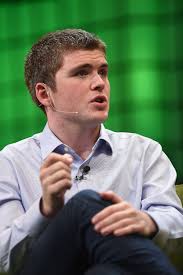
You're watching TVPN. We are here live at Stripe Sessions. We're joined by John and Patrick Collison. Thank you for having us. How is it going so far?
It's incredible. We have 10,000 people here. Yeah, yeah, and it is just the center the economy is re-platforming around AI and I think that's the theme of the conference.
Which economy? Is that the global economy of which you control 1.6% of it?
That is. We talk about the internet economy, but you know yourself everything is in the internet economy these days. There's very few companies that are not interesting at being at the center of the internet economy. So, it's increasingly the whole thing. When we spoke back a couple of weeks ago, which in singularity time is you know, a couple of months ago or exactly, yeah. Um, we said that we were seeing a significant surge in new business creation. That is roughly doubled again since then. And so, as of um
And wait, are you tracking that through Stripe Atlas specifically or through just new companies that are onboarding to Stripe as a payment processor?
Both. Both. So, March was an all-time record for new incorporations uh with Stripe Atlas. And then in Q1 overall for just new businesses joining Stripe, that was up 71% year-over-year. We showed the chart at the beginning of our keynote yesterday. It is it is parabolic. It is exponential. I'm you know, running out of mathematical terms, but it's it's really very striking.
And do you like the I guess my collar's all ruffled. There we go.
All right. And and and and do you like the idea that this is driven by AI? This is driven by democratization of more tools, that smaller companies, that there's more sort of like lifestyle businesses popping up?
So, initially I thought when I saw these charts that it's um that it's about new vibe-coded businesses that are more abundant in number, but on a in any given instance maybe not as significant or not growing as quickly or you know, whatever. What we're actually finding is not only are there so many more businesses, but the average revenue per business is also increasing.
Uh and so it's not just more new tiny ones. Uh somehow um the the median business is also doing better.
Yeah, I think even the term lifestyle business, you know, there's like a bit pejorative. It betrays a worldview. Whereas what we're seeing is there's tons of business now making more than a million dollars a year. Uh like that number is really inflecting. And in general like we think about it in ah, you got the little color service. I mean, I just have be doing my color myself. Um so uh you also have to look at this almost in Cosian terms where what we're seeing is more small businesses
Revoked for drinking this.
I just want to clarify that these are full-size pints, everyone.
These are full-size pints. We're just very large humans. I just want to clarify that it's Guinness 00, which is very good plus uh given that it's 11:00 a.m. It's a little early. Yeah.
But how are you seeing that coast?
Oh, just yeah, we're seeing thanks to AI you now have more small businesses able to do million dollars plus of revenue and be really impactful. And so we think you'll probably see smaller firms have a big impact.
And and and what's driving this is you think AI is making every little step of entrepreneurship slightly easier, like slightly easier to incorporate, slightly easier to create a contract or to hire somebody, slightly easier to create an ad, and then you add all of that together and
It's the merging of all the functions. It's the fact that you can do your design and your PM and your engineering all yourself as one really effective person. Sam Altman was here yesterday on stage and he was talking about the the return of the idea guy. The fact that exactly, yeah, yeah, yeah. The fact that if you the long maligned idea guy, but now if you have really good ideas, you can actually go execute them and you have so much more capability to do so. And again, we are seeing that born out in the Stripe data where I think this phenomenon shows up as 71% year-over-year growth in in in businesses launching.
So I mean, it feels like you could do nothing and win. Stripe's in the right place at the right time, but you're probably not taking risks.
So tell me what you're actually doing. How are you accelerating these businesses? Like what are you changing about Stripe? What products are you adding? What functionalities are you building?
So, all the commerce is going agentic. We think that people will like people will still be doing stuff, but they will do it through their agent. So, what does that mean? On the consumer side of things, like we've all had the experience of, you know, you're in chat GPT and you're recent like I was trying to buy a case for my bike and I was going back and forth and I was, you know, asking questions about what about, you know, hardware, software, things like that. But anyway, at the end of that, you just want to be able to hit buy rather than like no one wants to fill out web forms. It's not a value-add activity. And so, we just announced that Google is joining our agentic commerce suite. So, now we have Google, OpenAI, Microsoft, and Meta all working with us on this agentic coming commerce modality where you can just buy there. That is the consumer side of things. Do you want to talk about the developer side of things?
Well, you need three other things. So, first, we're seeing a change across the economy in business models where with inference costs with tokens and so forth and so many businesses, you know, in some way taking advantage of AI in their products, we're seeing a shift from SaaS from seat-based business models to usage-based business models. And I think this is this is pretty profound. So, we acquired a company called Metronome back a couple months ago and we're now integrating that cohesively throughout the Stripe platform. We demoed yesterday thing that I think is very cool and is the intersection between crypto / stablecoins and usage-based billing where basically you can have streaming payments where you're paying for each token as it's delivered.
Yeah, exactly. Today, there's a kind of credit extension that implicitly happens with any you know, token token billing which you're when you're billed at the end of the month and so forth, which is actually pretty tricky because if you have token thieves, if you have, you know, some failed billing after somebody's racked up a million dollar uh uh credit card tab or something, you know, that that's a real problem for the provider. So, anyway, we're doing a lot around usage-based billing in this economy-wide structural transformation. Then secondly, to this fraud point, we're seeing I mean, concomitant with the enormous increase in new business creation, we're also seeing a lot of fraud. Um and um there's
Yeah, so uh you know, when you um you can't resell access to software. And so, if you got illicit access to some SaaS tool 2 years ago, there wasn't much you could do with SAS two monetize so to so to speak. There wasn't much incentive to steal SAS. Um, but you can resell tokens. It's very lucrative to do so. Uh, and so all these new AI companies and all these new AI products growth is not really a problem for them. They have a surfeit of growth, but there are also a lot of people and token pilferers uh, looking to near-do-wells. Exactly, looking to run away with these these you know this precious value.
And and and walk us through how that would work how that works in practice. Is that somebody spinning up a bunch of free accounts and then like hitting them with just kind of the bare minimum
Is this the motivation distillation or actual reselling?
Both. Really both. So there's definitely just straight resell but there's also more sophisticated attacks and distillation. So anyway, we've seen that one in six new accounts across this ecosystem are fraudulent. And for many providers it's actually difficult now to offer free trials because you know the the illicit accounts that sign up for these free trials, they drive so much expense that it's hard to make the overall economics work out. So anyway, we're extending Stripe Radar to use the intelligence of the Stripe network to help any of these companies not only score payments but score customer sign-ups to score trials and we're you know turning Stripe Radar into this into this uh, sort of x-ray vision for the AI economy to try to prevent these new and more sophisticated attacks. I think this is really important in that we're not going to have an internet with self-serve access
Yeah, so so so just to repeat it back to you the the if if somebody signs up and they can basically pay for tokens streaming with stable coins, that would enable like let's say a big AI company to be able to offer a self-serve product and not worry about someone coming in running up a big token bill and then saying like see you. I'm not even in the country.
That's exactly right, but we're also going to try to protect the regular sign-up flows as well and the kind of more straightforward consumer access.
If you run any physical store, you have to worry about shrinkage and you know, no one wants the direction of travel where you know, you go to a CVS and everything is locked up behind the painting you know, goods you know, upstanding people suffer from you know, the small percentage of crime that happens. It's the exact same in the AI land where similarly they are selling a you know, product that has you know, real value and real resale value exactly real cost associated and so therefore they need to prevent fraud not just for financial loss for themselves, but also the so they can continue to offer a great experience to all the good users.
I want to go way deeper, but I know you have a hard stop. Do you have something else to say?
Well, I was going to say one thing before I have to scurry away which is you know, so we're with this usage based billing stuff. We have the agent of commerce stuff that John just described. We have these this new fraud functionality and then the other thing is Stripe started out of course as a payments company, but we've you know, over the last couple of years Stripe has uh been becoming a broader programmable financial services platform and that's a bit of a mouthful. What it means in practice is that not only should you be able to get paid with Stripe, but you should be able to hold money in Stripe, be able to pay people around the world, be able to orchestrate your entire financial services business sort of be an operating system for for global money movement and so we announced Stripe Treasury where businesses can hold balances in Stripe. They can dispatch money to more than a 150 countries, instant free Stripe to Stripe account transfers and so forth and so rather than Stripe be this sort of conduit for money ephemerally passes through, Stripe is becoming a home and this is very valuable we think because Stripe's expertise in building programmable tools and APIs and CLI functionality and all the rest, this is obviously much more important in the agent of commerce era.
Was Sorry to cut you off. Was this in the seed pitch deck?
None of this was in the seed pitch deck.
No, but but I imagine like you're in the fund you're you're telling people we're in the funds flow at some point or another. We won't just pass this back to their bank account. We'll actually be able to unlock the value of the
That wasn't in the seed pitch deck. And in general, you know, the secret to being a Silicon Valley founder is you have to like get lucky for many, many years in a row. And then you go back and you pretend that that was you know, your plan all along. You know, exactly. Yeah, you do a lot of red counting. That's That's That's very important. However, what I will say is interesting is we did focus from the very beginning on developers. Uh and we thought developers were very important and underserved. I mean, Stripe's original name was slash dev slash payments. Uh and you know, payments for developers was you can go back in the wayback machine. That was the tagline on the uh on the website. I think what's interesting now, obviously, is that the you know, all the agentic coding tools need something with well-documented APIs, with everything being available on an API basis. And so, I think we have always thought that companies should take developers more seriously. I think we're now seeing just industry-wide companies that took developers seriously are now really benefiting from this AI moment because they built their stuff for the agents.
Well, also everyone's a developer now.
And and agents feel like they are developer-shaped, at least.
Exactly. Agents want good DX developer experience even more than humans do. And so, if you don't have a I mean, it's it's a real problem.
Yeah. I think they're going to kill me if we keep you any longer. We'll let you get out of here. We did want you to sign this plaque. Can you explain to us what this is and what it what it stands for? You familiar This is the original uh print that went into
How did you get that? That's ours.
It was given to us and we want you to sign it.
You thieves. They recommend you here and here.
From the archives. We have a museum of business where we try and uh accumulate signed objects of historical significance.
Poor Charlie's Almanac paper cover.
Hey, this is the paperback paper cover of Poor Charlie's Almanac.
Heavy. It's This is how we made the original hardcover if you have it of Poor Charlie's Almanac. So, sorry, I'm signing it.
And we'll have Patrick sign right over there.
And this will live on at the Museum of Business and we will let you get out of here. And we will go way deeper. Stay with us. We are going to continue our interview with John Collison from Stripe at Stripe Sessions here in San Francisco. Thank you so much Patrick for taking the time to come chat with us. We really appreciate having you on the show. It's always a pleasure.
And congratulations. We do want to have you Can we have you hit the gong? I What is the headline number?
Let's have you hit the gong.
Is it 1.6? Is that the headline number?
That is the 2025 number. Stay tuned for the 2026 number.
Powerful. Powerful hit. Powerful hit. I see why you need the gong. You can tell he's been lifting. Yeah.
Well, thank you. Have a great rest of Stripe Sessions. We really appreciate you coming on the show. I want to just shift over to another Stripe Press book. This is Maintenance of Everything by Stewart Brand. And in here, the general thesis is what what Maintenance of Everything. I I mean, I'd love to know what you took away from this, but Maintenance is what keeps everything going. It's what keeps life going. And he gives a ton of really interesting anecdotes about cars and repairs and weaponry and sailing. And there's so many interesting anecdotes and I'm wondering about your thoughts on maintenance in the age of AI and what you feel and see in this like we're in this maybe there's like this job replacement thing. AI does everything, but then there's so much that goes on in the maintenance of the system.
And so I was wondering if you just reflect on like Brand's work in the age of AI.
So, Stewart Brand is obviously amazing and you know, he's maybe famous for the the Whole Earth Catalog originally which you know, Steve Jobs talked about in that that famous commencement speech. But Stewart Brand has been around for the entirety of Silicon Valley history. Like if you go back and read the Tom Wolfe book The Electric Kool-Aid Acid Test. I don't know if you guys are big Tom Wolfe fans, but he's talking about like the early LSD culture of the 1960s in the Bay Area. They're having these parties. Stewart Brand is in the book, you know, he's like there at those early parties and everything like that. Yeah, when like the you know, the Grateful Dead and everything like that. And so he's just been like there for everything all along. He was the He was the manning the computer at the Mother of All Demos, you know, the Engelbart's famous demo. So this is where the the original mouse was demoed.
Where the mouse was was shown.
Exactly. Exactly. So Stewart Brand is still, you know, he just published this book. And so Stewart Brand is so intertwined with the the history of technology and Silicon Valley through technology. And obviously what this book is getting at and also the Whole Earth Catalog is this passion for tools and taking care of your tools and kind of thinking about tools. And it's interesting you bring that up in the context of AI because one thing that I get excited about in the current moment is this idea of individual empowerment. And you know, you could have different visions of AI and I definitely have an adverse reaction to this, you know, very passive you know, I think the term slop is you know, the term we use for this just you know, being a passive recipient of AI generated stuff and no one wants the you know, brave new world soma kind of vision. And instead if you look at something like like open claw, I get very excited about that because you are giving computing power and the ability to do stuff with programming and tinkering with technology. It's the Homebrew Computer Club all over again. It's this tinkering energy that's back and so I just get really excited about how I think tools and passion for tools
How much negativity there's been towards the entire like Mac Mini Open Claw movement when it's like for how how how long how long has Silicon Valley been like I miss the days of like the hacker era. And then the hacker era comes back and then and then people people bring it to market.
I agree. And okay, I was reflecting on this. I think there's something interesting where people maybe have an adverse reaction to early adopter enthusiast culture. Uh the early open claw um enthusiast uh group really reminds me of the early Bitcoin enthusiast uh group who also got people's backs up in a way. Like you remember that famous New York Times article with like the guys with the sweaters? Like those guys are presumably being into open claw right now. Uh so there's something about the maybe because people tend to overhype stuff. You know, they say my open claw does this. Like maybe it doesn't quite, you know, or something like that. But the tinkering is back and I think that's really cool. So I agree with you. It's crazy that um you know, people have this skepticism because it's easily like the most fun you can have with computers.
People on people on X, you know, see an open claw meetup in some place like Tokyo and they're just like mocking it, right?
And it's like isn't this isn't this isn't this like core to the culture?
Exactly. Yeah, I'm totally with you. That is the optimistic uh take on open claw tinkering. I love that. That's what I believe. But there is the other side, which is the not just the tools but the tool-shaped objects. You've heard of this criticism that uh you wind up I I've I've had this exact experience where I've gone to codex and built a whole thing and been like that could have just been a prompt. And like I didn't actually need to have it instantiate a Python script. Like I could have and and and I think there is a risk in some enterprises of having 25 people vibe coding dashboards when you could have just had one. There is some managerial de-duping and overhead and management and I'm wondering how you grappled with that side of AI.
Yeah, I mean a a few thoughts here. One is uh I I think it's just awesome that software is becoming so accessible. I think we should really um celebrate that. Like I'm writing much more software even just from a kind of a fun perspective because it is so fun and this is kind of uh addictive feeling.
Mhm. I think we're also very clearly in a transitional state where it just doesn't feel to me that the way we do things in 2026 where, you know, you need to prompt us to, you know, make no mistake. So, you know, you saw the caveman token efficiency thing where it's like if you talk like a caveman and I ask you to talk like it it just uses fewer tokens. And so, but gets the same results, you know, it's as effective. And so, if you want to kind of economize in the token budget,
My only prompt was no six fingers. And I haven't seen an AI image with six fingers in a year.
Exactly. And we just we just crossed that chasm.
Exactly. You know, if you're doing anything with financial data, you know, you need to prompt it to do not make up any numbers. And then it's much better as, you know, not making up numbers. But all right, so where we are in 2026 is clearly not where we're going to be. The models are getting much better. But I think right now we're in this interesting transitional period. There is this software fatigue as you say where, you know, from software maintenance and things like that. I think we'll we'll get there. And I think all these things, you know, there's puts and takes. People are talking a lot about the offensive side of security, which is true with, you know, the very powerful new models. But of course you also have the defensive side of things where if you ask your, you know, 5.5 to audit, go take a look at this application, take a look at this, just like go push around this server and give me a security audit and suggestions to lock it down, it'll do a great job of that. And so, again, I think we just haven't figured out what the end state is.
Yeah. Yeah, it it it does feel like as we move up the layers of abstraction, we go from, you know, pair programming alongside an AI to being more of a product manager to almost winding up more in a build versus buy mentality. And yes, you could buy code that, but if it already exists or it's open sourced already or there's something you can pull off the shelf and it's going to be cheaper than the token cost, cheaper than the maintenance, like maybe you just
We'll end up in a new equilibrium where, you know, the I think exporting your data will become more important because you'll get back to the Unix philosophy of, you you you have individual tools that are much easier to interoperate between each other. You can kind of pipe your data conceptually between applications. If I can also bring this back to payments for a moment, a very important angle on all this stuff. You guys have probably had the experience of um when you are doing something in Codex, when you're vibe coding away, you are the adult that needs to reach for things on the high shelves for us. And so, it is much better at writing code than you. It's able to architect an application. So, what do you need to do? You need to go uh sign up for an API
Yeah. Go get a PDF of the website that it can't access.
Exactly. Log in and please get me API keys is like something you end up doing a lot. And so, uh one of our biggest announcements this year was something called Stripe Project, where you are able to agentically do stuff in the wider world. And so, you can hook up your Codex to Stripe Project, and if you want to We demoed this. If you want to uh deploy a website, it can go sign up for Vercel for you, and it can pay for it. And so, now what was previously a multi-step process where it could kind of do some version It could like orchestrate Vercel, but it couldn't sign up for it. Now it can pay for Vercel. It can pay for Cloudflare. It can pay for BrowserStack if you want to, you know, do uh uh headless web browsing and things like that. It can do all this stuff. And so, we think the agents are going to get so much more powerful because we're we're giving them the ability to actually go buy what they need in the wider world, and then it can do way more end to end. And so, that's Stripe Project, which is kind of the second side of agent to commerce is your your agent needs to be able to go do stuff on your behalf. And you're exactly right. Agentic coding agents are not just for coding, they're for doing stuff. You know, we demoed today write a research report for me, buy some data in the process of doing that research report. But again, that's not I happened to use a coding agent for it. It is not a coding task. It's a It's a research task.
Yeah. Yeah. This happened I on the show, I used Codex, I vibe coded a a a a beautiful webpage for some joke we were joking about, and I was like, I It's on my localhost. I need to send it to Jordy, and actually deploying it was the harder part. is supposed to be so easy, and that's that's why
Stripe projects is the only way you can agentically buy a domain. Like, you you don't need to have anything, you don't need to have an account with any of these providers. You can just go buy a domain. It's super cool.
And I feel like that's a really important. Let's uh let's How has recruiting How has recruiting changed over the last few years? Because I feel like so much of of what made has made Stripe such an incredible company is convincing the smartest, most ambitious people in the world to work in payments, a place that they historically maybe wouldn't have been excited to work.
And then now, I imagine the job of any any person that that could get a job at Stripe can probably also get an offer at at OpenAI and Anthropic, you know, some of these other labs. And so, I imagine you you find yourself having conversations with folks and helping them make a decision.
I mean, so many places you could go there. One, as you say, uh I think we have always encouraged people to think bigger than just payments. And I think if, you know, Stripe was just about payments,
Fewer people would have been interested in joining. But I think they understand that, going back to tools and the importance of them, I think people understand that the infrastructure that we give people for entrepreneurship actually changes the outcomes. You know, we're moving the supply and demand curve. And so, we can encourage there's be more entrepreneurship. Again, Pat talks about 71% year-over-year growth in the number of businesses being created on Stripe. That's not all Stripe, but we definitely contribute to it by making the whole entrepreneurship journey easier. And then when those companies scale, you know, OpenAI sells ChatGPT, I think, in more countries than it otherwise would have because all that infrastructure is just super available and on rails. And so, it exists at kind of the small getting started end of the spectrum and for, you know, the biggest companies in the world, the Amazons and Hertz's and Meta's and everyone like that that we work with on on projects like this. You probably saw the like the stablecoin thing. We announced them. Okay. So, that's one part of it. It's like, you have to genuinely have a mission that's interesting. And I think we believed and believe that this stuff actually really matters, and you can change the the end equal That's one. Second thing is that it has always been uh the most competitive time I can remember to compete for talent. It's just like I can never remember a time when it wasn't the case.
No, it was it was easy when you were competing with Mark Zuckerberg.
And then it was easy when you were competing against Elon Musk.
Forget when we're like no man steps in the same river twice cuz you know, he's not the same man and it's not the same river. Like I remember you know, when we were recruiting Greg Brockman who's our second employee who you know, we're going to have speak um uh yesterday but we ran out of time uh cuz there was a lot going on this week but um but I remember recruiting Greg joining Stripe as our second employee, flying across the country to Boston to go meet with them because like you know, why would you join this like no-name company that you've ever heard of? And that's kind of stuff you do then and like you stuff and so it's always the most competitive time that it's ever been with recruiting and this is certainly no exception and you know, people have a lot of um uh great options.
That kind of gets to I think you know, people are talking about the death of software engineering and honestly, the closer people are to AI, the more they're like, 'Oh, you know, software engineering is cooked. You know, it's got 2 years left.' I think those people are all high, honestly. Like
Just you have you have so much you have you are able to work with AI so much better if you understand the underlying concepts.
Uh and you're so much better prepared for that. And I'd almost analogize it to Remember in the '90s people had this view that like, 'Okay, you know, the cloud or like a proto cloud back then is coming along. The network is the computer.' All this vision. And people tried to have these leaky abstraction or like abstract you know, they thought they had a beautiful abstraction where you would have uh you know, a folder that just happened to be on the network in the cloud. And uh you know, you still have that on the Mac today, you know, your iCloud folder and things like that. Uh and same on Microsoft Windows. Those never worked that well cuz it turns out the network exists and you know, it can sometimes be down in a way that your hard drive wasn't and things like that. And so, it was always important to understand disk IO and RAM swap and all these kind of things even if you had useful helper abstractions over them. I think with AI similarly to be really effective working with AI, you need to understand what it's doing and what's going on underneath the hood. You need to understand that there's the model and then the memory and then you have your harnesses and you have your got your skills and everything like that and how they all interact. And so, I I think all these people calling the death of software engineering are are smoking something.
Yeah, I mean there's also just the software engineers are dynamic and intelligent, creative, and can operate at various levels of abstraction. And there have been transitions from
You want to make the argument that that AI will will transform every aspect of the economy but that engineering like core understanding of engineering and software engineering will no longer be valuable. That's that's And and and and obviously some some of the people that are are more bearish on on the practice of software engineering have um you know, uptime issues. And like Stripe is a category where you guys can't really afford to have um you know, uh reliability issues.
There's two categories of people I would be super bullish on right now I think will do incredibly well over the coming 10 to 20 years. Firstly, high agency people. We know this at Stripe. The people who are like, I've been talking to customers. I know exactly what we should do. We got to go fix this. But the people who have that pep in their step and they want to go make Stripe better. Um they are now so much more empowered thanks to AI. The second is double majors. I think if you understand software and understand finance or if you understand software and understand marketing, you now can go massively improve the entire marketing funnel for your company. And one person can do what would have taken 20 people drudging through all these systems previously.
Famous Paul Graham quote about that, too. That that typically an entrepreneurship team, a founding team has a collection of like five or six skills between two founders, three founders.
Charlie Munger talked about the importance of being multi-disciplinary.
and multi-disciplinary thinking. And implied was that like he thinks getting a functional understanding of many disciplines is not that hard. You can just go read the books. Now, you know, you can talk to your AI about it. And so, I think multi-disciplinary thinkers are going to do incredibly well.
Yeah. Uh do we have a minute to talk about stablecoins?
Okay, 1 minute. Uh the uh in the Economist in Buttonwood, there is uh there there's a lot of doom and gloom about the stablecoin winter. I put a ton of money in stablecoins, didn't make a dime.
They're saying it's too stable, but they are saying that the market uh grew 30% in the 6 months up until late October, but still total stablecoin assets have barely budged since. Are we in a stablecoin winter broadly? Are you seeing that adoption is going down?
Not processing that they they can be a correction. There can be a correction in crypto asset prices and yet more adoption than ever in actual the utility of stablecoins and and the two things are not not not the same.
We're always trying to point out to people like the difference between price curves and the underlying activity and like those are very different things. Uh and you know, we're talking about that in the SAS apocalypse in the context of you know, SAS growth is really good despite exactly top line growth is really good and everything like that. And so, uh kind of a similar story with stablecoins where we see volumes continue to grow and again, we had this in a lot of our demos.
With a gen tech pay per use payments or streaming payments or things like that, you actually have to use something like Tempo. You have to use stablecoins because economically speaking, just like what else are you going to do? And so, we are as bullish on stablecoins as we've ever been.
Fantastic. Well, thank you so much for taking the time to come on the show.
This was great for having us at the the Cheeky Pine.
Yeah, you guys have the perfect setup. Uh have a great rest of Stripe Sessions. Take your headphones off and we will bring on our next guest.
Uh and we will bring on Henry next. Welcome back to the show. Last time we were in person, we'll let you put those headphones on. I think last time you were in person, didn't you help us translate something in French? Something random? Do you remember that?
I do. This is my second audition. It was about uh...
This is fantastic. Yeah, you can sit here.
It's about Meta's acquisitions.
That's right. Yeah, yeah, because we were interviewed for French TV and we didn't know what they were saying and you helped us understand it. That was fun. What a wild time. I mean, I guess it's only getting wilder. Have you been struggling with any of the the talent wars or have you been recruiting for your team? Are you growing your organization now?
All of the above. I mean, so when we were acquired, this is coming up on 9 months. We were about 30 people at Privy. We're about 60 now and then Stripe generally is doing so much more.
Incredible. And then Stripe is doing a lot more in the space. So generally, I think the talent wars are real. But also, the reality is is is twofold. First, you have to be a little bit damaged to go into crypto and stable coins to begin with. And so we're seeing these people who are still, you know, coming in. And then actually, we're seeing a lot more merging of the two. Which is to say, yesterday was a good demo on like streaming micro payments. Like there's a lot more that I think stable coins and like you know, internet native money is going to enable for agentic use cases. It's still very much in its infancy, but it's like...
Yeah, we just spoke with the calls and stuff around, you know, the all this issue around AI, fraud, people signing up for a bunch of free accounts to get access to tokens where people signing up for an account running up a bill and then basically stiffing the the provider. And and how stable coins could effectively be a solve for that, which is like, 'Hey, if you're if you're if you're going to just sign up and use this tool, that's fine. We don't necessarily know who you are. We don't need to KYC to use like a you know, a language model. But you might need to use stable coins to pay as you go to stream the payment. So there's no so there's no risk.'
For sure. I think a lot about it in terms of like, you know, tier one, tier two, tier three ISPs where you'll call between call it Verizon and AT&T and then at the end of the month you'll settle the bill across the tier ones. Like I think there's just such an interesting design space for managing token spend payments and so on using programmable money in in in in the era we're coming into.
Uh or have you been tracking the showdown between the the stablecoin community and the banks? This was in the This was in this this Economist article as well. And I and I want to know if you think that this is a true collision course, if there will really be a showdown. Uh the the concept here as as put in Buttonwood in the in the Economist is the prospect of stablecoin growth spooked America's banks. This is because a loophole in the law lets stablecoins offer deposit-like yield without bank-like regulatory burden. The American Bankers Association warned that a $2 trillion market for stablecoins, if it was all dollar-pegged, could lead to a 10% decline in bank deposits. That would raise average funding cost for lenders by about a quarter of a percentage point, they said, crimping their profits and driving up interest rates on all manner of loans for everyone else. Is this a real issue? Is there a logical solution? Is there going to be some sort of unification where the stablecoin community and the bank industry will come together?
Not get a solution with the Genius Act?
I think it's Yeah. Please.
Oh, well, I I mean in here it says 'Bankers and stablecoin issuers have since been locked in a fight over the final shape of a follow-up bill, the Clarity Act.' And so that's where we are right now, but I want to know where you think it goes from here.
So, Polymarket, last I checked, has it at around 45% that the the Clarity bill will make it out of the House committee and actually pass. And I think the reality is Genius was basically as buttoned down as it could be on this specific issue and this is why Clarity needs to exist to set standards and and procedures for actually doing this. I think it's a really...
If it was such a genius, should have provided more...
But this is this is why the um...
This is why the show exists.
Crowd Crowd doesn't like it. Crowd doesn't like it. Crowd says it flops.
It flops. But for those of you viewing, I see this as the acoustic set versus the Ultra Dome. This is your guys coming in unplugged.
Totally.
But but I No, I think it's an essential issue. And I think right now you're seeing also twin thing around tokenized deposits versus stablecoins. And like two different formats for how digital assets I guess can impact finance and fintech generally. Um the the reality is I think more competition...
About tokenized deposits. I I can imagine what that is. Which is like I go to a bank, I give them an actual dollar.
And you get an exchange...
But then they're keeping the dollar there. They're lending against it.
Maybe they maybe they give me some yield even.
And they'll run all of the same infra in the back that exists today, but you have a digital representation of your deposit that you can use. And so in a sense it is a it is akin to being handed a a coat check ticket. Uh and you get to walk around with your ticket and at some point you can redeem it at the coat check or another coat check potentially versus the stablecoin where you're actually holding the asset itself. Um and I think those are the two pathways that are getting a lot of exploration in the space. Um Ultimately, I think you know, a lot of these rails will merge and I think more importantly, the question is one of like competition for the consumer. The consumer should have more ways of actually earning on their on their assets. And so the idea that we need you know, greater clarity as it were with uh issuers and institutions that are putting out stablecoins is so absolutely clear. But I think we should view it first and foremost from the question of like what benefits the companies that are using stablecoins or you know, the internet generally. What benefits the users, not how different is this from the current infrastructure that we have cuz that is you know, not a way to build new systems in the world.
Yeah. And then I guess there is also the sort of the uh like additive outcome where yes, you get to $2 trillion in stablecoin assets, but it's for new use cases that are not uh competing with like the traditional credit card lending, mortgage lending, uh asset-backed loan industry. And so, it's it's not putting that downward pressure necessarily on the traditional banking system. And so, I'm sure the banking industry is sort of like cautiously optimistic this is all like net new dollars that are being created and used around the globe and for different purposes. But if it's but if it it does directly come after, 'Well, this company used to just use credit cards for everything and now they're not paying us.' then that's maybe has some negative effects.
And I think the two things you'll see as run-ons is basically how does stablecoin deployment evolve worldwide? To what extent is it a Western thing versus a rest of the world thing? That probably has impact on, you know, USDT versus USDC market share. Like there's a lot of interesting run-ons to this exact question. The second thing is at least this is why I'm excited to be at Stripe and and you know, Stripe isn't doing any crypto things for crypto's sake.
They're doing, you know, how do we build better rails for our users no matter what the rail is under the hood.
Ideological and more pragmatic first principles.
This is a very good tool. Exactly. And we should we should put it to use in ways that that betters the experiences. Um this is where I'm interested in some of I mean, DeFi has had a very complicated few months with uh basically a lot of exploits and and and things like that. And this is still an industry in its infancy. And yet, we're seeing a very interesting merging of the rails with, for example, uh vault creators on Morpho like, you know, folks like Apollo and others uh taking part in it. And so, we're seeing again just a merging of of traditional finance and online finance uh in a way that I think is going to continue to...
Recent exploits, is that more social engineering for the most part? This is not not AI-led?
In those specific cases, And my understanding is it is not AI-led. I think it's very much uh social engineering, you know, bad setups in various places that have led to to to unfortunate outcomes. And I think it's just the space maturing.
I think we are seeing as a side note, this is very interesting. So we use at Privy a number of basically AI tools to do like constant pen testing to review every PR that goes out to do a lot of this. And we're also seeing quite a bit of just better uh attacks bug bounties coming in, much more sophisticated. But the baseline basically on the bug bounties gone much better. And you're now able to string together like more complex attack vectors that you can do before. So that evolution is like mega clear. And one of our engineers Andrew McPherson used ChatGPT to find an exploit in React. It was a zero-day in React. And the fact that, you know, React is a 15-year-old library put out by Meta. It's open source. It's been beaten to death because it basically backs every web every product on the web. The fact that we're finding these now is is insane.
And do you have more clarity on like a zero-day? Does that allow someone to potentially get into someone's computer, their browser? Or is it more just like like cause the browser to crash in a certain or be strung together? Cuz there's like a wide range of like what you can do once you exploit something. You can just like, you know, take the service offline, which is bad. Or you can like...
On the website, which is yeah, that get into the database. You like...
Like there's a wide range of like negative outcomes.
Yeah, I'm not actually sure what the what the ramification of his work was. But you know, there's a very good economic market for buying zero-days. And and the price will depend on what it allows you to do.
That makes sense. Has there been Have you Have you been tracking any movements in the stablecoin community to do interesting non-dollar backed stablecoins? I'm thinking of like Peter Thiel back in like '99 sort of proposed like a Vanguard total index, like a VTI backed stable coin where you have $1, but the dollar is backed by basically a massive basket of assets that includes gold, oil, real estate, a slice of stocks and bonds, and so it's sort of more diversified than even the US dollar could be, and maybe it's less stable relative to the dollar, but it's you're bought in on the global economy.
So, I think first we're going to see a rise of non-dollar stable coins as, you know, more people embrace it, especially, you know, I'm...
And that would just be foreign currencies?
Yeah, foreign currencies. Yeah. Second, I've heard of a a few projects that are trying to basically have a inflation uh stable coin, which is the the the the the the stable actually grows with inflation, so that you're on a purchasing power parity, like stat points.
Yeah, or the or the famous assets that you can buy from the Treasury, Treasury inflation-protected something securities. I I forgot.
That one, but that that's the idea of of one of them. I think they're really hard to instrument and get quite right, which is why I don't think they've taken off just yet. And then I think the the the third piece is uh this is not a stable coin, but I it was a project I heard about recently I thought was very interesting. There's a company called Pearl that is uh finding a way to do like fast matrix multiplication, and back a blockchain on this, so you can issue tokens based on how much compute you've got ready to do useful inference.
And so there was a question for me of like what other useful work could you back the currency on?
Yeah, that uh yeah, I mean, we've talked to Prime Intellect a few times. They've been doing early on some crypto token backed compute. And interestingly, the the 3D rendering community, I don't know if you're familiar with the render token, but uh basically, uh you know, most 3D artists, if they're rendering CGI for movie, TV show, something like that, animation, uh they will typically have an like on-premise uh rack of GPUs that they use to render the graphics or the the the the final uh output. And the render network was an an effort that I think was pretty successful to basically well I'm not rendering my project I'll render yours and I get tokens that I can put back on the network cuz these cuz each frame is deterministic and separate. So you can render you know if there's 24 frames a second you can render thousands of frames across a whole bunch of different machines. They all will look the same when they come together and so that that was the first example of like oh a crypto project that's being done for useful work marshalling computer at...
Now you can imagine like a thousand times more like ways to...
These are hollowed times while crypto prices are down and there's so much interesting thing happening in tech you can actually build very useful things in a way that's that's lovely.
Uh prediction time when we look back on 2026...
Yeah what what what what's your price for USDC?
This is John's this is John's favorite joke.
The answer to that is not $1 it's a disastrous outcome.
Uh what do you think the story will be around the intersection of of AI and crypto specifically agents and and um stables you know?
It's a great question. I...
Because everyone everyone keeps saying it right but I feel like we need to have like massive it it's very clear that when when an AI tool has product market fit adoption is like extremely rapid right? You just immediately hockey stick and so I'm like sort of like waiting for a hockey stick moment like that at the intersection of stables and um and agents.
So so here's my First we're seeing so much activity like 35% of new Privy sign-ups today are for people building agentic wallets. So they're using the wallet they're like giving agents for example like some allowance and then they're like you know they have an ability to claw back assets if the agent doesn't spend it they can control spend in a very like particular way so we're seeing so much tinkering happening here that I think is going to lead to emergent behaviors that are really interesting. My prediction is first uh, use cases are going to happen in the background. They'll be a lot more about like business model innovation. Things like what you were talking about earlier, which is how do we get, you know, payments in a streaming sense so that I can get paid on a, you know, per token basis much more easily.
Yeah. Um, so I think that's where we'll see the first few and then over time we'll see a much greater pick up of basically agents actually running their own wallets and that'll be across both fiat and stable coin rails.
Mhm. Very cool.
Red button or blue button, would you push? Are you familiar with this thought ex-
I have no idea what you're talking about.
We'll get to it another time.
I don't have time for these things. I don't have time for these things.
That's incredibly bullish. Uh, it's a thought experiment. You can go check it out online. Anyway, thank you so much for coming on the show.
Uh, we'll talk to you soon. Pop those headphones off, put them down right there and we're good to go. Jeff, welcome to the show. We are here live at Stripe Sessions in San Francisco. Great to see you.
Throw a headset on, sit down. Introduce yourself again. Yeah, you can sit here, here with that headset.
Uh, introduce yourself for the the fans, the viewers, the chat. Who are you?
Howdy. I'm Jeff, Stripe, on the platform team.
Jeff Weinstein, good to see y'all.
Great to see you. This is the first time I've ever met you in person. We've been talking on Zoom for 10 years.
Have we have we met in person?
Wait, is that actually is that actually true? I don't think I've ever met you actually in person. It's like one of these things where you've met so many times through the computer, it's like true.