Namaste and welcome to Legacy Leaders, an initiative by the Arvind Mafatlal Group in association with Network18. The Arvind Mafatlal Group. Legacy of successful business, lasting impact. Legacy Leaders. Values across generations, stories that inspire.
Today's guest needs little introduction. For over four decades, he has built businesses across pharmaceuticals, financial services, and real estate, continually reinventing himself while staying true to one philosophy: that true success lies in doing well and doing good. Today, he continues to lead institutions and shape India's future through philanthropy.
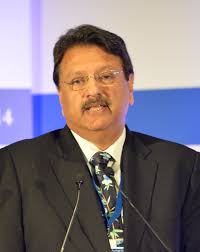
This conversation isn't about business numbers or balance sheets. It's about the person behind the leader, the experiences that shaped him, the values that guide him, the decisions that changed his life, and the legacy he hopes to leave behind. Please join me in welcoming the chairman of the Piramal Group, Mr. Ajay Piramal. Namaste, sir.
Thank you so much. Thank you.
My first question to you — it's a big special moment for me. Businessman, investor, philanthropist. When you look back...
I think purpose in some ways is the definition of the life of most of us. Purpose — doing well and doing good, and making a positive difference in the world around us, by serving people and living by the values. So I think that itself is a definition. So whether it is business — textiles, pharmaceuticals, financial services, or philanthropy — purpose. You do well in it, and at the same time, whilst you have to perform well, you also need to make a positive difference in the world.
So do something and also understand: why am I doing it? What's the actual purpose that I am serving?
So you continue doing that, but you also reinvent yourself.
So in some ways, circumstances themselves also made me do it the first time. So we were basically a textile business. Our textile company, Morarjee Mills, was there from 1871. It's a long-established company, but when I started leading it, circumstances made it happen. My father passed away when I was pretty young — I was 23. Then my elder brother, who was the chairman of the group, also passed away at a young age of 34. So I was pushed into leadership at a young age of 29. But more importantly, besides all these tragedies in life, there was also a big strike in the textile industry. That was the famous Datta Samant strike, where every mill in Mumbai was affected. And therefore, I also realized that it is time — yes, you have textiles, but one has to look beyond textiles. So one had to reinvent oneself, and that's when we went into pharmaceuticals.
And pharmaceuticals is actually just the opposite of what a textile industry is. Textiles is labor-intensive; pharmaceuticals is much more marketing-driven, much more IP-driven. So they were very different. So one had to wear one hat in the textile, which we still were in, and the other in the pharmaceuticals. Later on, when we sold a part of our pharmaceutical business to Abbott in 2010, we had a fair amount of capital that came in, and we had to deploy it. Rather than just living on it, we decided to create value out of it. And that's when, beyond pharmaceuticals, we also went into financial services and real estate. So that's how sometimes circumstances — at the time of pharmaceuticals, whilst looking at the environment, I thought these two were the more future-oriented industries.
So you're saying sometimes it was circumstance — you had no choice, you were pushed into it, so you had to do it. Other times, you had opportunity, you had the ability, so let's do something and get into it. But what is the one thing that was a constant? What is the one thing about you, about your business, about your values, that did not change despite the changing businesses and sectors?
So one thing, of course, that didn't change was that every time there had to be the purpose that I spoke about — that we had to do well in it, perform well, which fortunately we could, and also that it had to do good. And we had to live by whatever values we had. And I think this is what has really held us together and has been to whatever we've done till now.
So this purpose — how do you find that purpose? That's one part. The other thing is, four decades now, sir, and more than 100 acquisitions, investments, exits. You've seen all kinds of business cycles. You've seen it all. One thing is, many believe and many credit you for it — that you see opportunity where people tend to see uncertainty. What's the secret sauce for this?
So I think when there is uncertainty, there's a lot of ups and downs in business. In life, I don't see anybody who's not had ups and downs. In fact, if you go into the scriptures, you look at the life of Lord Ram and Krishna — they've all had the most challenging lives. They have purposely come into this world to demonstrate that. So therefore, during this period, how do you remain equanimous? How can you sit back and think and see — the sea will also be calm, the ocean is calm after some time, and that's when you can see opportunities. So we've been able to do that. Even during the textile crisis, what was one industry that we thought, okay — pharmaceuticals was an industry which was then still in its early stages as far as India was concerned. There was potential for it, and that's where we got into it. So that's how, always, I think one has to sit back and look at what is happening and go beyond the headlines to really understand what the market could be like in the future.
But isn't there a conflict within you? Because oftentimes leaders take decisions which are not necessarily driven by data. So if data points one way and your gut or your instinct points another way, what choice will Mr. Ajay Piramal make?
So one has to look at the data, but one has to look at what is the real data. Very often, as you said, data on the surface may be one thing, but what is the real underlying data — one has to go through. And on that basis, one has to decide. And that's where, yes, instinct does play a part, or the general impression that you get about it is important. But data is also important. So take the pharma case again. Most people at that time — pharma was not an attractive industry in India. Every multinational was thinking that there's a problem in India — problem of pricing, problem of intellectual property protection. And MNCs were very high cost, so people were not interested. But we saw through that and said that, underlying it all, there's still a good future for that industry. So one has to go beyond headlines, and then, of course, instinct does play a part. If you think that it smells right, it looks right, people are good, then you do it.
But there must be people who would have said, 'Don't do this. Don't get into it.'
That's happened many times. I can tell you a case. It was in 1984, in August. My elder brother, who was chairman of the group as I said, was pretty serious, and he actually passed away in August of '84. But in July, there was an opportunity which came across of investing in a glass plant. Now, everybody at that time, I can say without exception, thought that that was a very stupid idea for me to do it, because there was the crisis in the family, as I told you, about the crisis in the textile. But somehow I felt that one has to act. I mean, yes, there is tragedy, there is difficulty in life, but if you won't move ahead, then you will be stuck in that all your life. And I thought that this was a good opportunity. And so, yeah, that time, that's where I think you have to have that — if I call it like an owner's mindset. You have to take the risk. It was risky, but I think it turned out well. Actually, we could make a world-class facility, world-class business.
So walk a path where nobody would walk, and to back conviction is not easy. You talked about Ram and Krishna — so one of my favorite topics, we'll come to that — that is the Bhagavad Gita, the Shrimad Bhagavad Gita. You've spoken about trusteeship oftentimes, and you've also said that it inspires you. A recent foreword that you have written, you've also spoken about it in Dr. Balu's book. So I'm just going to ask you that — you've said that wealth isn't something we own but something we are entrusted with. Now, has there been a moment when this philosophy shaped a business or a personal decision? How much has the Bhagavad Gita helped you?
Actually, if you look at the setting of the Bhagavad Gita, the Bhagavad Gita is actually set in the midst of a battlefield. Yes. It is also when Krishna is giving the Bhagavad Gita to his friend — it is his best friend. He's not then looked upon as God by Arjuna. And he's giving it to Arjuna, who is the most skillful warrior in the world, and yet — so it's being said at a time when that's not the best time to give a discourse. But there is a reason why it's said at that time — to show that every one of us can use it at any time. So that's the learning of the setting itself of the Gita, so important. And I think whether you talk about trusteeship, which is that you are just a mere instrument and the wealth is given to you by the Lord — that itself, I think, is so correct. I mean, so if I just go on that one concept — think of it, how privileged you are to be born a human being. You have to spend millions of lives, as we say — 84 lakh birth cycles — and then you become a human being. Then, for people like me, but so many of us, we've been born in a good family. We've learned the values from our family. We've got the education. We've got the whole environment around us. I'm fortunate that we come from a wealthy family. So all this, again, is a privilege, and therefore, I think we have to be grateful and we have to give back.
So this nimitta matra concept, and to have also equipoise — is in direct conflict with ego. So how do you balance that as a leader? How are you able to?
So I think perhaps one of the biggest — if you're quoting from the Gita, you will talk about humility being so important. A humble person is the right person, as far as is described in the Gita. And it's so important. I have found it in my own life that sometimes when you're not humble, then you're not listening to other people. And I'll give you a personal example. In 2010, we had sold part of our pharmaceutical business. Now, that was sold for 3.8 billion, and that was the highest valuation in the world for a generic formulations company. After that, we also made a couple of other investments which were very good. So somewhere, I think, in my own mind, it was hubris which came in. Because till now I thought I was humble, but somewhere I felt that I can do everything right. And that's when we made some mistakes in lending. We started in real estate lending, and we made some wrong decisions. And there were people who were telling me that you're not doing right, but I was not listening. So I think humility, to me, is the most important thing. And that opens up the world to you — then you can hear good people telling you things, and it just helps in business. So ego is — I think, what is there for ego? We are not that great. Nobody is so great.
That takes great humility and learning to be able to understand that. And they say that ego is Maya's greatest weapon — it keeps you away from true spiritual development. We'll come back to it in a bit. I just want to also ask you — how would you view succession in leadership? Many believe that good leaders and good business — even, let's say, the Piramal Industries itself — how do you see succession?
So frankly, I've already done the succession. It's important that succession — not taught, but should become leaders by just understanding the values that the family has had. And they have to have competence. So I have two kids, and I'm fortunate — actually, both my daughter Nandini and my son Anand are both graduates, one from Stanford and Oxford, the other from Penn and Harvard. They've had good business experience, and now they are both independently running the businesses — one is in pharmaceuticals, the other in financial services and real estate. So I think that is important, and I think it was kind of planned in that way. And I also believe that one has to give the reins over at a time when they are young enough to have a career ahead of them. They are raring to go. So both of them are in their early 40s. So this is a good time. So I believe succession is very important — new ideas, new thoughts.
But is it easy to let go? And is it easy to look beyond your own as to who will be the right leader? Are these easy choices to make?
No, they are not easy to do. But I myself — I mean, if I learn the Gita, that's where I believe that you have to let go. And if you are just a trustee, then it's not yours. So what are you letting go? You're only letting go of the position. And I don't want to think that my identity is my position. It's more than that to me. And you have to choose the right leader. What I think is important is that they must have — and my both kids have, and we've done it all throughout in my career — that the best persons in the organization must be there. You have to allow professionals to lead the businesses. But I think the leaders also have a key role to play. And this is what gives confidence even to whether it's the lenders, whether it's the investors — that you have somebody who has a full stake. We talk about giving ownership to employees and giving stock options. This is the biggest stock option somebody has.
True. Absolutely. You know, here we're talking about legacy leaders. One of the questions I would have wanted to ask — the entire family of Arvind Mafatlal — or right now I want to ask you is this concept of vairagya that you spoke about — attachment with detachment, or the ability to let go. It's not easy to build. It's very difficult. But how do leaders at that level — how are they able to do it? You don't want the publicity, you just want to do good. You have the purpose and you are ready to move on. How are you able to do it?
Well, as I said, I'm fortunate. I feel that I have been — I'm not attached. As I said, my identity is not because of my business. My identity is not because I am XYZ in the company. My identity is actually beyond that, I feel. And that's why I can — I have done it right from the beginning, knowingly that I will do it. And I'm actually very happy.
Yeah. So it's not easy to get there. When things are going good, it's all right. But when failure happens, when there is self-doubt, when you find yourself in an Arjuna-like situation — then what do you do?