The entire day was all these coding interviews, and at the very end, the last question the guy asked me is, 'Hey, you're crossing a street, a child falls, what will you do?' I eventually blurted out, 'I'll call 911.' And he gets up and he says, 'When a child falls, you pick them up and hug them.' And he walks me out. 'You need more empathy.' I said, 'Oh my god, I think that's it. I'm definitely not getting this job.'
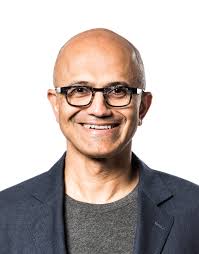
Welcome to Confession, where I invite tech veterans to share their painful lessons. We all connect through shared pain, and I've had more than my share of big mistakes in my career. I'm Ali Partovi, and I run NEO, a venture fund and mentorship community for startup founders. In this episode, I sit down with Satya Nadella, legendary CEO of Microsoft and a dear friend of mine. We each share confessions about things we did wrong and what we learned from them. I think you'll really enjoy it. This is Confession. Let's begin. Thank you so much for doing this, Satya. Welcome to Confession.
Lovely to be with you, Ali, again, and happy to do this.
I'd love to start by just learning a little bit about your life. Where were you born? Take me back to what little Satya was like.
You know, I was born in India. I was born in the city of Hyderabad, which is very different today than even it was when I was growing up there in the '70s and the '80s. For an Indian middle class, I did have a pretty privileged life. I had a father who worked in the Indian civil service, a mother who was a professor of Sanskrit. They were very academically accomplished people. I was the only child, so in some sense they gave me a lot of room and confidence to explore, find my own path. My early passions were, you know, I was very provincial in some sense when growing up. I don't think I even had the dream of ever leaving the city.
I was obsessed with playing cricket. I thought that's kind of my calling and that's what I'll do. And I was smart enough to recognize that I was not good enough to ever sort of really make it as a professional cricketer, but I was going to be a good club cricketer. And then I was going to get a job in a little bank there and live my life. And for some reason, that's not how it panned out. Luckily for me, I guess a few years back, you know, my high school certificate, my daughter found it lying somewhere. We were moving places or what have you. And she looks at me and says, 'What? These are your marks?' And I distinctly remember my father also looking at my scorecard, okay, and also laughing at it. So I'm one of those guys who both my daughter and my father sort of said, 'Man, this guy is pretty mediocre when it comes to academics.' My parents greatly influenced the ability to continuously learn, perhaps, right? If there's one attribute, it's the version of Satya each year. It's slow, but it's better each year. I was better than the previous year. For anyone who starts slow, it's okay as long as you keep getting better.
Was there any story of mischief? Did you ever get in trouble as a kid?
Yeah. I mean, I had this quiet confidence and I wanted to do my thing and be left alone. But there was one thing that triggered me, and that was bullies, right? So anyone who tried to do anything, that is when I somehow reacted in a way that was not the normal reaction I would otherwise have, right? Because that's the only time I think my parents were called into the school to explain what the heck happened. Like there was this one kid, we were in the playground and he was trying to push me around and I pushed him back and he fell and it was a bit of a disaster.
Do you remember this person's name?
I don't remember the person's name. I think I was in second grade.
This was in second grade.
Yeah, this is in second grade.
You got in trouble for knocking out a bully.
Knocking out a bully. And I've had incidents like that where, yeah, I do react pretty negatively to anyone who provokes me for the wrong reasons, but I'm not easily provoked.
Okay. Note to self, don't bully Satya. Well, take me into your path to the United States and your career. How did your career begin?
Thanks to a little bit of push from my father. He had bought a Sinclair ZX80 when I was probably in 10th grade at that time, and that was my first introduction to computing and software. And I kind of was into it, and I was not much of a tinkerer. I was not a builder. I was in the aeromodeling class, I remember, and none of the planes I built flew, as far as I could tell. So obviously I didn't have that mechanical talent to build, but you know, computers at least I felt like, wow, this is the first thing that I had agency in. And luckily I remember getting into two colleges, one in mechanical engineering and then one in what at that time was called electronics and communications engineering. And I had a big choice to make, and my father pushed me, saying, 'Software is the future,' or, you know, 'Electronics is the future.' I'm thinking, man, this guy's an economist, he doesn't know a damn thing, what is he advising me on engineering? But it was great foresight because he pushed me into this track. So slow and steady, I started learning, getting better. So I came to the States to do my master's, actually in electrical engineering, but then in the first semester, a friend of mine who was also from my same undergrad college had switched to computer science. I remember taking a class with him, I wrote a massive amount of Lisp code, the coding stuff started coming a lot more naturally to me at that stage, and so I switched majors. I graduated and then got into Sun. I worked for a couple of years at Sun. So anyway, the way I describe it sometimes is it is American technology, broadly speaking, reaching me growing up in India, right? And it's the American immigration policy, enlightened American immigration policy, that let me come live here. I mean, first learn, study, and live here, and then contribute.
Great. So take me through. How many years have you now been at Microsoft?
I joined Microsoft, yeah, 35 years. So I joined Microsoft in '92, and yeah, it's been basically a lifetime.
The purpose of this conversation is to talk about, you know, painful moments that you maybe haven't shared before, or lessons learned, mistakes you've made. So I'd love to have you take us back to think through across that 35-year arc. Are there themes or specific stories that you look back on thinking, 'Oh man, I messed up,' or where you learned something the tough way?
Yeah, I mean, there are many, Ali, in the sense that there are a couple of different arcs we can pull the thread on. I mean, the thing that I have talked about, but it's still, I think, one of the formative stories of my journey is, you know, you worked at Microsoft for a brief time. So there's this last interview, it's called the 'as appropriate' interview. The guy who was doing my interview, his name was Richard Tate. I distinctly remember he was a Scottish guy, just an unbelievable human being who unfortunately has passed since. The entire day was all these coding interviews on the whiteboard, and you know, all kinds of memory management and algorithms and blah, blah, blah. And at the very end, the last question the guy asked me is, 'Hey, you're crossing a street, a child falls, what will you do?' And I said, 'Oh God, is this some variant of the traveling salesman or some computer science challenge I don't know about?' This is some computer science challenge, and I went everywhere except for the thing. So I kind of tried to... then I eventually blurted out, saying, 'I'll call 911.' And he gets up and he says, 'When a child falls, you pick them up and hug them.' And he walks me out. 'You need more empathy.' And that was his word. And I said, 'Oh my God, I think that's it. I'm definitely not getting this job.' It was a fascinating thing that somehow he felt like he needed to deliver that message to me. That was the last question. I did get the job.
That's so powerful, Satya. People ask me what you're like, and you know, I reported to you for a year or something like that, and the word empathy is always either the first or among the first words that I mention. And it's surprising that someone gave you that lesson so starkly, and it's such a, you know...
Yeah, it's a hard thing, quite frankly. You know, I kind of understand even that and a lot more now, Ali. In fact, I would say the most formative thing that happened just on that arc, even because even at Microsoft, one of the most formative things that happened to both Anu and me, you know, I was 29 years old when Zain, our son, was born, and you know, he had cerebral palsy, and he had a tough life. He passed a few years ago. I remember I was mostly about, 'Oh my God, why did this happen to us? Why did this happen to me? Why do we have this tragedy and this, that, and the other?' And then it was actually watching my wife struggle through it all. In fact, taking Zain up and down 520 to every therapy possible and being there for him. And it was when I realized that nothing had happened to me except Zain needed a lot of help, and that I needed to now see the world through his eyes and understand that and be helpful as a parent, as a father. And that maybe the thing really started getting me to even think about what does it mean to be a manager. In fact, one of the things that you triggered for me was the memory of the manager whom I was working for, his name was Mark Cruz. The call he made to me the day Zain was born, because we were trying to figure out, he was in the NICU, and it was sort of all of a sudden, and we were absolutely not prepared. And I remember him saying, 'Hey, take all the time you want and don't worry about work.' Right? Just those few words from this one manager at a time when you most need it. I think back at it, right, even the company, the insurance that Microsoft had, those kind words of a manager just give you all of what you need in terms of support. And I look back at it, and to your point about even the confessions, the biggest regrets I have are times when I don't have empathy. And it's hard. You make these calls, you're obsessed about something, you go into a meeting, you really don't understand, don't listen, don't see it through other people's eyes, and you're judgmental and what have you. So yeah, that's one arc. I don't think it's ever finished. In fact, I think being human is to sort of have increasing levels of empathy, because life teaches you, right? It's not like, oh, we are born with empathy. It's just life, through every day, gives you the ability to have more empathy for more of what is happening around you. I remember it was my first job where I was managing people. There was this lady who worked for me, and I just could not get myself to recognize what she was struggling with. And I remember her coming to me multiple times, even, and asking for help, and except one, I didn't care. I didn't listen. I just wanted the job done. And so the level of... and when I look back at it, you know, I'm quite frankly stunned at both my ignorance of my job and also, more importantly, regret what it may have done for her, right? Because subsequently, I don't recall the entire thing, it's just so far back, but I remember she left Microsoft after a few years after that. I don't remember whether she left at that time or a little later, but it has bugged me, what was my impact of not being there as a lead helping her out when she was asking for help. It was about some simple thing, right? 'Hey, I need to coordinate with another team and I need to get that done.' I was just mostly an absent leader who was just barking orders, right? Versus being the one who was even helping.
What emotions does it bring up for you?
The emotional side of being a leader is that, right? Which is you're going to make mistakes. You have to have the courage to learn from your mistakes, right? I think that's the thing. It's not like you're going to be perfect. But to me, that's the other part of the Microsoft journey, is how do you build the courage to confront your own mistakes, fixed mindset, even big ones, especially ones like this, which are about soft skills that are the most important skills. They're the hardest skills in some sense. It's all about being able to get people to be able to do their very best working with you, around you. Yeah, and I obviously failed at it, and many times, you know, over the years built more of that skill set.
Again, for what it's worth, I think it's your top trait, or one of your top traits, empathy.
I remember another more consequential meeting. This was maybe 2008, maybe. Bill called a meeting. I was at that time running what became Bing later on, and this was an acquisition our enterprise business was making, and they were trying to buy some kind of a parallel data warehouse team. I looked at it, it was completely architecturally stupid at that time to go buy that. This is this other team sort of making some decision which made no sense. I sat in this review. I distinctly remember this. In fact, it haunts me to think that I may be in a review where there's somebody in that meeting who sees the future a lot more clearly than I do, and the other person presenting, but does not really advocate for it. And so that's what I did. I just kind of got out of the meeting and I said, 'Ah, this is such a waste of time.' You said you sat in this review, you saw that there's an opportunity and the right path, and other people were taking a different path, and some different group had their own agenda, and you could have stood up and banged the table or said, 'You guys are making a mistake.' Like, how do you do that? The thing is, in a large company, let's face it, right, there are different groups, there are different incentives, but you work for one company, and your job as a leader is not to say, 'I work...' like this owner mindset is like, at some point, you know, Steve Ballmer had once said this to me, at some point you transition from just working at a place to feeling like I'm one of the owners. It's not about, like, am I on the cap table and exactly what my number is, it's more a mindset, right? Because life's not lived by just being so transactional about everything. Because at the end of the day, we all perish, and nobody's going to look at any balance sheet or income statement, and it's going to be like, hey, how did you live your life? And so that's the thing. This is what is fascinating about us as humans, we are irrational. And so that's the thing, like, how do you develop that courage or the owner mindset to go fight for what you feel is the right outcome for the company, but do it with an approach that doesn't trigger the amygdalas of everybody else, right?