📅 Oct 23, 2026Finance Deep Dive8 MIN23491 VIEWS15 SEGMENTS · 5 SPEAKERS
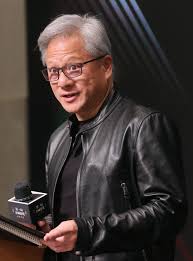
Jensen Huang is pushing back against concerns surrounding Nvidia’s AI boom. At GTC Berlin, the Nvidia CEO explained why demand for AI computing remains extremely strong, why neocloud companies need more working capital, and why he doesn’t expect memory demand to disappear anytime soon.
He also revealed how Nvidia’s new DSX architecture could help data centers move from installation to production much faster, potentially improving efficiency and profitability across the AI industry.
00:00 — Jensen Huang addresses AI market concerns
00:45 — Why neoclouds need more capital
01:40 — Is memory ov...
Questions asked in this interview
2
0:16So I asked Jensen Huang, is there actually a fundamental problem with the business models of these neoclouds?
2:56Would you ever, if it came to it, bail out one of these companies, or is it time for neoclouds to stand on their own two feet?
AI, always in focus, and video wrapping up its GTC conference today in Berlin. CNBC's Arjun Kharpal spoke with CEO Jensen Huang at the event, and Arjun joins us live. Arjun.
And David, it's been Jensen-mania over here in Berlin, and a great time, of course, to catch up with the Nvidia CEO given some of the concerns around this AI trade in pockets of this market. One of those, of course, being the neoclouds, led by concerns over CoreWeave, some of the debt financing we've seen there, and a number of quite bearish stories around some of these neoclouds. Now, of course, Nvidia is an investor in many of these neoclouds, from Nebius all the way through to Enscape and CoreWeave as well, and they are buying up billions of dollars worth of these Nvidia GPUs. So I asked Jensen Huang, is there actually a fundamental problem with the business models of these neoclouds? Let's listen in to what he had to say.
The demand for the neoclouds is off the charts. Their capabilities are extraordinary. And so, what is missing in the middle is the working capital to fuel that growth, to fund that growth. And because there's so much demand across so many sectors of AI, there's a scarcity of capital. The demand for capital is much greater than the availability of the capital. That's going to get solved. And that's going to get solved because fundamentally, the most important things are the values that these guys are providing, these companies are providing. The demand for it is so strong.
Jensen's view there, really, it's not an issue about demand or the business model itself, but access to working capital as well. And of course, as I mentioned, Nvidia backer of many of these neoclouds. Another big concern in the market, of course, is over some of the memory stocks, the likes of Micron and Samsung and SK Hynix, and whether there is actually potentially an oversupply. This was a conversation that was sparked a few days ago by a prominent South Korean business paper who suggested that there could be oversupply of memory in 2029. It was a question, of course, given that Nvidia is a big buyer of memory and of high-bandwidth memory in particular as well. I asked Jensen Huang whether a 2029 oversupply scenario is likely. Let's listen to what he had to say.
I don't think so. You know, one of the things that's really great about memory is that you could always use more of it. And of course, through architectural ideas, and Nvidia owns the architecture of our systems, through architectural ideas we could shift around the resources as necessary. But HBM memory will be used for years to come, and LPDDR...
So no signs of memory oversupply there, according to Jensen Huang. He goes, there's lots of memory that is going to be needed in the future. We spoke through so many topics, all the way from his views on safety through to the China market and whether that is still open to the company as well.
Jensen, we're obviously in this environment where the cost of capital has increased, and as a result, investors are increasingly scrutinizing the business models, the balance sheets of the neoclouds. And clearly that is creating some headwinds, whether it's Fermosa or CoreWeave or NextDC. You've backed a lot of these companies financially, rhetorically, financially. So my question is, how far is Nvidia prepared to go to back neoclouds? How much further could you go in extending your balance sheet to support those companies? Would you ever, if it came to it, bail out one of these companies, or is it time for neoclouds to stand on their own two feet?
7 more exchanges in this transcript
Sign in free to read the rest of this interview. No card required.
Huang, J. (2026, October 23). Jensen Huang - AI Demand Is About to Explode [Interview transcript]. Finance Deep Dive. CEOInterviews.AI. https://ceointerviews.ai/interview/3123876/
MLA
Jensen Huang. "Jensen Huang - AI Demand Is About to Explode." Finance Deep Dive, 23 Oct. 2026. Transcript, CEOInterviews.AI, https://ceointerviews.ai/interview/3123876/.
BibTeX
@misc{huang2026_3123876,
  author       = {Jensen Huang},
  title        = {Jensen Huang - AI Demand Is About to Explode},
  howpublished = {Interview transcript, Finance Deep Dive. CEOInterviews.AI},
  year         = {2026},
  month        = {oct},
  url          = {https://ceointerviews.ai/interview/3123876/},
  note         = {Speaker-attributed transcript with timestamps}
}