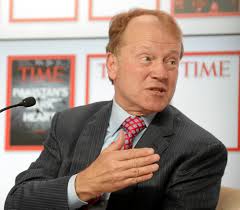
Hello and welcome to Leaders of Tomorrow, India's only daily television platform for small businesses. We bring you the right information to empower you, the SN entrepreneur. Tonight on the show, an exclusive conversation with John Chambers. He is the chairman emeritus of Cisco, also the former CEO of Cisco, and in his present role he is the founder and CEO of JC2 Ventures, investing into entrepreneurs and startups.
John, such a pleasure having you here with us and the Leaders of Tomorrow in this exclusive conversation talking all things entrepreneurship, startups, and leadership as well. So it's exciting to be speaking with someone like yourself. I want to start this conversation by asking you, you've now turned investor after more than 25 years of being the chairman and the CEO at Cisco. You now are an investor. What are maybe one or two things that you look at when you're investing into businesses?
Well, you know, the fun part is if you were to look at my 25 years at Cisco, I acquired 180 companies, 12 of them over a billion dollars. And so I've been an investor for a while, but what I'm really doing now is more of a strategic partnership role with startups and trying to change the world one more time because I believe startups will be the primary generator of jobs, innovation, and economic growth. The large companies will probably not add jobs over the next decade because of artificial intelligence, automation, digitization. So when I look for in terms of my startups, it's very similar to what I used to do with acquisitions. We had our eight major goals from acquisitions. They were our innovation playbook and most people believe that we did the best job in the world in terms of acquisitions and they taught our process in Harvard and Stanford etc. business school.
With the startups it's a very similar approach. The first thing I look for in startups is I look for a market or business transition, i.e. economic transition going on enabled by a new form of technology. And that's like for example what Amazon did to Walmart a number of years ago or what Uber is doing to the transportation industry. Second thing I look for is a world-class CEO. And without exception, if you're going to have a great company, you just got to have an unusually smart, talented CEO who wants to be coached. She or he knows what they know and knows what they don't. And they want a true strategic partner to help them grow. Third thing I look for was only one Steve Jobs. He knew what to build. He didn't ask much input from anybody. But it also took him seven years to do it. What I always do whether it was acquisitions or now with my startups is I find out who their top customers are and I ask the top customers what do they really think of this organization and this company and the CEO. Then I look is this company capable of being the number one or number two player in their segment of the market with at least 30 to 40% market share. And then I look at how close they are to an inflection point. Is it about to take off? So that's kind of the rule that I use for startups and candidly as an investor, people looking in to invest, that's almost the same criteria I would use if I were them.
Some of the companies that you've invested in, including say Lucidius, you also play the role of a mentor who's very actively involved in the business. Why is that necessary? Why is that your model?
Well, first, the majority of startups, probably 98% of them will eventually fail. Secondly, many startups do not have a mentor, an adviser that really helps them grow and scale. And third, today's startups are waiting much longer before they go public or before they even get to unicorn type status. And so traditional VCs who are good in the early stages aren't as good about scaling and operations. So what I try to do is strategically partner to be a coach with them. I help them on everything from when you look at a CEO, you evaluate him or her on their vision and strategy. You evaluate them on how they're doing developing, recruiting and retaining their team. You evaluate on what most young startup entrepreneurs miss, the importance of culture and what is your culture. And then fourth, communications are huge skill sets. So I help my startups in each category. So whether it's Lucidius with Saket Modi who's just amazing or Unifor with the mesh, I evaluate them on we work constantly on the vision and strategy and review it literally monthly. We usually talk at least two to three times a week either by texting or talking. I help them recruit and develop and retain their leadership team. For example, I'm helping Saket with a key recruit that he's doing right after this doing a video session to try to recruit that person. We then spend a lot of time on culture and that's one of the things that young CEOs, you never have a great company without a great culture. You may or may not like the culture but underneath a Microsoft, a Cisco, a Walmart is a very strong culture on it. And then communications is becoming so important today. And a large part of communications is how you listen, how you deal with media, how you communicate to your employees and your investors. And two decades ago, you could be a brilliant CEO and get away with it just being average on communications. Not in today's world.
Okay. So, you're saying 98% of startups are bound to fail.
90% of them will. Not just bound to but will. Through this interview, maybe one or two things that you want to tell the entrepreneurs who are watching this to say this is what you should be watching out for.
Oh, okay. Great. Several things. The four characteristics that I just said about a CEO, stick on those four. Secondly, as basic as this sounds, say where should you spend your time on those four and actually track it and you'll be shocked. You spend a lot of time where you should not as a young entrepreneur. Third thing is understand your sustainable differentiation both today and in the future and if it isn't there, you're not going to survive on it. And fourth, surround yourself with people that complement the areas you're not as strong on and create an open culture for communications. But if I were to say the one thing this group will probably do the same thing the US Silicon Valley people do, they'll underestimate how important culture is. How important culture is to have a great company. Are you truly making innovation happen? Are you truly customer-driven or not? Are you truly a family or are you a Netflix, which by the way is not a family, but they're a professional football team where it's up or you're out in terms of its capability. Do you just do the right thing? Do you only hire people that are really good people? In other words, no jerks. And the CEO has to own that. So if there's one element that I think your listeners might underestimate on entrepreneurship and startups, it's the importance of culture.
Most of the workforce here in India are now in the 25 year old age group. They're mostly millennials. For entrepreneurs and for leaders who are watching this interview to say how do I deal differently with millennials in the workforce? What would you have to say?
With millennials, different things motivate them. One of the reasons Cisco was so successful is that we retained our people in an industry that has 15% turnover. My turnover was only 5%. And we created a family-like environment. Millennials want to work for something more than just a job and a paycheck. And also more than just being successful, they want to make a difference in society. And then you've got to get them involved and challenge them. My son has already had five different jobs and he's now joined me as a partnership. I only had three jobs in my life. And so millennials, I think the employers have to understand, will move more frequently and if you're going to keep them in your company you've got to get an environment that really is socially aware of the changes, that is really fun and people can achieve their careers, aspirational goals, personal and business.
Okay. I want to take a big picture view of you and talk about how perhaps Indian startups are very different from what you've seen globally. Are they any different?
The honest answer is no. You know, it's so interesting. When I came to India a number of years ago with Cisco, I was giving every single time we talked about culture being a huge part of what the CEO should own and constantly reinforce. And I said, you got a question for the audience, 5,000 people in the audience, and the person in the back row said, 'John, you don't understand culture can't be the same around the world as it is in India. It's different cultures, and Cisco's culture must be different.' And so then I had fun. TV cameras were on me and because there's 5,000 people I walked off, I pulled my cultural badge out and I said change the way the world works, live certain places, is that different in India? No. Make innovation happen, is that different? No. Just do the right thing, is that different? No. Customers first, is that different? The point that I'm making is that the values for successful startups are the same and even in France which used to be the worst place in the world to do business in Europe just 5 years ago and they've made a tremendous transformation under Macron. When I met with the 77 French startups four years ago at the Consumer Electronics Show and I met with all of them because I heard French was changing. It was just like I was in Silicon Valley, the questions were identical except the accent was funny and you know I speak with an accent so I can tease on that. So the questions that I get about startups here and I talk to probably 40 different sessions a month both here in the US and around the world are identical and the characteristics that make startup successful are almost identical as well.
But it's no surprise that Indian startups still have a long ways to go before they compare perhaps with the ones that you see in Silicon Valley or even in Israel. If you were to see the startup ecosystem here in India rival what we're seeing globally, what should change really?
Well, first of all, I think the startup system in India if done right will not only rival, it'll be among the leaders a decade from now. What is going right? Your engineering schools, your IITs, etc. producing the best and brightest engineers in the world and they do it in English and in a democracy and interesting enough half my startup founders in the US out of my 16 companies in the US invested in are first or second generation Indians. So there are many things the country is doing right in terms of talent, the education system etc. In terms of what you really think to create the right environment for startups, if you're in a government perspective you have to basically deal with the bankruptcy laws which they did, the goods and services tax it allowed for free flow that was very important. Demonetization was a huge move and you've got to say how do you restructure the country to be a startup nation that starts with the leader of the nation, Prime Minister Modi owning it then putting a position where startups fit into his digital agenda and where it fits into job creation as you go forward.
So it's just like a CEO of a company outlining the vision for the country. What are the elements to make that happen and where do startups fit in? I'm going to take a very quick break on that note, John. But we will continue this exclusive conversation with John Chambers on the other side discussing entrepreneurship and his advice for entrepreneurs in India. Do stay tuned back in just a short bit.
Welcome back with us here on Leaders of Tomorrow. And tonight, I'm continuing an exclusive conversation with John Chambers, getting his advice and top tips for entrepreneurs and what he thinks it's going to take for Indian startups to be on par with their global peers.
So that brings me really to the role of the government. We speak to a lot of entrepreneurs and the opinion on this is really divided. So I'm curious to understand you know on what side of the argument you are. Entrepreneurs on one hand say the government should have a hands-off approach. That's the only way innovation can be allowed to flourish. Other entrepreneurs say no we do need a regulatory framework and this in a country where even the definition of startup it really hasn't been defined. What's your opinion on that?
Well, in the reverse role, a startup in today's environment often goes to 10 or 15 years before it's considered not a startup. In fact, the average startup in Silicon Valley before it went public was in existence this last year for 10 years. Secondly, that startup framework has to actually be embedded even in the large companies with a startup mentality. I used to have the view of your first group which is the further away government was the better and I was wrong. Government and startups and business have to work together to the benefit of the society and also to create the right regulatory framework or regulatory light framework to make things happen. So I think the role of government and business and startups working together. India has been more one of the and probably the most responsive government in the world over the last four to five years on here are the legitimate concerns of business and job creation and how do we address them.