Full episode: • Satya Nadella – How Microsoft thinks about...
Spotify: https://open.spotify.com/episode/290a...
Apple Podcasts: https://podcasts.apple.com/us/podcast...
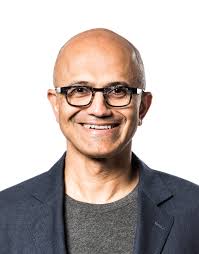
As part of this interview, Satya Nadella gave Dylan Patel (founder of SemiAnalysis) and me an exclusive first-look at their brand-new Fairwater 2 datacenter.
Microsoft is building multiple Fairwaters, each of which has hundreds of thousands of GB200s & GB300s. Between all these interconnected buildings, they’ll have over 2 GW of total capacity. Just to give a frame of reference, even a single one of these Fairwater build...
Questions asked in this interview
5
0:00What is your thought process here and how do you think about this?
Every other administration around the world cares a lot about AI. And the question is, you know, we're in a sort of a bipolar world, at least with US and China, but Europe and India and all these other countries are saying, 'No, actually, we're going to have sovereign AI as well.' How does Microsoft navigate the difference of the '90s where it's like there's one country in the world that matters, right? It's America and we do our companies sell everywhere and therefore Microsoft benefits massively to a world where it is bipolar where hey Microsoft can't just necessarily have the right to win all of Europe or India or Singapore. There's actually sovereign AI efforts. What is your thought process here and how do you think about this?
It's I think a super critical piece which is I think that the key priority for the US tech sector and the US government is to ensure that we not only do leading innovative work but we also collectively build trust around the world on our tech stack, right? Because I always say the United States is just an unbelievable place. It's just unique in history, right? It's 4% of the world's population, 25% of the GDP, and 50% of the market cap. And I think you should think about those ratios and really reflect on it. That 50% happens because quite frankly, the trust the world has in the United States, whether it's its capital markets or whether it's its technology and its stewardship of what matters at any given time in terms of leading sector. So if that is broken then that's not a good day for the United States. And so if we start with that which I think President Trump gets, the White House, David Sacks, everyone really gets it. And so therefore I applaud anything that the United States government and the tech sector jointly does to quite frankly for example put our own capital at risk collectively as an industry in every part of the world, right? So I would like in fact the USG to take credit for foreign direct investment by American companies all over the world, right? It's kind of like least talked about but the best marketing that the United States should be doing is it's not just about all the foreign direct investment coming into the United States but the most leading sector which is these AI factories are all being created all over the world by whom? By America and American companies. And so you start there and then you even build other agreements around it which are around their continuity, their legitimate sovereignty concerns around whether it's data residency, whether it's even what happens for them to have real agency and guarantees on privacy and so on. And so that in fact our European commitments I think are worth reading, right? So we made a series of commitments to Europe on how we will really govern our hyperscale investment there such that really European Union and the European countries have sovereignty. We're also building sovereign clouds in France and in Germany. We have something called sovereign services on Azure which literally give people key management services along with confidential computing including confidential computing in GPUs which we've done great innovative work with Nvidia. And so I think I feel very very good about being able to build both technically and through policy this trust in the American tech stack.
And how do you see the shaking out as you know you do have this network effect with continual learning and things on the model level maybe you have equivalent things at the hyperscaler level as well and do you expect that the countries will say look it's clearly one model or a couple models are the best and so we're going to use them but we're going to have some laws around well the weights have to be hosted in our country or do you expect that there will be this push to have it has to be a model trained in our country? Maybe an analogy here is like people would you know the semiconductor which is very important to the economy and people would like to have their sort of sovereign semiconductors but like TSMC is just better and so semiconductors are so important to the economy that you will just go to Taiwan and buy the semiconductors you have to. Will it be like that with AI or is there?
Ultimately I think what matters is the use of AI in their economy to create economic value, right? I mean that's the diffusion theory which is ultimately it's not the leading sector but it's the ability to use the leading technology to create your own comparative advantage, right? So that I think will fundamentally be the core driver. But that said they will want continuity of that, right? So in some sense that's one of the reasons why I believe there's always going to be a check a little bit to sort of some of your points on hey can this one model have all the runaway deployment. That's why open source is always going to be there. They will be by definition multiple models. That'll be one way like it's kind of you know that's one way for people to sort of demand continuity and not have concentration risk is another way to say it is, right? And so you say hey I want multiple models and then I want an open source so I feel as long as that's there every country will feel like okay I don't have to worry about deploying the best model and broadly diffusing because I can always take what is my data and my liquidity and move it to another model whether it's open source or from another country or what have you. So concentration risk and sovereignty, right, which is really agency, those are the two things I think that'll drive the market structure.
Nadella, S. (2025, November 14). How Geopolitics shape Microsoft’s AI strategy – Satya Nadella [Interview transcript]. Dwarkesh Clips. CEOInterviews.AI. https://ceointerviews.ai/interview/853051/