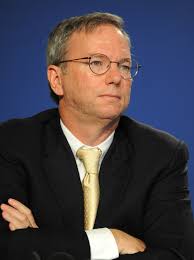
In a discussion about the rise of AI, Eric Schmidt, Co-founder with his wife, Wendy, Schmidt Sciences and Former CEO & Chairman, Google, KBE highlights the profound impact it has on society, likening it to past technological revolutions such as the PC and the Internet. He emphasizes the dual concerns of governments: the desire to win and the need for safety and regulation. AI is seen as a transformative force across industries, including education, where it can enhance teaching. Schmidt acknowledges the fears surrounding AI, such as job security and misuse, but notes that industry guardrails a...
What Eric Schmidt said
Written from the verified transcript and checked against it. Every figure links to the moment it was said.
Eric Schmidt, former CEO of Google and co-founder of Schmidt Futures, discussed AI's potential and risks. He said governments want to win with AI but also worry about safety and misuse, needing both investment and regulation. He acknowledged fears about job loss and misuse have some truth, but compared AI to past revolutions like PCs and the internet, predicting a 10-15 year transition mostly for the better. He worried more about missing the opportunity than about AGI, emphasizing AI's potential for education, medicine, and economic growth. He admitted he and peers missed social media's negative effects, like tribalism and misinformation, and now advocates for free speech for humans but not computers. He said AI is barely used on the battlefield but will change war, making it more targeted yet easier. He argued cheap drones can defeat expensive tanks, undermining military assumptions, and predicted militaries will look very different in a decade. He said Saudi Arabia is well positioned for AI due to abundant energy, land, and commitment, and advised the government to invest, calling it good business. He sees society at the beginning of AI implementation, with personalized assistants enhancing productivity. He believes teachers with AI will be better, and human connection will remain essential.
Key takeaways
AI will take 10-15 years to fully transform society, similar to the PC and internet revolutions.
Schmidt favors free speech for humans but not for computers, wanting to hear from actual humans.
Saudi Arabia is well positioned for AI due to abundant energy, land, and commitment, and should invest heavily.
6:24You did say that a few things would have to be done like what?
6:56Realistically, where are we as a society with implementation of AI?
7:38Do you feel that educational system is prepared to teach an entire new mindset of this future work?
7:58And last question, how important with all the AI systems we have, is it still to sit down and talk like we are doing here today, like all these people are doing here today at FII?
For a decade, Eric Schmidt operated as its CEO and afterwards as the executive chairman. Now he works on a series of projects and investments as well as advising governments on applications of AI. Mr. Schmidt, welcome and thank you very much for the interview.
Well, governments are concerned about two things. One, they want to win, but they're also concerned about safety for their populations and can it be misused? You have to solve both problems. They have to both invest but they also have to regulate and they're trying to sort it out. Some are better than others.
There is huge excitement about AI at this conference. However, when you leave, you have the feeling that people are actually really scared. Scared about their jobs, scared about AI going into the wrong hands. How valid are those fears?
There's some truth to them. The models as they get smarter, if you will, have dangers embedded in them. The industry puts what are called guardrails on them to try to prevent them from answering questions like how do I kill myself? How do I kill somebody else? Things which are obviously dangerous. So governments have trust and safety programs to do that. Remember that this is a wave that is a generational wave. It will go through, it will take 10 or 15 years. The PC revolution was like that. The internet revolution was like that. Social media was like that. AI will be the same. We're just at the beginning of the changes that AI will bring in medicine, in science, in conflict, in information, in misinformation, in what you do and what I do. It will all change mostly for the better.
I'm actually concerned about us missing the opportunity. And the reason is that the arrival of an intelligence that's sort of like a polymath, one of these sort of brilliant minds that is aligned with you, that works with you, is a major change in human productivity and efficiency. And we have to harness that power. And we harness it for education, right? for medicine, for the efficiency of economies, for generating wealth, for making the middle class stronger, from taking people from absolute poverty into the middle class, for climate change. All of that benefits from AI if it's done correctly.
I did not and I can confidently say that almost all of my peers did not see it either. When I think about it, I think about it in terms of the bubble that we live in. All of us are similar. We have a certain level of education, a certain set of political views. We come from the west. And I think we did not understand how these incredibly important tools which benefited many, many people could also be misused. I think that the fact that social media has enabled tribalism and misinformation was not in the plan. That's not what we designed, but it happened and now we have to address it.
Well, I've written one book and I have another book coming out in November on the same subject. We have to get ahead of AI and its impact on human life. When your child or your grandchild has as its best friend a nonhuman actor, right, a voice on a computer and they're five years old, what does that do for development? Should we allow it? How should it behave? Children are very important. All sorts of issues around messages and identification. I personally am in favor of free speech for humans but not for computers. I want to hear from humans and their voices. I don't want to hear what computers think humans think. I want to hear from actual humans. Those are simple principles. Would not be difficult to write them down.
Schmidt, E. (2026, May 11). FII: Eric Schmidt - Co-founder & his wife, Wendy, Schmidt Sciences; Former CEO & Chairman,Google,KBE [Interview transcript]. FII Institute. CEOInterviews.AI. https://ceointerviews.ai/interview/905279/
MLA
Eric Schmidt. "FII: Eric Schmidt - Co-founder & his wife, Wendy, Schmidt Sciences; Former CEO & Chairman,Google,KBE." FII Institute, 11 May. 2026. Transcript, CEOInterviews.AI, https://ceointerviews.ai/interview/905279/.
BibTeX
@misc{schmidt2026_905279,
  author       = {Eric Schmidt},
  title        = {FII: Eric Schmidt - Co-founder \& his wife, Wendy, Schmidt Sciences; Former CEO \& Chairman,Google,KBE},
  howpublished = {Interview transcript, FII Institute. CEOInterviews.AI},
  year         = {2026},
  month        = {may},
  url          = {https://ceointerviews.ai/interview/905279/},
  note         = {Speaker-attributed transcript with timestamps}
}