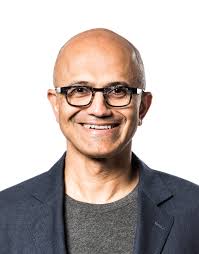
Good morning. It is fantastic to be back in San Francisco for Build. It is always fun to be at a developer conference to see great change. Developer conferences are always about understanding tech shifts and understanding the new stack. It is also about really coming to grips with the new opportunity for us as developers, for the companies we work at as well as the broader world. Today we are going to unpack this. This conference is all about that. If there is one key takeaway it would be this: how do you all participate fully in this frontier intelligence ecosystem. It is not about any one piece of technology you hear about or even the platform itself, it is about the value that you can build, you can compound, you can create on top of the platform. That's what the conference will be about and that's what we will focus on.
Let's take a look at this AI stack this conference is going to unpack in a great amount of detail. It starts with ubiquitous compute fabric that expands the edge and the cloud. You then have this layer which is the emerging layer where you have the models, you have context, you have the tools the models can access, and then you have the runtime where you deploy the agents and applications that you build on top of the content player and model layer. Of course you have the best tooling to do all of this and you have the security and compliance and governance. That's the simplest form.
Let's start where it all starts which is infrastructure. In fact let's start at the edge with Windows. The amount of compute there is at the edge is actually astounding. Think about every NPU, GPU, CPU even, every PC. We ask ourselves one simple question: can we do that with this era of AI? In some sense we are delivering that already. When you look at something like Outlook summarized it is using onboard AI locally. Same thing with PowerPoint alt text. Or Teams super resolution. It is just not Microsoft. It is Adobe effects or premiere. Using Windows ML in order to happen to all of this compute power is to expand the scope of Windows ML and Windows AI. You now are full install base of GPUs you can get to. I am thrilled every developer out there can count on building for local onboard AI and then have it run across all of the install base.
Now if you are -- we are also announcing two cool models that are all going to run on Windows in ONNX. Phi-4-instruct, it is a great reasoning model. We have the planning model Phi-4-plan. You have a full local agentic loop you can give it tools access and build a fully agentic applications without having to run trip to the cloud. In order to really push the limits, realize this unmetered intelligence, there is a lot of hardware that we are adding too. We are thrilled to see the innovation through the ecosystem. The stuff from Intel is exciting to see. Qualcomm announced two sets of things which are great one on the high end Snapdragon X on the lower end to sub 500 PCs. Of course that brings us to NVIDIA. This is next generation SOC for PCs. It brings together the CPU the GPU as well as AI capabilities into a single SOC. It includes unified memory architecture and also integrated DRTM. You have the SOC coming together.
One we build is the Surface Ultra it is a beautiful device. It brings the power of NVIDIA together with the design and craftsmanship of Surface, 128 gigabytes of unified memory. Beautiful 2,000 display, and it has an all day battery life. Excited to see this later in the fall. It is wonderful to see all of the designs from all of the OEM partners building and taking advantage of the SOC and the new platform and bringing out pretty exciting machines that are going to be all available come this fall. So, of course, we said, okay, this is fantastic. What can we do next? We said, let's try and push this. Push the architecture to its limit for developers. What if we could just max the compute, max the memory, build out that developer machine that is the dream machine, and that's what we are announcing today. Surface RTX DevBox. Let's roll the video.
It is truly a dream machine. It has 1 Petaflop of AI compute. 20 CPU cores. All of those things have 128 gigabytes of unified memory access. So super excited. I am on the wait list as well, there's a wait list. We will get there. So then we said why stop there? We said what if we did one more thing? In fact I think Jensen did that already. He said Windows is coming to the DGX Station. I describe it as the desktop data center which you can have running a 1 trillion model locally. It is close to what we perhaps had when we built GPT-5 or 3 one of the first supercomputers. It is crazy to think we have come this far with where you can have a data center on your desktop. We are extending the developer endpoints to the cloud. Windows 365 has the developer distribution that is optimized for developer productivity in the cloud that's Windows 365 that I use every day. It is about making Windows whether it is on the laptop, desktop, the cloud wherever the best place to build. And so to that end we have tons and tons of updates. We have starting -- we are starting with the favorite things for all of us, which is distraction-free dev environment. We are introducing an intelligent terminal that has built-in GitHub Copilot. Copilot intelligence. Of course lots and lots of Linux love for Windows now. You have 70 plus utilities. Git in full glory is now available for regular Windows access. 70 plus utilities as I said. All of that is coming to Windows. We are also bringing that you love. Homebrew will be on native as well. Switching all of this. Having first class support for containers while will really help us when developing locally. Showing you all of this on new Surface on RTX. I wanted to invite up on stage Kayla to take a spin through all of the Dev tools. Kayla, go ahead.
Our team has been working hard to make Windows a great place for development. Today I am going to show you major improvements and delighters you can try out today. What we have here is the default experience on the Surface RTX Spark DevBox. It is calm. No news feed no widgets popping up no notifications. We are in dark mode of course. I am ready to start development. There's one thing I would like to change. I like to put my task bar on the left. Let me jump into my task bar settings using run which is built with power tools and palette. No I want it all of the way on the left. There we go. After popular demand we are excited to announce vertical task bar is available in Windows insider build. The new Surface RTX Spark bunch of tools already installed like python and node. All developer goodness all in one file. If you want the same experience on your device we are making this file available to everyone right now. We have a public repo set up with configuration file and how to apply it. It will make adjustments to windows and install all of the tools. One cool thing I have running here is power toys new utility called grab and move. Hold alt and move the window around from anywhere. You can enable end task which lets you end the process without having to open task manager. Let me jump into my Dev drive. It runs with defender running in async and authorize performance when comes to developer scenarios. Get aware. We have stuff like last name change message status of each file and the branch name is on the bottom left. So now let's get started building and open our terminal. It helps working with agents even more seamless. When you install intelligent terminal you can pick your favorite agent. I am using GitHub Copilot today. You can use whichever agent speaks to you. In intelligent terminal I have terminal pane at the top and agent working on the bottom. I work between them while the agent helps along the way. Here is an error being generated. Agent pane is able to detect it and provide a fix which is great when I don't understand the syntax. I am working on open claw I have worked it using WSL container. It is a native container experience on Windows plus it can leverage the GPU. It can reference your existing container files just like the one in open claw project. This is open in Microsoft edit got syntax highlighting and latest version. You can see the container running with container command. Since we are on the topic of WSL there is a profile that is comfortable for those using tools like star, CSH and home brew. It has all of the favorite utilities and available in the repo I showed earlier and includes btop one of my favorites. The Surface RTX Spark serves large local models for coding. I have done development with 120 billion parameter model which most machines can't load. We can see how many tokens I have used locally. 3.4 million tokens leveraged on the device itself. We can kickoff agents using fleet. Just so you don't have to watch me type I am going to use Copilot voice feature which is leveraging its own local model. I will hold face for it and tell it what I want it to do. Find any console dot right line calls in the tray and node projects and convert them to the standard logger used elsewhere in the code base. There we go. The main agent will delegate sub agent tasks of appropriate complexity to the local model utilizing GPU and making it cost efficient. As developers while debugging we are looking through log files to diagnose any issues. Finding the location of the log files is a challenge. I would love to be able to type something like grep log and find them all. Sweet. On top of already adding curl, car and pseudo to windows now we are adding over 75 command line utilities like end, be head, tail and touch for those of us who love to live in the terminal. So I found all of my log files, but now having to parse them is the second challenge. I have had Phi-4-instruct practically performing analyses on my log files this whole time. Now I can quickly diagnose anything that has gone wrong in my development, plus I don't have to worry about token usage since it is all local. We can take a look at the machinery sources. Models are loaded you can see 90 gigs of ram being utilized by the GPU using the full power of RTX Spark. We were able to use them simultaneously unmetered going through the dev flow without a hitch. That's huge. So I know you are going to love what the team has been working on. We hope it gives you a glimpse of what's possible on windows today and where we are headed next. Thank you. Back to you Satya.
That's the beginning of unmetered intelligence having the models and agents using the models work in parallel to what you are doing in the cloud. That's what the platform enables as first class. Let's move to the cloud. The driving equation for us remains the same, which is tokens per dollar per watt. How do we optimize around this? When we think about the systems problem we think about electrons coming on one end and tokens on the other end and how do we think about the systems optimization end-to-end. It starts with the data center design itself. The core compute, storage, network. All of the accelerators that are going to accelerate each of the components. How do you think about the DC to DC connectivity and networking as well as the off load to something like the local compute. That's the sort of systems challenge. But before we even get into all of the systems and the technology and the innovation, perhaps the most important design criteria for us is how do we earn the permission from the communities in which we are building these data centers. That's where these principles ground us and focus us. How do we ensure that the DCs do not increase the electricity prices. Making sure we are using water use. Creating jobs for the local residents. Adding to the tax base. Making sure we are strengthening communities by investing in local training and the nonprofits in the area. Only when we live up to the principles do the hard work is when we innovate and build. We have been doing a lot of data center build up. Today Azure spans more than 500 data centers in the region. We have the most expansive hyperscaler footprint out there. We have added more data center capacity in the last 18 months than the first decade of to put that in perspective.
We built out the cloud infrastructure for heterogeneous workloads that span the enterprise. When you look at what we are building when you think of all of the gigawatts that are going to come online we have three dominant workloads. There is training, inference and the agent runtime. These are three dominant workloads. In fact when you look at Fairwater it was sort of our first AI super factory. It spanned two regions, Georgia and Wisconsin. The entire system was designed from the ground up for AI. We worked in fact very closely with NVIDIA on this. It is a two-story architecture that lets us essentially put the number of GPU densely with network access. Means you really got fantastic higher performance networking, lower latency and more bandwidth across the entire cluster. We are rethinking even the power delivery. How do we deliver 100 kilowatts per row with the conversion loss to the grid to silicon. We took a new approach to it. Also changes with the cooling system and water. The tooling loop is filled and the data center can operate effectively with zero water consumption. The daily water usage over the course of the entire one year is equivalent to what the single restaurant would use.
When it comes to the systems in the silicon, we have a lot of choice. We have first party silicon, we have partner systems. We have the first cloud to bring up NVIDIA. We work close with AMD. Working with them on the next generation AMD GPU. Maia 200 is continuing to scale it is live in Arizona will deploy internationally. It delivers 30% per tokens per dollar versus what's is the leading GPU today. We have validated it with GPT-5 and we are going to use that to power Microsoft 365 Copilot. When it comes to running these agents, interesting thing now it is no longer about having AI accelerator or GPU. CPU is critical. Ratios may be coming to one is to one. That's why we are innovating with Cobalt. We are announcing preview of Cobalt 100 VMs. Next generation on generation CPU designed for cloud native and agent workloads today. It is exciting to see Cobalt make progress as well. One thing we are trying to make sure being optimized for the new agent workloads. Cobalt delivers 30% better than Cobalt on cloud native. Using GitHub Copilot traces these agentic traces to see. The call patterns are so different. We are seeing 33% lower latency for the agent calls, 14% faster speed, 23% higher throughput. This is about the co-design of both the AI accelerator and the CPU for the agent. And of course, when you talk about AI workloads you need scale, you need reliability and that's why the network becomes super critical. We have innovated with the architecture and rebuilt how traffic across Azure moves to support workloads which is synchronous data workloads. They span 10s of thousands of GPUs. You need to have them coherent. That's what the next frontier is to make sure we are able to keep scaling the network architecture. It is not just about outside it is inside the data centers. It is connected through our continent spanning AI with the truly fungible compute fabric. All of this innovation is exciting, but when you think about innovation designing for AI and I would say deep understanding of systems, there's no better company than NVIDIA and there's no other person than Jensen to talk about it. I want to invite Jensen Huang from NVIDIA. I know it is late for you in Taipei. I appreciate you staying up. I have been looking at social and people talking about your keynote. The concept of unmetered intelligence right at the edge is so hot again. You have thought about this, talked about this, now of course with RTX Spark really delivered what is a breakthrough system for AI to be much more ubiquitous. Maybe you can share where you see this going?
It all started about three years ago with a conversation between you and I. We were talking about how we could build a new class of PCs incredible for designers and creators and it would be incredible for artificial intelligence. It would be one of these systems that has the processing capability but also the software stack that is integrated into the world's design packages and creator packages and all of the things we are doing with AI. Here we are three years later we built an incredible new chip, and this system is supported by all of this new software you created for Windows. We have autonomous agent running on the PC. When you step back and think about what does that mean? For 40 years or some 30 years we have been working together we went from inventing DirectX together to creating now this incredible computer that has autonomous systems running. The PC evolved from being an incredible tool to now being a tool that is used autonomously by an AI assistant. The idea I could be traveling and on the phone and text my PC and ask my PC to get coding done or an idea I have and it would fire up the tools on the PC and it would make the modifications or the changes or the design that I told it to do, and it would iterate with me while I am away from the PC. My PC became an assistant. While I am sitting there it would my great system as well. The idea that the PC evolved from a personal computer to personal AI is really exciting. To see it come to life and actually doing that, I am super excited about it. Spark you mentioned earlier has all of these capabilities Petaflop of AI performance. Has a Petaflop of MVFP4 numerical format our companies worked on together that allows it to take advantage of the 128 gigabytes of memory and fit maybe a couple hundred billion parameter model. A couple hundred billion parameter model is state of the art. The days of having a really smart assistant running on the PC is here.
It is awesome. I am excited about Windows coming to the DGX Station. It is a data center on your laptop. Talking about the data center side. This entire thing got started when we built the first supercomputer to train the GPU models. I was talking about the Fairwater design, this custom build for the Grace Blackwell era to max the data center design with the system design you had. Now of course we are validating Blackwell. Maybe you can share on the cloud side how you are sharing the system.
Our journey is incredible. We built the first AI supercomputer together. Hopper was an incredible success. The first two generations were focused on pre-training. Grace Blackwell came along and all of the focus moved to post-training, reinforcement learning which allowed us to have reasoning models. These reasoning models based on mixture of experts were incredibly intelligent, energy efficient. It requires giant systems. We required NVL72. The entire rack became one computer. We had evolved from one node to now one rack. Well, Microsoft deployed the largest number of Grace Blackwells in the world today. Largest number of Grace Blackwells in the world. Fairwater is a magnificent system to look at. It is an incredible feat. It is liquid cooled. Something you mentioned it is closed looped, basically uses almost no water. It is incredibly environmentally friendly energy efficient. We are able to increase the token generation rate and reduce the cost of token generation by an order of magnitude, some 30 times over Hopper. That was a huge achievement. Vera Rubin was created for a world where these AIs are now agentic. As Hopper was created for pre-training Grace Blackwell for training, post-training and also inference. Vera Rubin is designed to run for agents. It is the same computing pattern when run on the RTX Spark. It is the same agentic system but of course larger win process enormous number of them. Many will be from different customers and different partners. The entire path, coding path from storage which is the long-term memory, working memory is encrypted. The data is encrypted in transit and data also encrypted in use. This entire disaggregated distributed computing system you mentioned CPU Vera is a CPU designed for agents. In the past CPUs were designed for humans. We are more patient than agents are. Agents want low latency. Vera was designed for extremely low latency. Vera Rubin I can't wait to show everybody. You stood it up. Our two teams have been working closely. Long before the chips taped out long before the systems brought up the two teams were almost completely aligned. Data centers created for Vera Rubin. It is into the networking and stack and community. The moment systems were rolling off the lines they were building stood up at Microsoft. So incredibly excited about the collaboration.
This speed of light execution for the teams are fantastic to see. All of this is to power the ecosystem around us. You and I having grown-up with a PC the server and now with AI, have always thought about ultimately it is about creating the opportunity for every developer, every organization to build on the work that we do and the platforms we create. Speaking of that there's a lot of software that NVIDIA builds we will have the models in foundry, tooling in foundry. Software will help us with accelerating our workloads when it comes to the data warehouse. We will have the stuff in windows. Talk about the broader vision of what does it mean as an opportunity. Everybody talks about the one model and one piece of tech. It is about the broadest biggest opportunity maybe you want to share a little bit about that.
We have been preparing for this moment. What happened the last several months we have been working a decade and a half together getting ready for really what happened in the last several months. All of a sudden because of agentic systems the convergence of these great models AI is now useful. If you look at GitHub, the commits into GitHub has gone completely parabolic. In the last several months the number of commits increase by a factor of three. It is clear agentic systems are useful, it is doing productive work and also it is profitable as a result. The amount of demand for compute between the usage of AI the contribution necessary for agents it has gone through the roof. One thing we have been doing together is making sure all of the tools agents are using are fully accelerated. Fabric is fully accelerated. We are accelerating data processing, SQL, Spark, semantic based, graph based we are going to make sure all of the tools available on Azure are going to be fully GPU accelerated because the agents are going to be impatient. The faster it can iterate and generate tokens which are ultimately what the developers both customers would like to do is generate a lot of tokens that are profitable and highly intelligent.
Thank you so much for the partnership and leadership and innovation that you bring to this entire ecosystem and really thrilled to be working closely with you and the team and bring all of this to the developers here and beyond and look forward to seeing what the next sort of few months and the next year will bring in terms of the innovation that gets built on top of the platform. Thank you again for joining this late in the night from Taipei.
Thank you so much Satya for your partnership and friendship.
So so far we have talked about the edge and the cloud. The form factors, when I saw that Jensen picture from the weekend where he had all of the desktops. I felt man I am back in the 90s. It is so cool to see the lineup of all of the machines that I loved and grew up with back yet again with new functionality. The same form factor, but unbelievable new functionality, because of the onboard AI capability. That is sort of what we have seen with the laptop, the desktop and of course with the cloud. But it also, you know, sets up that next question. If you have that capability, which is new function and you can put it into existing form factors, can you even purpose build new form factors for the new function? Can you build a new platform even for the agent era? And that is the motivation behind Project Solara. I wanted to invite Stevie on stage but first let's roll the video.
First there's you. Then everything in front of you. We get it. The noise, the weight of it all. We have been building something. For an agent first world. New agent first devices. You come close, it is ready when you are. You speak, it understands you. What matters comes forward. Everything else falls away. When you want it to keep going it keeps going. Sometimes it sits with you. Sometimes it goes with you. Sometimes it sees what you want it to see. It doesn't decide for you. It lights the path. Tries to clear the way when you need it to. That's the idea. A whole ecosystem built to clear the way. Wherever you are, whenever it matters.
I am so excited to be here. It really is great to be back on this stage. Before I talk about those awesome new devices you just saw, let me start with the why. Back at Build 2023 I talked about the outside AI infrastructure. It moves within the application frame to operating globally to connect maintain context across entire workflows, devices and time scales. What if there were an ecosystem of devices specifically designed for the new type of application structure for those types of agents for that transaction. That's the impetus behind Project Solara. With many possible forms which one do you pick? What is the next device. The big uh-huh for us is that it is not choosing one form factor it is about creating a system that extends your agent across a constellation of devices. The next computer is all of the devices working together as one system with agents closing up closer to where and when you need them. To realize this vision two challenges immediately show up. First many specialized form factors already exist but often rely on custom one-off apps and fragmented stacks that are difficult and expensive to build, deploy and maintain. Second across every industry people and organizations are already building their own agents deeply specialized and instrumented for their work. The impact of those agents is constrained by how and where they can exist. Project Solara does both by extending agents on to new purpose built easy to manage form factors designed to reach the nooks and crannies where project creators do not exist or are not optimal. It is a turnkey solution for building unique agent first devices enabled by three pillars. First it is enterprise ready. Enabled by the AOSP based Microsoft device ecosystem platform. Second it has an agent driven interaction model with just in time UI that adapts to the form factor. Third it has extensibility so you can bring your own agents. Tying it all together is Azure unifying the system across cloud and device. That's enough of that. Now let's talk about the devices. Today we are previewing two very broad categories. The first is stationary and the second is portable. The first device is designed for your desk. It is built on MediaTek silicon. With Hello for Business walking up to the device securely signs you in giving you direct access to your agent. Just like Nathan is about to show you here. For the information work this means frictionless yet protected access to Microsoft 365 Copilot grounded in work IQ. What matters next in your workday helping you think, plan and even act by delegating task to your agent with a simple tap or just using your voice. Dedicated ambient device for work. It acts as companion to your existing Windows Copilot Plus PC. Or access Windows 365 in a connected monitor. How cool is that? The second is portable. Re-imagining a wearable millions of people use every day. The access badge. Built using Qualcomm silicon wearable this badge is lightweight form factor designed for agents on the go. Adaptable across variety of verticals and workflows. I have an early prototype of the badge. Using my fingerprint I tapped to unlock the device now I have all of my agents in a secure manner. Gather content for social media post for today. Why not do it right now. I am going to hit record and the device's camera is recording. Hope you don't mind I am going to take shots. Find good shots from this clean them up and send them for me and my team to review. There you have it. Now my agent is off running through multiple tasks I clean them up and send them to me and the team. Pretty cool. I know it is a simple demo but it is all agent driven and there are so many verticals and opportunity. Imagine in healthcare from the moment you pick up the device the right agent shapes the experience around the role and the workflow helping with check-ins, patient records and critical insights. All through enterprise grade secure access. And with the built-in microphones the nurse can start a hands free voice based documentation including dictation and notation. The side facing camera can help with vitals or scan medications or help verify workflows. This is a few examples of how the small purpose built wearable can bring intelligence directly into the flow of patient care helping nurses access and gather and even act on information while staying present with the patient. Both devices are an expression of devices the core hardware and software are designed to be highly flexible. With a few changes loading a different agent adjusting the shape, screen size, sensors or input methods the same foundation, the same software can be adapted for many verticals and workflows such as retail, industrial, hospitality, financial service, legal and so forth. That is the power of the platform, that flexibility. Whatever scenario there are places where computing has not naturally fit before. While this is an early look, we are really excited that Acme, Weather, Best Buy, Target and others are working towards exploring how devices can improve their workflows. This is the broader opportunity for the ecosystem. Agents moving outside of the app and taking shape in devices designed for specific scenario, a specific customer and a specific place. For all of you this is the moment to imagine where your agent should live, what form they should take and what new work they can unlock. Last week Satya sat down with Qualcomm, Cristiano Amon to talk about the future.
Incredible to have you at device lab and talk about the reference designs.
Happy to be here. I have been to the device lab a lot recently.
One of the things that you and I have chatted for a while is how there's a real platform shift. We are moving from building operating systems, devices for apps for agents. You want to talk about how you see this?
This is technology this one seems to be a big one. Agents change the whole nature of the device in itself. Starting with the fact that if AI understands the world as we understand it it will be closer to our senses, closer to our eyes and mouth and ears. It will be things we wear. You need computing which is geared towards real time context. And from silicon to cloud.
This is one of the references we have that I love. There is stuff happening at the edge here. Things on the cloud. You want to talk about the core systems and silicon implications for such a new ecosystem.
You need a power efficient CPU. The silicon is designed for you to have a cloud native experience. You have a lot of sensors for context. It is personalized. It is a big change in the nature of devices. Wearable platform is changing itself. You see incredible factors.
The computer platform, how do you build it such that there is an open ecosystem. It is not about one agent it is about any agent.
Because the smartphone today is at the center of your digital life, the job of those devices today is to be extending the functionality of the smartphone. You saw many platforms became vertical. It is a natural thing to have a vertical platform from the same company. The phone was at the center. That changes dramatically when you think about agents. Agents becomes the center of your digital experience. They will be looking for an open horizontal platform that enable the agents to be interacting with the best possible device for different applications.
We want to make it possible for anybody working with agentic system not just bound to devices but imagine they can be many devices that carry that intelligence in different context. That's the open ecosystem we want to build together. It is great to partner with you to get this started.
We are proud of this partnership and that's just the beginning.
Thank you very much Stevie and Cristiano. It is a new platform but it is a set of new platform rules that don't in some sense hem in what you can imagine the type of form factors where your agents live. Where the new platforms come you
get to rewrite even the rules of how new platforms operate. That's what we are trying to get done with Project Solara, so you as developers and enterprises have the flexibility to imagine the form factors that you want and have agents be ubiquitous. Let's go up the stack to the next layer. We are building a new intelligence layer bringing together the models, context, as well as the tools. It starts with model choice. Every customer, every developer is going to choose the right model for the right task and eval mix. Azure AI Foundry today has over 1,200 models. The largest model catalog out there. From OpenAI to Anthropic. Even MAI models. Last week we brought the OpenAI real-time voice models along with Claude Opus 4.8 to Foundry. We are continuing to bring these frontier models. The consideration about the models is becoming increasingly key. The last developer counsel to now, when you are building the agentic system, having this context really shaped right is becoming super important. In fact, it starts right at the data tier. The data to date has been built for application that is supported user-facing applications. Now you have to change, build them for agents again, different call patterns even to the data tier. Agents are restoring, retrieving, reasoning, acting, and learning. That is what is happening in a continuous loop. They are using Cosmos DB, ChatGPT does, Azure Search retrieval of indices. They started the business logic tier effectively for agents. You have Fabric real-time intelligence, which now brings me to an exciting new service, Azure Cosmos DB for PostgreSQL, which is fully managed SQL server on Azure. One of the things we wanted to make sure we built ground up, Postgres managed service for higher availability, scale out. It is automated failover, 128 terabytes per cluster. The read-heavy workloads, you can scale with this managed service. In our internal testing, we are seeing Cosmos DB for PostgreSQL is having 3x throughput compared to PostgreSQL. It is critical thinking about the scale you need. The other data workload we are changing dramatically is the data warehouse. In a world where agents are constantly querying data, data warehouse is critical. One thing to have it mission-critical for users, but when agents need analysis done on the fly, bringing GPU acceleration to Fabric is super key. We are seeing 7x performance gain. It is thrilling to see that AI acceleration.
So if you sort of have the data tier, the layer above this is the IQ layer that we are building that brings together essentially the model capabilities along with the data. You kind of mix the data and model capability so you can deliver that right context to unlock intelligence. In fact, when people talk about token efficiency, this is perhaps the most important consideration. If you structure the context right and feed the models, you are by definition going to be so much more token efficient. The first domain is the web. Web grounding is so important. You need that fresh, high-quality, and fast web data. And that's why we are really, really excited to announce today, Web IQ. And Web IQ is built on our global infrastructure that is already serving over a billion users. But fundamentally rearchitected for the LLM and agentic workflow. It is model agnostic, MCP native. Plugs into any agent runtime. It has web and news, images, video, so agents can ground responses in fresh, verifiable content. And Web IQ leads across all of the three key criteria. It is best in class in quality, best in class in speed as well as in cost. So we are very, very thrilled about Web IQ being in the developers' hands as you build out agentic systems. We are not stopping beyond the web. Every developer wants to ground their agents on what is the most valuable data across the enterprise. We are bringing together Foundry, Fabric, and Microsoft 365 as this unified IQ layer. Continuously updated understanding of your organization. To show you all of this rich IQ in action building real-life agents, here is Elijah. Elijah, take it away.
Agents are only as good as the context we give them. Microsoft IQ unifies enterprise intelligence for every organization. I am here at a power utilities control center and will start by running a long-running agent. This agent is going to help us assess the current grid operations incident and produce a brief for us so we can respond accordingly. Now I am going to go ahead and kick that off. While that runs, let me show you how we got here. We built our agent and it's also wired to a Foundry IQ knowledge base. A single grounded source that packages our documents, operational data, and people into context the agent can reason over. After building the agent in Foundry, we published it to Microsoft 365 for the whole team. Let's go see it in action. Now, here in M365, I will start with a question about current events that an ungrounded LLM wouldn't be able to answer. I'm going to ask about current electricity prices in SF. Our agent pulls in the first IQ tool, Web IQ, search built for the AI era. It delivers industry-leading quality, velocity, and efficiency. Web IQ constantly indexes fresh official sources and does a great job with semantic documents. And it gives us our answer. Grounded in reality. Not only can we deploy our agent here, but we can embed it. Let's head back to the control center. Let's see how we handled a previous incident. Can you ask for details at our at-risk substations? The power of Microsoft IQ comes when we combine that external knowledge with our own internal enterprise context. For this information, our agent pulls in the next layer, Fabric IQ. Here is Brightline's grid represented as a tabular ontology, an operational view of the live grid, and we didn't build this from scratch. It takes models used by millions of customers and lets teams extend them into rich ontologies that helps run the business. This model is coupled with live telemetry, so it reflects the real operational state of the grid minute by minute. This is what Microsoft IQ means by enterprise intelligence. Not data scattered across disparate systems, but a single living model of the business that an agent can reason over. Now, turning back to our agent. We can see that it gave us a table of our most exposed substations. That's the agent querying the ontology you just saw. Now the agent has access to the outside world and our grid. The last piece turns the situation into a response. Our policies and our people. By asking, 'What are the steps to respond to a substation trip,' we activate the final layer, Work IQ. This is Brightline's response procedure in SharePoint. It's the playbook the team reaches for when something goes wrong. And the important thing, the agent isn't working from a stale upload or copied snapshot. It's answering from the same source the team maintains day to day. When the procedure changes, the answer changes with it. No re-uploads. No prompt rebuildings. And no stale versions. And critically, this is your knowledge. The assets you create stay with you, no matter what model or agent is reasoning over them. Now, if we return to our agent, we can see the proper way to respond to this issue. Not a generic recommendation, but our playbook applied to this incident. Now, we just saw one situation, three questions, and one connected answer. Now let's go check back in on our long-running agent. And... oh! Let's check the backup really quick. Moment of truth. And... Boom! Our task finished! Here we can see every step the agent took. First, beginning with Web IQ, connecting it on the outside world. Second, Fabric IQ through Foundry, anchoring it in the state of operations. And Work IQ, grounding in people and procedures. I triggered this manually, but with Foundry routines, this can run on a schedule, turning a one-off response into continuous, proactive execution. And if we look closely, we can see it even used the power of Work IQ to alert me directly about the incident. And if we go ahead and check Teams, it sent me a brief notifying me of the situation. That's the power of Microsoft IQ. When the crisis hits, teams don't chance an answer. They get an answer all in one place they can trust. Back to you, Satya.
All right. Thank you, Elijah. And now, you know, let's move up from this context model layer to deploying these agents and thinking about the runtime. And, you know, when you're building a first-class agentic system, you need a first-class agent runtime and a platform that we are going to ship both with Windows as well as part of Foundry in Azure. We want Windows to be a fantastic place to run and scale agents, and agents effectively are a new execution environment. Right? It's a new paradigm, even. They reason continuously. They generate and run code dynamically. They take action across files and devices, as well as across the network. Obviously there's a lot of power in it. Right? The fact that it can generate code and act on it, on a long-running agent that's autonomous. But obviously it creates new risk. And that's why today we're introducing Microsoft Execution Containers, or MXC, which is a new policy layer that lets Windows apply isolation and containment, using OS-native primitives. You need to bake this into the operating system, so that the containment is enforced by policy. You can have process-level isolation for lightweight agent actions. You can have session-level isolation for user separation. So Windows and Linux machines, including WSL, for much stronger boundaries. And in fact, if you want full isolation and containment, Windows 365 for agents, for maximum isolation in a separate managed environment, effectively. You can pick the right containment option for the workload, and Windows will enforce it. And I think this becomes pretty critical as you think about deploying agents at scale on your Windows desktop. We want to ensure containment is enforced, of course, regardless of who builds the agent. This is why you want to bake it into the operating system. On that end, we're working with many partners to ensure that we're supporting real developer workloads out there and addresses the needs. And NVIDIA is bringing Open Claw to Windows, and today, we are really thrilled to announce that Open Claw runs natively on Windows leveraging MXC. We are very deeply engaged with the team to make Open Claw run super well on Windows. Let me hand it over to my colleagues Scott and Samantha to show you. Scott and Samantha?
Hey, friends! Open Claw came out in November of last year, and it took the world by storm. And I've been using it to stay on top of my health. It can help me manage my blood sugar and gives me notifications. I've got it triaging email, GitHub issues, and buying movie tickets. What are you using yours for?
I turned my Open Claw agent into my triathlon coach. It developed a work-back plan for me, using my data to notify me how I'm progressing and keeping me accountable.
We're working closely with Open Claw to make them successful and more successful on Windows. We've collaborated on GitHub to bring you an Open Claw app. It will help you set up your own or connect to existing ones. And the Windows companion, we're going to sandbox the Open Claw tool calls to keep you and your system safe.
Yeah! You'll see the Open Claw Windows app running in the background. Right-click on it, Scott.
It looks awesome! It looks like a native Windows app because it is. It's got information about my gateway, other machines, my sessions, and my usage. I've also got quick access to things like chat, Canvas, the main dashboard, and more. Let's jump into companion settings. Within the app, we've got full chat support with tool calling, and you'll notice in the corner, we've got lots of permissions options, along with our sandbox configuration.
The permissions options, along with our sandbox configuration. The sandbox is interesting because this is using MXC, and for this, we're going to be using process isolation. Now, newer versions of Windows will have more containment options, so keep your eyes out for news. I've got one-click security option settings, but Samantha, talk to me about custom folders.
Yeah. You've got full support about what files and folders you want Open Claw to have access to, and really granular security features like clipboard access or talking to the internet itself. Now, I've given it read-access to your desktop folder. Open Claw already has a rich safety layer, augmented more by policies by IT. For the purposes of this demo, I'm going to do something scary and ask Open Claw to delete all the files on your desktop.
You hid all your icons from the audience while we were on stage. I think we need to show the audience who you really are.