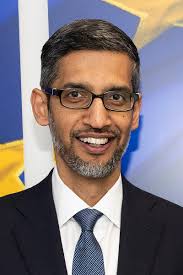
President Levin, Provost Martinis, trustees, senior class presidents, thank you for the invitation to address you today. And to the distinguished class of 2026, congratulations. I must warn you, this is only the second commencement speech I've ever given. The first was in my backyard in spring 2020, during COVID lockdowns, filming a YouTube commencement for graduates who couldn't have their own celebrations. When I look back, I see a time of great anxiety, the empty space where an audience should have been, and the haircut I gave myself. Today, I see how graduation should be: graduates celebrating together with the people who supported you. Let's give them another round of applause. I know not everyone you care about could be here. Many of you came from other parts of the country and the world, as I did. This is the first time my mom and dad are attending a graduation ceremony I'm a part of, so let me say a special thanks to them and my family. I know today is about giving advice, but people have been giving me advice on what not to say—the last two letters of my last name. But the topic is immaterial. The most timeless advice I've learned is technology agnostic: it's about you, the life you want to build, and the choices that help you pursue that life. Some of you know what you're pursuing; enjoy closing down the Rose Crown. Many of you may have no clue. That's okay. I remember feeling uncertain on graduation day, the pressure to get every big moment right. But let me let you in on a secret: these things are much less consequential than you think. You could have failed that biology test, skipped a class, never learned to play the tuba, and you'd still probably be here today. Let me tell a story. When I was a student here, I had a classmate named Pat from Long Beach, with an earring and a white Honda Prelude convertible. One Wednesday morning in January, my first winter quarter, he asked, 'Do you want to go to Vegas instead?' I had never skipped a class or taken a road trip. This is the first time my parents are hearing of it. I said sure. We drove through the mountains, it started to snow—I had never seen snow before. Pat stopped the car so I could get out. It was beautiful. Nine hours later, we arrived in Vegas. Pat taught me blackjack; I started with $5 and won $15, then quit. We didn't have enough money to stay long, so we drove back the next day. No one noticed we missed class. For the first time, I realized the world won't end if I relaxed a little. You'll face many moments; only a few are really important—picking a partner, starting a family, a career pivot. But thousands of moments only seem big: your first job, the city you move to, whether to take that road trip. They add texture but rarely determine your life's course. If you filter the signal through the noise, you can nudge your life toward the impact you want. So today, I want to share three filters I've applied. First, choose optimism. The world is going through a lot—global conflicts, economic anxiety, technology rewiring. It's easy to think we're in uniquely challenging times, but each generation has faced hardship. We don't choose the world we graduate into, but we choose how to frame our circumstances. My parents instilled this in me. I grew up in Chennai, India. We had challenges—drought, waiting years for a telephone, TV, refrigerator. But my parents never let constraints limit my imagination. When Stanford called, my father spent a year's salary to buy my ticket. When I landed in California, it wasn't as I imagined. Driving down 280, I saw brown hills and said so. My host, Mrs. Jane Earl, gently corrected me: 'We prefer to call it golden.' That's choosing optimism—reframing for the positive. This slight change of perspective had a huge ripple effect. Despite the brown hills and cold ocean, everyone seemed optimistic. I adopted that California optimism, which helped me navigate a big pivot: I came to Stanford intending to get a PhD and go into academia, but life had other plans. I left my doctorate and Stanford offered me a master's. I could have seen it as the end of a dream, but thanks to Mrs. Earl, I saw that brown hill as golden. Second, gravitate toward working on hard things. I'd love to say I was an immediate success after Stanford. Even a decade later, I felt I wasn't on the right path until I applied to Google. My final interview was on April Fool's Day 2004, the day Gmail launched. When my interviewer asked about it, I wasn't sure if it was a joke—1 GB of free storage seemed impossible. A couple years in, I got to work on a seemingly impossible problem: reimagining the browser. Internally, consensus said it would require hundreds of engineers; we had about ten. We were naive, but it's good to be a bit irrational. In 2008, we launched Chrome. We had 8 million users in the first 24 hours, then growth stagnated. After a year, we had about 2% share. Steve Ballmer called Chrome a rounding error. With California optimism, I told the team that his dismissal meant we were doing something right. We kept going, setting aggressive goals, shipping every six weeks. Success followed. Working on hard things attracts great, optimistic people, and even if you miss the high goals, you achieve something great. So when you have the choice, say yes to hard things. Third, when all else is equal, do the thing that excites you. For me, access to technology has always been key. I didn't have much access to a computer until Stanford. When I walked into Sweet Hall in 1993 and saw rows of computers I could use anytime, I saw the internet being built around me. It was a fundamental enabler of human progress. That excitement led me to Google, to work on Chromebooks and Android. I remember meeting women in rural India using Android smartphones for the first time to learn new trades, and visiting a classroom in Pittsburgh where students from different backgrounds learned through products I helped build. Seeing computing change lives was the most exciting thing. So don't focus on what your parents want or what society expects. Think about the things that keep you chatting excitedly with your roommate late into the night, and go do those things. Class of 2026, I genuinely believe you're the most capable class in history—at least until next year's class. That's how progress works. You have thousands of moments ahead. The important thing isn't to get them all right; it's to keep moving forward. Sometimes you end up somewhere wonderful like a beautiful snow-capped mountain, other times in Vegas. Both are a gift. You already have the California optimism to see life's golden hills and a Stanford diploma proving you can do hard things. Now go out and set your heart ablaze. Congratulations.