CEOInterviews.AI
Start App
Try: AI strategy tariffs earnings guidance layoffs interest rates growth

Demis Hassabis

Chief Scientist of Alphabet & Chair of Google DeepMind, Alphabet Google

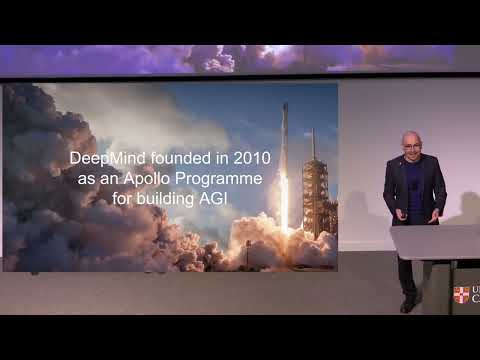
Search every verified Demis Hassabis interview, podcast appearance, and on-the-record quote — each transcript cross-checked by AI and human review to confirm speaker identity. Demis Hassabis, Chief Scientist of Alphabet and Chair of Google DeepMind, has recently spoken at several high-profile events about the risks and potential of advanced artificial intelligence. At a June 2025 meeting hosted by King Charles at Dumfries House, Hassabis stated that the chance of serious harm from AI if things go wrong is "definitely non-zero," while also expressing confidence that collective efforts can address these risks. In a September 2026 lecture at the Royal Society of Arts, where he received the RSA Albert Medal, he described AI as potentially having an impact "10 times" that of the industrial revolution, occurring at "10 times the speed." He also called for significant changes to education systems, which he described as a "50-year-old post-war system" that does not adequately serve students outside the average range. In a September 2026 framework proposal, Hassabis argued that Artificial General Intelligence (AGI) is "probably only a few short years away" and compared its significance to the discovery of electricity or fire. He proposed a new US-based standards body, modeled on a public-private partnership like FINRA, to assess frontier AI models before release, with voluntary sharing of models for review up to 30 days prior to deployment. In an August 2026 Cambridge lecture, he discussed the technical foundations of AI, including AlphaFold's ability to approximate solutions to protein folding without quantum simulations, and reiterated the need for a "scientific method" and "humility" in approaching the technology's unknowns.

Recent appearances

Verified interview transcripts

Notable quotes

“I think something pretty radical has to happen with education. That's the first thing. Maybe it needed to anyway. We're talking about a 50-year-old post-war system that I think needs updating anyway. The problem with the school systems today is it caters for the sort of medium. So if you're not in that then you're sort of not really catered for; the smart kids, the talented kids are not pushed enough and then they ge”

“I think it's going to be one of the most profound technologies humanity will ever invent. And I think it will be a revolution in the way that electricity was. Telephone, we've heard the internet, mobile, I think it'll be at least as big but perhaps bigger than all of those. Maybe something like 10 times the impact of the industrial revolution and the additional challenge is that it's probably going to happen 10 times”

“At the moment, we are locked in an extremely intense multi-layered commercial and geopolitical race. While these competitive dynamics fuel rapid progress and accelerate the incredible upsides, advances on the frontier are outpacing our understanding of the technology. Nobody in the world knows for sure what is going to happen from here, and even the experts disagree. When there is a large degree of uncertainty and th”

“And my conjecture is that actually classical Turing machines, basically classical machines that these types of AI systems are built on, can do a lot more than we previously gave them credit for. And if you think about AlphaFold protein folding, you know, proteins are quantum systems, you know, they operate at the atomic scale and one might think you need quantum simulations to actually be able to find the structures ”

“I think instead, you know, we should be trying to use uh uh uh the scientific method and approach it with a kind of humility and respect that this kind of technology deserves. And you know, not we we don't know a lot of things. There are a lot of unknowns around how this technology is going to develop. It's so new. Um um and I think with exceptional sort of care and foresight we can get all the benefits uh and minimi”

“I think the public's right to be concerned. I think that there are things that that uh and I'm concerned about several aspects of what the technology is. It's a dual-purpose technology. It's something this profound, you know, I sometimes describe it quantify it as 10 times the this this the impact the Industrial Revolution was, 10 times faster. And so, you know, you know, instead of taking it place over a decade inst”

Other executives at Alphabet Google

The summary and quote tags on this profile are produced with AI assistance from verified, first-person interview transcripts, then checked by our team to confirm the speaker's identity and the accuracy of every quote. See how we verify →