Bring in show music. Please this is Squawk Pod. Today what 2025 has in store for the second biggest bank in the US, Bank of America's CEO Brian Moynihan on the Federal Reserve's next move. I think our team thinks we're going to cut today a couple times next year. And in Congress, a bipartisan team takes aim at social media companies and explicit content. Senator Ted Cruz and I teamed up together to put a legal obligation on the tech platforms to take that garbage down when they know that a victim is being victimized. And Senator Amy Klobuchar: with the advent of AI, they're literally making up bodies on the faces of girls or faces on bodies and they are putting this stuff out there and it's destroying lives. Plus the other stories that got us squawking, like President-elect Trump's plan for PBM in healthcare, and former talk show host Carlos Watson was sentenced to 10 years in prison. Some lessons from his questionable business practices: don't do it, Becky, don't do it, just say no. I won't. I'm CNBC producer Zach Valisi. It's Tuesday, December 17th. Squawk Pod begins right now. Stand by in 3, 2, 1.
Andrew good morning, welcome back to Squawk Box right here on CNBC. We are live at the NASDAQ Market site this morning in Times Square. Andrew Ross Sorkin along with Joe Kernen. Becky is reporting live this morning from the Bank of America. Becky, what do you got going on?
Well good morning guys. We're going to talk about a lot of things here at Bank of America. I'm live here on the New York trading floor. This is all happening as the Fed kicks off its final meeting of the year. We'll be joined by the CEO Brian Moynihan. We're going to get some views from the bank and maybe what the future might bring, the new administration that's coming in, what we're thinking about inflation, and what Bank of America, which has a huge number of customers across the country both in terms of the business side and in terms of what you see from the consumer side, just how the economy is standing up right now. Maybe try and get some answers to all of that.
Okay, we got a lot coming up. A bipartisan framework bill to fund the government and avert a shutdown has hit some snags. House Majority Leader Steve Scalise telling reporters yesterday that a deal was close to being finalized but not yet completed. A main sticking point has been aid for farmers. Speaker Johnson needs votes from farm district Republicans, but securing billions in economic assistance would likely force him to make some concessions to Democrats, which could cost him votes from separate blocks of Republicans. Here we go again. Lawmakers have until midnight Friday to prevent a government shutdown. Me time. Let's give weird that we haven't talked about this like at all. You know the government shutdown? I mean I feel like we've always talked about it a lot. It you're right, it never really comes up. But I this time I feel like we haven't discussed it basically at all. We just assume it's going to get done. You've got you know, they're going to figure it out probably. Yeah, because we right, don't we always? We know that we know what the movie is and we know it's like the 11th hour then it happens. I don't know, surprise us. It's yeah, it's the house again. I mean we're now saying the house is going to be different because you got you know, and it obviously it's not January 20th, narrower majority. Yeah, when it finally happens, when on January 20th, but you still do have this de facto sort of head of the Republican party now that probably could put some pressure even on some of the factions. Maybe, but if John Johnson's used Democrats before and I don't know if he has to worry as much about doing that. Mike Johnson, the speaker of the house, right? I think you're probably right about losing his job as a result. Shares of pharmacy benefits managers fell yesterday after President-elect Trump said that he plans to knock out drug industry middlemen. And we have a thing called the middleman, you know the middleman, right? The horrible middleman that makes more money frankly than the drug companies and they don't do anything except they're a middleman. We're going to knock out the middleman. I'm going to be very unpopular after that. CVS Health, UnitedHealth, and Cigna each fell by 3% or more. All of those companies own the largest prescription drug middlemen. These are companies that used to be independent, but they've all gotten wrapped into these pharmacy companies as pharmacy benefits managers. And guys, we've talked to a lot of people including Mark Bertolini and others, former executives or current executives in the industry, who say that these PBMs, the pharmacy benefit managers, have really outlived their time. They used to be there to try and squeeze out cost to get a better price for the consumer, but they've kind of gotten wrapped up. A lot of people will allege as profit centers for these pharmacy companies, existing for kind of their own sake. And they went, remember they went right, your friends in investment banking, you know, merge them, merge them again, with all the famous ones, remember Medco, and you know, name name, everybody's trying to that's, they were all trying to take the middleman out by putting them in the middle. I mean the middleman becoming the main man of sorts. And the PBMs feel like, to me, they are the new HMOs. You guys remember, this goes all the way back to the Clinton administration when HMOs were really seen as the bad guys when they were going to try and tackle healthcare costs. Part of the problem is we just have this system that's been built upon system after system and ways of trying to squeeze cost, simplifying things never really come to fruition. But you need transparency, you need to understand how these things work, and you need to find a way to help the private sector do what the private sector does, which is trying to ring cost out of these things, right? People living a lot longer and they want everything that you can get. They want the state-of-the-art healthcare which is expensive. And you know the aging population, there are, I'm not speaking personally here, but there are the population of people over 65 years old is going to swell and swell and swell. And then you get chronic diseases that cost so much to maintain. And then you got lifestyle issues too. Again, I'm not speaking personally about being fat, but obesity is an issue. Less weight, yeah. Yes, this we should talk about this story because we know this guy. I like we were part of this, we were well we had on the air right when he was going. Carlos Watson, the former talk show host, he was sentenced to nearly 10 years in prison in a federal financial conspiracy case. Prosecutors accused him of inflating revenue numbers and touting deals and offers that were non-existent or not finalized and showing other false indications of his company's success. And I remember we talked about it and he remember they would pick a headline from somewhere that was describing the company and then they'd act like the newspaper was endorsing. Well no, it was worse than that. They would buy ads themselves right in the LA Times, write an article in the LA Times like in a paid premium post, and they would take that post then they would buy a billboard somewhere and say you know LA Times, but that wasn't. That was the least of the issues. The bigger issue was that the numbers weren't real too. Well even worse than that, there was a moment at which he apparently was on the phone with Goldman Sachs pretending to be somebody else using some kind of machine to change his voice so that it would appear that it was a YouTube executive because they were trying to prove that they had a special relationship with YouTube and they didn't have a special relationship. You two okay? So now the question which I'm very curious how everybody feels about this was wire fraud 10 years. How do you feel about 10 years? Imagine what he could have done with AI if AI was as advanced as it was today instead of just one of those machines where you change your voice. He did speak to CNBC I guess in his regular voice after yesterday's sentencing. Here it is.
What started as a very unfair and selective prosecution and led into a really egregious railroad of a trial has ended up with an incredibly unfair sentence. How does Elizabeth Holmes with a 9 billion company, a fake product, end up with 11 years while she lives in a $135 million house and Carlos Watson drives a 15-year-old car and eats Chipotle and put money in his company, didn't take it out, ends up with 10 years? Even if you believe everything they said, which you should not, the average person for this gets something like two or three years. Does plan to appeal.
What do you think? What do you think of the sentence for real? I'm mixed. I don't know enough about the case honestly. I have very mixed views because I do think he's right about this sort of there is this fake it to make it thing. And I think like Elizabeth Warren, Elizabeth Holmes, man, one of your best Freudian slips right there. Elizabeth Holmes, a lot of people think that by the way. No, apparently you do too. Whoa, you were close. Elizabeth Holmes is that 11 years. I'm going back even Dennis Kozlowski, whatever you thought of him, I think was seven years. So the actual, I mean there are sentencing guidelines, right? Federal crimes, so it's very hard for the number to actually go down materially. There are laws, there are guidelines for sentencing, and you might think wow that's kind of harsh, but well look, the good news is if there's a deterrent out there for folks who are watching this show who run their own businesses or who are thinking about okay, you know what, if I could just skirt a little things and if I could fake it till I make it, I hope that they're watching this and saying to themselves that's a bad idea. He was trying to mislead people about the finances of the company, and then once you go to the point of oh yeah hi this is a you know, that's a bridge too far, you can't defend that. No, the whole thing is indefensible. What was the voice? Do we know what his voice, where do you buy one of those? Can you buy something with some machine that changes? Yes, I think even 20 bucks like Batman. I mean I want it sound like Batman. No no no, it changes the voice a little bit. And I don't know, just to be 100% clear, I don't know if they ultimately determined that it was him doing it, just that it was not the executive from YouTube and that the speculation from the folks at Goldman Sachs at that time was that it was potentially him. Yeah, if it's just a general rule that there's things you know that you're doing wrong that can not be good, don't do it. Don't do it, Becky, don't do it, just say no. I won't.
Will be next next on Squawk Pod: Bank of America CEO Brian Moynihan on the Fed's next rate decision, plus what he's expecting from Donald Trump's next administration. President-elect Trump ran on a position that there was too much regulation and too much had to be dealt with, obviously inflation, immigration, regulation. And you have that obviously for people who have been in this industry for a long time like myself, we got to get the thing back to the middle and he's been clear about that.
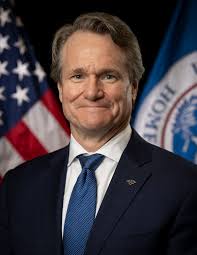
We are here at Bank of America's New York trading floor this morning and joining us right now is Bank of America's CEO Brian Moynihan. Brian, want to thank you first of all for hosting us here today and doing it on a day when there's a lot of market activity that's coming. I didn't realize until I got here this morning that this is actually 15 years since last night since you were named CEO. You took over in January of 2010 but you were named just last night 15 years ago. What a long strange trip it's been, huh?
Well no, it's been great. It's been an honor to lead this great company and all these talented teammates out here. It was 15 years ago yesterday that the board met and announced it, and we announced it then. I had my first town hall with everybody today 15 years ago. And you know, it's been great to see this company take its position as a leader in all its businesses with great scores from those customers, great scores from the teammates, delivering for shareholders, helping what you can do to help society. It's a great company, it's an honor to lead it, and I'm very proud of what we accomplished.
Yeah, the stock price has more than tripled over the time that you've been here, and I know this year's been a good year too, up 34% I think year to date, maybe 36% over the one year. There's been a lot of enthusiasm very recently about financial stocks in general just given what we're seeing with a new administration that is poised to take over. Why don't we start talking a little bit about that? I heard you say in the last week or so that you thought it was very rational to see these stock prices taking off like this. You want to explain?
Well, that's part of the thesis that the banking industry's valuation relative to the other valuations you all spend all the time talking about is still lower than usual. But at the end of the day, we had a swing in regulation that probably went too far and that there's hope that it'll come back. For the smaller banks, the ability to merge together was slowed down, and as an investment banking firm, you know we can't buy anybody because it's not legal under the rules, hasn't been for 30 years. But as an investment banking firm, we like that activity. And then the belief is the economy is going to grow, and that belief in the economy growing while the markets are up, the activity among our customer base and stuff, the enthusiasm for potential deals for non-banking clients getting through and happening, you know there's a lot of enthusiasm. So it would be completely irrational if the bank stocks didn't follow the economy and the optimism that's come out.
What did you hear? Do you tie this back to the election with the regulatory oversight that's coming or the changes in the regulatory oversight that are coming?
Well, the President-elect Trump ran on a position that there was too much regulation and too much had to be dealt with, obviously inflation, immigration, regulation. And you know that obviously for people who have been in this industry for a long time like myself, we got to get the thing back to the middle, and he's been clear about that. And I think the appointments he's had so far, which is really Treasury Secretary, they haven't gotten to the bank level appointments, are clear that they're going to try to maintain stability in the operations of the Fed on the monetary side but push hard on the regulatory side to get the balance back in the system.
Yeah, Scott Bessent is the choice, the incoming President's choice for Treasury Secretary. Have you spoken with him at all?
I've spoken to him. I know him, he's terrific, and he'll be great. He knows our industry, he knows what goes on on these desks, he knows what goes on. But at the end of the day, one of his challenges is he's got a big budget deficit, and we've got to get that more aligned. We're running a $1.8 trillion deficit last fiscal year, that's equal to the entire GDP of Australia to give you a sense of size. $30 trillion in debt and growing. So we've got to get that aligned, and he's going to have to be a leader in figuring out the balance of all the issues to see how they all work. I mean, it's a tricky task, especially when you listen to everything that incoming President Trump has had to say about things. On the regulatory side, obviously that's going to be great for growth, big deal for a lot of businesses who are here, but there have been a lot of fears and concerns about tariffs for example. What happens with some of those talks, what happens with trade, how do you balance it all out? I've seen what the bank has said, but what do you think?
If you really see the regulatory relief and other activities increase the profit margin of companies, and the tariffs come through, they will eat more of it. So the effect of the inflationary side of the tariff will be lower because the companies would be willing to eat it because they're making more money, and they never want to change. It's a very competitive market out there. You raise price for whatever reason, even the pass-through goods prices, you know people seek alternatives. So I think people feel it's relatively balanced in the range of tariffs that are being talked about. At the end of the day, I think this discussion went on during President Trump's first administration, we'll go on again. It's already started up in advance of even the inauguration, and it's about fairness. We buy a lot of stuff from other people, we have the largest consumer economy in the world, we have one of the largest economies in the world. So we buy a lot of stuff from other people, why aren't they buying our stuff? And the reality is they're trying to get balance to that, and so that creates jobs and more opportunities for American companies. So it's hard to argue with that, but the question has to be balanced against the impact on inflation, the impact on slowing down the economy, and also what we realistically can do in this country. There are things that are made in other countries that have been made there for many years that are so inexpensive, the American consumer you have to think hard about whether you can bring them into this country and create the kind of jobs that you want to create.
It sounds like, I think the bank's official policy has been that it's going to be a wash between the two sides on this. It sounds like you are a little more positive about things though.
Well, I'm more positive than enthusiasm. America, if you think about what was coming through last summer, you saw every time our teammates put out their economic projections, they really changed them. It was always increasing the GDP growth rate for this quarter and into the early part of next year. So in fact, you've gone from where you and I are sitting last year, we said this year was probably like 1% plus this quarter, now we're at 2% plus next quarter at 2% plus. That was only a few months ago was 1.5%. So they keep increasing that. That was building all the time because consumer spending was solid, employment levels were solid, companies were making money, companies were investing. But as you came through the summer, then you had to kick off well maybe there's more ahead. And so now those economic projections are literally gone up by almost a point to half to a point. That's what's leading to more optimism, rather than whether the tariffs will cause a little bit of inflation. Not if the economy is growing, everything is a lot easier.
You made some comments very recently, I think in the last week maybe at the Goldman Sachs conference, where you said you're expecting for the fourth quarter 25% rise in investment banking fees, about a 20% increase in wealth management fees, and record trading level revenues. Those numbers again, how much of that is tied to the growth that you're talking about? How much of that is tied to either consumer confidence or company confidence that has built post-election?
I'd say it was tied to the trends coming in, and now those trends are expected to continue more strongly. So that's creating something. You don't have investment banking fee booked for a transaction, an M&A transaction, unless it was already signed up. So what were sort of prior conversations? People would have you in in the summer and they'd say we got to take this company public, a financial sponsor, we got to get this company out when the window opens and when valuation is right. A strategic buyer would say hey look at those companies, that looks interesting, we want to buy those companies. But it was more pro forma, the pitch was here's a bunch of ideas, oh yeah it's great, let's talk later. Now it's like get in here now. This is later, it's get in here now. We're going to try to hit the windows, we're going to try to sign this deal up, we're going to move. That's really bookings for next year honestly, but what's coming off this year is just that stronger economy coming through from the summer into the fall. So what do you expect come January? I expect you'll see more deals signed up now and you'll see more deals. Even since just in the banking field, you've seen like three or four deals announced recently, and I think the pace will pick up because the biggest issue for a board when someone's making a proposal to buy you is what's the certainty of getting it done. The price is there, it's obvious, the question is what's the certainty and then what's the duration of that and how destabilizing is it to the company that's selling prior to getting it done. If it's a year's process and it should be a three-month process, that's tough. If everything gets looked at two or three extra times and not everybody has the staying power to sit on a deal for two years, it's hard. So that certainty then moves people ahead. If you look at the markets, it was more the market rally based on all the enthusiasm and all the things that you've talked about every day, and so the activity of volatility kicks up. And if you look at the consumer though, the consumer is more fundamental. What's happened is in the middle of summer, I think we were when we were talking various things, the consumer had slowed down and I was getting concerned that the Fed was going to get behind a bit on cutting rates. As soon as they said they were going to cut rates, they saw consumer enthusiasm pick up a little bit, you saw a little more activity because they realize in the future the rates are coming down. And that started happening in the September time frame, and so you started spending picking back up. Right now for the two weeks around Thanksgiving, it's 5% plus of all kinds of spending over last year, and that's stronger than it would have been last year or the year prior to that. So that means the consumer is in the game now. Interesting enough, more on cosmetics and clothes and less on real luxury goods, more on experiences and travel and things like that, which is all good. That means the breadth of the economy is strong. The only segment that's still fighting to get along is because the higher rate structure is sort of the housing and housing-related projects.
But is that the higher rate structure or is that the supply that's out there? The supply of housing is one question, but even the higher rate structure, even on the home equity lines, our home equity lines are still 30% below where they were pre-pandemic. The person has a right to borrow, the rates are relatively inexpensive, the facility is all set up. So if you want to put a new bathroom, it's just that they're saying these rates are high enough, I have to think hard about this. That'll change over time just because people get used to rates and the wage growth has caught up to the rate structure. We don't expect the long-term, the medium-term rate structure to move down a lot. We expect it to sort of sit around this level, which is more normal. We expect the front end to come down, and as the consumer just gets more used to that and the wage growth catches up, you'll see that be activated.
So if you were worried around the summertime that the Fed was maybe behind the curve in terms of cutting, what do you think now? We've had a lot of people questioning whether they should be cutting rates at this point.
I think they've got to get to, I think our team thinks they're going to cut today and then a couple of times next year. But think about what they're really saying: the end state of fed funds rate will be in the 3.5 to 4% range, not in the 2.5 to 3% range. That was a big change over the last 6 to 9 months. That's because the inflation still doesn't get down to lower twos. They have until 2026, so with that length of time, they've got to stay higher than they'd otherwise be. It's a real rate structure that's very restrictive on small and medium-sized businesses because that's who they were borrowing at 300 basis points over 50 base, so for at 50 now, they went to 300 basis points over 5.5, now they're back down to 4.75. That's still a lot more interest cost. They've slowed down, quit using lines as much. The activity year over year is okay, but it would be a lot stronger as rates come down because then it's just cheaper to borrow. That's where the real restriction, the real rate structure is there. So they have to come down a little bit to get more normalcy in the system.
15 years ago when you came in, you inherited a bit of a mess stepping into this place. You spent the first year trying to make sure that the bank had enough capital on hand because we're talking back at 2010 just after the financial crisis hit. Part of what you did was take $5 billion in cash from Warren Buffett. He has a huge position in the bank, he's been the largest shareholder for quite a while. But we did see in the third quarter that he's been cutting his stake in the company. I think he sold something like 200 million shares. He still, the last we've seen on the public filings, had a 9.99% stake in the company, still a major holder. Do you know why he's selling and have you spoken with him about it?
I have not, and that wouldn't be sort of right. But you know, there's been a lot of speculation, you can ask him, that's your job. But look, at the end of the day, he made two investments in a company that was a little hard for people to understand. He made one in 2011, and for the first time he told me that for the first time he's ever done it, he made another major investment in 2018 to 2019. And you know, that's a higher basis and he sold that down. But he came to us in 2011 and called me up, and you've reported on it, and said I want to put $5 billion in a company. And I said we don't need it, and he said I know you don't, that's why I want to do it. I want to stabilize a company. From that day, if you would have bought our common stock at five and change, it was that day, you'd be up as much or more than he is frankly in terms of economic value. He did it, it stabilized a company at that point. We had 260,000 people, whatever it was, they all came back to work. Said the best investor put the money behind that endorsement, allowed us to keep just driving the company forward. And the rest is history. So he's done very well, he's been a great shareholder, and at the end of the day, he owns a lot of investment in this company and we have to keep producing for him.
Yeah, I think it's still around $35 billion the stake in this company. When you started in 2010, I think Bank of America had a cost structure that was in the high 60s, maybe it was 70. 72 actually, okay. So 72, where is the cost structure today? And I'm thinking of this from the perspective of hearing what DOGE is planning on doing with the federal government. Elon Musk and Vivek Ramaswamy really want to make sure that they're more efficient and effective with the US government. You've got some experience with this. What would you tell them?
Yeah, so we had 285,000 people the day I took over, we went up to 305,000 people, and now we have about 213,400 as of last week. And so that is all made possible by digitization, efficiency, eliminating work. And when you do that, it sticks to the ribs. So this year we'll end up expensing $66-67 billion, which is below where it was when you took over. It's below where it was in 2016, with inflationary nominal, and by the way far more profit. Our compensation spend is almost 30% higher than it was pre-pandemic in total. And where does the cost come from? It's all compensation. We're 70% compensation. So at the end of the day, it's all these talented teammates getting paid more for more activity and more output. But the way you did that was eliminate work, and that's the key. To make it stick to the ribs, as we call it, you have to eliminate work. We constantly engineer the company, take 1 to 2% of the work out, the heads out, and then replace it with 3 to 4% spending and inflationary growth, and that grows net 2% now. And that's what we're shooting for. The adjustment out of the pandemic obviously took a while to settle in, we're starting to settle in. But my advice to them is eliminate work. There's a lot of things that people say this is waste, that's waste, those are obvious. But if you don't eliminate the work and automate the work and digitize the work or get rid of the work because it's duplicative, it's not going to stick to the ribs, it'll just creep back in. So that's what we learned. So think about 280,000, 285,000 people, 213,000 people. This company's consumer base is twice as big since then. The customer experience scores went from 60 up to the 90s. The teammate scores went from the 60s up to 85, 86. So you have happier teammates and happier customers, and you've been able to reduce the head count that much. That's all digitization, the customers' behavior changed. But you got to eliminate the work, you can't just wish it away.
There was a report in the New York Times this past week I want to ask you about. They saw a congressional memo that suggested that they were looking into SAR reports, two SAR reports, suspicious activity reports, that the bank made for transactions from Leon Black to Jeffrey Epstein. The report suggests that those came much later, they were after Jeffrey Epstein killed himself, and not in the same timely manner. Why did the SAR reports come later?