Is there anything that strikes you, Kiran, about how Gen Zers today are in the workforce?
The one good thing about Gen Z is that they are aspirational and they have a lot of energy. But I think they also lack patience. They lack deeper meaning in their life because they are so eager to move ahead. Gen Z don't have that time to reflect. Hustle culture comes because of intense competition, intense aggression, and impatience. There's no patience left in this world anymore.
Bangalore is one such brand that has evolved over time. It has many things working for it with a very strong advantage. One is this is a city of first generation entrepreneurs.
This is a city of givers because I think the best philanthropists and the most well-known philanthropists come from Bangalore. When you look at entrepreneurs, each entrepreneur has a very different persona. One thing in common is that every entrepreneur has this risk-taking ability. What I like about entrepreneurs is when they build something different.
At our board, we do remind ourselves off and on about the purpose that we've built the business for, which is about life-saving medicine for serving patients around the world and about affordable access to these life-saving medicine.
I personally believe that AI will actually augment creativity. You've got to be you. Authenticity to me is very important. Don't pretend to be who you're not. And to me, I've always been bold, daring, curious, and experimental.
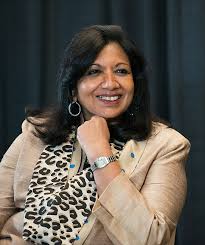
There are founders who built companies, and then there are pioneers who change what's possible. Kiran Mazumdar-Shaw did just that. Long before biotech became one of India's biggest growth and brand stories, she was betting on science, innovation, and the belief that a global company could be built from India.
But this conversation isn't just about Biocon. It's about what decades of building, leading, and reinventing have taught her. About how leadership changes with time. What younger leaders are getting right. Why succession is one of her founder's toughest decisions. And what success really means after you've spent a lifetime chasing it.
This is a conversation about ambition, resilience, legacy, and the lessons that only experience can teach. Here's Kiran Mazumdar-Shaw on a special episode of Media Dialogues with Storyboard18.
When it comes to Bangalore, what do you think the brand needs right now? It's known as the startup capital of India. It has this place on the world map as well. But what will it really take to make it a global city, a global brand? I mean, aside from the infrastructure issues.
No, I think you know when you talk about brands, they're about ecosystems. They evolve over time. It doesn't happen overnight and Bangalore is one such brand that has evolved over time. It has many things working for it with a very strong advantage. One is this is a city of first generation entrepreneurs.
This is a city of givers because I think the best philanthropists and the most well-known philanthropists come from Bangalore because all of us are first generation entrepreneurs who understand what it means to give back to society, to your city. And I think the other thing is of course we've been blessed with being the science capital of India.
Because of that we've created this unique ecosystem for innovation, for experimentation, for ideation and that's what has made us the startup capital of the country. And I think technology has led this city in many ways, whether it's digital tech, whether it's biotech, whether it's agritech, you name it.
I think Bangalore has really been a great city to support talent, support innovation and support entrepreneurship. So I think that's what makes this city very special. And more than anything else, it's a very cosmopolitan city.
If you look at any other city which is vying to be what Bangalore is today, it doesn't have the liberal cosmopolitan feel that Bangalore has. I mean today, whether it's the political ethos, whether it is the civic ethos, whether it is the entrepreneurial ethos, or whether it's purely the working ethos, I think it's very special because it's about each one trying to make the most out of their lives.
And so I enjoy being a part of Bangalore. It's a very free and liberated system which allows you to do a lot more than you can in a very closed environment or a very homogeneous environment which many other cities are.
You know, you go to even if you go to Hyderabad or Chennai, I mean Bombay is another very cosmopolitan city, but if you go to many other cities I think they don't have the kind of cosmopolitan look and feel that we have.
I mean Bangalore also prides itself by being the micro brewery capital of the country. You know, in the past we used to be the pub capital of the country, we're also the medical capital of the country in many ways and so on and so forth. So I think we really try to build a very diverse ecosystem which is what is very exciting.
But do you see any challenges to that ethos, that fabric that has made Bangalore what it is and that has given India so many founders, business leaders?
I think you know the main challenge that we have in Bangalore which I am very vociferous about is the fact that the city hasn't kept pace with growth. I mean you know we are 14 million people today and it was a city of less than a million people when I was growing up. So you can see the kind of growth we had to support with very poor planning I would say.
So I think political leadership has to focus on how to look at all the failures in the system and course correct. You know we haven't built enough infrastructure to cope with the capacity that is being built. We haven't really looked at building rules and regulations that really start with planning a city well.
And you can see some of this happening in some of the new localities, but we have to do something to fix the city. I mean, we started all the mobility projects too late. So, like the metro should have been completed 10 years ago.
At least today we have one of the finest airports in the country but we should have done a lot of this before and I hope that the government will actually look at this very seriously. I know we're talking about building tunnels and flyovers and what have you but we don't have the luxury of time.
We need to have better mobility and better cleanliness. I think garbage management and solid waste management have been the bane of this city because we just don't have the right governance model. Now we're beginning to try and build all that, and I'm just hoping that you will see some change in the next 3 or 4 years.
You have this unshakable faith and trust in technology and science but at the same time you have that same kind of faith in people. You have taken bets on people. Others might have overlooked but you sort of stood by people despite everything. I mean was that always something that you had, intuition about people, or were they just these calls you took on people while you were building your business and your companies? I'm trying to understand whether you always had it or was that something that you cultivated for yourself in identifying the right people and then making bold bets on those people.
So I've always believed that to be a successful entrepreneur you have to be a people's person. And I think good entrepreneurs are great networkers, are good people persons. And for me, it's about getting people to buy into your vision. You know, entrepreneurs create companies but people build it, and you cannot build it alone.
So that's something I learned right from the start and I made sure that I got people who believed in what I was doing to join me. So I've always sort of bet on people who share my vision for the future and that's what has actually built Biocon.
So you know I've built it with people, I built it with very special people. I built it with extraordinary people who others would have considered ordinary. So I think this is what it's all about and I'm very proud of the people who have joined me in this journey of building Biocon and building a global biopharmaceutical enterprise through this real sense of purpose and conviction.