Hello. If you want to show more patience, then it's about economies of scale, high volume. And if you want to sell a few patients, it's about high value, low volume. So you decide. I've chosen the format because I want to serve more patients in the high stakes world of pharmaceuticals.
Global giants like Eli Lilly, Sanofi, and Novo Nordisk have dominated the spotlight. But India has been quietly building a powerhouse in one of medicine's fastest growing sectors: biosimilars. Biocon is at the forefront of therapies designed to closely match complex medicines made from living cells, and it is one of the world's biggest producers of insulin.
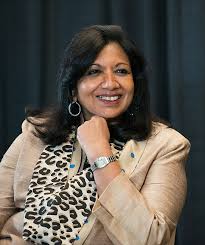
For founder Kiran Mazumdar-Shaw, the goal is accessibility at the crossroads where science, money, ethics, and human lives collide. She believes purpose and profit go hand in hand.
Koramangala. This is where it all began for Kiran Shaw nearly 50 years ago. This neighborhood looks very different today. Back in 1978, when Kiran started Biocon in a rented garage somewhere around here, she had little capital and no proven blueprint. What she did have, though, was a lot of foolish courage. As she put it today, Biocon commands an area of more than 100 acres in Bengaluru. It generates an annual revenue of nearly $2 billion, and its products are in more than 120 countries. Now, Biocon is on the cusp of a new era. Where does it go from here? I'm meeting the woman who built the company into a multi-billion dollar business. Come with me.
I built Biocon on a very strong sense of purpose, which is really about building a world-class, global leader in the biopharma space. I really want to help patients around the world with high-quality products and, you know, drugs that make a difference. I mean, I want to help healthcare systems around the world to cope with these crippling costs of drugs. I lost my best friend to breast cancer, and even she found it so expensive to afford treatment. And because of her, I started biosimilars.
You've been pretty critical of Western companies, which I suppose put a lot of emphasis on margins. And you say that's not how it should be.
It's not about margins. It's about the fact that we are a humanitarian industry, right? We are here to serve patient needs. We are here to improve the health of the planet. And you are developing drugs that save lives. Now, if you're going to restrict those drugs to only people who can afford it and charge such a hefty price point that most people can't afford it, then I think you're not really true to your purpose. So I think as a driving purpose, I've always tried to disrupt this model, which was always about low volume, high value, and turn it on its head and say, if profits are only driven by high price, then that's a different model. My profits are driven by high volume so that I can serve more patients. It's not that I'm less profitable, but it's just that I'm expanding my access by making it more affordable. It's about what is your business model? What is driving profit?
Well, you've been called the queen of biotech, the first lady of biotech. You've graced the Fortune magazine. As the story goes, you stumbled upon biotech. You were a master brewer who couldn't find a job. Take us to those days in 1978.
That was a very tough year for me, because I'd come back from Australia a few years before that, and I had assumed that I would be nabbed by all the breweries in India. And that was not to be, because I was shown the door by every single brewery saying, this is not a woman's job. This is not a career I should even think of pursuing. So there was a huge gender bias I felt, and I was then forced to look for jobs overseas. And I did get myself a job in Scotland. Would you believe it? And I was going to use that as a stepping stone to get a better job. But an accidental encounter with an Irish biotech entrepreneur got me to start Biocon. And that was, I think, quite an interesting time for me because I never expected that to happen. But it was tough going right from the get-go.
Not only were you a woman, you were 25 years old and the banks thought you were a high risk, and when you got the business going, your raw material suppliers wanted your Dad to be a guarantor. So all things were working against you.
Yeah. I mean, India was not ready for women entrepreneurs, I can tell you that. And of course, like you very rightly said, I had huge credibility challenges. You know, banks didn't want to lend to me because I was considered high risk in every way. I was too young, you know, 25 years of age. Secondly, they didn't understand what biotech was. So that was another high risk for them. And thirdly, I had absolutely no collateral to offer them. But I think one by one I got over those challenges. And every time I got over a challenge, I felt stronger and more confident. So I think my entrepreneurial journey over the years has been built on self-belief, self-confidence, and of course, a very deep sense of purpose.
Coming up, a sense of purpose for India's AI future to build and own its AI technologies. That's next on Latitude.
Beyond molecules and markets, a new frontier is emerging in almost all aspects of science: AI. For Biocon, it's more than being competitive. It's about ownership over the data and the science. A vision Mazumdar-Shaw holds for India and the Global South.
Talk to us about why it is important for India to have biotech sovereignty embedded in AI. Is it about not allowing India's biological data to sit in the US? Sit in China where, you know, they possibly can create therapies for Indian stem cells and then sell it back to India at a high cost?
You know, my view is that when I talk about biotech sovereignty, this is going to be about trading data, trading knowledge. So I think allowing our data to be leveraged by other countries and not doing something with it ourselves is going to be a lost opportunity. And in the future, it's not about doing it yourself. It's about collaborating. It's about trading. But if you don't have your own data to trade, then you are going to be at the mercy of others. So that's why I said that we must have biotech sovereignty embedded in AI, because that's what will actually allow you to play as equal partners in the future. And that's what the world has to do.
It is complicated, isn't it? Because right now, if you take a look at the countries with that capability, it's pretty much the U.S., China, and some European nations.
Oh, I would correct you there, Haslinda. It's not just European nations. I think you've got the likes of Korea. You've now got the likes of India. So yes, it is going to be a handful of countries who are going to be able to do that. And why do I keep on emphasizing that India is going to be part of that group of nations is because you cannot do anything without talent. And of course you will need infrastructure. So the infrastructure is what Europe is building, what Korea is building, what the US is building. And we know India is trying to build and the infrastructure also needs it. So both are required, right? You need talent and infrastructure. And India at the moment has talent and infrastructure mismatch. You have huge talent but the infrastructure is developing. So what we need to do is to make sure that we do justice to the talent we have. And once you do that, we will be equal partners. That's the key change. So I think when we look at what we need in the future, it's not that you're going to use AI to replace manpower, but I think you need to make sure that you have people who know how to use AI. So I think AI enablement is very critical. So the scientists of the future will have to be very AI savvy and AI enabled both. And I think that's the kind of workforce I really want, people who can use AI and who can also be enabled with the right.
We're talking about biotech sovereignty against a backdrop of India's reliance still on China when it comes to supply chains. Where are we with that?
The generic industry in India has relied very heavily on China, largely because they basically surrendered that whole key starting materials and API business to China, which they themselves basically created. And then of course, China built scale, which became globally competitive and nobody could compete with China. Now it's, you know, too late to try and bring that business back to India and try and compete with China. Though if you do want to build global scale, you could possibly compete with China. But I think going ahead or moving forward, you need to start looking at building resilient supply chains.
How has Biocon cut its reliance on China? Talk to us about APIs.
You know, China is very good at starting materials and APIs that are synthetically developed, chemically synthesized. Biocon's portfolio has been focused on fermentation science, on biologics, on biosimilars. And none of these required anything from China because these are not chemically synthesized. These are biologically produced, fermentation or mammalian cell culture. That's what I mean by the fact that Biocon has not had that reliance on China. The only way for industry now to cut their reliance on China is to really look at how to develop green technologies that doesn't require chemical synthesis. If India goes down that route, I think the reliance on China will be cut down.
Do you see India as being the third politically, I guess, detached alternative to the US and China, given that there is currently a biotech war between the two countries? Could India play that third role?
I think India has a good opportunity to play an important role. I don't want to call it the third role, but I do think India has a very important strategic opportunity because of its talent, because of the fact that it's invested in the US, because of the fact the Indian diaspora also are very much a part of the professional ecosystem in the US, in UK, in Europe, and other parts of the world.
This is our first biologics facility at Biocon. What we are making here are the cancer drugs, some of the other antibodies that we have in our pipeline. And we're very proud of this facility because it was our first. But it's also a very important part of our support system for our global business. Cancer has become a very important segment for us, because I think this is an area where cancer patients need affordable access to these therapies because they are life-saving.
Hello, I'm Ozempic. Oh, and I'm other GLP-1s for type two diabetes. A new generation of drugs, glucagon-like peptide 1 or GLP-1, started making headlines. Initially marketed as a diabetes medicine, GLP-1s eventually exploded on the scene as a weight loss miracle sold under well-hyped names like Ozempic, Wegovy, and Zepbound. Other uses have been found. GLP-1s are now used to reduce risks for heart and kidney disease, with hopes that they may also have an impact on conditions like Alzheimer's or even cancer prevention. By the end of 2024, at least one major player, Novo Nordisk, said it would invest billions into making GLP-1s while phasing out some insulin products.
What would make you consider going all in into GLP-1?
I think one of the things we have to be a bit, you know, aware of is that generic GLP-1s is a crowded market. So it's not about going all in. It's about being competitive and it's about being realistic about your market share.
So you don't envision a scenario where perhaps you might be focusing more on GLP-1 versus insulin, the way some of your competitors have done? Your Eli Lilly's and Sanofi's?
Well, for them it's very different because, you know, they have a limited window of opportunity for each GLP-1. And then they are, you know, introducing new GLP-1s. And basically the capacities that they have for insulins are being diverted to GLP-1s. And they will continue to do that. For us, actually, we've got two separate facilities. We have a large peptide facility for GLP-1s. We also have a fill and finish for GLP-1s, and we have a very large fill and finish for, you know, the insulins as well. So it's a fungible asset in that sense. And we can decide how we want to play it. But I think being a generic player, we are quite realistic about the fact that there's a lot of global competition. So we will have a small market share, but a good one.
You talk about insulin. It is a key product for you. How are you looking at expanding that market share? So you're number one for now, right?