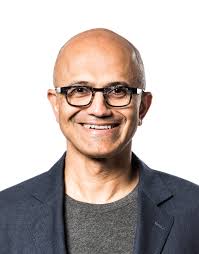
Satya Nadella Explains The Future of AI-Powered Coding and Multi-Agent Systems
📅 May 23, 2025Tiff In Tech12 MIN223078 VIEWS21 SEGMENTS · 2 SPEAKERS
Microsoft’s CEO Satya Nadella joined me for a conversation at Build 2025 to dive deep into how AI is transforming the developer experience, and the future of work.
We talked about the growing role of Copilot in writing code (it now contributes to over 30% of Microsoft’s own codebase), and what the introduction of Copilot Tuning means for developers and companies who want to train AI on their own proprietary data. Satya shared his vision for “AI squads” specialized agents that assist with tasks like email, data analysis, and ideation, and how Microsoft Teams is enabling these multi-agent syste...
Questions asked in this interview
6
0:17How do you build trust in a workflow where one of your co-workers, for example, is a bot?
0:54With the introduction of Copilot tuning, where companies can train Copilot on their own data, how do you see a developer's day-to-day evolving as both the AI and domain-specific tuning become the norm?
3:40Now that Teams is launching these multi-agent systems that can actually work together, how do you build trust in a workflow where one of your co-workers, for example, is a bot?
6:22How do you make sure an AI doesn't go off the rails, if you will?
8:16Could you give me a specific milestone that will prove, for example, or we can measure that it's working?
10:22I mean, eventually when you look back, what would make you feel like you truly left your mark on the company?
Copilot tuning is it's not just about using intelligence, but it's about tuning intelligence to amplify a given firm's ability to produce the products and services that they anyway are doing and doing it with much more leverage. Your point is absolutely right. We do need these social systems and a language. That's why I think the fact that it's all natural language, the work artifacts, that I think becomes the interface.
Satya, thank you so much for taking the time to chat with me today. I've been following along for all the exciting announcements with Microsoft Build, and I mean there is so much to cover, so much to chat about, but I wanted to really dive into a lot of the developer-focused questions that I have. It's a huge part of my audience as well. And I know you recently shared some really exciting, interesting news around AI that I think it was around 30% of AI today writes Microsoft's code. With the introduction of Copilot tuning, where companies can train Copilot on their own data, how do you see a developer's day-to-day evolving as both the AI and domain-specific tuning become the norm?
Yeah, and know the way I, Tiffany, come at this is if I look at the demand side of software development, the reality is the IT backlog or the tech debt that exists in the world broadly—not just in the narrowly defined tech industry, right? When you look at a small business in Indonesia to a large multinational trying to in manufacturing in Poland, and you sort of look at the world—then you need more software built such that it can address the world's needs. So if you say the demand is there, and there's a massive deficit of actually supply, so therefore, all of these dev tools, whether it was just simple code completions from a few years ago to Copilot Chat to Copilot agent mode or even what we launched today with Copilot coding agent, all are really about helping software developers and software development teams stay more in the flow, working down that tech debt more, producing the tech solutions that the world needs.
And then the other piece, which is this Copilot tuning, to me is again more like another tool for any software engineer in any company to be able to then turn the particular firm's competitive advantage—which is what is it, the knowledge they have as a firm, the documents they have or the databases they have—but then to use the latest model plus that data to turn it into sort of the competitive advantage for that firm. That's what this Copilot tuning is. It's not just about using intelligence, but it's about tuning intelligence to amplify a given firm's ability to produce the products and services that they anyway are doing and doing it with much more leverage.
I like that so much. You mentioned it's not just about using intelligence, but about tuning it to amplify the best way possible that these companies, these businesses can utilize it.
You've talked about a future where we all have AI squads, which I get excited about. I love that thought and idea about one for emails, one for data, one for ideas, for example. Now that Teams is launching these multi-agent systems that can actually work together, how do you build trust in a workflow where one of your co-workers, for example, is a bot?
Yeah, I mean that's the real question in front of us is what's the social system of trust that exists? And I think the social system of trust would be very similar in some sense to how even we as co-workers, when you're working on a project, we're able to look at the work artifacts, we're able to inspect what we are doing in our work to move things forward. So even like the coding agent, for example, I love when even I assign a PR or an issue to it, it opens a PR in its own branch. The thing that I go to is the issues log, right? So it's actually committing all of the session log where it's committing all these draft commits, and I'm looking at it and say, "Wow, every step of the way, it's like uncannily watching someone else code away and know what they're doing," right? So in some sense, your point is absolutely right. We do need these social systems and a language. That's why I think the fact that it's all natural language, the work artifacts, that I think becomes the interface. In fact, even the markdown file for agents is the interface between us and an agent. And so I do feel, whether it's in Teams or whether it's in GitHub or what have you, we will have to basically build out these things which are the interchanges where humans and agents can essentially, quite frankly, verify each other's work.
11 more exchanges in this transcript
Sign in free to read the rest of this interview. No card required.
Nadella, S. (2025, May 23). Satya Nadella Explains The Future of AI-Powered Coding and Multi-Agent Systems [Interview transcript]. Tiff In Tech. CEOInterviews.AI. https://ceointerviews.ai/interview/1332746/
MLA
Satya Nadella. "Satya Nadella Explains The Future of AI-Powered Coding and Multi-Agent Systems." Tiff In Tech, 23 May. 2025. Transcript, CEOInterviews.AI, https://ceointerviews.ai/interview/1332746/.
BibTeX
@misc{nadella2025_1332746,
  author       = {Satya Nadella},
  title        = {Satya Nadella Explains The Future of AI-Powered Coding and Multi-Agent Systems},
  howpublished = {Interview transcript, Tiff In Tech. CEOInterviews.AI},
  year         = {2025},
  month        = {may},
  url          = {https://ceointerviews.ai/interview/1332746/},
  note         = {Speaker-attributed transcript with timestamps}
}