This is the Asian Trade. Our top story today, Donald Trump and Xi Jinping thrust their fierce AI rivalry into the spotlight at the White House summit. The president arguing for unfettered development while China's leader indicates openness to setting boundaries. Let's bring in Chief North Asia Correspondent Stephen Engle and in Washington, D.C., Gabriella joining us from the U.S. Capitol. We are still expecting to have that state dinner and dignitaries arriving at the White House.
Momentarily. We are on the North Lawn where the dignitaries are going to be arriving shortly. We have seen Jamie Dimon and the Ambassador David Perdue outside the gate arriving in tuxedos early. Large-scale protests are going on in Lafayette Square, beyond the barricade on the road that passes to the north of the White House, using megaphones. You can hear 'Free Hong Kong, Free Tibet.' Right now it's all about the dignitaries, the tech executives, in addition to Jamie Dimon and David Perdue who are arriving. Will we also get some Chinese executives? Let me paint the picture for you. We heard yesterday from sources that Xi Jinping, when he landed in Washington, did not bring a bevy of executives. We are hearing from other media, including the South China Morning Post, there could be Chinese executives showing up at the gala tonight if they had their own visas to the United States. They made their own way. We have to wait and see. That is why we are camped out on the North Lawn waiting for the state dinner. Most of the day, the early part of the morning, there were talks. The table set up in Donald Trump and Xi Jinping meeting, talking about a number of very critical issues between the countries. We know the efforts to lower some non-critical areas of trade to the tune of $30 billion to reduce tariffs to really show the interdependence in non-critical areas. It is those critical areas that really are dominating the news flow, in particular with AI. Donald Trump spoke about the similar themes that he has talked about, and that is the threat to humanity that AI has posed. He is still holding to his view that it is a bit of a hoax. He put out on social media he likes to keep AI exactly where it is. Xi Jinping at the White House gave signals he would like to see a little more of an attempt by the two nations to put guardrails on the development of AI. He said we have both the capability and responsibility to develop and manage AI for good and ensure the development of AI is always under human control. Very quickly, lastly, Taiwan was a key point of Xi Jinping's remarks to Donald Trump, urging in maybe the strongest terms possible as of yet to oppose proposed Taiwan independence, as opposed to previous and current U.S. policy towards Taiwan, which is we do not support Taiwan independence. It is verbiage but it is clear that the Chinese would like to see the United States state they oppose any efforts towards separatism on the island.
There's been discontent when it comes to the China hawks in the administration. What are we hearing? What symbolism are we seeing as we see this projected warmth between the leaders being paramount? We've had a return of panda diplomacy, for example.
Yes. We are waiting to hear the U.S. readout on some of the more substantive elements coming out of President Trump and President Xi's closed-door meeting in the Oval Office. What we did see in public, we saw some openness to guardrails on AI from Xi Jinping. Overall there was a cooperative tone on the topic of AI in the opening remarks. We know trade issues and AI fears are underlying this meeting. In the open we saw a lot of gestures of warmth. President Xi Jinping made the announcement that China will be gifting two pandas to Atlanta, Georgia, which is sort of a textbook diplomatic move. It's an easy diplomatic win. It was a widely read story on the Bloomberg terminal today. That is just one example of the warmth these two leaders are showing to each other during this state visit that is very rife with pageantry and this state dinner will also be an event to watch.
Steve, we had speculation that the expectations were going to be quite low when it comes to commercial deals. What are we seeing in terms of potential deliverables given a note of absence of senior business leaders on this trip?
I want to interrupt a little bit. Xi Jinping's motorcade that they brought from China has arrived. He is coming up to the North Gate of the White House. The gates are also open where other dignitaries are also coming through. We have right here as well the Marine Guard lining the driveway to the front door. There is the welcoming of Xi Jinping and his wife. Back to the White House after the numerous hours they spent in negotiations tonight. It is about the pageantry and the celebration of a closeness, a relationship, a growing relationship that the two gentlemen talked about over the course of this morning. As Donald Trump did give a tour of the White House, including the wall of presidents and the new helipad on the southwest part of the White House. As part of the question about commercial deals, that is something that the United States side of the story were hoping to get out of this summit. Donald Trump talked about the potential for a number of different deals. Maybe it is a setback we did not get the big bevy, the contingent of C-suite from China at this summit. We might get some later but again, because the board of investment has not been developed as quickly as the board of trade, perhaps there is not easy deliverables right now for Chinese businesses to do direct business in the United States. In particular, in sensitive areas like EVs, though Donald Trump last week did mention he would be potentially open to China building EVs in America, as long as they did not import the EVs and also used American workers. I am not sure what the deliverables necessarily on the commercial side are going to be at this summit since it wraps up tomorrow. Remember in Beijing, there was the colloquialism. It was 'Deal Team 6' to talk about deals on agriculture, rare earths and the like. That kind of rhetoric has died down a little bit since the May summit.
Stephen Engle is telling us about the pageantry and you can hear all the music at the White House right now. How is this sitting with regular Americans at a time when gas prices are soaring and at the same time within Washington both sides of the aisle, you have controversy around F-35 parts ending up in the possession of China?
Yes. There are many members of Congress, including members of Trump's own party that are not too enthusiastic about the timing of Xi's visit to D.C. For average Americans facing a crisis of living costs, the pageantry is maybe a little poorly timed and the cost of living is a huge issue for Trump going into the congressional midterm elections in just a few weeks here. As far as the congressional pushback on Xi's visit, there are members of Congress that are asking for answers on this report that F-35 parts were diverted to Hong Kong and China is holding those parts. We are not exactly sure how this happened but there are Republicans and Democrats that are asking for answers on why such sensitive materials would be left in Chinese hands at this juncture.
Even with the pomp and circumstance and pageantry and really it seems like genuine warmth between the two leaders, as Gabriella alluded to, lots of sensitive topics that may still come up. What can we look forward to in terms of how the state dinner will play out in the rest of the trip?
I think the state dinner will be lots of pageantry, a lot of flattery between the two leaders as they are trying to build, you know -- they know about their strategic rivalry. That is definite but they are also trying to build a senior leader level camaraderie. That is very, very evident. I was here when Xi Jinping left the White House around 1:30 this afternoon after the talks. Donald Trump walked Xi Jinping out the main door of the West Wing where the Oval Office is. There was, you know, a very cordial and warm sense of friendship that we can see personally. Xi Jinping walked away and we all shouted questions to President Trump, who said the talks this morning went very well. Again, without those significant deliverables -- I'm not expecting significant deliverables or significant deal flows coming out of this very short visit by Xi Jinping, but it can go further to build that camaraderie into perhaps the next meeting that might happen in a very short two months from now in November when APEC will be held in China. Donald Trump indicated he would like to meet Xi Jinping at least two more times. How many deliverables and progress can we get on the AI dialogue between now and then? Or other initiatives like tariff reductions? We have gotten the extension of the trade by a mere two months. A lot has to be compressed into a short amount of time before they meet again, also potentially in December at the G20 in Florida.
Chief North Asia Correspondent Stephen Engle there in D.C. and RDC Breaking News Editor Gabriella. We are looking ahead to the next elements of the state visit and the talks between Presidents Xi and Trump with the state dinner to come. We are seeing the global bond index yield hitting 4% for the first time since 2007. It's been floating around a whisker of that. We have had that milestone. 4% for the first time since 2007. This is the congregation of not just Treasury yields which have been leading the pack but really European sovereign yields. JGBs as well as Australian and New Zealand following the trend as well. A little bit of a pullback or flattening when it comes to the dollar index after the rally of the past couple of sessions. When it comes to Asian equity futures, quite a bit of uncertainty into this Friday session. The Nikkei futures off by about 0.3%. Oil continuing to fan inflation fears, driving yields higher and we can see risk appetite pulling back today. We have got a milestone when it comes to that 4% level for global bond yields. We have the geopolitics. It is a complex environment for investors.
Absolutely. The diesel prices front and center -- price is front and center. The diesel price rising as rapidly as it has with not the best alternatives for supply of diesel, it is leading to this concern the Fed might not be on a short hiking cycle but a longer one than they might like. The bond market yields are intimidating risk appetite.
Typically you would see banks doing better than they are now.
U.S. banks particularly have had a lot of pressure because the yield curve has dramatically flattened over the past six months, and on top of that we have seen comments out of Bank of America with trading volumes lower than expected. And then the price of fuel and gasoline weighing on consumer sentiment and the consumer generally -- whether that takes growth away from these banks, these banks are not interest rate sensitive on the long end like European banks are so we have seen outperformance in European banks versus the U.S. this last 2-3 months.
We were talking about panda diplomacy. There's one certainty, one deliverable we are seeing so far but when it comes to the U.S.-China stability, are there investable themes if we see bifurcation on how the presidents want to approach the AI safety theme?
I think the AI safety is the biggest deliverable that can come out of this. Whether there will be more cooperation between the leading AI labs. China is having a probe looking at what labs have been doing with Anthropic's model. We had overnight DeepSeek looking to raise more funding. $7.5 billion worth of funding. Which in context is more than two Baidus. There's a lot of creation happening in the AI ecosystem and Chinese models are now requiring more compute. The big deliverable from China's point of view will be whether there is relaxation on access to the leading U.S. chips and memory access.
Our Bloomberg equity strategist there. We have much more to come when it comes to the Trump-Xi summit that is underway. Analysis coming up from officials we will be speaking to later on the China Show. This is Bloomberg.
We are seeing U.S. crude futures at the moment losing ground after a session of gains overnight. The Brent crude, about $106 a barrel, surprising given the physical tightness we are seeing in the markets right now. Saudi-backed coalition saying they intercepted six ballistic missiles. We have Houthis claiming those attacks. We have seen perhaps some conversations happening at the U.N. General Assembly around the Iran war but you can see Sydney futures at the moment losing a little bit of ground. We are watching the energy sector right there. We had seen some of those losses the previous session as well. Do keep an eye on Australian yields. The three-year yield, at the highest level since 2011. Inflation concerns around the world with the bond selloff. Let's discuss what is happening on the potential oil implications from the Iran warfront. Magdalena Telles joins us from New York. Do we have any indication of what's happening in the negotiations between Iran and the U.S.?
Both presidents were fierce in the rhetoric against one another but I also think it is kind of interesting that we have seen more progress than expected on the Iranian front this week. If you think back to last week, we did not know if their delegations would have visas to be able to come to New York. The Secretary-General himself when we asked him if he thought any progress would be made in the UN, he said probably not, that there would be other forms where the U.S. and Iran could discuss this better. But actually Tuesday, Trump announced some of his delegation had spoken to the Iranian delegation and Jared Kushner and Steve Witkoff had started some sort of conversation with the Iranians and now we are seeing reports there is going to be maybe some phased-out deal. We don't know many details but it appears the idea will be that Iran opens up the Strait of Hormuz and the U.S. lifts the blockade and we would go from there.
We also heard from the Israeli Prime Minister, Netanyahu. It was tense at the U.N. General Assembly. Some dignitaries actually walked out.
Yes, Benjamin Netanyahu is no stranger to the U.N. disliking his presence, although maybe this year was a little bit colder than usual since the city itself came out against him -- I would not say came out against him but, you know, there's been frictions with Mayor Mamdani, who has said he wanted Benjamin Netanyahu arrested over his war crimes. People said he can't really do that, and he accepted that himself. Benjamin Netanyahu came into the city with -- they did not welcome him with open arms, let us say that. There were a lot of protests around the fact he was going to be here. And as soon as he started speaking, the full room became pretty empty. We saw I think dozens of delegations walk out before he started to speak. But he acknowledged it and mocked them, 'Anyone else going to walk out, do it now.' He delivered a speech along similar lines of previous years, he said Israel would keep fighting against its enemies, he said terrible things about Iran and Turkey's president and did not miss the opportunity to say some bad things about Mayor Mamdani but it is what it is.
We have seen a lot of friction at the U.N. General Assembly, not surprising, the top priority issues at the moment, the Iran war, Ukraine war and everything around critical minerals, trade, AI even becoming contentious, what should we be watching as we have the world leaders gathered in one place?
I think the AI conversation is going to be an interesting one especially once we see what Trump and Xi talk about during their summit. We saw during the council AI CEOs discussing with diplomats about what safeguards they want to see and how they want to work together on some international framework around AI but we cannot make any progress without the two biggest AI superpowers involved. And so, I think whatever they talk about while Xi is in town will be more important in this bigger conversation which was a huge part of the UN. The Secretary-General spent opening remarks on Tuesday discussing the dangers of AI and I think he had a funny line about how he did not want killer robots in our future. And it is true. We would not want that.
Our Bloomberg U.N. reporter, joining us from New York. We have more ahead on 'The Asia Trade.' This is Bloomberg.
Take a look at how we are shaping up in Asian bonds. We had a continued relentless climb in yields spearheaded by Treasuries but we are seeing global yields really playing along as well. Global bond index yield, hitting 4% for the first time since 2007. This, as the soaring oil prices continue to feed into heightened inflation expectations, feeding into these revised expectations for the global central banks including the Fed of course. Asian bond losses are really set to extend as we get into this Friday's session, deepening to be seen in Asia as we see these elevated energy prices continuing to play through. We have seen long-term Treasury yields being pushed to multi-decade highs there. Brent at around -- well over $105 a barrel. One to watch for the session. This is Bloomberg.
The state dinner going on between Presidents Trump and Xi. This summit the first time in 11 years that a Chinese leader visits Washington D.C. and meets with the U.S. President. What has been interesting are the difficult topics on the agenda, including around Taiwan. We are now hearing President Xi is pushing to oppose Taiwan independence. At the same time you have a softer side, the pageantry. We are seeing the state dinner lift the guest list from the U.S. side. GM's Mary Barra is on the list, Citi's Jane Fraser, the Fed Chair Kevin Warsh among the attendees. Blackstone's Schwarzman is there, LVMH listed in the guest list for the state dinner. We have heard President Xi Jinping was not necessarily bringing a robust delegation of Chinese executives. But eventually this could reflect the difference in expectations. We know President Trump likes to make these business deals on the sidelines of these big summits. We are still waiting to see what concrete fruits come out of these conversations.
Particularly around rare earths, which has been such a key point of leverage for China in these ongoing trade negotiations. There is a trade truce extended, but only for two months. That takes us past the all-important U.S. midterms. Could be quite a different political landscape domestically in the U.S. as well. We have one deliverable. Pandas are back in play. Two pandas in the coming days will be heading to Atlanta, where they will be able to meet those pandas. There are some elements that play into the warmth between the two leaders, this idea of that friendship building despite not a lot of deliverables. If you look at what markets are watching, that stability is what they are hoping for. There's a lot of distraction in terms of what else we see with the economic risks. This is that push higher when it comes to global yields. 10-year yields rising to over 5.21% in the previous session. The global yield touching 4%. That is the latest milestone. We will see the losses mount for Asian bonds, Australia and JGBs into the Friday session. Equities looking quite risk-averse at this point as we continue to have the oil risk feeding into expectations we will see central banks get more hawkish. Let's bring in the Managing Director of Geopolitical Advisory Firm, and served under President Biden and President Trump in the first Trump administration. We talked about this high on pageantry, low on deliverables. We have been through a few of these leadership events today. It is never a sense that any big surprise deliverables will come through, but it feels like even the low-hanging fruit may not be in play for this trip.
That is exactly right. In seeing some of the images on the screen a couple minutes ago, it makes me think we should think of this summit going on right now in Washington as a pageant as the two leaders try to paper over some of these big systemic differences over rare earths, over trade and tariffs, over fentanyl, AI distillation attacks. The optics have been quite striking, but it is like a Christmas present that is wrapped in shiny paper, and then you open it up and there is nothing inside. Or worse yet, there is a lump of coal. The day has been filled with so much pageantry that there has not been all that much time for the two presidents to sit down and work out their differences. I think that is by design. Any real work that happened was a couple days ago in New York. The two presidents are clearly ready for a bit of break in the tensions and appearance of calm, just sort of a break so they can have a couple more months of calm.
There were already enough red lines back in May where they met in Beijing. A lot of that focuses on rare earth access and the tech tensions. The tech tensions aspect has built with a further flashpoint with AI. Was it interesting to you that Presidents Trump and Xi had differing views on how AI safety should be dealt with? Does that mean we will see more bifurcation than consensus for coming together for any kind of framework?
It has been quite striking how even over the last few days, both sides, Xi Jinping in Beijing and Trump in Washington, have repudiated these notions that the two sides have agreed that this AI development should slow down. Both sides have rejected that view. The Chinese Ministry of State Security was out writing their own views on what they call AI security. What they mean by that is securing the Chinese Communist Party regime, whereas in the U.S. the debate is more about catastrophic risks and all the rest. Trump has rejected the notion that the labs should put things on pause while they figure that out. The two sides don't have a lot of common interest. That is why what you have seen so far on the AI deliverables are baby steps. They announced again they will have an AI dialogue. That is a recycled announcement from the summit in May. The U.S. put out a proposal for a so-called AI notification mechanism. You can think of this as like a hotline where the U.S. government is saying let's give a heads up or even a fax if an AI model climbs out of its sandbox and is about to do something disastrous. This is a positive small first step, but it is a baby step.
The other interesting thing out of the limited information we have is this request from President Xi for Washington to oppose Taiwan independence. We don't know how President Trump reacted. Even a change in semantics would be striking and significant here.
That is right. I think Xi Jinping is continuing to build on what he likely felt was a bit of progress he made in May, putting his talking points and trying to program President Trump's brain to think in terms of, hey, let's you and I solve this Taiwan crisis together. I think it is a subtle way to seed in the American president's mind that Taiwan, this democracy that is the center of technology supply chains, maybe should not even have a voice in this discussion, which is a ridiculous idea. I don't think Xi Jinping will push very hard, but I think he just wants to keep chipping away at that notion and build on that and get Trump to start thinking in these terms. I do believe President Trump is well briefed by his team on this. They will try to prep him not to fall into these traps. I am not expecting any major sea change. Nonetheless Xi Jinping is playing the long game.
When it comes to the other pressure points President Trump and his administration are facing, wars on multiple fronts. There have been talk on wanting to get Beijing's help on what it can do to influence Iran and its friendship with Vladimir Putin as well. Do you think those conversations are happening or has it been a step back and more pragmatic management of expectations on what they can see Beijing doing?
Certainly Iran at least has come out. The Chinese put out public statements reiterating their own familiar talking points. They want the U.S. and Iran to go back to the MOU from a few months ago. They want tensions to cool down. Nonetheless I don't expect Xi Jinping to go out of his way at all to help President Trump. I think the best we can hope for is that he does not escalate his support for the Iranian regime even more. We know Chinese companies have provided satellite imagery that the Iranians have used to target and kill American service members. The Chinese are supplying components to Iranian drones. It does not look like Xi Jinping will go out of his way to stop any of that or to offer real material assistance to Trump. He will sit back and enjoy watching the Trump administration struggle with the situation.
The struggles domestically are interesting. We heard from China hawks in the administration. There is a situation with these F-35 plane parts. The visuals probably don't look great from a domestic point of view. Do you think that is pressure President Trump is under at the moment?
Certainly. That is part of the explanation why you have this high-on-optics summit. It is a bit of a distraction from these hard problems that both leaders are grappling with. It is all the ones you mentioned for President Trump. President Xi's problems are perhaps more subtle but I think they are ultimately more serious. It is the structural problems with the Chinese economy and signs of long-term weakness that just keep coming. I think that helps explain why Xi Jinping isn't doing more to twist the knife on the U.S. on rare earths. Xi Jinping needs relief so he can take care of his economic problems at home and continue pursuing his goals there. Even though Beijing still has this leverage over the United States, control over most of the supply of rare earths, they are not twisting it as much as they could be. I think that is an indicator that Xi Jinping is feeling a bit more on the back foot than he did in May when Trump traveled to Beijing to visit him.
Let me end on the analogies we brought out earlier, the Christmas present, the pageant. Who wins this pageant? Does anyone end up with a lump of coal?
I would say that America has this crisis around rare earths. China has this long-term condition, this weakness in their economy. I think the crisis around rare earths is solvable. It takes a lot of hard work. It could take years and so America needs determination and political will and to keep at it. But it is a solvable problem. China on the other hand, it is not clear to me that their economic problems are solvable. The economic miracle growth is over. If I had to choose which country's problems I would go with, I would still take America's over China's.
Great to have you with us. Liza Tobin, former China Director at the U.S. National Security Council. We will have more on the Trump-Xi summit ahead. The former embassy chief of mission in Beijing joins us. Later, you can hear from a director at Fudan University. More on 'The Asia Trade.' This is Bloomberg.
Oracle is moving to shield itself from a wrecking ball of expenses on the controversial data center being built in New Mexico. Sources say it sent the developer a notice citing a bid to put off payments should the project fail to come online in 2028 as planned. The data center is a major part of the Stargate AI buildout but has faced setbacks, including energy permit denials. A report saying Hyundai is poised to outsell Ford for the first time. A researcher says combined U.S. deliveries of Hyundai, Genesis and Kia vehicles were up over 4% in the third quarter. Ford on the other hand saw sales decline nearly 8% to roughly 504,000 vehicles. U.S. listed shares of UBS gained while Morgan Stanley fell after a report that the Swiss lender is weighing potential deals with banks in other jurisdictions. UBS has revived discussions about ways to move away from Swiss regulation and the possibility of stricter capital rules. The report says one option would be through Deutsche Bank or Standard Chartered. Take a look at how U.S. banks traded in the overnight session. We saw the KBW Bank Index rally overnight and see losses in the overnight session that sent banks into technical correction. We are talking about a 10% plus loss from the KBW Bank Index high. This coming at a time when we see sentiment for the sector weakening. We have the Fed shifting back to raising rates. Typically negative for banks. It pushes up costs for new loans, also increasing risks in the broader economy. A Bloomberg Intelligence note saying most banks have done well in 2026, robust trading and benign credit, but when it comes to financials and focused ETFs we saw more than $2 billion of net outflows.
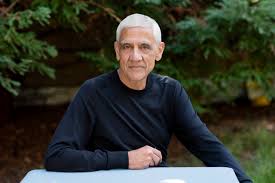
A billionaire venture capitalist says AI development should not be held back. Speaking exclusively to Bloomberg, he also warned the slowing of AI development in the U.S. could hand China a strategic advantage.
I do think that is the wrong message. I do think we have to focus on our competition with China. Whoever wins in AI, and I talked about this for a long time, is going to win the economic race and hence the influence race globally. What Southeast Asia, Latin America, Africa adopt will be the political philosophy, will be a function of who wins the AI race. Economic power will reside in who wins the AI race. That is why I think President Trump has a right. I hope we get behind this.
You gave me hope with energy. Quantum computing is the next unknown. A concept that is hard for the main street to understand. We can say partner with AI can do all sorts of things. You see things others don't. This is super national security stuff. Can we expect any quantum computing updates soon?
I looked at everyone and turned down every single one. Except only this year I changed my mind. We made our first quantum computing investment after looking at a dozen of them. I do think there is a radical breakthrough. Previously the question was which is the best quantum computing company? I always look at what is a good enough quantum computing company to solve what is technically called the Shor's algorithm, which is disruptive. I think that happens before 2030, which is disruptive. It is an area we can beat China in. There's other areas where we can beat China. We are very dependent in minerals and materials. I think there is a huge effort in this country to reintroduce those industries. We have seen AI really help in refining, in mining, so lots of hope in the minerals and metals. Very excited about what they can do. They are opening up a copper mine in Utah today. This is climate week. We have a company that produces cement cheaper than high-carbon emission cement. We have a company that produces steel that is cheaper than high-carbon emission steel. When you don't defy the laws of economic gravity, you don't have to worry about the climate benefit. If the climate technologies are cheaper than their fossil competitors, that is the way to approach it.
Vinod Khosla speaking exclusively to Bloomberg Technology. You can check out past episodes of Bloomberg Technology and other shows on Bloomberg.com/videos. We have more ahead. This is Bloomberg.
Let's take a look at these markets for the Friday session. A lot at play, least of which is the selloff after the 30-year bond. We see oil prices feeding into higher inflation expectations, feeding into expectations for the Fed and central banks to get more hawkish. A fresh jump in oil prices lifting five to 30-year yields. Global yields touching milestones as well. Futures in the U.S. down by 0.25%. We start the trade of Sydney in minutes. Watch for the energy majors in case we see an uplift with the crude price being elevated. Nikkei futures on the downside as well. Asian markets will be looking to close out what has been a volatile week, potentially more positivity when it comes to the roadmap to peace between the U.S. and Iran. Tech news continues to resonate. Positive buzz around Meta's moves being offset by concerns about Oracle's data center ambitions. Let's bring in our Bloomberg Markets Reporter for everything, the confluence of factors.
A pretty quiet day. A lot of markets out in the region, so we have mostly Japan and Hong Kong to look to. In Australia and those markets, there are a few more big parts. There are two narratives that will dominate. One is the rates move. It is pretty stark. It will probably be mirrored in terms of JGBs and Australian bonds. That will have repercussions on insurance, on banks, and in Australia in particular you have seen the downside pressure from what the pressure rates are putting on what is already a kind of muted domestic economy. Aussie job numbers yesterday did not do anything to address that concern. Australia has been a bit under pressure. In Japan the banks will be interesting in terms of how they react to higher yields. Are they going to celebrate a steeper yield curve or will they be pricing in market losses? Similarly for Hong Kong you have to consider the property and insurance market. Then on tech you continue to see Meta shares trade higher on optimism of the new AI agent. That theme seemed to be heartening. People really believe in that. Optimism around the data center buildout is being tempered by Oracle's attempts to rein in some of its financial risk around that. Markets are able to navigate who is spending money where on what kind of hardware. That dispersion will be important.
Anthony Stephens with the latest on the markets as investors are watching the latest when it comes to the Trump-Xi summit. That state dinner is happening now. President Trump saying they can continue a prosperous and secure future with China and that the U.S. and China have never gotten along better. They are celebrating a long history between the two countries. The top business leaders from the United States are in attendance at the state dinner happening at the White House right now. The market opens our next. This is Bloomberg.
We are counting down to Asia's major market opens. At least Japan and Australia coming online. We have China, South Korea and Taiwan away on holidays. They are missing out on the global debt selloff! The 30-year yield at the...
Highest level since 2004, not to mention the ongoing latest developments in the Trump-Xi summit in D.C. With the way markets have been going over the last few weeks, you are almost certain to be missing out on something. Japan trying to play catch up with the first three days of this week when we saw the frenetic check gains across the board. At the moment we are getting the resumption of inflation fears, oil and energy related fears feeding through to the relentless selloff in global bonds, that is also spreading to Asia including the impact on JGBs.
Especially given the fluctuations in the oil space, and perhaps some expectation of what we can expect out of this Trump-Xi summit. A two-month extension of the trade truce, does that make any material difference to investors at this point? Nikkei 0.4% higher. TOPIX gaining a bit of ground. What we have been watching is the Japanese yen, close to the 159 level. Approaching 160 against the U.S. dollar already. Are we in that intervention risk zone? Finance Minister Katayama has been reiterating the U.S.-Japan joint coordination principles are still intact, but questions abound about what is that limit, where is that zone where we could see more action coming either from the U.S. or Japan. JGBs, we talked about the global bond selloff. Even the three-year Australian yield at the highest levels since 2011. The 20-year yield in Japan at the highest levels since 1996. 3.1% is the level. We are contending with pressures not only from the global bond selloff, but also domestic demand being an issue in Japan. Insurers, the likes of pensions also buying domestic debt. We have the BOJ, for the longest time retreating from the JGB space.
Let's look in terms of what is driving all this, that picture when it comes to Brent. We get a few more developments. There is not an absence of optimism in terms of where the diplomatic agreement could still be found, but certainly at the moment we see a bit of a drop. Into the start of trading Brent crude off by 0.5%. We are seeing an alleviation on speculation we could still see a deal. There is a version of the events that suggests Iran is seeking a deal. There's been a lot of tough talk between both of those sides. We are watching treasuries. This is a global story not just when it comes to U.S. treasuries, but yields on the longest-dated bonds climbing to the highest level in more than two decades. The bond selloff continuing to worsen. The fresh jump in crude prices lifting five to 30-year yields to new multi-year highs. We see that play out from Australia to Japan to European bond yields. We are watching the geopolitics. The Trump-Xi summit in Washington where the leaders are attending a state dinner. Including some of the top U.S. CEOs across banking, finance and tech. We saw Xi and Trump talking about Taiwan and conflicts in the Middle East. Our chief North Asia correspondent Stephen Engle is where this state dinner is taking place. We have been hearing from President Trump.
He's making some pleasant comments about their day together with Xi Jinping. I will quote him, 'U.S. and China have never gotten along better. We can continue a prosperous and secure future with China.' They are celebrating a long history and delighted to welcome Xi to the White House. We were on the North Lawn when Xi Jinping arrived in the last hour. They are having the state dinner right now. We are back to our normal perch overlooking the festivities in the White House. I'm just looking through the guest list. In the time I transited between the last report I had and now, you probably ran through the guest list. I want to highlight some of the names that stuck out to me. A lot of the U.S. business leaders we already reported, the Elon Musks, Jensen Huangs, but there is also, given this F-35 new story we were talking about yesterday with those parts going missing on the way from Australia to the United States via South Korea and Hong Kong, and then reportedly gone into the possession of the Chinese government. We have the Lockheed Martin chairman also here. It will be interesting to see if that story comes up further, even at the state dinner. We are hearing a number of lawmakers on Capitol Hill are calling on the Pentagon to give their side of the story, what do they know about this? Not to mention any findings of an investigation since that incident, if it is true, reportedly happened in May. Let's talk about the guest list on the Chinese side. There are no listed names of key Chinese executives that I have seen. We knew that yesterday. We were hearing they would not necessarily make this trip. The South China Morning Post reported that any Chinese executives who behind the scenes were invited, as long as they had an American visa and made their own way, we have not seen any major executive name on the list other than the government officials, including the head of the National Development and Reform Commission. The ambassador to the United States, the minister of finance, and the minister of commerce, among other Chinese dignitaries, of course including Xi Jinping and a number of his cabinet members and the Politburo Standing Committee. The U.S. delegation heavily weighted no doubt in addition to Kevin Warsh, who is the Fed chairman, including a number of the different Supreme Court justices, that long list of U.S. executives I had mentioned earlier.
Fewer than 20 of them are from the Chinese side. There with the speculation to which Chinese executives would turn up. President Trump presenting President Xi with a sculpted bald eagle. We are hearing from President Xi, saying they have reached an understanding on many issues with the U.S. Quite interesting because we know when it comes to some of the top issues, an interesting and rare call for the U.S. to oppose Taiwan independence. May be a lack of consensus on AI, that it will not be quite so easy to find the middle ground.
Let's tackle those two contentious issues separately. The issue of AI, Donald Trump essentially said he likes where they sit with AI right now. Donald Trump over the last two weeks has talked quite a bit about America being the leader in AI. They want to keep it that way. Scott Bessent talked about how the advancements in AI should be for the good guys, not the bad guys. You can read between the lines. It is Donald Trump who said it was a hoax, all this talk about the threat to humanity for AI. Whereas Xi Jinping in his comments struck a more open tone toward putting up the guardrails, and that the two nations have a responsibility and the capacity to govern the pitfalls and dangers of AI going forward. This is what Xi Jinping had to say, we have the capability and responsibility to develop and manage AI for good and ensure development is always under human control. The big redline issue, as I turn the page to Taiwan, recently is that $14 billion arms package that is proverbially sitting on the desk of Donald Trump. That is something the Chinese have warned him about approving. That verbiage is about oppose Taiwan independence. Xi Jinping urged Donald Trump to adopt that verbiage, oppose Taiwan independence, as opposed to long-standing verbiage of we do not support Taiwan independence.
Bloomberg chief North Asia correspondent Stephen Engle from Washington D.C. A mixed picture across markets early in the Asia trading session. We will try to digest the latest geopolitical developments. Let's bring in an equities strategist at Goldman Sachs. Steve was just telling us some of the top lines coming out of this summit. The expectations were pretty low. We have a trade truce extending for about two months, but still a lot of unresolved issues, including rare earths and tariffs. Does this change anything for the Asian market equity picture at all?