When you came in, what was the revenue of the company?
And what was it at 18 years later?
I know you don't like the word turnaround, but you really hockey-sticked their business up. You go in to see Don and he gives you a card with one line basically letting you know like, 'Thank you so much. Here's the door.' I guess what I want to know is how did that feel?
How did it feel? Well, it was, 'What the [ __ ]'
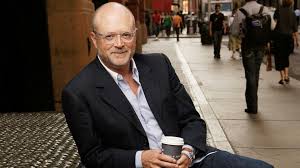
Today on the Messy Parts, we're going to have on Mickey Drexler. He was the CEO of the Gap in the 80s, then went on to turn around J. Crew, and today he runs Alex Mill. The reason I love that Mickey Drexler came on is because when I was in college, he had a campaign running for the Gap called Individuals of Style. It was an iconic campaign, so iconic that Richard Dixon and his team have brought it back today at the Gap. And I had this idea of combining a travel guide that I did, which was an insider guide to cities, with his campaign. I mock it up. I mail it to him because this is pre-internet, and it's the finals in my business school class, and the phone rings, and it's Mickey Drexler. This led to me meeting Mickey Drexler. And in fact, I often say Mickey Drexler started me on my career in marketing because I wasn't looking for a job at the Gap. I just wanted them to do the guide. And he said to me, 'This is a marketing idea. You should go into marketing.' He is a man who is all about creativity and instinct, which makes a lot of sense when you think about the fact that him and Steve Jobs, they were so tight, they actually convinced each other to be on each other's board. This is a conversation that is all kinds of things, but you're going to want to listen. And partly I want you to know that Charlie, he really did think Mickey was a dog whisperer. So, he was very active. And I think he had the spilkas, which is a word that Mickey talks about. I can't wait for you to hear. I can't tell you, Mickey, how excited I am to have you here in the house on the blue couch. You and I have a funny backstory which is that you were CEO of the Gap, the Individuals of Style campaign, which is kind of back, you know, however many years later. I created a mockup of that ad campaign and mailed it to you and it was the middle of the finals and the phone rang and you called.
Which I now know is totally what you do.
Because you never know when you make the call. That would have been in 1991. And you never know because here you are on my couch many years later.
And while I never... like you're a psychiatrist, here I am on your couch. But which I know your wife Peggy's a psych. We're just a whole full circle moment here.
Well, now she's a documentary maker.
Okay. All right. Well, so we've already covered a lot of ground in this conversation. But I remember so distinctly that phone call because it was really, I say before the internet, I'd mailed you a book and you called and I have often said in interviews that that exchange and you're introducing me to Susan Cooper who was head of recruiting for you really started me on my career because you both said to me this is a marketing idea you should go into marketing. And so here we are now I'm a podcaster so who knows. I obviously know about your incredibly iconic career but what I want to talk about a little bit is sort of how you started, right? You grew up in the Bronx. I read that you lost your mom when you were 16. I lost my father when I was 17, which you may not know. And you know, you had a complicated relationship with your dad.
That's a nice way to put it.
Well, how would you put it?
He didn't fit the job description of a dad. And he wasn't that nice to my mom or he wasn't nice to me. And I kind of give him credit for my success today to a degree. But, you know, he wanted to be successful. He acted like a big shot. We lived in the ground floor apartment in the Bronx. I slept in the foyer area, the entry area. And he worked in the garment business. He always acted like, you know, he had a lot of bills and all that, but wherever that came from, but he worked in the shipping room and he was just not a nice person. The only thing he did well good for me was force me to work as a kid. I used to work in the shipping room where he worked at a junior coat manufacturer in the garment business. So, I had a work ethic and my mom was very depressed. She had lived with cancer for many years.
So you think that sort of that complicated upbringing was part of your drive?
A million percent, not even 100%. I like people who have had adversity. I skewed towards them in who I like meeting because today, you know, it's a different environment, a different generation. Because I had to do certain things, you know, I went to public schools, I went to Bronx Science which made a difference in my life, I went to City College and then I kind of got out of town. College grades, board scores, I couldn't care less. I like a college degree. But on the other hand, there's a lot of successful people who haven't had them. I grew up kind of being anti-fancy people. Even today, I am kind of that way.
Although now you might be a fancy person.
Well, you know, it's interesting. People respond to me like that and I respond to them. I call them back and that's the same old me because I never had anyone who mentored me. I didn't have role models. Eight cousins. I'm the only one who went to college, Jewish in the 60s. Pretty amazing because the educational ethic wasn't there.
So, you didn't go to business school and...
Did you go to business school to stay out of the draft?
Okay. But did you think business school helped you?
No. It's a waste of time.
Yeah. Because all these kids who are graduating and we're not quite sure what the job market's going to look like.
Yeah, I know. That's when I met you.
It did. Well, first of all, if I hadn't been there, I wouldn't have known you came to speak at Columbia and I wouldn't have met you. So, maybe.
So, it's interesting. You have two children.
And I assume they did not have the kind of adversity you had growing up.
Do you worry about them? Because I think about that. I also had adversity growing up and I worry about how you pass that resilience on because I think that that dysfunction is part of my journey and success possibly.
I think no one escapes from whatever it is. You know, people can say this that my son grew up and he works with me now which is not easy for him. I had a good trainer in my dad to not ever be like him. In fact, I say that about people I work for. I mostly learn from people I really don't find that I never had a boss I really admired in my first 12 years. I think my kids, they have their issues, but who doesn't? Who doesn't? But they're nice kids. They're nice. Well, kid, Alex is 47. Katherine's in her mid-30s, but they're nice and they have good values.
Okay. So, you do 12 years. You're definitely known for paying attention to lots of details, including obviously picking up the phone and calling everybody.
It's very important because I never want to be the big shot because I didn't get a lot of calls back. I didn't get the big shots when I went up the escalator in Bloomingdale's. Hi. I said to myself, well, I work for you. Hello. They didn't say hi. But I don't want to be that person. And in my opinion today, most of those people are that person.
Who's most of those people?
CEOs, chairmans, bureaucrats. But I didn't want to be like them because my best compliment is two Yiddish words, which are haisha and a mench.
Oh, I know what mench is. I don't know what haisha is.
Down to earth. You know, if you look it up, you'll see what the exact definition is.
Okay. So, that was clearly always part of your personality. You get to the Gap and it's a big turnaround.
Well, I'll tell you my personality. I was painfully shy.
Yes. As a kid growing up, I was always shy into my 20s. Actually, probably in my 30s. I was always like reticent, but I worked a lot hard. I worked hard and I guess I worked very smart at Bloomingdale's, but I didn't come out of my shell. I was older.
So, were you at the Gap at this point?
I was at the Gap. I was at Ann Taylor when I was 35. Became the CEO. I turned down the job twice. CEO of Ann Taylor. I was 35. Worked in a department store job which I hated and I always...
Wait, why did you hate that job?
Bureaucratic and I was looking for someone I admired to work for. Yeah. I mean, and I had this sense and you know, I admired Bloomingdale's my first boss two levels up. I really liked him a lot, but I liked him because he liked me and we had a nice relationship. But in terms of the business, no. I never had someone I really liked.
You take the job at the Gap.
I was having dinner at home with someone who was much older and more successful. You know, you have friends when you're young like they're big shots sometimes. He was a big shot. I told him what was going on. I said, 'Well, I was offered the head of Ann Taylor job.' And I said, 'I've turned it down twice.' He said that night, 'Take the job. Better off being the CEO of a $25 million company than the vice president of a $500 million company.' And the next morning, I was so nervous. I called the president of the corporation, Manny, and I said, 'Is the job still open?' He said, 'Yes.' And I said, 'I'll take it.' Changed my life that.
So, he was right. Your friend was right about that.
Yeah. I don't talk to him anymore, but it did change my life.
But he gave you good advice.
That was it. That the advice was that it was like it made sense. When you're a young person, you don't think what you think is necessarily right. I worked at A&S on a summer MBA job. I did great. So I thought I fell in love with the job and the environment. And so when they came to offer me a job out of graduate school, they offered me $11,000 and I was going to take it, of course, and whatever. And a guy I knew in the class, I wasn't even friendly with him, said, 'Can you fix me up with A&S?' I said, 'Sure.' I called the head of HR. He interviews and when I ran into him later, he says, 'Oh, I got the job. Thank you. They're paying me 11,500.' I was [ __ ] furious. There was something there that I didn't like.
What makes him better than me? I worked there for three months. I did a great job. I was well-liked. And they give him $500 more. It was a signal to me, a tell. I interviewed at Bloomingdale's. I really had good interviews. I liked the vibe of the company. They were pretty desirable then. And so I took the job there. And then I was very lucky because the first day I was in housewares, whatever. I didn't know what a pot in the pan was. And the second day they put me into a junior sportswear shop as the buyer because Barbara the buyer was on maternity leave. And I ran it. I did that for six months. I loved it. I was on my own completely.
So, you go to the Gap to do a turnaround.
Well, I don't call anything a turnaround. I went...
Yeah, I don't. 'Cause you did a turnaround at J. Crew.
No, I don't use the word turnaround ever.
I'll tell you why. I think it's a short-term word. People say I turn companies around. I don't. I marry a company and it's always long-term. Now at Ann Taylor, we were taken over by Allied Stores. Anytime a big corporate company takes over creative company, they strip it of all cultural ways and they don't understand creativity. I'm allergic to big corporations.
You were the CEO of a big corporation.
Different. And that's why I did well because I never forgot or forget who I was. But I was in the stores every week because who do you learn from more than a salesperson who's dealing with a customer? God forbid at Bloomingdale's, Macy's, someone would walk on the floor to talk to the associates who work there. Anyway, I was 18 years at Gap, started Old Navy and they owned Banana Republic. I think you know I was fired with one day notice.
I remember right because we lost touch and I called you after that news because I remembered that you've been seminal to me and I feel like moments when bad things happen. Those are sort of the moments you reach out. But by the way, I also remember that Steve Jobs gave you the heads up because yep, you were on his board and he was on the Gap board and they wouldn't tell him until they legally had to tell.
Because they... so he got it and he sort of gave you the call like, 'Hey, heads up.' Well, I came back from a board dinner. I'll never forget we had a bad year. Who doesn't? Might have even been a recession and I knew the turn was in. You could feel it. I just want to say we all feel it before it comes.
Right. Exactly. I've been there.
We all know if the instinct and intuition is the most important traits I have. I see around corners. We had this young guy came in. He was... I knew his father who's had Uggs, worked with me. 'Can you speak to my son?' So he sends me a list of 10 or 15 questions today. I spent about an hour with him only because his dad, you know, I knew him. And the questions were, 'How do I get to be a merchant? How do I do that?' I have them on the email if you want to see them. But what am I going to tell him? And I say this, there is something you're born with.
Well, besides misery and anxiety.
Yes. Well, those are things that, you know, we can put to good use apparently.
Right. I was born with a drive to be the opposite of my father. I didn't know that until in hindsight. He was bitter. He was angry. And he wasn't a nice person. And when I did the payroll once in the coat company, he'd act like a big shot all the time. I was 16. Take the payroll to the bank. I said, 'Wow.' So I get down the freight elevator. I walk out into the next freight elevator and I go through every pay stub.
So he found out how much he made.
And he was one of the lowest paid guys there and it devastated me because he dressed very well always and he acted like a big shot. We didn't live like big shots live. I'll never forget how depressed I was from that. But I think all good things come out of depression and whatever else.
What was the instinct that you think you were born with? Because you talk about that a lot because when we met, you were like, I don't believe in marketing or research. It's just instinct.
This is a strange story and I didn't realize it when I was 10 years old. My father bought a new Buick Special two-door and he ordered it red with a white top. And then we went to pick up the car. I'll never forget this. I look at the car and it's red with a cream top. I was so upset and I hated that car because the top was the wrong color. I remember that as kind of a telling moment for me. I never thought about as a kid, but you know, you kind of look back in hindsight. What the heck?
Okay, so I'm going to go back to the story because we digress. Which we're good at.
I digress a lot. Well, that's what we do. I think it's a sign of creativity. So, or at least I'll go with that. So, you have an instinct. You sort of know things are not great on the business. So, you're not completely surprised when Steve Jobs calls you to give you the heads up?
No, I wasn't surprised because I was looking for new president of the Gap division. So, they have me interview at my home in San Francisco on a Saturday woman who was the chief merchant at J.C. Penney. She came in and for me I really have a thing about I like them or I don't with people interviews five minutes in fact I just know about people because I spent my whole life either living in my fantasies or thinking about people or whatever. Then I get a call from a director. Now this is the chief merchant at J.C.P.
Yeah. Why is a director calling you about that?
He wanted to know what I thought of her. I knew something was up. They're looking for her to replace me.
Had you gotten the call from Steve already?
Steve was never... He didn't go to the board meetings. Never went anywhere with them. Anyway, I got the call at 9. He goes, 'You're getting fired tomorrow.' Go call Don. I said, you know, I said, 'No wonder they couldn't look at me.' And I called him. He got nervous and because they do lawyers come in and see me at 8 in the morning. Hands me one note. It says effective today or tomorrow. Not a nice note. Just a one sentence. This is your last day.
You were fired via sticky.
A sticky? A little sticky note.
Oh, no. Was that? Yeah. Oh, sticky. I call them stick-ons.
Oh, stick-on. It's funny. And I'm looking at this and then I said, I managed your assets for 18 years. What did I do wrong? Whatever. So he...
No. No. He was, you know, Don Fisher was not a warm fuzzy man.
How long did that conversation last? 10 minutes.
Three minutes. And you were out of the office?
No. I said, 'I want to see the board.' So I went in to see the board. None of them looked at me again, I guess. Maybe they thought I was contagious. I don't know. And he came back. He says, 'Well, we're going to let you stay till we hire your replacement.'
You stayed from May through September.
Well, I wanted to finish my job.
Can I just go back for a second? Yeah. Go ahead. You get this little card. You've been there 18 years. When you came in, what was the revenue of the company?