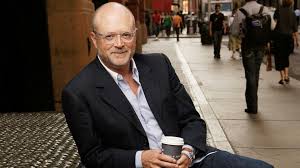
Hey, it's Jeremy Kirkland. You're listening to Blamo. How are you doing? How are you hanging in there? How is life?
It's getting nice. It's getting a little hot outside. I got to complain for two seconds because it's hot and I don't want it to be hot. I want spring. I want to wear my nice jeans and pants. I don't want to switch to my baggies yet.
I just came back from Kansas City, which even though I have to go there often, is not where I'm from and is also not where I live. It's funny. Sometimes I'll get messages from people and they're like, 'Yeah, you're in Kansas City, right? How's Kansas City?' And it's like, 'Don't know cuz I don't live there. I live in St. Louis.' And I'm happy I live in St. Louis. You know, it's a great city. I'm from here. It's nice to live here again. There's a lot of good stuff the city has to offer. Good clothes, good stores. You know, I like that my house doesn't cost a lot of money and I got a studio where I can record these pods when I need to. Other than that, you know, I'll see you in New York, you know, once a month, whatever. But who cares about that honestly because Mickey Drexler, the Mickey Drexler, he's on the pod this week. You know, this is the 10th year of doing this pod and Mr. Drexler has been a person whom, you know, I've been wanting to have on the show since the beginning. I mean, if you know anything about fashion or retail or if you don't know anything and you're just like, 'I'm looking for an incredible businessman and entrepreneur,' Mickey Drexler is going to come up in that conversation. You might know him as the guy behind Gap, J. Crew, Old Navy. I mean, he was on the board of Apple. I mean, there's so many things. This guy's resume reads like this, you know, murderer's row. I mean, he's just done it all. And he is now chairman of Alex Mill. But, what I liked about this is, you know, we were supposed to have this conversation and we're kind of going back and forth and you know, he shows up and he's still, and I think this is the biggest takeaway for me on this pod. He's still just like a guy who loves shopping. He loves clothes. He loves good retail. Like, but he really, really loves it. I think a lot of people sometimes think that when a person reaches a level of success that they kind of are like, 'All right, now I'm done with all that stuff and I can just kind of lean back and I don't know, count my cars or whatever you're going to use to define yourself of success.' But Mr. Drexler, no, he is like, 'I like coming into work and I like shopping and I like going into stores.' I mean, he's still laser-focused on that. And so we got into it. I mean, it starts off pretty hot cuz I was trying to talk to him how I'm like, 'Look, it feels like everything is the same. It feels like, you know, what's good and what's bad.' I mean, you'll hear it when it goes to it in a second but like he's like, 'Oh, no,' you know, but he just, we had this very lovely little corner, little sort of debate. But basically, I mean, he thinks most modern fashion has lost its taste level. He's right.
He thinks all cars look the same. He thinks corporate brands ruin creativity. He's not an AI guy. I mean, of course, this is why he's the goat because he's also pushing back on this not to be a contrarian because there's certain things that he believes that are very important to run a business. And I'm with him. So I mean we get into all sorts of stuff. We talk about why Costco is one of the best brands in America. We talk about why Rolex is so great. Storytelling, details matter. But I mean there's so much stuff in there. There's a Steve Jobs story in there which look, I'm not going to lie. I was not looking for Steve Jobs stories. But he throws one in there. It's just nice. We hate on Allbirds together. I mean life is just peachy when you can also hate on Allbirds. But I'm so, so glad to bring this pod to you. This was a long time coming. Here's my chat with the great, the one and only Mr. Mickey Drexler.
I think we're in this amazing time for retail and clothing and style where everything is actually good and good enough. And now we're in this era where it's more about how you feel about yourself and how you want to present yourself to the world versus being bombarded by a singular trend or place that you need to kind of conform. You know, that you can walk down the street in New York or LA or whatever it is and you see a wide variety of style and everyone looks good. And everyone seems happy versus it felt like back then you kind of had one, you had, you know, the GQ rules and that dictated whether you had good style or not. And now where it's like it's just be you and have fun. So it's interesting to be in view the clothing industry now where there's nothing that's inherently bad. It's just how do you want to present yourself?
I would debate what you just said. Because I think starting at a high-end top level in a sense looking down at the world. I think taste and style is now on a much lower rung of the ladder in terms of what I would, again, it's personal. I look at the design in America, not just clothes. I look at cars. I used to be a car maniac, collect and this and that.
I can't tell the difference. I was driving this morning to work and there was, and I just look at cars and I called someone up who hears a car, she's a car nut. I said, 'You know, Bridget, I'm here on the streets and I just saw what I would swear was a Jeep Grand Cherokee.' And I looked at the name and it was I think it was a Toyota model.
And everything has that swoop up. I mean, I'm into aesthetics and I guess I have to be in my job. But everything has the swoop in the back and they all look like they were designed in the same computer room that the others were designed in. And some of the great classics have been, they're not great classics anymore. Used to know a shape or chassis of an automobile. And then clothes, I think it's the same thing. I think taste and style, and I don't know what AI is going to do to this because I am a Luddite. Forgetting 16 years on an Apple board, I still, you know, don't get most of it. But I think the world of fashion has deteriorated dramatically. There are some great winners out there. But I think the designer business, it's kind of become so arrogant and you'll pay this for what we're charging. And a lot of people like the logo. They like to feel that, 'Oh, I'm special.' And they line up at the shops. But to me, luxury has always been scarcity in a way.
And when you look at the world, you know, discounters are galore, and the regular price retailers have now become discounters to a great degree.
And so, that's my takeaway on AI. I'm not sure about it. I like to argue with my life. I like to debate. I like to take up opposite opinions. Keeps me going, you know, I like that.
I don't know how it will affect the power of this. I have arguments with my friends about this. One says, you can design, you can do. Another says, they'll make movies. I said, where is the emotion? Where is the feeling? Where is the aesthetic? Will AI, in fact, predict the future? In my business, I always say, don't look in the rearview mirror. Skate to where the puck is going, you know, good old Gretzky. But you have to see down the road, see around corners, and all that. So, with AI, I do get into fights, and I think I'm intimidated. I am intimidated by technology and all that. And I shouldn't know what AI will do for us, but other people know what it'll do for us. So, I can't know everything, and I don't expect technology. But all in all, I don't know where the integrity of buildings are. And I'm not, you know, I was born in the Bronx, so I lived in a six-story whatever. But I don't know how I got this way in feeling. But so, I'm disappointed. I love nice things because when I grew up, I didn't have any, and I lived in my imagination. And people say, well, creative. I said, I think because I was internally based with things I'd want. I think. So, here I am, they say, influencing, doing this or that. But so, anyway, that's my point of view. So, we're of opposite, I think, in what we're saying.
Well, I think, no, I think we're more in line than we realize because there, I think the floor has been significantly lowered in what is acceptable, you know, right? But two things. One, on AI, I think AI is great to help me know where to put my commas. Other than that, it is absolutely devastating and couldn't be more annoying when it's applied in our artistic place, you know? And I do lectures with students at WashU and Parsons and I think the kids are all right. There is already a strong backlash that you're seeing on AI and even on social media for younger individuals.
You know, just, I couldn't agree more. And the technology, what I see, I mean, a lot of what I saw, this article, whatever it means. Someone is doing their paper on a typewriter, an Olympia.
And I think, I don't know how you feel, but I look at my 7-year-old grandchild and you go there, now they have this can telephone can or whatever it is. She has...
Tin can and she waited six or eight weeks or her mom did to get it. And so, she has three or four phone numbers. I think it's at the max. And I try to get my phone number in there, but I didn't make the cut. She has three friends. She, you know, hello, hello, hello. And then this on the whatever the videos.
Yeah. And it's not good. Where's the time alone that people spend? But again, I have to say I'm a Luddite in all this.
So, I think that if you're Wall Street and you're talking about AI, everyone's like, 'Oh, that's the future. Double down. Double down.' You know, look at Allbirds, which was essentially, in my opinion, a complete shit show. It was an absolute trash show.
100%. I met them the first time around. I said, 'Shit, they wanted me to invest in the first year or two.' Yeah. I said, but I'll never forget when I was, I happen to be in London. It must have been 10 years ago, whatever. Sure. Walks into a shop. She's wearing Allbirds, and I'm looking, and I said to the team, 'I don't understand those shoes. They're cheap and ugly.' And the... But I'll tell you something. I'm not going to, I didn't know the founders. Creativity was not in their vocabulary. A friend of mine was a consultant, very talented creative soul who I knew in our business. And she kept preaching, 'Where's the puck going? Where, where, where?' Now, the irony is they're going into the AI business. I mean...
Yeah. Well, that's the thing. It's like, I mean, I don't know what financial manager, you know, cuz a lot of them it's like, 'Look, the directive is invest in the future.' And so AI equals future, so people go ahead and put it on there. But the fact that they were able to pivot essentially from a failure, which is okay. There's nothing wrong with failing. But like, the fact that they were able to pivot from that into some AI company is mind-boggling. And I think, you know, some of the things were, we're almost speaking in parallel in the sense that you're right, a lot of fashion has kind of been reduced or sort of dumbed down. But the thread that you were pulling at, too, is there is still a love and deep search for great storytelling. I mean, why is Ralph Lauren always crushing it?
Great storytelling and the pursuit of history. You know, when we started Madewell, which became, and that not a huge success, we opened a store in Dallas. See, you know how in shopping malls they have a rail and if you jump you'll kill yourself down to your vest. So it was a quiet morning. It was a shitty location. But anyway, a guy yells across, he was just on the other side of the floor there. It was morning and I think he knew who I was. Maybe he didn't, didn't matter. And he said, 'You know, congrats on your new business. Remember storytelling is the key.'
Yeah, absolutely. I mean it is and it's like, you know, you look at the sea of hoodies out there. What makes the hoodie I'm wearing different than the hoodie that's being sold at A, B, or C? And you know, fortunately and unfortunately it's the environment it's sold at. It's a commodity, a hoodie, so you might have, but the thing that gets me like crazy on hoodie. I don't get it. P-A-R-K-E. You heard of that? Some woman started it.
It's a hot and it's in block print. It's like Bomb Equipment?
No, it didn't, Bomb I think had like an archway.
Yeah, it did. So block letters. But the world to me, there's, you know, people are followers mostly, but there are more standouts that aren't standouts. I mean, and the people you look at the magazines today. I hope my friends, you probably have magazine readers from the 60,000 or so people. But you know, you look at things and maybe cars in particular for me cuz I had collections of cars I always fantasized about as a child. I don't have many more because enough's enough, you know.
And but I don't know. I'm not a big fan of what's going on and I love what we're doing because I just love it and there's no, you know, there's no textbook you read on creativity.
Well, there's two things to talk on Alex Mill when we talk about what makes a clothing brand special right now and what makes something that you want to continue to dig deeper into in an era of, yeah, essentially a lot of noise. I'll put it that way. There's a lot of noise in the clothing industry, whether it's someone who's spending a lot of money on a crazy marketing campaign and it's fine if they want to do press hits for fashion shows, go for it. But for me, the joy of really, really good retail is still so important and even more so now as me and plenty of other people like me are pairing down a lot of the e-commerce purchasing until you can have the in-store experience first. And to talk Alex Mill, you know, my wife, who is an extremely specific shopper. She came back from New York the other day with this beautiful cotton cardigan that had like a tailor button all the way up. And I was like, 'Where'd you get that?' She's like, 'Oh, I got it at Alex Mill.' And she's like, 'You know, I'll be honest. I really hate shopping right now and it's so frustrating.' And she's like, 'But I was there and the customer service was absolutely...' She was like, 'It was almost unsettling because I wasn't used to like such good customer service.'
Isn't that nice? Well, she has good taste cuz that tailor sweater is bottom boom. It is, right? I mean, and it's...
Oh my. And so I went in. And look, I'm already kind of an ass clown snob in retail. I just admit it, you know, I like to look at everything. I like to look at the hardware.
Wait, only in retail? That's not true, then. Go ahead.
You know, it's hard to focus. You're right. And so I go in and I, you know, and I've been there multiple times, but to really go and I was like trying to like look for that experience she got and I got it, you know, and there was people talking to me about denim and trying on the different denim fits, no pressure to buy.
And then finding stuff that was really, really good. And I'm not going to lie, I don't really talk too much about my in-store experiences on the pod. Um, whatever, but it was excellent. It was really, really good and I think for me there's something that I think Alex Mill's doing differently in a time where you have places like it's more cool to not engage, right? You go to some retail stores and it's like, 'No, leave them alone.' And now I'm kind of like, 'Actually, I'd prefer you to talk to me.'
Well, you know, and this was all after we had a date, right? I mean, you didn't call us as a result of that, which is a compliment.
The team has to be a reflection of being kind and nice and knowledgeable to customers. And I am a micro manager because someone's got to do the job. And if you don't micro manage, then you're not noticing the bigger things that might be wrong. So, I've always been that way and I'm very demanding on specifics. You know, today, this is interesting. I had a breakfast with, you know, SoulCycle?
Yeah, I go every morning, 7:00 a.m.
And the music is deafening.
It's rough and I wear Bose headset and AirPods. And I listen to my own. So, I had a breakfast with the CEO. Um, I was very active with the founders from the beginning and they gave me the title Godfather of Soul, but I still, I don't get the respect of that title. So, I called Evelyn and the chairman and I said the sound of the music is deafening. And I brought in a measurement. I forgot what sound is called, decibels.
Yeah, but I had something on the iPhone that measured it. And I've been preaching to the teachers and staff about the noise level and it does create, 85 decibels and above create hearing loss. Now, the guy who I had a first fight with last Monday, I said, 'You know, you've got to lower your music.' We got into a little fight. He said, 'I'm in the recommended levels of 105 to 115.' I said, 'But I bet you'd deaf.' Now, he was not right and I said, 'Okay.' I left like pissed. And so, I was told today the recommended levels are 95 to 105, which is not low, but at least it's not painful.
So, I said to her, 'I don't know if it'll change.' I said, 'You know, when I ran all those shops, we had a low and a high of...' Now, in shopping it's different than in biking to bad music. But anyway, so it's micromanaging. It's, look, this morning I said, 'Why am I waiting so...' I know them. I like to schmooze with them. I said, 'What's happened to my coffee?' You know, but that's what you do. Now, micromanaging, when I visit a store or in here, I do the same thing because I consider myself, I don't know if it's my ancestry. I didn't have any retail or whatever. They're all from Poland, but I consider myself a micromanager in a positive way. I wish more bosses, I worked in 12 years in the department stores to see one of the chairman, well, it was only chairman in those days. Now it's thank god chairwoman, too. Spend time on the selling floor speaking to a salesperson. You learn more there than anywhere. But anyway, it's a long story. It's, you know, learning and being curious to me is one of the top requirements for any leader. Curious and dig in.
Yeah. Okay, wait a second. Look, sometimes I got to hit that pause button in here to tell you something. As you know, I've been collecting watches for 15 plus years now, even more than I've been doing this podcast. I got Mickey Mouse watches, I got Snoopy, I even got some heavy hitters in there, including my prized Seikos. And you're like, 'Jeremy, I know, but I'm always nervous about buying watches. It's kind of weird out there on the internet.' Well, that's why your boy uses Bezel. Bezel is an incredible trusted marketplace to find and buy your next dream watch or even that new daily driver. They even have their own auctions all backed and vetted by their incredible team of authenticators and experts. By the way, they're real people. It's not some tacky AI. It's super easy. You can contact their concierge team and say, 'Hey, I'm looking for this or I'm looking for that.' and they'll find it for you. And next thing you know, you'll receive that perfect watch. You can rest easy knowing it's authentic, correct, and now in the perfect spot on your wrist. So, if you're looking for a new Speedmaster, Datejust, or you just want something fun and weird, visit getbezel.com and find your next watch at getbezel.com. Wait. Wait, what? Oh, oh, you already did this? Oh, oh. You just want to make sure that your new toy now stays safe. Look, I get it because now Bezel offers insurance for your collection, even if you didn't purchase from them. So, find it, buy it, or bid on your next watch at getbezel.com and ensure while you're at it at getbezel.com.
Yeah, I agree. I think there is, you learn a lot more by being on the ground floor in the sense like, you know, getting a first-hand experience with the products, with the customers, what they're looking for, what they're, you know...
Yeah, and even caring about, like for me scent is actually very important in a retail location. And I'm not talking about like an overwhelming scent. I mean, I worked at Abercrombie.
Oh, Abercrombie. Overwhelming.
It was horrendous. I mean, they would...
Overwhelming. I worked there at one point and I remember the fragrance was called Fierce.
Yep. And everyone had a bottle and it was your job actually to open the bottle and spray it everywhere, but then also pour it on the rugs. It was...
Well, you know, the chairman then I used to work with before years. Oh, gosh. Two years he was my boss at Abraham & Straus, which is defunct.
Yeah. But, yeah, I remember that smell very well, you know.
Yeah, and it's interesting because, you know, scent triggers a lot of memories.
100%. And you know, I'll go to some stores now and, you know, just how the environment, whether it's the music and the scent and then even the hardware that the clothing is displayed on, you know, you feel it does help frame the objects in a better state of luxury, you know.
Well, presentation. It's like a plate if you get, you know, if they're not slopped on a plate in a restaurant.
You know, presentation is one of the critical issues. And but it's all a detail. That's why I say I'm a professional customer. And I've had practice my whole life. You know, you don't have to learn that. You see it. You feel it with service, with the food. Or with the clothes.
Yeah. I walked in this shop yesterday and very successful. I was buying, I had to replace my jogging pants which they could probably stand up and walk themselves. They were so old. And so I went to a, and the service was just okay. The guy was very nice. And that's all my standard is, is just okay. But you know, we're all responsible and the fish stinks from the head down. I learned that from the hotel manager in San Francisco when I was commuting there from New York for my first six or eight months. And I invited him in cuz he ran a great hotel. I said, 'Stan, please speak to our field team.' Which he did because every detail Stan took care of. And but that's, you don't feel that.
You know, there's a podcast called Founders. I don't know if you've heard of that.
So, the first one I listened to just randomly was Enzo Ferrari. And then I got addicted because it was all about the factory floor for Enzo. That's where he spent his time. And all the micro managers was about the selling floor, the factory floor, the customer conversations along with everything else they did in a genius like way for a number of them. But you know, that the art and my feeling, I hope I don't get into trouble for my criticisms of big corporations. I don't mind saying it, you know, big corporations are bureaucratic in most cases today. Try to get someone to answer a phone. Try to get a resume, you know, and people don't care. And I'm stunned when I listen to the bad music or recording. 'We want to take care of you. Press one, press two, press three, press four.' And what the hell? But I don't know what's happened. And I think the bigger you are in my own experience, by the way, running what became big businesses is it was very hard to stay on all the issues here. This, you know, I don't know when you get to New York you'll visit, but there's 30 of us. We have two rooms. And I am having more fun on this job for two reasons. One, no one can get away with anything cuz I'm walking around and listening all day. Number two, I don't have directors, boards of directors.
Who, and I say about boards and meetings, everything a group, and they knew nothing of all from my five or six boards in retail world. They knew nothing about schmatta's.
Mhm. You know, you know what a schmatta is, right?
I'm afraid I'm ignorant to this. Forgive me.
Well, it's Yiddish for clothes, rags. It actually technically means rags.
But, they would have opinions about everything. And I think most committees, I'm not for a dictator, although I kind of would like a benevolent dictator running America or that New York City does not need a politician. It needs someone to pave the damn roads. Anyway, if I look at the world today, the bureaucrats don't really care about, there's no decision that gets made in a boardroom that's not a compromise, except Steve Jobs. No compromise. Now, when I had directors and a controlling shareholders, whether it private equity or a founder, you know, I voted against building a new headquarters at Gap. Every director agreed. Guess what? The vote came new building. I was the only one who voted against it, but I see that happening in this world. You know, it's just happening all the time. Compromise after compromise in a boardroom cuz people are, it's like peace negotiations. I'll do this if you do that. And it's all people who in most cases, forgetting independent directors, have loyalty to the chief. And yeah, and so what be it? So that's micro, it's small things of big things. It's saying, 'Oh, I was, I used to like people to say hello to me when I started. I was a young guy at Bloomingdale's. I, you know, hello, I'm here. I work for you. Who's coming down the elevator? You know, hello. Just respect for your fellow coworkers.' And I like the term coworker at Bloomingdale's.
Maybe it sounds a little communistic or whatever, but you know, I like being called a coworker, but then just talk to the people and don't have your office to triple locks to get in. So, you know...
Yeah, I mean, I worked with a brand at one point and we were in a meeting and this was a luxury brand and they were going through some of the P&L and they were going over, and basically the conversation came down to if we changed our packaging from A to B, we would save an average of like, you know, 38 cents. But for me, and this is the thing too, is like the packaging represented part of the luxury experience, you know? Now, I get it, there's a concept of being conscious of waste, 100%.
Yeah. And so they basically voted to nix this to add a very, very small incremental value, and I politely tried to argue where I was like, 'Look, if we take this away from the packaging, if we're not focusing on the whole holistic experience of this brand, especially as a luxury brand, then we're going to completely remove ourselves, and we're just going to be another blank item.' And I'll be honest, I see that brand now, and I also see that brand fall more and more down in the terms of prestige of luxury, and it's like, I don't say it was just because of the packaging, but it was because of the constant compromises that were made.
Yeah, the packaging is just a signal, a hint of everything else. You know how I judge that same issue? Well, you know, at Ann Taylor, which we made very successful, and I was only there five years because we were bought out by a big bureaucratic company. I'll tell you another story about quality. So, they, the minions, whoever, I think they went to the Yale Club every day at lunch and got whatever. They said, 'The policy here is to put Allied Stores underneath all things that say like a shopping bag.' Right. And to me, Allied Stores, that's where Ann Taylor, that's our name, it's our...
Reputation. I, you know, bureaucracy, I just didn't listen. Why? Because they never check anyway.
But, you know, talking about taking something out of a product. So, Brooks Brothers was owned by the same company that owned Ann Taylor, among some department stores that are not around anymore. So, we sat in on each other's meetings and I listened to the chairman of Brooks Brothers say how Brooks Brothers had well-known luggage. I think it was made by Hartmann. This is many years ago. And he was saying how to maintain price, he was removing certain zippered compartments or whatever. And to me it dictated where Brooks Brothers went and is. Because that little notion, and the fish does sting from the head down.
When I check into a hotel or you name it, a restaurant, most important first marketing person, the car park guy, the valet or the doorman. You walk into hotels, Marriott takes over the same Regis. You walk into a hotel, it's Marriott after a year or two. Culture does not last in creative high-quality companies, except there are exceptions. LVMH, fantastic. And there are other high-quality companies who add enhance quality. But you get a great famous name, and if you do taking the money out of a product, that's the beginning of the end. And you know that when you walk in to the hotels today, like I'm not nothing against Marriott. A lot of people go there. And nothing against who else do they some other company I'm thinking that buys brands. You walk in and it says, oh, Hilton, too. It says on the desk it says a product of something of Marriott. Now, you walk into a nice hotel, I think they own St. Regis here. But you feel the culture in acquisition. And when creative companies in my world get taken over, it changes. It becomes purely mercenary. And mercenary over the long term is good, but quarter to quarter, stock price to stock price. So, I'm a little bit of an idealist because for my own career, I paid the price, but I'm very happy I did.
You know, at Gap, I got fired one day notice. My phone...
Yeah. Well, it was Steve Jobs actually told me I was being fired after 18 years. One day notice. And then I looked at the board and I... Well, the chairman and Steve called me 9:00. They didn't tell him because we were friends. He called me and he said, 'You're getting fired in the morning, called Don.' They told him 9:00 at night. We had a board dinner and I knew the turnaround was in from a bad year. And I said, 'No wonder no one looked at me.' I felt it and I showed them they don't know about goods. Most directors in the schmata world know nothing about goods. Like nothing about technology, but I did other things that Steve appreciated.
So, I called Don, 'Come in at 8:00 in the morning.' I get the one sentence or two sentence piece of paper, 'Effective today, dot dot dot.' I am stunned and I said, 'I have to see the directors.' Well, it was an inside board. Like most directors, there's no such thing as independent. Most directors. So, I said, 'Why?' I mean, I said 'Where's the integrity?' I got ushered right out. And then after the press conference the next day, Don said to me, 'You know, I made a mistake.' Now, it's all over the papers. My family was just 'Oh, okay, you made a mistake.' And he said to me, and he was a great partner at times. And he said to me, 'My family I would like to back you in a new company that you might want to start.' Well, you know, I started Old Navy totally on my own. It's now 11 billion of Gap's 15 or 16 billion. And Madewell I started, but that was after.
And you know, that's what goes on in this world of politics. Now, forget the ultimate political situation today. But, you know, it's very interesting to see how big corporations and little ones, too. But, give me a good founder and a visionary who can keep up with it. And that's where, you know, Walt Disney, people like Walt Disney and other founders, Steve Jobs. And although Tim's done a great job, but Steve was the guy. Walt Disney, who I never knew, of course. There's companies that are great with great standards. And you know, I went to see the other day. Have you been to the Sphere in Las Vegas?
Yeah, I have. It's awesome. I saw the Eagles. Who did you see there?